


Pipeline Basket Strainer
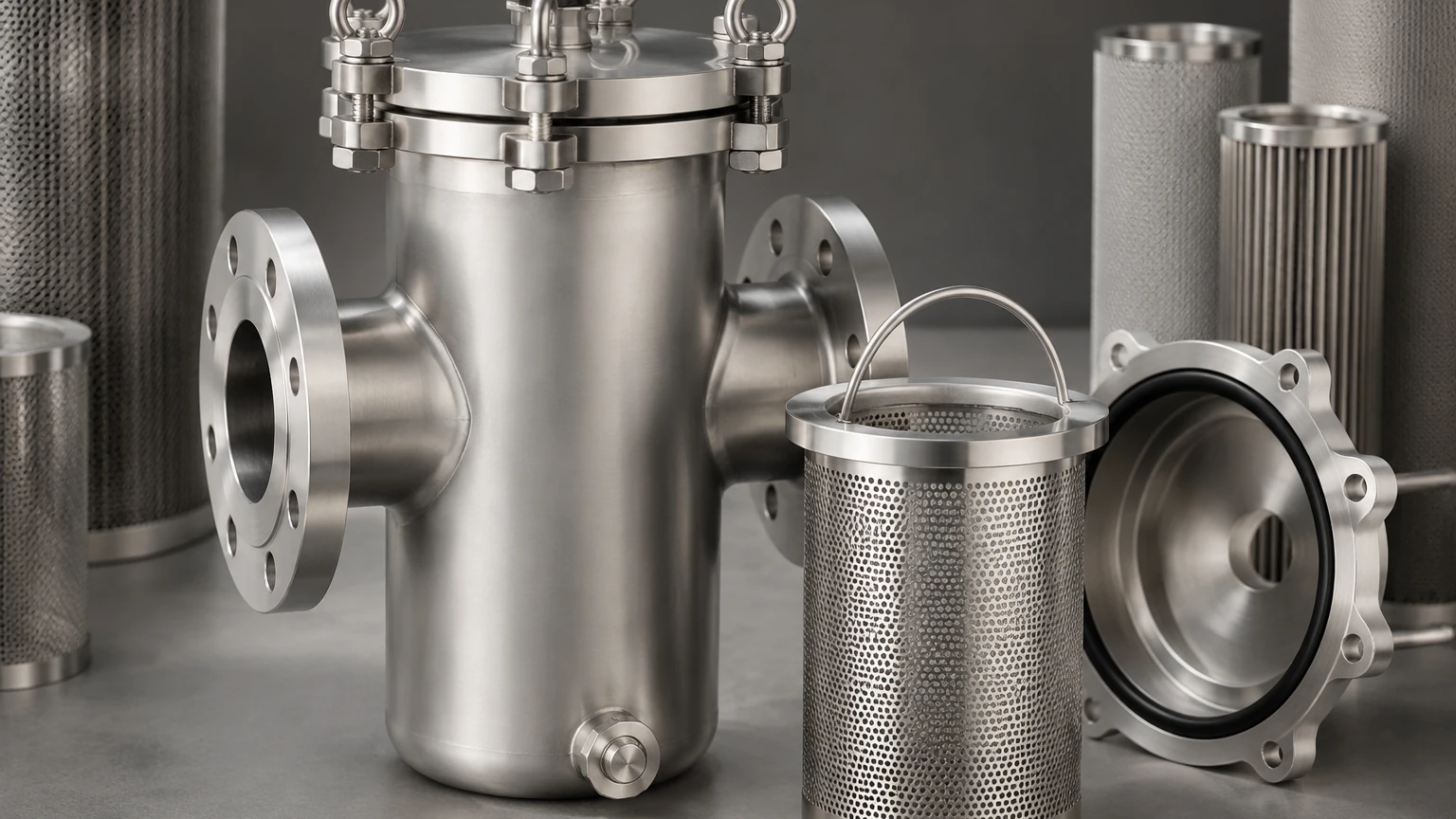
In industrial fluid handling systems, the integrity of downstream equipment such as pumps, flow meters, heat exchangers, and control valves is paramount to operational uptime. A pipeline basket strainer serves as a critical mechanical component designed to remove unwanted solids from liquid, gas, or steam lines by means of a perforated or wire mesh straining element. Unlike Y-strainers, which are typically used for smaller amounts of particulate, the basket strainer is engineered for applications with a higher debris loading capacity, offering a larger surface area for filtration and a more robust housing for demanding industrial environments.
Selecting the correct pipeline basket strainer requires a deep understanding of fluid dynamics, material science, and the specific mechanical requirements of the application. As a professional manufacturer, Kaifil specializes in custom stainless steel filtration solutions, providing the technical expertise necessary to navigate these complex engineering decisions. For more information on our full range of industrial filtration components, you may visit our Main Page.
Understanding the Role of Pipeline Basket Strainers in Industrial Systems
The primary function of a pipeline basket strainer is to protect expensive system components from damage caused by scale, rust, jointing compound, and other foreign debris. The "basket" design is specifically chosen when a high flow rate and a low pressure drop are required. Because the basket is oriented vertically, it can hold a significant volume of debris before requiring cleaning, making it ideal for processes where the fluid may contain a higher concentration of solids.
From an engineering perspective, the strainer acts as a sacrificial barrier. It is far more cost-effective to clean or replace a stainless steel filter basket than it is to repair a damaged centrifugal pump impeller or recalibrate a precision flow meter. In many industrial sectors, including chemical processing and water treatment, the installation of a high-quality strainer is considered a standard best practice for risk mitigation.
Technical Design: Simplex vs. Duplex Configurations
When specifying a pipeline basket strainer, one of the first design considerations is whether the process can tolerate a temporary shutdown for maintenance. This leads to the choice between simplex and duplex configurations.
Simplex Basket Strainers
Simplex strainers are used in systems where the flow can be interrupted. When the basket reaches its debris capacity—typically indicated by a rise in differential pressure—the system is shut down, the strainer is depressurized, and the basket is removed for cleaning. These are common in batch processing or in systems with redundant parallel lines.
Duplex (Twin) Basket Strainers
In continuous flow applications where a shutdown is not an option, such as in power plants, refineries, or large-scale chemical manufacturing, a duplex basket strainer is required. A duplex unit consists of two separate strainer chambers connected by a diverter valve. When one basket becomes clogged, the flow is switched to the clean chamber without interrupting the process. The dirty basket can then be serviced safely while the system remains fully operational.
Material Engineering: The Advantage of Stainless Steel
Material selection is the most critical factor in determining the longevity and reliability of a pipeline basket strainer. While cast iron or carbon steel may be suitable for basic water applications, industrial processes involving corrosive chemicals, high temperatures, or strict hygiene standards require stainless steel construction.
Kaifil focuses on high-grade stainless steel, specifically 304 and 316L alloys, for several technical reasons:
1. Corrosion Resistance: 316L stainless steel contains molybdenum, which provides superior resistance to chlorides and acidic environments, preventing pitting and structural failure.
2. Temperature Stability: Stainless steel maintains its mechanical properties across a wide temperature range, from cryogenic applications to high-heat steam lines.
3. Durability: The high tensile strength of stainless steel allows for thinner, lighter baskets that can still withstand significant differential pressures without collapsing.
4. Sanitary Compliance: For the food, beverage, and pharmaceutical industries, stainless steel provides a non-reactive, easy-to-clean surface that prevents bacterial growth and cross-contamination.
Sizing and Selection: Calculating Flow Capacity and Pressure Drop
Sizing a pipeline basket strainer is not as simple as matching the pipe size. An undersized strainer will cause an excessive pressure drop ($ΔP$), leading to cavitation in pumps and reduced system efficiency. Conversely, an oversized strainer is an unnecessary capital expense.
The Open Area Ratio (OAR)
The Open Area Ratio is the relationship between the total open area of the strainer basket and the cross-sectional area of the inlet pipe. A standard industrial strainer should ideally have an OAR of at least 6:1. This ensures that even when the basket is 50% clogged, the pressure drop remains within acceptable limits. For viscous fluids, an even higher OAR may be required to maintain flow velocity.
Micron vs. Mesh
The filtration accuracy is determined by the mesh size of the basket. "Mesh" refers to the number of openings per linear inch, while "Micron" refers to the actual size of the particle being filtered. Engineers must balance the need for fine filtration with the reality of pressure drop. A finer mesh (higher mesh count) will capture smaller particles but will also clog faster and create more resistance to flow. It is often recommended to use the coarsest mesh possible that still protects the downstream equipment.
Customization and OEM Filtration Solutions
Every industrial facility has unique challenges, which is why off-the-shelf solutions often fall short. Customization in pipeline basket strainer design allows for optimization based on specific fluid characteristics and spatial constraints. Kaifil provides extensive OEM capabilities, allowing for the development of bespoke filtration components.
Customization options include:
* Multi-Layer Mesh Construction: Sintered wire mesh or reinforced perforated metal can be used to provide both fine filtration and high structural strength.
* Specialized Gaskets and Seals: Depending on the chemical compatibility of the fluid, gaskets can be specified in EPDM, Viton, PTFE, or Buna-N.
* Connection Types: Beyond standard ANSI flanges, strainers can be designed with NPT threads, socket weld connections, or sanitary tri-clamp fittings.
* Magnetic Inserts: For applications involving fine iron or steel particles, magnetic rods can be added to the basket to capture metallic debris that might otherwise pass through the mesh.
Operational Maintenance and Cleaning Protocols
The total cost of ownership (TCO) for a pipeline basket strainer is heavily influenced by its maintenance requirements. Effective operation depends on a proactive cleaning schedule.
Monitoring Differential Pressure
The most reliable way to monitor a strainer's performance is by installing pressure gauges on the inlet and outlet sides. A "clean" pressure drop is established at startup. Once the differential pressure reaches a predetermined limit (typically between 5 and 10 psi, depending on the system design), the basket must be cleaned. Operating beyond this limit risks basket deformation or "blow-by," where debris is forced through the filter media.
Cleaning Procedures
When servicing a simplex strainer, the unit must be isolated and drained. The cover (which may be bolted or feature a quick-opening design) is removed, and the basket is lifted out. High-pressure water or steam is usually sufficient for cleaning stainless steel mesh, though chemical soaking may be required for stubborn scales or oils. Regular inspection of the basket for signs of mechanical wear or broken wires is essential to ensure continued protection.
Industry Applications and Performance Standards
Pipeline basket strainers are ubiquitous across various sectors, each with its own set of performance standards and regulatory requirements.
* Chemical Processing: Requires high-alloy stainless steel to handle aggressive solvents and acids. Strainers must often meet ASME Section VIII pressure vessel codes.
* Food and Beverage: Focuses on sanitary design. Baskets must be manufactured with smooth welds and high-polish finishes to meet 3-A or FDA standards, ensuring no areas for organic matter to accumulate.
* Pharmaceuticals: Demands the highest level of precision. Filtration components must provide documented material traceability and meet stringent USP Class VI requirements for elastomers.
* Water Treatment: Often uses large-scale simplex strainers to protect membranes and desalination equipment from sand, shells, and organic debris.
* Hydraulic Systems: Uses strainers to protect sensitive valves and actuators from metal shavings and environmental contaminants, ensuring the longevity of the hydraulic fluid.
Conclusion
A pipeline basket strainer is a fundamental component for any industrial fluid system, providing the necessary protection to ensure long-term equipment reliability. By focusing on high-quality materials like stainless steel and adhering to rigorous engineering standards for sizing and selection, facilities can significantly reduce maintenance costs and prevent unplanned downtime.
Whether you require a standard simplex unit or a highly customized OEM filtration component, understanding the technical nuances of flow rates, pressure drops, and material compatibility is the key to a successful installation. For assistance with custom designs or to review our manufacturing capabilities, please refer to our Main Page for detailed product support and engineering guidance.
