


Filter Housings Stainless Steel
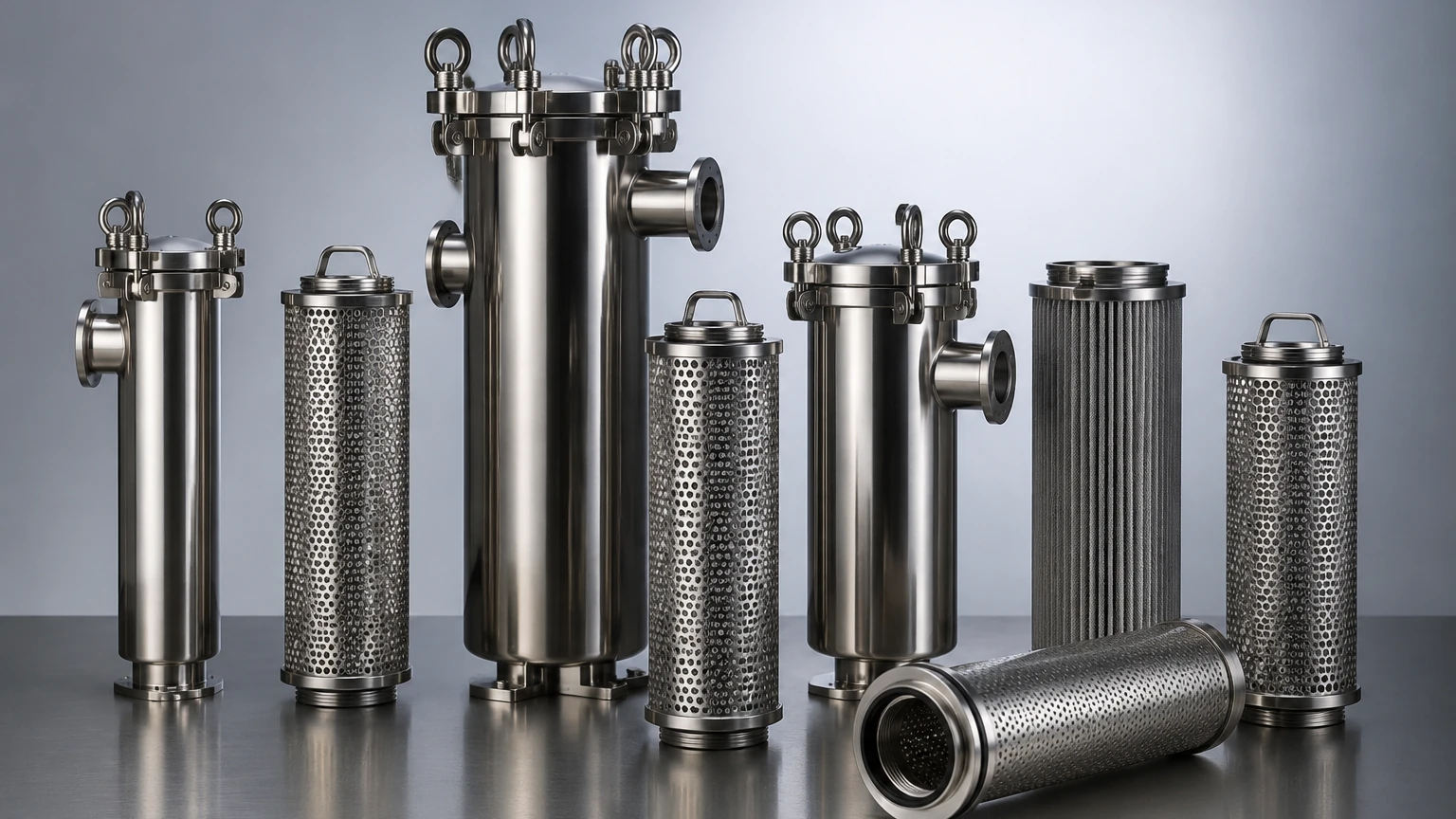
In industrial filtration, the performance of a system is as much dependent on the vessel that contains the process as it is on the filter media itself. Filter housings stainless steel serve as the critical pressure vessels designed to hold filter cartridges, bags, or mesh elements, ensuring that the fluid stream is directed through the media without bypass. For engineers and procurement teams in the chemical, pharmaceutical, and food and beverage sectors, selecting the correct housing involves a complex evaluation of material science, fluid dynamics, and mechanical engineering standards.
Stainless steel is the material of choice for these components due to its inherent resistance to corrosion, ability to withstand high temperatures, and ease of sterilization. As a professional manufacturer, Kaifil emphasizes that a well-engineered housing does more than just hold a filter; it optimizes flow distribution, minimizes pressure drop, and ensures the long-term integrity of the entire filtration process.
Material Selection: 304 vs. 316L Stainless Steel
The first technical decision in specifying filter housings stainless steel is the grade of the alloy. While various stainless steels exist, the industrial standard typically narrows down to Grade 304 and Grade 316L.
Grade 304 Stainless Steel
Grade 304 is the most common austenitic stainless steel. It contains chromium and nickel, providing excellent durability and resistance to oxidation. In applications involving water treatment, hydraulic oils, or mild chemicals, 304 stainless steel offers a cost-effective solution with sufficient mechanical strength. However, it is susceptible to pitting and corrosion in high-chloride environments.
Grade 316L Stainless Steel
Grade 316L (low carbon) includes molybdenum, which significantly enhances its resistance to chlorides and acidic solutions. In the pharmaceutical and chemical processing industries, 316L is often the mandatory specification. The "L" designation is crucial for housings that require extensive welding during fabrication, as it prevents carbide precipitation and ensures the heat-affected zones remain as corrosion-resistant as the rest of the vessel. For high-purity applications, 316L is also more conducive to electropolishing, achieving the smooth surface finishes required to prevent bacterial growth.
Structural Design and Pressure Ratings
Filter housings must be engineered to withstand the maximum operating pressure of the system, including potential surges. Most industrial filter housings stainless steel are designed according to ASME (American Society of Mechanical Engineers) Section VIII standards or equivalent international codes.
Design Pressure and Temperature
Engineers must confirm both the design pressure and the operating temperature. As temperature increases, the allowable stress of the stainless steel decreases. A housing rated for 150 PSI at ambient temperature may have a significantly lower rating at 300°F (149°C). Furthermore, the housing must account for "water hammer" effects in liquid systems, where sudden valve closures can create pressure spikes far exceeding nominal operating levels.
Flow Rate and Pressure Drop
The internal geometry of the housing impacts the initial pressure drop (delta P). A housing with undersized inlet or outlet ports will create turbulence and restrict flow, leading to energy inefficiency and shortened filter life. Technical specifications should include a flow-versus-pressure-drop curve to ensure the housing can handle the required volume without excessive resistance.
Configurations: Single vs. Multi-Round Housings
The scale of the operation dictates the configuration of the filter housings stainless steel. The choice between single and multi-round designs depends on the total flow rate and the required filtration surface area.
* Single-Round Housings: These are designed for a single filter cartridge or bag. They are ideal for low-flow applications, pilot plants, or point-of-use filtration. They are compact and easier to maintain but have limited capacity.
* Multi-Round Housings: For high-volume industrial processes, multi-round housings can hold anywhere from 3 to over 100 cartridges. These vessels allow for high flow rates while maintaining a low face velocity across the filter media, which improves filtration efficiency and extends the interval between filter changes.
When evaluating multi-round housings, the internal support plate (tubesheet) must be robust enough to prevent flexing under differential pressure, which could lead to seal failure and bypass.
Sealing Mechanisms and Bypass Prevention
One of the most critical aspects of filter housings stainless steel is the sealing interface between the filter element and the housing. Even the highest-efficiency HEPA or membrane filter is useless if fluid can bypass the media through a faulty seal.
O-Ring and Gasket Materials
The choice of sealing material must be compatible with the process fluid and temperature. Common options include:
* EPDM: Excellent for steam and water but poor for oils.
* Viton (FKM): High temperature and chemical resistance, particularly for hydrocarbons.
* PTFE (Teflon): Nearly universal chemical resistance but lacks the elasticity of elastomers, often requiring encapsulated designs.
* Silicone: Preferred in food and beverage for its low toxicity and high-temperature stability.
Closure Types
The method used to seal the housing lid also impacts operational efficiency.
* Swing Bolts: The industry standard for high-pressure applications. They offer a secure, rugged seal that can withstand repeated opening and closing.
* V-Band Clamps: Used for lower-pressure applications. They allow for quick access but are limited in their pressure-holding capability.
* Threaded Caps: Often found on small, single-round housings for simple, manual operation.
Surface Finish and Compliance Standards
In industries such as food, beverage, and pharmaceuticals, the internal surface finish of filter housings stainless steel is a primary concern. Rough surfaces provide microscopic crevices where bacteria can colonize or where product residue can accumulate, leading to cross-contamination.
Mechanical Polishing and Electropolishing
Mechanical polishing uses abrasives to achieve a specific Ra (Roughness Average) value. However, electropolishing is often preferred for high-purity applications. This electrochemical process removes the "peaks" of the metal surface at a molecular level, leaving a mirror-like finish that is easier to clean and more resistant to corrosion (passivation).
Regulatory Compliance
Depending on the application, housings may need to comply with specific standards:
* FDA/CFR 21: For food contact materials.
* 3-A Sanitary Standards: For dairy and liquid food processing.
* USP Class VI: For pharmaceutical grade plastics and elastomers used in the housing seals.
Operational Maintenance and Replacement Cycles
While the stainless steel housing itself is a long-term capital investment, its performance depends on proper maintenance. Engineers should look for features that simplify the service cycle.
Venting and Draining
Every housing should be equipped with a vent port at the highest point to release trapped air during startup and a drain port at the lowest point to allow for complete liquid removal before filter changes. In hazardous chemical applications, these ports are often piped to a recovery system.
Differential Pressure Monitoring
To maximize the life of the filter elements, housings should be fitted with pressure gauges on both the inlet and outlet. The differential pressure (DP) indicates when the filter elements are loaded and require replacement. Operating beyond the recommended maximum DP can result in element collapse or "breakthrough," where contaminants are forced through the media.
Customization and Engineering Support
Standard off-the-shelf housings may not meet the specific spatial or functional requirements of a complex industrial skid. This is where custom manufacturing becomes essential. For specialized requirements, visiting the Main Page of a dedicated manufacturer like Kaifil allows engineers to explore OEM capabilities, including custom port orientations, specialized mounting brackets, and unique internal geometries.
Customization often involves:
* Inlet/Outlet Variations: Flanged (ANSI/DIN), NPT threaded, or sanitary tri-clamp connections.
* Heating Jackets: For processes involving high-viscosity fluids that must be kept at a specific temperature to flow correctly.
* Skid Integration: Designing the housing to fit within a specific footprint on a modular process system.
Conclusion: Total Cost of Ownership
When purchasing filter housings stainless steel, the initial acquisition cost is only one part of the equation. Engineers must consider the total cost of ownership, which includes the frequency of seal replacements, the ease of cleaning, and the durability of the vessel under cyclic pressure loading. Investing in a high-quality, precision-manufactured housing ensures that the filtration system operates at peak efficiency, protecting downstream equipment and ensuring the purity of the final product. By focusing on material integrity, mechanical design, and application-specific features, industrial professionals can secure a filtration solution that provides reliable service for decades.
