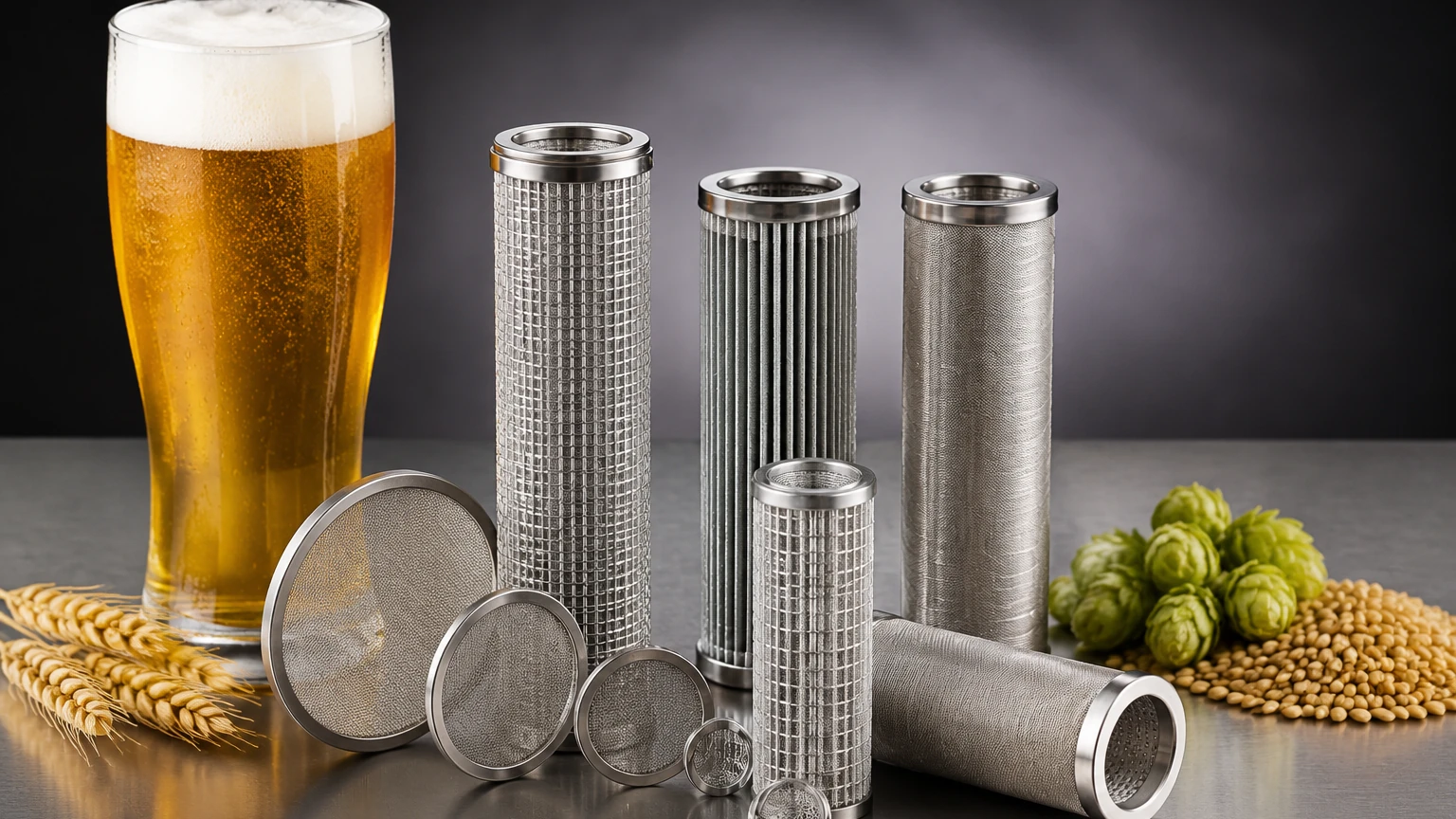
Beer Filteration
In the industrial brewing sector, the process of beer filteration is a critical phase that determines the final product's clarity, biological stability, and shelf life. While the craft of brewing involves complex biochemical reactions, the final presentation and preservation of the beverage rely heavily on mechanical separation technologies. For engineers and production managers, selecting the right filtration media is not merely a matter of clarity; it is an engineering decision that impacts yield, operational costs, and brand consistency. Stainless steel filtration solutions have become the industry standard for demanding brewery environments due to their durability, cleanability, and precise performance.
Understanding the Objectives of Beer Filteration
The primary goal of beer filteration is the removal of suspended solids, including yeast cells, hop residues, and colloidal proteins. These elements, if left in the beer, can lead to unwanted secondary fermentation or the development of "chill haze"—a cloudy appearance that occurs when the beer is refrigerated. From a technical perspective, filtration is categorized based on the size of the particles being removed and the specific stage of the production cycle.
1. Colloidal Stability: Beer contains various proteins and polyphenols. Over time, these can bond to form macroscopic particles. Effective filtration reduces the concentration of these precursors, ensuring the beer remains clear throughout its intended shelf life.
2. Microbiological Control: Removing spoilage organisms, such as lactic acid bacteria or wild yeast, is essential for shelf-stable products. This often requires fine or sterile filtration stages where the pore size of the filter media is strictly controlled.
3. Aesthetic Quality: For many beer styles, particularly pilsners and lagers, a brilliant, "bright" appearance is a fundamental quality metric. Achieving this requires the removal of particles down to the sub-micron level.
Engineering Considerations for Industrial Beer Filters
When designing or upgrading a brewery's filtration system, several engineering parameters must be evaluated to ensure the system can handle the mechanical and chemical stresses of the production environment.
Material Compatibility and Hygiene
In the food and beverage industry, 316L stainless steel is the preferred material for filtration components. This alloy offers superior corrosion resistance, particularly against the acidic nature of beer and the aggressive caustic and acidic chemicals used during Clean-in-Place (CIP) cycles. The surface finish of the filter element, often measured in Ra (roughness average), is also critical. A smooth, high-quality finish prevents the adhesion of organic matter and inhibits the formation of biofilms.
Pressure and Flow Dynamics
Filtration is a pressure-driven process. Engineers must calculate the "clean pressure drop" (the initial resistance of the filter) and the "terminal pressure drop" (the point at which the filter is considered fouled and must be cleaned). Industrial beer filteration systems must be rated to withstand high differential pressures without compromising the structural integrity of the filter media. Sintered metal and reinforced wire mesh designs are specifically engineered to resist pleat deformation or media migration under these stresses.
Temperature Resilience
Brewery filtration can occur at varying temperatures. Cold filtration (near 0°C) is common for stabilizing proteins, while sterilization cycles may involve steam at temperatures exceeding 121°C. Stainless steel filter cartridges are uniquely suited for these extremes, maintaining their pore geometry where polymer-based filters might soften or degrade.
Types of Stainless Steel Filtration Media in Brewing
Choosing the correct media structure is vital for optimizing the balance between filtration efficiency and flow rate. Kaifil specializes in several types of metal filtration components that are widely used in the brewing industry.
* Sintered Wire Mesh: This media consists of multiple layers of stainless steel wire cloth that are bonded together through a high-temperature sintering process. The result is a robust, porous plate or cylinder with precise pore sizes. Sintered mesh is ideal for high-pressure applications and provides excellent backwashing capabilities.
* Wedge Wire Screens: Often used in the lauter tun or as a primary trap filter, wedge wire features a V-shaped profile that minimizes clogging. The continuous slots provide a large open area, allowing for high flow rates during the initial stages of separation.
* Porous Sintered Metal: For fine filtration, sintered metal powders can create extremely small pore paths. These are often used in gas carbonation stones or for fine polishing stages where high mechanical strength is required.
Multi-Stage Filtration Process: From Primary to Sterile
Effective beer filteration is rarely a single-step process. Instead, it involves a graduated approach to protect expensive fine filters and ensure maximum throughput.
Primary (Rough) Filtration
In this stage, the bulk of the yeast and larger solids are removed. Traditionally, this was achieved using Diatomaceous Earth (DE) filters, but many modern facilities are moving toward cross-flow filtration or reusable stainless steel mesh systems to eliminate the environmental and health risks associated with DE powder. Stainless steel elements in the 10 to 20-micron range are typically employed here.
Secondary (Polishing) Filtration
Polishing filtration targets smaller particles and remaining yeast cells to achieve the desired clarity. This stage often utilizes filter cartridges with ratings between 1 and 5 microns. Using permanent, cleanable stainless steel cartridges at this stage can significantly reduce the total cost of ownership compared to disposable depth filters.
Final (Sterile) Filtration
Also known as cold stabilization, this stage removes any remaining microorganisms that could cause spoilage. While membrane filters are common here, stainless steel pre-filters are essential to protect these sensitive membranes from premature fouling. By ensuring the beer reaching the final stage is already highly clarified, the lifespan of the sterile membranes is greatly extended.
Maintenance and Longevity of Stainless Steel Filter Elements
One of the primary advantages of stainless steel filtration solutions is their ability to be regenerated. Unlike disposable cartridges that must be discarded once fouled, metal filters can be cleaned and returned to service multiple times.
* Backwashing: This involves reversing the flow of fluid through the filter to dislodge accumulated solids from the surface of the media. This is highly effective for surface-loading media like sintered wire mesh.
* Chemical Cleaning: To remove organic buildup or "beer stone" (calcium oxalate), filter elements are subjected to CIP cycles. This typically involves a caustic wash (Sodium Hydroxide) followed by a neutralizing acid wash (Nitric or Phosphoric Acid). Stainless steel's resistance to these chemicals ensures a long service life.
* Integrity Testing: For critical stages, engineers perform integrity tests to ensure the filter has not been damaged. Because stainless steel is rigid, it is less prone to the bypass issues that can affect flexible media.
The Economic Impact of Permanent Filtration Solutions
While the initial capital expenditure for stainless steel filtration components is higher than for plastic or paper alternatives, the long-term economic benefits are substantial. Engineers must consider the Total Cost of Ownership (TCO), which includes:
1. Reduced Consumable Costs: Eliminating the need for frequent cartridge replacements.
2. Lower Labor Costs: Fewer filter change-outs mean less downtime and reduced labor requirements.
3. Waste Reduction: Reusable filters align with corporate sustainability goals by reducing the volume of spent filter media sent to landfills.
4. Process Consistency: Metal filters maintain their pore size and structural integrity over hundreds of cycles, ensuring a consistent product quality that disposable filters may struggle to match as they approach their loading limit.
Selecting the Right Filtration Partner
In the complex landscape of industrial brewing, a one-size-fits-all approach to filtration is rarely successful. Customization is often necessary to account for specific flow rates, vessel dimensions, and the unique characteristics of different beer styles. Working with a manufacturer that understands the nuances of metal fabrication and filtration science is essential.
Kaifil provides a wide range of customizable stainless steel filtration products designed to meet the rigorous demands of the food and beverage industry. From initial design and material selection to the production of precision-engineered filter cartridges, the focus remains on delivering durability and high-performance filtration. For technical professionals looking to optimize their production lines, exploring specialized metal filtration components is a strategic step toward operational efficiency.
To learn more about specific filter configurations, material specifications, and how custom stainless steel solutions can improve your process, you can Review product options and application support on our Main Page. Whether you are addressing challenges in primary separation or looking to enhance your sterile filtration pre-treatment, selecting the right engineering partner ensures that your beer filteration system is a robust asset to your production facility.