


Fabricated Strainer
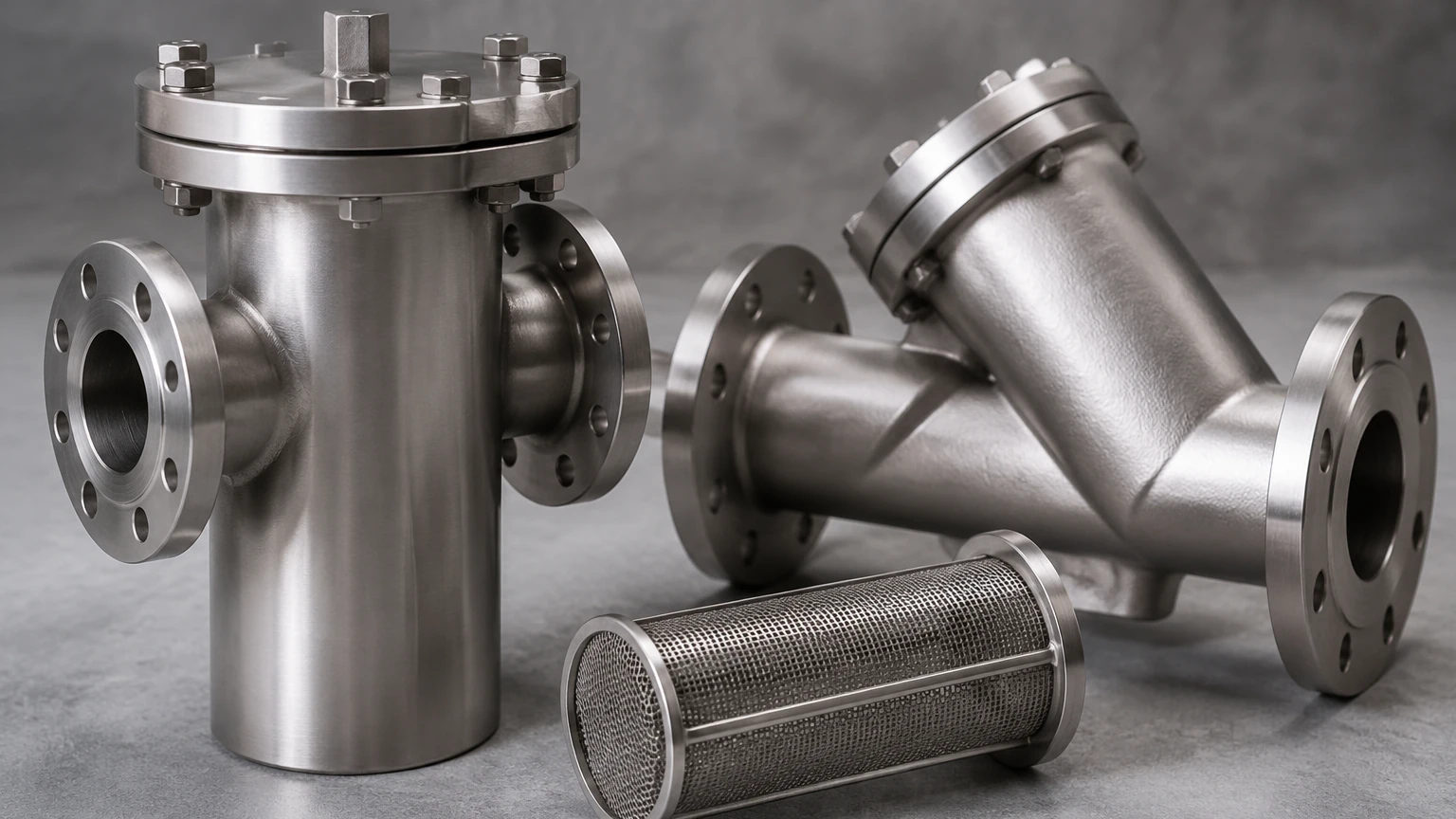
In industrial fluid handling, the protection of downstream equipment such as pumps, valves, flow meters, and heat exchangers is a critical engineering priority. A fabricated strainer serves as a robust, custom-engineered solution designed to remove unwanted solids from liquid or gas streams. Unlike standard cast strainers, which are produced in fixed molds with limited dimensions, a fabricated strainer is constructed from pipe, plate, and forged components through advanced welding and machining processes. This method allows for significant flexibility in design, material selection, and pressure ratings, making it the preferred choice for complex industrial applications.
For engineers and procurement professionals, selecting the right filtration component requires a deep understanding of system hydraulics, material compatibility, and maintenance requirements. As a specialized manufacturer of stainless steel filtration solutions, Kaifil provides the technical expertise necessary to develop high-performance components that meet these rigorous standards. To explore specific filtration products and engineering support, visit the Main Page of our technical resource center.
Understanding the Role of a Fabricated Strainer in Industrial Systems
The primary function of a fabricated strainer is to provide a coarse or fine filtration barrier within a piping system. While the terms "filter" and "strainer" are often used interchangeably, a strainer typically refers to a device that removes larger particles to protect mechanical components, whereas a filter is often used for finer separation.
Fabricated units are distinct because they are not limited by the constraints of casting molds. They can be engineered to accommodate higher flow rates, unusual piping configurations, and specific pressure vessel codes (such as ASME Section VIII). This flexibility is essential in industries like chemical processing, water treatment, and oil and gas, where standard off-the-shelf components may not withstand the operating environment or meet the required service life.
Cast vs. Fabricated: Key Differences
1. Design Flexibility: Cast strainers come in fixed sizes. A fabricated strainer can be built with custom inlet/outlet orientations, offset nozzles, or varying body diameters to minimize pressure drop.
2. Material Integrity: Fabrication allows for the use of high-grade stainless steel plates and pipes that undergo rigorous non-destructive testing (NDT), ensuring fewer defects compared to the porosity risks sometimes found in large castings.
3. Scalability: For large-diameter pipelines (above 12 inches), fabrication is often more cost-effective and structurally sound than casting.
Key Design Configurations: Simplex, Duplex, and T-Type
The selection of a fabricated strainer configuration depends largely on the continuity of the process and the space available within the facility.
Simplex Fabricated Strainers
A simplex strainer is used in systems where the flow can be temporarily interrupted for basket cleaning. These are common in batch processing applications. Because they are fabricated, these units can be designed with quick-opening covers (such as swing-bolt or klamp-tite) to reduce downtime during maintenance.
Duplex Fabricated Strainers
In continuous flow applications—such as power generation or large-scale chemical manufacturing—a duplex strainer is required. This configuration consists of two separate strainer chambers connected by a diverter valve. When one chamber becomes clogged, the flow is switched to the clean chamber, allowing the operator to service the dirty basket without shutting down the system. Fabricated duplex units are highly customizable in terms of the valve mechanism and the distance between chambers.
T-Type and Y-Type Fabricated Strainers
T-type strainers are often selected for large-bore piping where a compact footprint is necessary. They offer a straight-through flow path, which helps in maintaining low pressure drops. While Y-type strainers are commonly cast, fabricated versions are engineered for high-pressure steam or high-temperature oil lines where specialized alloy materials are required.
Engineering Parameters for Strainer Selection
When specifying a fabricated strainer, engineers must evaluate several technical parameters to ensure the component performs reliably under operational stress.
Pressure Drop ($ΔP$)
Pressure drop is the loss in fluid pressure as it passes through the strainer. It is influenced by the fluid's viscosity, velocity, and the open area ratio of the internal basket. A well-designed fabricated strainer should have a high "open area ratio" (the ratio of the total hole area to the inlet pipe area), typically 6:1 or higher, to ensure that the initial pressure drop is minimal and that the time between cleanings is maximized.
Filtration Accuracy and Mesh Selection
The internal element of the strainer—the basket—is usually made from perforated stainless steel plate, often lined with a fine wire mesh. The choice of mesh size depends on the smallest particle that needs to be removed. For example, protecting a spray nozzle might require a 100-mesh liner (149 microns), while protecting a heavy-duty centrifugal pump might only require a 1/8-inch perforated basket.
Connection Types and Standards
Fabricated units can be supplied with various connection types, including:
* Flanged (ANSI, DIN, or JIS): For easy removal and secure sealing.
* Butt-weld: For high-pressure systems where leak paths must be eliminated.
* Socket-weld: For smaller, high-pressure lines.
Material Selection and Chemical Compatibility
Material choice is the most significant factor in determining the longevity of a fabricated strainer. Stainless steel is the industry standard due to its corrosion resistance and structural strength.
* Grade 304 Stainless Steel: Suitable for general industrial use, water treatment, and mildly corrosive environments.
* Grade 316/316L Stainless Steel: Contains molybdenum, providing superior resistance to chlorides and acids. This is the standard for pharmaceutical and marine applications.
* Specialty Alloys: For highly aggressive chemical environments, materials like Duplex stainless steel or Hastelloy may be used in the fabrication process.
Beyond the housing, the internal basket must be made from a material that can withstand the differential pressure caused by debris buildup. Kaifil specializes in reinforcing these baskets to prevent collapse under high-load conditions.
The Customization Process: OEM and Tailored Solutions
One of the primary advantages of working with a manufacturer like Kaifil is the ability to customize every aspect of the filtration component. In an OEM (Original Equipment Manufacturer) context, a fabricated strainer is often integrated into a larger skid or machine.
Customization options include:
* Specialized Coatings: Such as PTFE lining for extreme chemical resistance.
* Heating Jackets: For high-viscosity fluids like bitumen or chocolate that must be kept at a specific temperature to flow.
* Automated Blow-down Valves: To allow for the removal of heavy sludge without opening the housing.
* Custom Dimensions: Adjusting the "face-to-face" length to fit into an existing piping gap during a facility retrofit.
By collaborating closely with engineering teams, Kaifil ensures that the final product aligns with the specific hydraulic and mechanical requirements of the application, rather than forcing a standard product into a non-standard role.
Operational Maintenance and Performance Monitoring
Even the best-engineered fabricated strainer will fail if maintenance is neglected. The most effective way to monitor performance is through the installation of differential pressure ($ΔP$) gauges. By measuring the pressure before and after the strainer, operators can determine exactly when the basket is full.
Cleaning Cycles
A common mistake is cleaning the basket on a fixed time schedule. This can lead to either unnecessary downtime or, conversely, a ruptured basket if the debris load increases unexpectedly. Monitoring $ΔP$ allows for "condition-based maintenance." When the pressure drop reaches a pre-determined limit (usually 10-15 psi above clean drop), the basket should be cleaned.
Replacement Parts
It is recommended to keep spare baskets and gaskets on-site. Because fabricated strainers are often custom-sized, the internal baskets may not be interchangeable with other brands. Maintaining a relationship with the original manufacturer ensures that replacement components meet the original design specifications for fit and filtration accuracy.
Technical Evaluation Checklist for Purchasing Teams
Before finalizing a purchase order for a fabricated strainer, technical professionals should confirm the following data points with the manufacturer:
1. Fluid Characteristics: What is the fluid, its viscosity at operating temperature, and its specific gravity?
2. Design Pressure and Temperature: What are the maximum and minimum operating conditions? Does the unit need to meet specific codes like ASME or PED?
3. Allowable Pressure Drop: What is the maximum $ΔP$ the system can tolerate when the strainer is clean?
4. Particle Size: What is the micron rating or mesh size required to protect downstream equipment?
5. Installation Constraints: Are there height or width restrictions? Does the inlet/outlet need to be at a specific angle?
6. Corrosion Allowance: Is there a required wall thickness addition to account for long-term material loss?
Conclusion
A fabricated strainer is more than just a pipe fitting; it is a precision-engineered component that ensures the reliability and efficiency of industrial processes. By opting for a fabricated design over a standard cast unit, engineers gain the ability to tailor the filtration system to the exact needs of their application—optimizing flow, reducing maintenance costs, and extending the life of expensive downstream machinery.
Whether you are designing a new chemical processing line or upgrading a water treatment facility, selecting a manufacturer with a focus on quality and customization is essential. For more information on custom stainless steel filtration solutions and to view our full range of capabilities, visit the Main Page of Kaifil. Our team is dedicated to providing the technical guidance and high-performance components required for the most demanding industrial environments.
