


Cuno Filter Catalog
In the landscape of industrial liquid and gas processing, the Cuno filter catalog represents a foundational reference for engineers and procurement specialists. Originally developed by Cuno Incorporated and later integrated into 3M’s Separation and Purification Sciences Division, these catalogs detail a vast array of filtration technologies ranging from depth filters to pleated membranes. For technical professionals, navigating these documents is not merely about finding a part number; it is about understanding the intersection of fluid dynamics, material science, and process efficiency.
Industrial filtration requirements are increasingly demanding. Whether in chemical processing, food and beverage production, or pharmaceutical manufacturing, the choice of a filter cartridge or housing can significantly impact product purity and system longevity. This guide examines the technical nuances of the Cuno filter catalog and provides an engineering perspective on how to evaluate these specifications against modern industrial needs, including the transition to durable, custom stainless steel solutions.
Navigating the Cuno Filter Catalog for Industrial Applications
The Cuno filter catalog is typically organized by technology type and application suitability. For an engineer, the primary challenge is identifying the specific series that aligns with the chemical and thermal constraints of their process. The catalog usually categorizes products into depth filtration, surface filtration, and membrane filtration.
Depth filters, such as the Micro-Klean series, utilize a thick matrix of fibers to trap particles throughout the entire medium. Surface filters, often pleated, rely on a thin layer to capture contaminants on the exterior. When reviewing the catalog, technical teams must look beyond the initial part number to verify the "Construction Codes." These codes dictate the end-cap configurations (e.g., 222 O-ring, 226 bayonet, or DOE – Double Open End), which are critical for ensuring a leak-proof seal within existing filter housings.
Furthermore, the catalog provides essential data on effective filtration area (EFA). A higher EFA generally leads to lower flux rates per unit area, which can extend the life of the filter and reduce the frequency of change-outs. Understanding these metrics is the first step toward optimizing a filtration circuit.
Key Filtration Technologies and Series
To effectively use a Cuno filter catalog, one must be familiar with the core product lines that have become industry standards. Each series is engineered for specific particulate loading characteristics and fluid types.
Depth Filtration: Micro-Klean and Betapure
The Micro-Klean series is often the go-to for general industrial applications where high dirt-holding capacity is required. These are typically resin-bonded filters that provide structural integrity without the need for a central core. In contrast, the Betapure series utilizes a multi-zone depth filter design. This "gradient porosity" allows larger particles to be trapped in the outer layers while finer particles are captured deeper within the media, preventing premature surface blinding.
Pleated Media: PolyNet and 700 Series
For applications requiring high flow rates and precise particle size control, pleated filters like the PolyNet series are featured prominently. These filters offer a much higher surface area than depth filters. When engineers consult the catalog for these items, they must pay close attention to the "Beta Rating," which provides a more accurate measure of efficiency than a simple nominal micron rating.
Technical Parameters for Filter Selection
Selecting a filter from a catalog requires a rigorous analysis of technical parameters. A common mistake is selecting a filter based solely on its micron rating without considering the operating environment.
Micron Ratings: Absolute vs. Nominal
The Cuno filter catalog often lists both nominal and absolute ratings. A nominal rating is an arbitrary value indicating the filter's ability to capture a percentage of solids. An absolute rating, however, refers to the diameter of the largest hard spherical particle that will pass through the filter under specified test conditions. For critical pharmaceutical or high-purity chemical applications, absolute-rated filters are mandatory to ensure process consistency.
Differential Pressure (ΔP)
Every filter media introduces a resistance to flow, known as clean pressure drop. The catalog provides charts detailing ΔP versus flow rate for various fluid viscosities. Engineers must ensure that the total system pump head can accommodate the maximum allowable pressure drop before the filter reaches its terminal state. If the ΔP rises too quickly, it may indicate that the selected media is too fine or that the surface area is insufficient for the contaminant load.
Material Compatibility
While many catalog items are made from polypropylene, polyester, or nylon, these materials have limitations regarding temperature and chemical resistance. Engineers must cross-reference the filter media, support layers, and O-ring materials (Buna-N, EPDM, Viton, or PTFE) with the process fluid’s Chemical Resistance Guide. In high-temperature or highly corrosive environments, synthetic materials may fail, leading to media migration and downstream contamination.
Challenges with Legacy Filtration Systems
Many facilities rely on older Cuno filter catalog specifications for their replacement cycles. However, relying strictly on legacy OEM parts can present several challenges:
1. Obsolescence: As manufacturers consolidate product lines, certain specialized filter cartridges may be discontinued, leaving engineers searching for equivalents.
2. Cost Inefficiency: High-volume use of disposable plastic cartridges can lead to significant annual expenditures and a large environmental footprint due to waste.
3. Performance Limitations: Standard catalog items are designed for broad market appeal. They may not be optimized for a specific facility’s unique flow dynamics or particulate characteristics.
To address these issues, many technical teams are moving toward customized metal filtration solutions. By visiting our Main Page, professionals can explore how custom-engineered stainless steel filters can replace or enhance systems originally designed for catalog-standard disposables.
Transitioning to Custom Stainless Steel Filtration
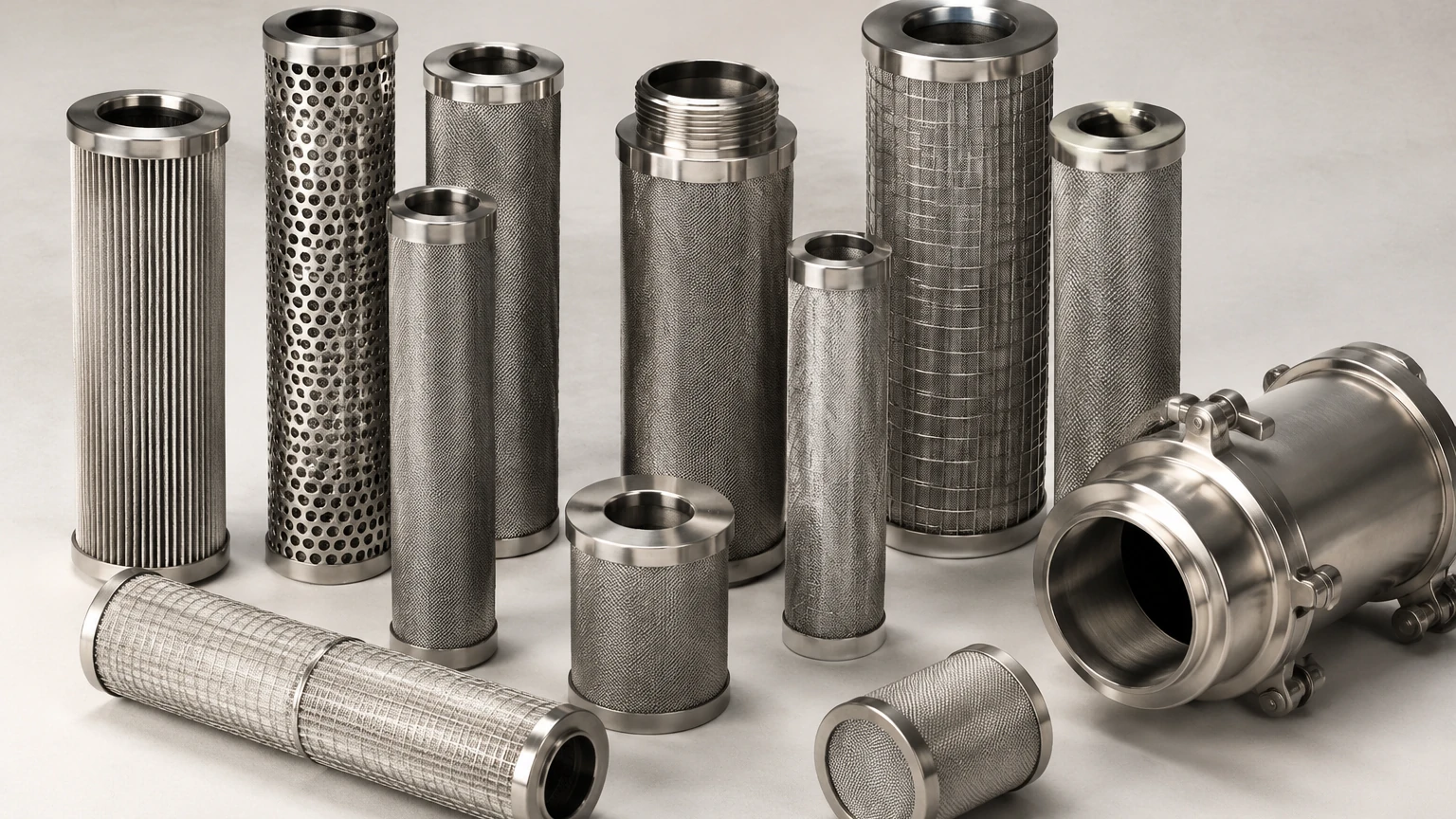
While the Cuno filter catalog offers excellent general-purpose solutions, demanding industrial environments often require the durability of metal. Stainless steel wire mesh and sintered metal fiber filters provide several advantages over synthetic depth or pleated media.
Durability and Reusability
Unlike disposable cartridges, stainless steel filters manufactured by Kaifil are designed for longevity. They can withstand extreme temperatures (up to 600°C depending on the alloy) and high differential pressures that would collapse a standard polypropylene filter. Furthermore, these filters are cleanable and reusable. Methods such as backwashing, ultrasonic cleaning, or chemical soaking allow the filter to be restored to near-original differential pressure levels, significantly reducing the total cost of ownership.
Precision Engineering
Customization allows for the exact matching of end-cap configurations found in any Cuno filter catalog. This means a facility can upgrade to a stainless steel element without modifying their existing filter housings. Whether the application requires 304, 316L, or specialized alloys like Hastelloy, custom manufacturing ensures that the filter is perfectly suited to the chemical environment.
How to Cross-Reference Filter Specifications
When transitioning from a catalog part to a custom or alternative filter, precision in specification is paramount. Engineers should document the following data points from their current Cuno filter catalog:
* Dimensions: Exact length (usually in increments of 9.75", 10", 20", 30", or 40") and outside/inside diameters.
* End-Cap Style: Identify if it is a Code 7 (226 O-rings with locking tabs), Code 3 (222 O-rings), or a standard flat gasket DOE.
* Micron Rating and Efficiency: Determine if the current filter is nominal or absolute and what the specific Beta ratio requirement is.
* Operating Conditions: Record the normal operating temperature, maximum surge pressure, and the chemical composition of the fluid.
By providing these specifications to a specialist manufacturer like Kaifil, engineers can receive a drop-in replacement that offers superior mechanical strength and filtration precision.
Optimizing Total Cost of Ownership (TCO)
In a B2B procurement context, the purchase price of a filter is only one component of the Total Cost of Ownership. When evaluating options in a Cuno filter catalog versus custom stainless steel solutions, one must consider:
* Change-out Frequency: How often does the process stop for filter replacement? Labor costs and downtime often exceed the cost of the filter itself.
* Disposal Costs: Hazardous waste disposal fees for contaminated synthetic filters can be substantial.
* Product Loss: Filters with high hold-up volume or those that require frequent venting can lead to significant loss of expensive process fluids.
Stainless steel filtration systems, while requiring a higher initial investment, often pay for themselves within 12 to 18 months through reduced waste and eliminated replacement costs. For engineers tasked with sustainability goals, moving away from single-use plastics found in standard catalogs is a high-impact strategy.
Conclusion: Making Informed Filtration Decisions
The Cuno filter catalog remains an essential tool for identifying baseline filtration requirements and understanding the diversity of available media. However, as industrial processes become more complex and the drive for operational efficiency intensifies, engineers must evaluate whether standard catalog items are truly the best fit for their specific needs.
By understanding the technical parameters—from micron ratings to material compatibility—and recognizing the limitations of disposable media, technical teams can make better strategic decisions. Whether you are looking to replace a legacy part or optimize a new process, considering the transition to high-performance, custom stainless steel filtration is a proven method for enhancing reliability. For detailed technical support and to review our range of custom metal filtration components, we invite you to visit our Main Page and consult with our engineering team. We specialize in turning complex filtration challenges into durable, cost-effective industrial solutions.
