


Filter Mesh Size Chart
In industrial filtration, precision is the difference between operational efficiency and costly equipment failure. For engineers and procurement specialists, the filter mesh size chart is an indispensable technical reference. It translates the abstract concept of "mesh count" into tangible measurements like microns, millimeters, and inches. Understanding these relationships is critical when specifying stainless steel wire mesh filters for applications ranging from chemical processing to hydraulic systems.
At its core, a filter mesh size chart provides the necessary data to bridge the gap between weave density and filtration performance. This guide examines how to interpret these charts, the engineering variables that influence selection, and the practical considerations required to optimize filtration systems.
Understanding Mesh Count and Aperture
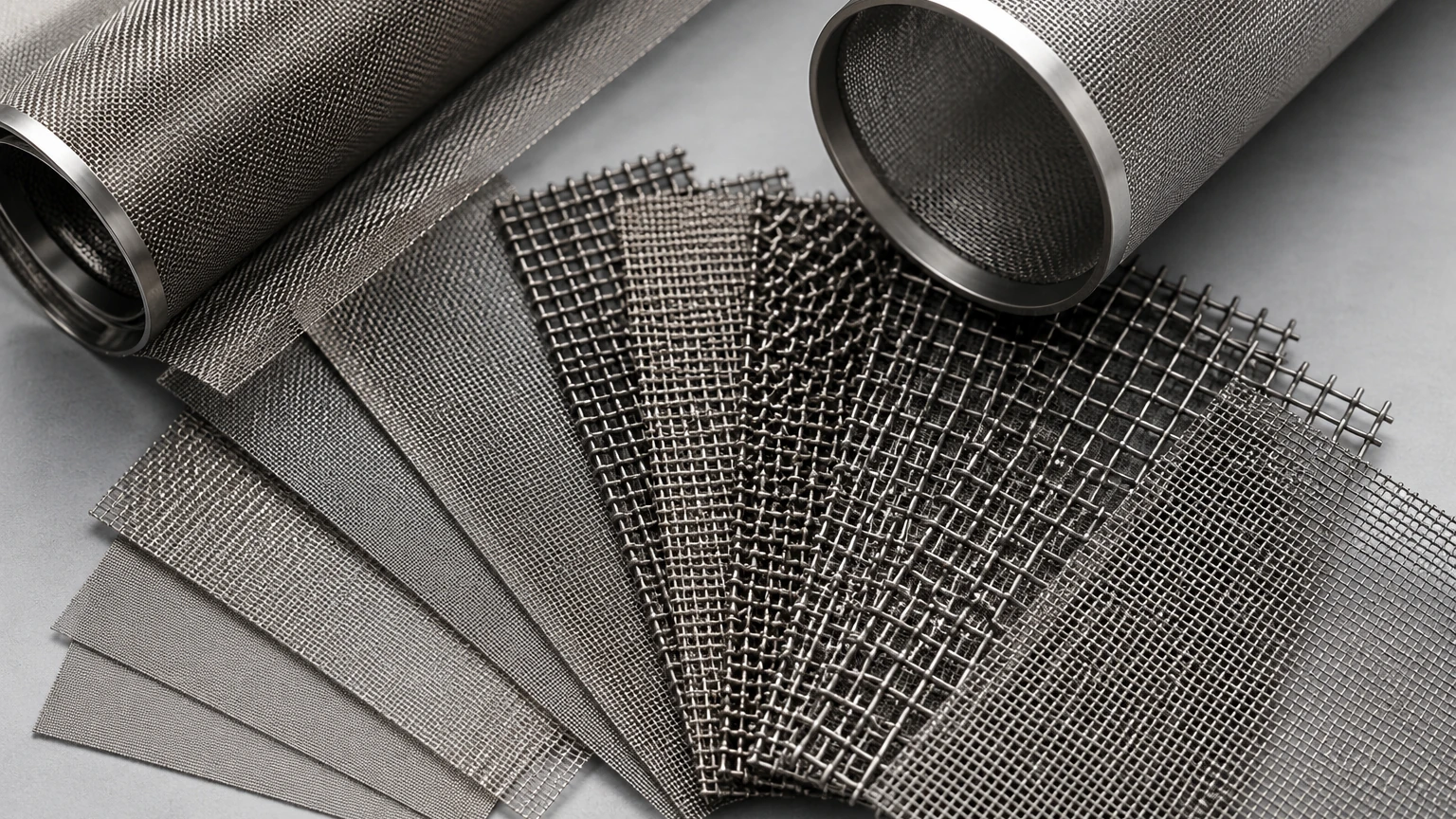
The term "mesh" refers to the number of openings per linear inch of the wire cloth, measured from the center of one wire to the center of the next. For example, a 20-mesh screen has 20 openings per linear inch in both directions. However, the mesh count alone does not define the filtration capability. The second critical variable is the wire diameter.
The actual space between the wires—where the fluid or gas passes through—is known as the aperture or opening size. This is typically measured in microns (μm) or millimeters (mm). A filter mesh size chart allows users to see how different combinations of mesh count and wire diameter result in specific aperture sizes.
It is important to note an inverse relationship: as the mesh count increases, the size of the openings decreases. A 400-mesh filter provides much finer filtration than a 40-mesh filter. However, because the wires take up physical space, a higher mesh count often results in a lower percentage of open area, which directly impacts flow rates and pressure drop.
Standard Filter Mesh Size Chart Reference
While specific manufacturing tolerances may vary, the following table represents the standard conversion values used in the industrial filtration industry. This data helps technical teams determine which mesh count corresponds to the particle retention requirements of their specific process.
| Mesh Count | Aperture (Inches) | Aperture (Microns/μm) | Aperture (Millimeters) |
| :— | :— | :— | :— |
| 10 | 0.0787 | 2000 | 2.000 |
| 20 | 0.0331 | 841 | 0.841 |
| 40 | 0.0165 | 420 | 0.420 |
| 60 | 0.0098 | 250 | 0.250 |
| 80 | 0.0070 | 177 | 0.177 |
| 100 | 0.0059 | 149 | 0.149 |
| 150 | 0.0041 | 104 | 0.104 |
| 200 | 0.0029 | 74 | 0.074 |
| 325 | 0.0017 | 44 | 0.044 |
| 400 | 0.0015 | 37 | 0.037 |
When reviewing a filter mesh size chart, engineers must also consider the "Percentage of Open Area" (POA). This is calculated using the formula:
POA = (Aperture / (Aperture + Wire Diameter))² × 100
A higher POA generally indicates a higher flow capacity and a lower initial pressure drop, but it may also mean the filter is less structurally robust if the wire diameter is too thin for the operating pressure.
The Role of Micron Ratings: Nominal vs. Absolute
When using a filter mesh size chart, it is common to see values expressed in microns. However, in industrial specifications, it is vital to distinguish between nominal and absolute micron ratings.
1. Nominal Micron Rating: This is an indicative value representing the filter's ability to retain the majority of particles of a specific size (usually 60% to 90%). Because wire mesh has fixed, geometric openings, nominal ratings are often used for standard square weaves.
2. Absolute Micron Rating: This refers to the diameter of the largest hard spherical particle that will pass through the filter under specified test conditions. This is a critical metric for high-precision applications, such as pharmaceutical processing or aerospace hydraulics, where even a single oversized particle could cause system failure.
For complex weaves, such as Dutch Weave or Twilled Dutch Weave, the aperture is not a simple square. These weaves create a tortuous path for the fluid, allowing for much finer filtration (down to 1–5 microns) than standard square mesh. In these cases, the filter mesh size chart will focus more on the micron rating than the physical mesh count.
Engineering Considerations for Material Selection
Selecting the correct mesh size from a chart is only the first step. The material of construction determines the filter’s longevity and compatibility with the process media. Stainless steel is the industry standard due to its mechanical strength and resistance to environmental stressors.
* AISI 304 Stainless Steel: The most common grade, offering good corrosion resistance and affordability. It is suitable for water filtration, food processing, and general industrial use.
* AISI 316/316L Stainless Steel: Contains molybdenum, which provides superior resistance to chlorides and acids. This is the preferred choice for marine environments, chemical processing, and pharmaceutical applications.
* High-Temperature Alloys: For applications involving extreme heat, such as exhaust gas filtration or high-temperature chemical reactions, specialized alloys like Inconel or Hastelloy may be required to prevent oxidation and maintain structural integrity.
Common Risks in Mesh Selection
Choosing a filter based solely on the filter mesh size chart without considering the broader system dynamics can lead to several operational risks:
1. Excessive Pressure Drop (Delta P)
If the mesh is too fine for the required flow rate, the initial pressure drop will be high. This forces pumps to work harder, increasing energy consumption and potentially leading to pump cavitation or filter element collapse.
2. Rapid Clogging and Blinding
"Blinding" occurs when particles that are nearly the same size as the mesh openings become lodged in the wires, effectively sealing the filter. If the mesh size is selected too close to the average particle size of the contaminant, the service life between cleaning cycles will be significantly shortened.
3. Structural Failure
In high-pressure hydraulic systems, the mesh must be able to withstand the differential pressure as it becomes loaded with contaminants. Often, a single layer of fine mesh is insufficient. Engineers should consider multi-layer sintered mesh or supported filter cartridges to provide the necessary mechanical strength while maintaining fine filtration levels.
Application-Specific Mesh Requirements
Different industries have standardized on certain mesh ranges based on historical performance data and regulatory requirements:
* Food and Beverage: Typically requires 40 to 200 mesh for straining juices, oils, and syrups. The focus here is on cleanability and compliance with hygienic standards.
* Chemical Processing: Often utilizes 100 to 400 mesh for catalyst recovery and removing impurities from aggressive chemical streams. Corrosion resistance is paramount.
* Water Treatment: Coarse filtration (10 to 60 mesh) is used for intake screens, while finer mesh (200+ mesh) is used for secondary treatment and protecting sensitive membranes.
* Hydraulics: Precision metal filters are used to protect valves and actuators from wear particles, often requiring absolute ratings in the 5 to 40-micron range.
Technical Verification Before Purchase
Before finalizing a purchase based on a filter mesh size chart, technical teams should confirm the following details with their manufacturer:
1. Effective Filtration Area: Ensure the total surface area of the filter cartridge is sufficient to handle the design flow rate at the specified mesh size.
2. Cleaning Methods: Determine if the mesh is intended for ultrasonic cleaning, backwashing, or manual chemical cleaning. Stainless steel mesh is highly reusable, but the weave type influences how easily it releases trapped particles.
3. Housing Compatibility: Verify that the filter element dimensions and seal types (O-rings or gaskets) are compatible with existing housings to prevent bypass.
4. Customization Requirements: Standard charts cover stock items, but many industrial applications require custom wire diameters or non-standard weave patterns to balance strength and permeability.
For those seeking specific technical data or customized filtration components, you can Review product options and application support on the Kaifil Main Page to ensure your selection aligns with your engineering requirements.
Summary
A filter mesh size chart is more than a conversion table; it is a fundamental tool for engineering precision into industrial processes. By understanding the relationship between mesh count, aperture size, and wire diameter, professionals can select filtration solutions that maximize throughput while protecting downstream equipment. Whether dealing with high-pressure hydraulics or sensitive chemical reactions, the correct interpretation of mesh specifications ensures long-term reliability and optimized total cost of ownership.
