


Water Well Screens Stainless Steel
In industrial water extraction and groundwater management, the integrity of the intake system determines the long-term viability of the entire well infrastructure. Water well screens stainless steel components serve as the critical interface between the aquifer and the pumping system. Their primary function is to permit the entry of water into the well while excluding sand, silt, and formation materials that could otherwise damage pumps, clog downstream filtration systems, or lead to well failure. For engineers and procurement teams, selecting the appropriate screen involves a complex evaluation of hydrogeological conditions, chemical compatibility, and mechanical load requirements.
As a specialized manufacturer of stainless steel filtration solutions, Kaifil provides precision-engineered components designed to withstand the rigors of industrial water treatment and extraction. Understanding the technical nuances of these screens is essential for optimizing well performance and minimizing the total cost of ownership.
The Role of Material Science in Well Longevity
The choice of material for a well screen is perhaps the most significant factor in determining its service life. While carbon steel or thermoplastic alternatives may offer lower initial capital expenditure, water well screens stainless steel offer superior resistance to the corrosive environments often found in deep-well applications.
Grade 304 and 304L Stainless Steel
Grade 304 is the standard choice for many industrial water wells. It provides excellent corrosion resistance in most freshwater environments. However, in applications where welding is required during installation or customization, 304L (low carbon) is often preferred to prevent sensitization and intergranular corrosion in the heat-affected zones of the welds.
Grade 316L Stainless Steel
For environments with higher chloride concentrations or slightly acidic groundwater, Grade 316L is the industry benchmark. The addition of molybdenum enhances pitting resistance, making it suitable for coastal aquifers or industrial process water with high mineral content. In the context of the Main Page of industrial filtration, 316L is frequently specified for its durability in aggressive chemical cleaning cycles.
Specialized Alloys
In extreme cases, such as geothermal wells or high-salinity brine extraction, duplex stainless steels or high-nickel alloys may be necessary. These materials offer higher yield strength and exceptional resistance to stress corrosion cracking, ensuring that the screen does not collapse under extreme geological pressure or succumb to rapid chemical degradation.
Engineering the Wedge Wire Profile
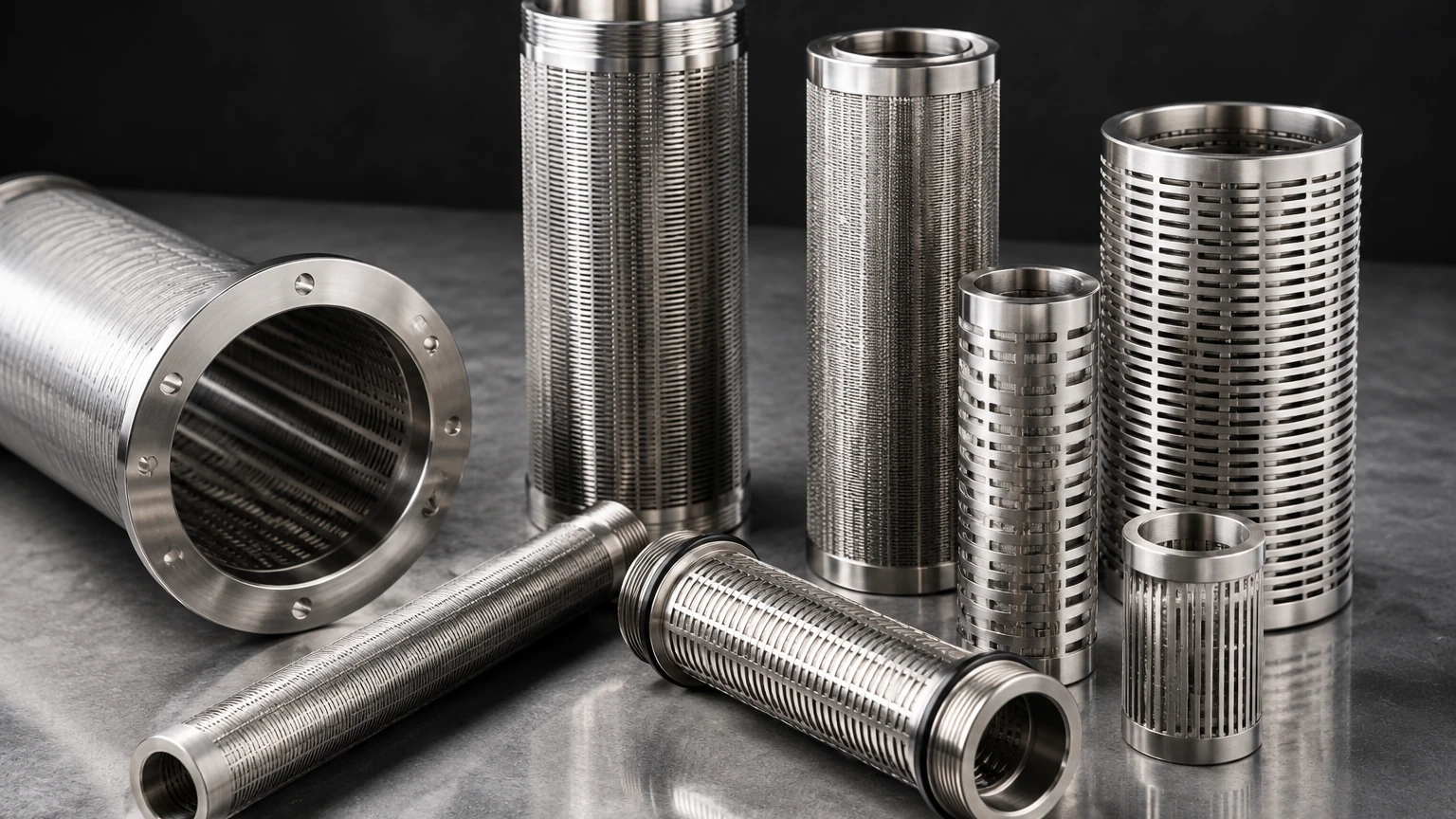
The most efficient design for water well screens stainless steel is the continuous-slot wedge wire (or V-wire) configuration. Unlike perforated pipes or bridge-slot screens, wedge wire screens are manufactured by wrapping a cold-rolled triangular wire around a circular array of internal support rods.
The V-Shape Advantage
The V-shaped profile of the wire creates an inward-opening slot. This design ensures that any particle small enough to pass through the outer width of the slot will continue through without becoming wedged. This "self-cleaning" property is vital for maintaining consistent flow rates and preventing the gradual blinding of the screen surface.
Continuous Slot Design
The continuous slot provides a significantly higher percentage of open area compared to other screen types. This high open area minimizes the entrance velocity of the water, which in turn reduces the pressure drop (drawdown) and limits the transport of fine sands into the wellbore. By maintaining laminar flow at the intake, engineers can significantly extend the life of the submersible pump and reduce energy consumption.
Technical Selection Criteria for Engineers
When specifying water well screens stainless steel, several technical parameters must be calculated based on the specific site's sieve analysis and hydraulic requirements.
Slot Size Determination
The slot size is determined by the grain size distribution of the aquifer material or the gravel pack. Engineers typically use a "uniformity coefficient" to decide whether a naturally developed well or a filter-packed well is appropriate. For a filter-packed well, the screen slot is usually sized to retain 90% of the filter pack material. Precision in manufacturing is critical here; even a deviation of a few microns can lead to persistent sand production or premature clogging.
Collapse Strength and Depth Considerations
As wells go deeper, the hydrostatic and lithostatic pressures increase. The screen must be engineered to resist collapse. This is achieved by adjusting the diameter and spacing of the internal support rods and the gauge of the surface wire. Kaifil’s engineering approach involves calculating these mechanical loads to ensure that the stainless steel components maintain their structural integrity throughout the well's operational life.
Entrance Velocity Limits
A common industry standard is to limit the entrance velocity to 0.1 feet per second (0.03 meters per second). Exceeding this velocity can lead to turbulent flow, which increases the rate of corrosion and encrustation and encourages the migration of fine sediments. High open-area stainless steel screens are the most effective tool for keeping velocities within these safe limits.
Customization and OEM Capabilities
Industrial applications rarely follow a one-size-fits-all approach. Customization is often required to integrate the well screen into existing infrastructure or to meet specific flow demands.
Kaifil specializes in the production of custom stainless steel filtration components, offering flexibility in:
- Diameter and Length: Manufacturing screens to match specific casing sizes and aquifer thicknesses.
- End Fittings: Providing various connection types, including NPT/BSPT threads, weld rings, or specialized flanges to ensure a secure and leak-proof installation.
- Reinforced Structures: For high-pressure or high-depth applications, pipe-base screens—where the wedge wire is wrapped around a perforated base pipe—provide the ultimate combination of high open area and extreme mechanical strength.
These customized solutions allow engineering teams to address unique challenges in chemical processing, food and beverage production, and pharmaceutical water systems where purity and reliability are non-negotiable.
Maintenance, Fouling, and Replacement Cycles
Even the highest quality water well screens stainless steel are subject to the realities of groundwater chemistry. Over time, screens may experience mineral encrustation (such as calcium carbonate or iron deposits) or biofouling (iron-reducing bacteria).
Chemical Rehabilitation
One of the primary advantages of stainless steel over plastic or carbon steel is its ability to withstand aggressive chemical rehabilitation. Acid treatment (using hydrochloric or sulfamic acid) can be used to dissolve mineral scales without damaging the screen's structural integrity. Similarly, chlorine treatments used to combat biofouling are safely managed by high-grade stainless steel.
Physical Cleaning
Methods such as high-pressure jetting, surging, and ultrasonic cleaning are more effective on stainless steel screens. The rigid nature of the metal allows for more energetic cleaning pulses to penetrate the gravel pack and restore the well's specific capacity.
Replacement Indicators
A decline in specific capacity (yield per unit of drawdown) or an increase in sand production are primary indicators that a screen may be failing or severely fouled. By monitoring these metrics, facility managers can plan for maintenance or replacement before a catastrophic failure occurs. The durability of stainless steel typically extends the interval between these major interventions, leading to lower long-term operational costs.
Total Cost of Ownership (TCO) Analysis
When evaluating water well screens stainless steel, it is essential to look beyond the initial purchase price. The TCO includes installation costs, energy consumption related to pump efficiency, maintenance expenses, and the projected lifespan of the well.
1. Energy Savings: A higher open area reduces drawdown, meaning the pump does not have to work as hard to lift water to the surface. Over 10 to 20 years, the energy savings often exceed the initial cost of the screen.
2. Pump Protection: By effectively excluding sand, stainless steel screens prevent abrasive wear on pump impellers and seals, reducing the frequency of expensive pump repairs.
3. Well Longevity: A well-designed stainless steel screen can last 30 to 50 years, whereas cheaper materials may fail in 10 to 15 years due to corrosion or collapse. The cost of drilling a new well far outweighs the premium paid for high-quality stainless steel components.
Conclusion
Selecting the right water well screens stainless steel is a critical decision that impacts the efficiency and lifespan of industrial water systems. By focusing on material grade, wedge wire geometry, and precise engineering specifications, professionals can ensure reliable water access even in demanding environments. For those seeking specialized guidance and high-performance filtration components, reviewing product options and application support at the Main Page of Kaifil offers a pathway to optimized industrial filtration solutions.
Whether the application involves municipal water supply, industrial cooling, or complex chemical processing, the technical superiority of stainless steel provides the necessary foundation for sustainable groundwater management. Engineers should confirm site-specific sand analysis and chemical profiles before finalizing screen designs to ensure the selected component meets the exact needs of the aquifer.
