


Cip Piping
In industrial processing environments, particularly within the pharmaceutical, food and beverage, and chemical sectors, hygiene and system integrity are paramount. Clean-in-Place (CIP) technology has revolutionized these industries by allowing for the thorough cleaning of internal surfaces without the need for extensive disassembly. Central to this process is the design and implementation of cip piping systems. These systems are engineered to circulate cleaning solutions, rinses, and sanitizers through the same pathways as the product, ensuring that every contact surface meets stringent cleanliness standards. For engineers and facility managers, understanding the technical nuances of CIP piping and the integration of high-performance filtration components is essential for maintaining operational efficiency and product safety.
The Engineering Logic of CIP Piping Systems
CIP piping is not merely a conduit for fluids; it is a precisely engineered circuit designed to facilitate mechanical, chemical, and thermal action against residues. The effectiveness of a CIP cycle depends on the "Sinner’s Circle" parameters: time, temperature, chemical concentration, and mechanical force (turbulence). From a piping perspective, turbulence is the most critical factor controlled by design.
To achieve effective soil removal, the cleaning fluid must reach a Reynolds number ($Re$) of at least 3,000, though most industrial standards recommend $Re > 10,000$ to ensure fully developed turbulent flow. This turbulence creates the necessary shear stress to dislodge biofilms and product buildup from pipe walls. Consequently, the diameter of the cip piping must be carefully calculated relative to the pump capacity to maintain a minimum flow velocity, typically between 1.5 to 2.1 meters per second (5 to 7 feet per second).
Furthermore, the physical layout of the piping must eliminate "dead legs"—areas where the fluid can stagnate. Current hygienic standards, such as those provided by 3-A or EHEDG, generally dictate that a dead leg's length should not exceed two times its diameter ($2D$), though $1.5D$ is preferred in high-purity pharmaceutical applications. Proper pitch is also required to ensure the system is self-draining, preventing the pooling of chemicals or rinse water which could lead to microbial growth or cross-contamination.
Material Selection and Surface Integrity
In the context of cip piping, material selection is dominated by stainless steel due to its corrosion resistance and ability to withstand extreme pH shifts. While 304L stainless steel may suffice for some applications, 316L is the industry standard for CIP environments. The addition of molybdenum in 316L provides superior resistance to pitting and crevice corrosion, particularly when exposed to the chlorides often found in sanitizing agents or the acidic cycles used to remove mineral scale.
Beyond the alloy itself, the surface finish of the internal piping and filtration components is a critical technical specification. Surface roughness is measured in Ra (Roughness Average). For most food-grade applications, an Ra of 0.8 μm (32 μ-in) is required. In pharmaceutical settings, this may be tightened to 0.4 μm or lower, often achieved through electropolishing. A smoother surface reduces the surface area available for soil attachment and enhances the effectiveness of the chemical cleaning phase, ultimately reducing the duration and cost of the CIP cycle.
The Role of Filtration in CIP Circuits
Filtration components are integral to the longevity and efficacy of a CIP system. Within a cip piping network, filters serve two primary functions: protecting the process equipment from incoming debris and recovering cleaning solutions for reuse.
1. Supply-Side Filtration: Before cleaning chemicals enter the process loop, they must be filtered to ensure that no particulate matter from the chemical tanks or water supply is introduced into the sterile process environment. High-strength stainless steel wire mesh filters are preferred here for their durability and ability to withstand high-pressure pulses.
2. Return-Line Filtration: As the cleaning solution returns from the process equipment, it often carries dislodged solids, scale, or product remnants. If the system is designed for "single-use" CIP, these are flushed to the drain. However, in "recovery" CIP systems, the solution is filtered and returned to a holding tank. Precision metal filter cartridges are essential in this stage to remove contaminants that could otherwise clog spray balls or damage heat exchangers in subsequent cycles.
Customization of these filtration elements allows engineers to match the filtration rating (micron size) to the specific soil profile of the production run, ensuring optimal protection without causing excessive pressure drops that could impede the required flow velocity.
Integrating Custom Metal Filters into CIP Layouts
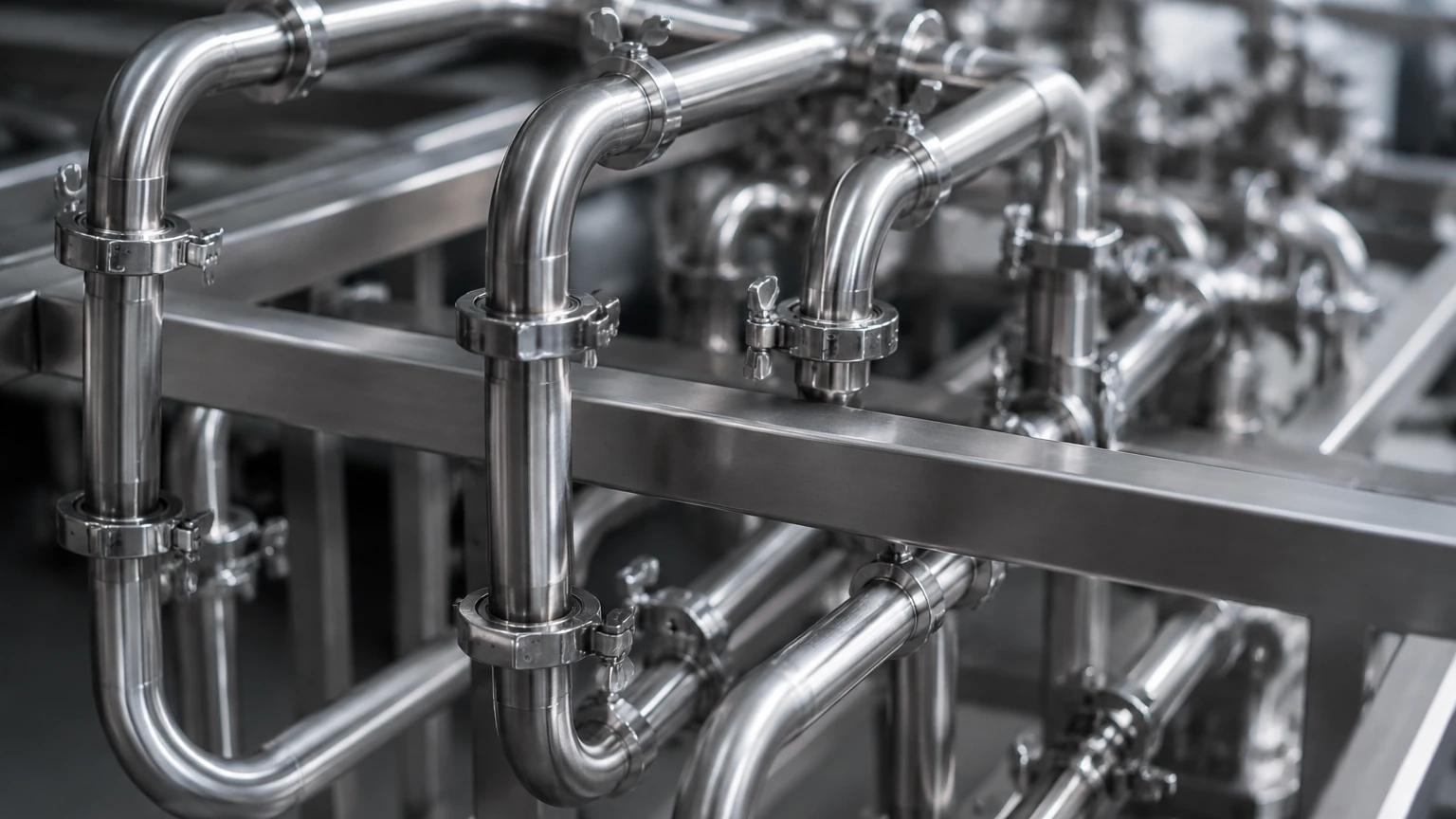
When designing or upgrading cip piping, the selection of filter housings and elements must align with hygienic design principles. Standard industrial filters often feature threaded connections or internal crevices that are difficult to clean. In contrast, hygienic filter assemblies utilize Tri-Clamp or other sanitary fittings that provide smooth, crevice-free transitions.
Custom stainless steel filtration solutions, such as those provided by Kaifil, are designed to be cleaned in place alongside the piping. Key considerations for these components include:
* Structural Integrity: The filter element must withstand the differential pressure ($ ΔP $) generated during the high-velocity CIP flow. Sintered mesh or reinforced wire mesh designs prevent media migration and deformation.
* Chemical Compatibility: Beyond the stainless steel housing, seals and gaskets (often EPDM, PTFE, or Viton) must be compatible with the specific concentrations of sodium hydroxide (caustic) and nitric or phosphoric acid used in the CIP cycles.
* Accessibility for Inspection: While the goal is cleaning in place, the system must allow for periodic validation. Filter housings should be positioned within the cip piping layout to allow for easy removal of the element for visual inspection or gravimetric analysis to verify cleaning efficacy.
Common Risks in CIP Piping Operations
Despite advanced designs, several risks can compromise the performance of a CIP system. Identifying these early is crucial for maintaining B2B operational standards.
Biofilm Accumulation
If flow velocities drop or if there are scratches in the stainless steel surface, biofilms can form. These are complex communities of microorganisms that are highly resistant to chemical cleaning. In cip piping, biofilms often hide in gaskets or around poorly designed filter supports. Regular borescope inspections and the use of high-quality, precision-manufactured filtration components can mitigate this risk.
Thermal Shock and Pressure Surges
CIP cycles often involve rapid transitions from ambient temperatures to 80°C (176°F) or higher. This thermal cycling can cause expansion and contraction in the piping. If the piping supports are too rigid, or if the filter elements are not designed for thermal expansion, mechanical failure can occur. Furthermore, the rapid closing of valves can cause water hammer, potentially bursting filter mesh or damaging sensitive sensors within the loop.
Chemical Carryover
Inadequate rinsing between the caustic and acid phases, or after the final sanitization, can lead to chemical carryover. This not only risks contaminating the next product batch but can also lead to accelerated corrosion of the cip piping. Conductivity sensors are typically used to monitor the rinse water, but the design of the filter housing must ensure that no "pockets" of chemicals remain trapped.
Maintenance and Replacement Cycles
A robust maintenance strategy for CIP systems focuses on both the piping integrity and the condition of the filtration media. Unlike disposable plastic filters, stainless steel filter cartridges used in CIP systems are designed for long-term use, but they are not infinite.
* Monitoring Pressure Differential: The most reliable indicator of filter health is the $ ΔP $ across the element. A gradual increase in baseline pressure after cleaning cycles suggests that the mesh is becoming "blinded" by stubborn particulates that the CIP cycle cannot remove.
* Ultrasonic Cleaning: When standard CIP fails to restore the original pressure drop, stainless steel elements can often be removed and subjected to ultrasonic cleaning to dislodge deeply embedded particles.
* Replacement Indicators: Elements should be replaced if there is any sign of mechanical deformation, broken wires in the mesh, or if the $ ΔP $ remains high after offline cleaning. For the piping itself, periodic thickness testing (ultrasonic testing) ensures that chemical erosion has not compromised the wall thickness.
Technical Procurement: What Engineers Should Confirm
Before finalizing a purchase or design for cip piping filtration components, technical teams should confirm several data points to ensure the solution is fit for purpose. This goes beyond simple dimensions and enters the realm of application-specific engineering.
First, confirm the maximum operating pressure and temperature, including the peak conditions during the CIP cycle, not just the production run. Second, define the required filtration accuracy. A filter that is too fine will clog prematurely during the CIP return, while one that is too coarse will fail to protect downstream spray balls. Third, ensure that all materials of construction, including weld fillers and elastomers, are certified for the specific industry (e.g., FDA compliance for food or USP Class VI for pharmaceuticals).
For those seeking to optimize their industrial filtration performance within these demanding environments, reviewing specialized technical resources is the next logical step. You can Review product options and application support on our Main Page to understand how custom-engineered stainless steel solutions can be integrated into your existing or new CIP infrastructure.
Conclusion
Effective cip piping is the backbone of modern hygienic processing. By combining sound fluid dynamic principles with high-quality materials and precision filtration, manufacturers can ensure a repeatable, verifiable cleaning process. This not only protects the consumer but also extends the life of the processing equipment and reduces the environmental footprint of the facility by optimizing chemical and water usage. As processing demands increase, the integration of customized, durable filtration components will remain a cornerstone of successful CIP strategy, providing the reliability required in high-stakes industrial applications.
