


Sintered Porous Stainless Steel Filters
In the landscape of industrial filtration, the demand for components that can withstand extreme temperatures, corrosive environments, and high mechanical stress has led to the widespread adoption of sintered porous stainless steel filters. Unlike traditional fabric or paper-based media, these filters are engineered through a sophisticated powder metallurgy process, resulting in a robust, rigid structure that offers precise filtration performance and exceptional durability. For engineers and procurement professionals, understanding the technical nuances of these components is essential for optimizing system efficiency and reducing the total cost of ownership.
As a specialized manufacturer, Kaifil focuses on delivering high-performance filtration solutions tailored to demanding industrial requirements. By examining the material properties, manufacturing variables, and application-specific selection criteria, technical teams can better navigate the complexities of modern filtration systems. For more information on customized designs and technical support, you can visit our Main Page to explore our full range of capabilities.
Understanding the Sintering Process and Material Composition
Sintered porous stainless steel filters are produced by taking spherical or irregular stainless steel powders and subjecting them to a controlled heating process in a sintering furnace. This process occurs at temperatures below the melting point of the metal, allowing the powder particles to bond at their contact points through molecular diffusion. The result is a porous metal matrix that maintains the inherent properties of the base alloy while providing a defined network of interconnected pores.
Material Selection: 316L vs. 304 Stainless Steel
The choice of alloy is the first critical decision in the engineering process. While several grades are available, 316L stainless steel is the industry standard for most sintered porous stainless steel filters. The "L" denotes low carbon content, which is vital for preventing carbide precipitation during the sintering process and subsequent welding, thereby maintaining superior corrosion resistance.
* 316L Stainless Steel: Contains molybdenum, which significantly enhances resistance to pitting and crevice corrosion in chloride-rich environments. It is the preferred choice for chemical processing, pharmaceutical manufacturing, and marine applications.
* 304 Stainless Steel: Suitable for less aggressive environments where cost-efficiency is a priority. It offers good oxidation resistance but lacks the specialized corrosion protection of the 316L grade.
Porosity and Pore Size Distribution
The filtration characteristics are determined by the size and shape of the initial powder particles, as well as the compaction pressure and sintering parameters. Porosity typically ranges from 30% to 50%, providing a balance between flow permeability and structural integrity. Engineers must distinguish between "nominal" and "absolute" pore size ratings. In sintered metal media, the tortuous path created by the interconnected pores ensures high efficiency in capturing particles even smaller than the rated pore size through depth filtration mechanisms.
Key Performance Metrics for Industrial Applications
When evaluating sintered porous stainless steel filters for a specific system, several performance metrics must be analyzed to ensure the component meets the operational demands of the environment.
Thermal and Mechanical Stability
One of the primary advantages of sintered metal is its ability to operate in temperatures where polymer-based filters would fail. Sintered 316L components can typically operate in temperatures up to 450°C (842°F) in oxidizing atmospheres and even higher in reducing environments. Furthermore, the rigid structure of the sintered matrix allows these filters to withstand high differential pressures without deforming. This mechanical strength is critical in high-viscosity liquid filtration and high-pressure gas applications where pressure surges are common.
Permeability and Pressure Drop
Permeability refers to the ability of a fluid to pass through the porous medium. In industrial design, minimizing the initial pressure drop (ΔP) is essential for reducing energy consumption and extending the time between cleaning cycles. The Darcy’s Law for flow through porous media is often used by engineers to calculate the expected pressure drop based on fluid viscosity, flow velocity, and the thickness of the filter media. Sintered porous stainless steel filters are engineered to provide maximum surface area and optimized pore structures to keep ΔP within acceptable limits while maintaining strict filtration accuracy.
Chemical Compatibility
Beyond simple corrosion, filters must be compatible with the specific cleaning agents and process fluids used in the industry. Sintered stainless steel is inert to a wide range of chemicals, including most organic solvents, oils, and weak acids. In the pharmaceutical and food sectors, this inertness ensures that the filter does not leach contaminants into the product stream, maintaining high levels of purity.
Selection Criteria for Engineers and Purchasing Teams
Choosing the right filter involves more than just matching a micron rating. Engineers must take a holistic view of the process to ensure the selected component provides reliable service over its intended lifespan.
1. Fluid Characteristics: Identify the viscosity, density, and chemical nature of the fluid. High-viscosity fluids require larger surface areas or coarser pore sizes to maintain flow rates.
2. Contaminant Profile: Understand the type of solids being removed. Are they hard, abrasive particles or soft, deformable gels? This dictates whether a surface filtration or depth filtration approach is more appropriate.
3. Flow Rate Requirements: Determine the maximum and minimum flow rates. Oversizing a filter can lead to unnecessary costs, while undersizing will result in frequent clogging and high energy consumption.
4. Operating Environment: Consider the frequency of thermal cycling and the potential for mechanical vibration, both of which can impact the long-term integrity of the filter housing and the sintered element.
For those seeking technical guidance on specific application requirements, reviewing the options on our Main Page can provide insights into how different configurations perform under varied industrial loads.
Customization and OEM Solutions in Filtration Design
Industrial systems are rarely "one size fits all." Standard filter cartridges may not fit specialized housings or meet unique flow patterns. This is where the value of a specialized manufacturer like Kaifil becomes apparent. Customization allows for the optimization of the filter’s geometry and performance characteristics to match the exact needs of the equipment.
Custom Geometries
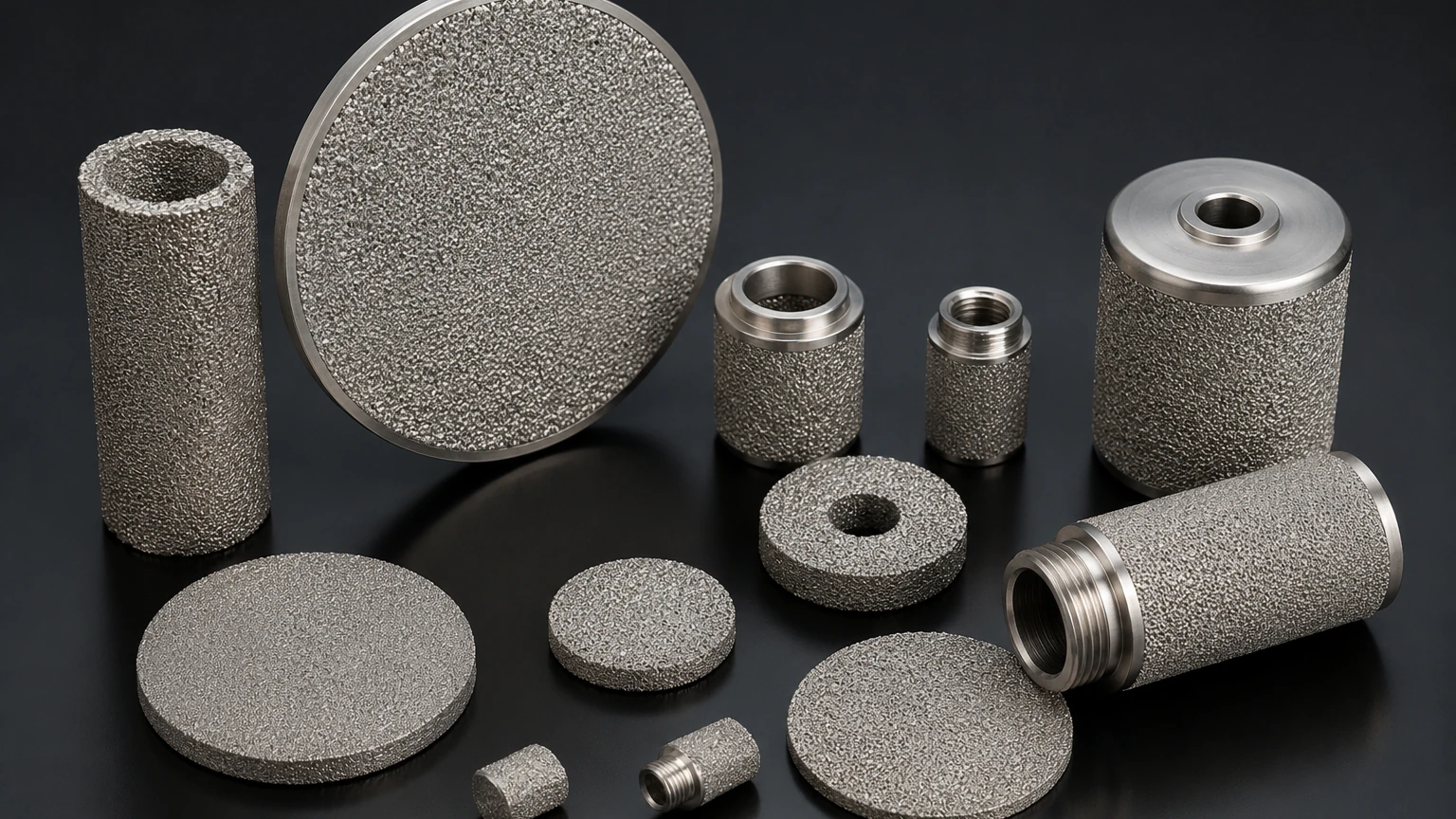
Sintered porous stainless steel filters can be manufactured in a variety of shapes, including:
* Cylindrical Cartridges: Common for liquid and gas stream filtration.
* Porous Discs and Plates: Often used in fluidization beds or as flame arrestors.
* Conical and Cup Shapes: Utilized in specialized sensor protection and localized filtration.
* Custom Manifolds: Integrated units that combine multiple filtration stages into a single component.
Engineering Collaboration
Working with an OEM partner allows engineering teams to specify not just the dimensions, but also the specific permeability and mechanical reinforcement needed. For instance, in high-pressure hydraulic systems, a sintered filter may be reinforced with a stainless steel mesh overlay to provide additional burst strength without compromising the fine filtration capabilities of the sintered core.
Maintenance, Cleaning, and Life Cycle Management
A significant factor in the total cost of ownership for industrial filters is the ability to clean and reuse the media. Unlike disposable filters, sintered porous stainless steel filters are designed for long-term service through multiple cleaning cycles.
Cleaning Methodologies
Depending on the nature of the contaminants, several cleaning methods can be employed:
* Backwashing/Backpulsing: Reversing the flow of the fluid to dislodge particles trapped on the surface or within the pores. This is often done in-situ without dismantling the system.
* Ultrasonic Cleaning: Using high-frequency sound waves in a cleaning solvent to break down and remove fine particles from deep within the porous matrix.
* Chemical Cleaning: Utilizing acids, alkalis, or specialized solvents to dissolve organic or inorganic deposits that cannot be removed mechanically.
* Thermal Burn-off: Heating the filter in a controlled atmosphere to carbonize and remove organic contaminants.
Determining Replacement Cycles
While these filters are highly durable, they are not infinite. Over time, "irreversible fouling" can occur, where particles become permanently lodged in the matrix, leading to a steady increase in the baseline pressure drop. Monitoring the rate of pressure increase after each cleaning cycle allows maintenance teams to predict the end-of-life for the component and schedule replacements before a failure occurs.
Industry-Specific Applications
The versatility of sintered porous stainless steel filters makes them indispensable across a broad spectrum of sectors.
Chemical and Petrochemical Processing
In these environments, filters are exposed to aggressive solvents and high-temperature catalysts. Sintered metal filters are used for catalyst recovery, gas-solid separation, and the filtration of polymer melts. Their ability to maintain structural integrity under high pressure makes them ideal for protecting downstream equipment from particulate damage.
Food and Beverage Industry
Hygiene and cleanability are paramount in food production. Sintered filters are used for steam filtration (culinary steam), carbonation of beverages, and the removal of yeast or bacteria in brewing and bottling processes. The smooth surface finish and lack of fiber migration ensure compliance with stringent safety standards.
Pharmaceutical and Biotechnology
Precision is the defining requirement in pharmaceutical manufacturing. Sintered porous stainless steel filters are used for gas sparging in bioreactors, solvent filtration, and the venting of sterile tanks. The ability to withstand repeated steam-in-place (SIP) and clean-in-place (CIP) cycles is a critical advantage in these applications.
Hydraulic and Pneumatic Systems
In high-performance hydraulic systems, even microscopic particles can cause catastrophic component failure. Sintered metal filters provide the necessary fine filtration to protect valves and actuators while handling the high-pressure pulses inherent in hydraulic machinery.
Conclusion
Sintered porous stainless steel filters represent a pinnacle of filtration engineering, offering a unique combination of precision, strength, and longevity. For industrial operators, the transition from disposable media to sintered metal components often results in improved process stability, reduced waste, and lower long-term costs. By carefully considering material grades, pore structures, and maintenance protocols, engineers can ensure their filtration systems operate at peak efficiency.
As you evaluate your current filtration needs or design new systems, partnering with a manufacturer that understands the complexities of metal filtration is vital. Kaifil provides the technical expertise and manufacturing precision required to develop reliable, custom-engineered solutions for the world's most demanding industries. To begin a technical consultation or to review our standard product specifications, please visit our Main Page and connect with our engineering team.
