


Understanding Woven Wire Mesh Meaning: A Technical Guide for Industrial Filtration
In the context of industrial engineering and procurement, the term woven wire mesh meaning extends far beyond a simple definition of a metal screen. For technical professionals in the chemical, pharmaceutical, and food processing industries, woven wire mesh represents a precision-engineered component designed to facilitate separation, filtration, and structural reinforcement under demanding conditions.
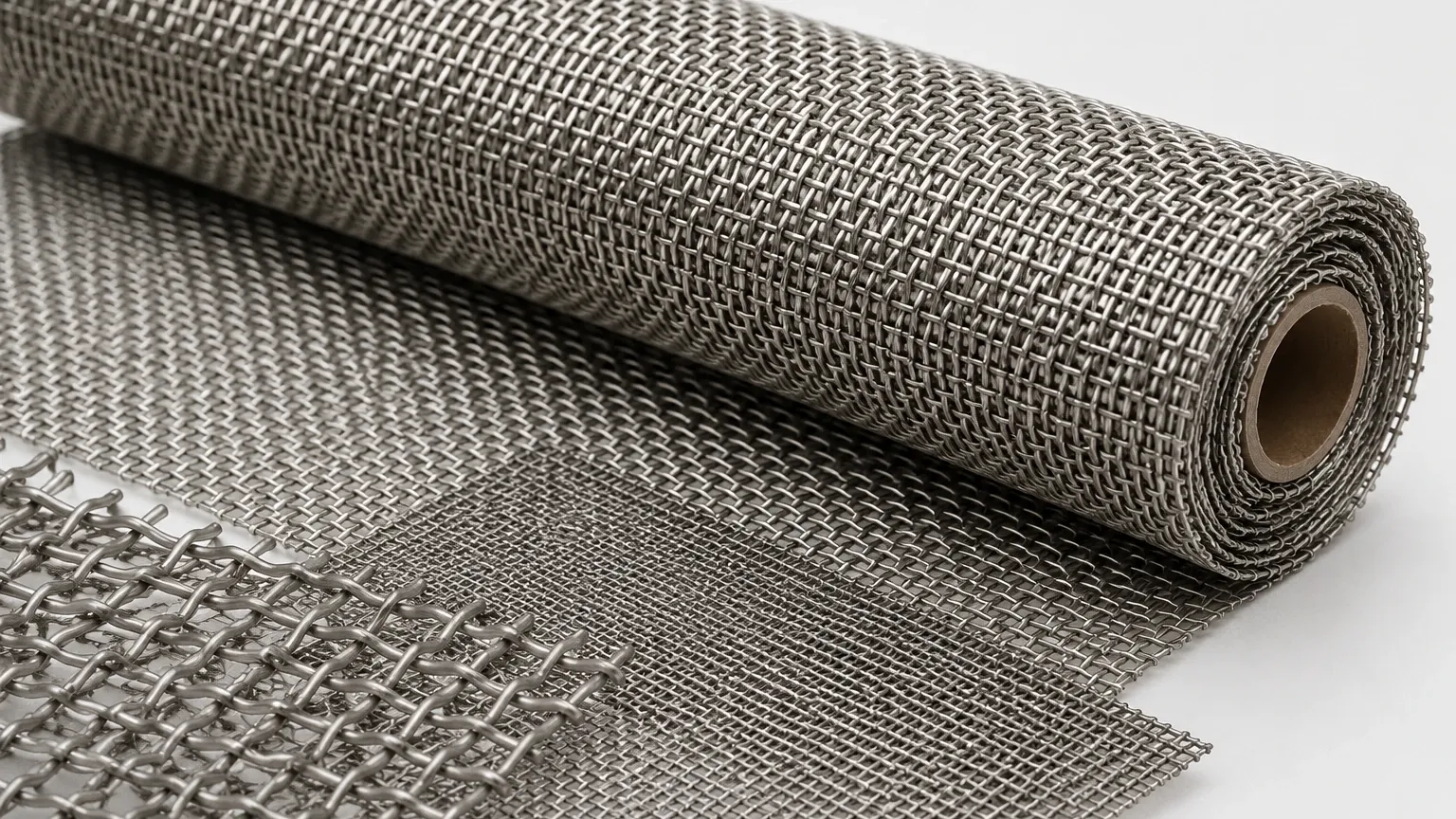
At its core, Woven Wire Mesh is a metallic fabric produced by weaving individual wires on high-precision looms. Unlike welded or expanded metal, woven mesh relies on the mechanical interlocking of wires to maintain its structural integrity and pore size. Understanding the technical nuances of this material—from weave patterns to metallurgical properties—is essential for optimizing filtration efficiency and ensuring the longevity of industrial equipment.
The Technical Definition and Construction of Woven Wire Mesh
To define the technical meaning of woven wire mesh, one must look at the manufacturing process. It is produced similarly to traditional textiles, using a loom that interlaces two sets of wires at right angles.
1. Warp Wires: These are the wires that run lengthwise through the roll, parallel to the direction of the loom's movement.
2. Shute (or Weft) Wires: These are the wires that run across the width of the mesh, interlacing with the warp wires.
The precision of the loom determines the consistency of the apertures (openings). In high-performance industrial applications, even a slight deviation in wire spacing can lead to inconsistent filtration results, bypassing of oversized particles, or premature clogging. For engineers, the "meaning" of a specific mesh specification lies in its ability to provide a predictable and repeatable barrier against contaminants.
Core Specifications: How Engineers Define Mesh Performance
When evaluating woven wire mesh for a project, several critical parameters must be confirmed. These specifications define the functional capacity of the mesh and its suitability for specific flow rates and particle retention targets.
Mesh Count
The mesh count is the number of openings per linear inch (25.4 mm), measured from the center of one wire to the center of the wire one inch away. A higher mesh count indicates a finer mesh with smaller openings. For example, a 100-mesh screen has 100 openings per inch in both directions.
Wire Diameter
This refers to the thickness of the wire before it is woven. Wire diameter is a crucial factor in determining the mechanical strength of the mesh and its resistance to abrasion. However, increasing the wire diameter for a given mesh count will decrease the aperture size and the percentage of open area.
Aperture (Opening Size)
The aperture is the clear distance between two adjacent warp or shute wires. This is perhaps the most critical specification for filtration, as it determines the "micron rating"—the size of the smallest particle the mesh is intended to retain.
Percentage of Open Area
Calculated using the ratio of the total area of the openings to the total area of the mesh, the open area percentage directly impacts the pressure drop across the filter and the flow velocity. In hydraulic and high-flow chemical processes, maximizing open area while maintaining structural integrity is a primary engineering goal.
Weave Patterns and Their Industrial Applications
The method by which wires are interlaced significantly alters the performance characteristics of the mesh. Selecting the correct weave is as important as selecting the material itself.
Plain Weave
This is the most common and straightforward weave pattern. Each shute wire passes alternately over and under each warp wire. Plain weave provides a high degree of precision in aperture size and is ideal for general-purpose filtration and screening. For those seeking standard industrial solutions, Plain, twill and dutch woven wire mesh in SS304/316L — rolls, cut mesh and framed panels. Send mesh count or micron target for a technical quote. provides a reliable baseline for most separation tasks.
Twill Weave
In a twill weave, each shute wire passes over and under two warp wires in a staggered pattern. This allows for the use of heavier wire diameters than a plain weave of the same mesh count. Twill weave is often selected when the mesh needs to withstand higher mechanical loads or when a finer mesh is required that would be impossible to weave in a plain pattern due to wire stiffness.
Dutch Weave (Plain and Twill)
Dutch weaves utilize different wire diameters for the warp and shute. Typically, the warp wires are heavier and spaced further apart, while the shute wires are finer and driven close together. This creates a dense, strong mesh with very small, tortuous paths for the fluid. Dutch weaves are the standard for high-pressure filtration, such as in hydraulic systems and polymer melt filtration, where fine particle retention (down to 5-10 microns) is required without sacrificing the mesh's ability to withstand differential pressure.
Material Selection: Stainless Steel 304 vs. 316L
The "meaning" of woven wire mesh in a B2B context is also tied to its metallurgical composition. While various alloys are available, stainless steel remains the industry standard due to its balance of cost, strength, and corrosion resistance.
* Type 304 Stainless Steel: The most common grade, offering excellent resistance to atmospheric corrosion and many organic and inorganic chemicals. It is suitable for food processing and general industrial use where extreme chemical exposure is not expected.
* Type 316L Stainless Steel: Contains molybdenum, which provides superior resistance to pitting and crevice corrosion, particularly in chloride-rich environments. The "L" denotes low carbon content, which prevents carbide precipitation during welding, making it the preferred choice for pharmaceutical and marine applications, as well as aggressive chemical processing.
Engineers must also consider temperature limits. While stainless steel maintains its properties at high temperatures, extreme thermal cycling can lead to material fatigue or oxidation, necessitating specialized alloys like Inconel or Monel in specific niche applications.
Evaluating Quality and Risks in Procurement
For purchasing teams, the meaning of a quality woven wire mesh supplier lies in their ability to provide certification and consistency. Inexpensive, low-quality mesh often suffers from "weaving defects" that can compromise an entire production line.
Common Risks to Avoid:
* Irregular Apertures: Inconsistent spacing between wires leads to "hot spots" in filtration where larger particles pass through, or areas that clog prematurely.
* Wire Surface Defects: Scratches or pits on the wire surface can become focal points for corrosion, leading to premature failure of the filter element.
* Inaccurate Alloy Composition: Using a lower-grade stainless steel than specified can lead to rapid corrosion and system contamination, which is particularly dangerous in the food and pharmaceutical sectors.
To mitigate these risks, it is essential to work with manufacturers who utilize advanced optical inspection systems to verify mesh count and aperture consistency across the entire width of the roll.
Customization and OEM Capabilities
In many industrial scenarios, standard off-the-shelf mesh rolls are insufficient. The true value of a professional manufacturer like Kaifil is the ability to provide customized filtration components. This includes:
* Sintered Wire Mesh: Multiple layers of woven wire mesh are bonded together using heat and pressure (sintering) to create a single, robust filtration plate. This combines the fine filtration of thin mesh with the mechanical strength of heavy support mesh.
* Fabricated Components: Mesh can be cut, pleated, and welded into custom cartridges, discs, or cylinders. Pleating significantly increases the surface area of the filter, allowing for higher flow rates and longer service intervals within the same footprint.
* Calendering: Passing the mesh through high-pressure rollers to flatten the knuckles of the weave. This reduces the thickness of the mesh and provides a smoother surface, which is often required for specific cleaning or scraping mechanisms.
Conclusion: Making Informed Purchasing Decisions
Understanding the technical woven wire mesh meaning allows engineers and purchasing managers to move beyond price-per-square-foot comparisons and focus on total cost of ownership. A mesh that is precisely specified for the application’s pressure, temperature, and chemical environment will reduce downtime, lower maintenance costs, and ensure the purity of the final product.
When initiating a quote or design consultation, technical teams should be prepared to confirm the following:
1. The specific fluid or gas being filtered (to determine material compatibility).
2. The target micron rating or particle size for retention.
3. The operating pressure and allowable pressure drop.
4. The physical dimensions or housing constraints for the filter element.
By focusing on these factual engineering boundaries, industrial professionals can secure filtration solutions that deliver reliable, long-term performance in even the most demanding environments. For comprehensive technical data and selection support, exploring professional resources on Woven Wire Mesh is the recommended next step for any precision filtration project.
