


Industrial Guide to Stainless Steel Woven Wire Mesh: Beyond Retail Specifications
For procurement managers and maintenance engineers, the search for "stainless steel woven wire mesh lowes" often begins as a quest for immediate availability. While big-box retailers like Lowe’s are excellent resources for general construction materials, residential repairs, and basic hardware cloth, industrial filtration and processing applications demand a level of precision, material certification, and customization that retail environments are not designed to provide.
When your operation requires specific micron ratings, chemical resistance to aggressive solvents, or high-pressure durability, understanding the transition from retail-grade products to industrial-grade Woven Wire Mesh is critical. This guide examines the technical boundaries of stainless steel mesh, the engineering considerations for industrial selection, and why professional manufacturing solutions are necessary for B2B applications.
The Distinction Between Retail and Industrial Mesh
Searching for stainless steel woven wire mesh at a retail level typically yields products intended for pest control, soffit vents, or basic decorative use. These products are generally limited to standard "hardware cloth" sizes, such as 1/4-inch or 1/2-inch spacing, and often lack the precise wire diameter and mesh count required for technical filtration.
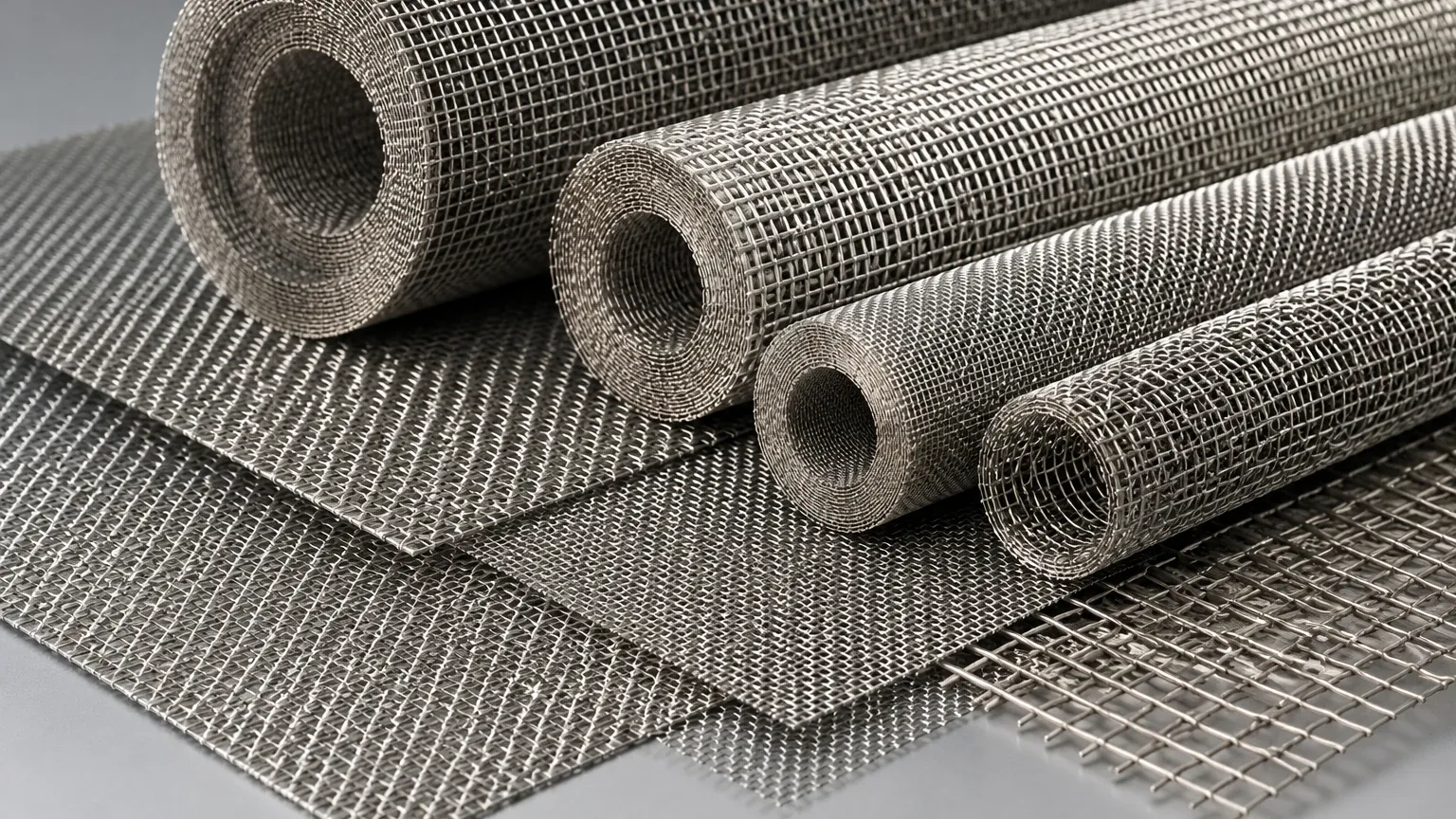
In contrast, industrial Woven Wire Mesh is defined by its precision. In a B2B context, mesh is not just a barrier; it is a calibrated engineering component. Industrial suppliers like Kaifil provide mesh ranging from coarse architectural screens to ultra-fine Dutch weaves capable of filtering particles down to a few microns. For an engineer, the primary difference lies in the predictability of performance and the availability of Material Test Reports (MTRs) that guarantee the alloy composition.
Key Limitations of Retail-Grade Mesh
1. Limited Alloy Options: Retailers usually stock a generic "stainless steel," whereas industrial applications often require a specific distinction between SS304 (for general corrosion resistance) and SS316L (for high-chloride or pharmaceutical environments).
2. Fixed Dimensions: Retail products come in pre-cut rolls of 3-foot or 4-foot widths. Industrial manufacturing allows for custom widths, slit coils, and precision-cut circles or panels.
3. Lack of Certification: Industrial processes often require compliance with ISO, ASTM, or FDA standards. Retail products rarely provide the documentation necessary for quality audits.
Engineering Specifications: Mesh Count and Wire Diameter
When moving beyond the search for "stainless steel woven wire mesh lowes," engineers must define their requirements using technical parameters. The two most important metrics are mesh count and wire diameter.
Understanding Mesh Count
Mesh count refers to the number of openings per linear inch, measured from the center of one wire to the center of the next.
* Coarse Mesh (1 to 20 mesh): Used for heavy-duty screening, guarding, and primary filtration.
* Medium Mesh (20 to 100 mesh): Common in hydraulic filters, oil filtration, and general industrial sieving.
* Fine Mesh (100 to 635+ mesh): Utilized in precision chemical processing, pharmaceutical manufacturing, and high-performance gas filtration.
The Importance of Wire Diameter
The diameter of the wire directly impacts the "Open Area" percentage and the mechanical strength of the mesh. A thicker wire increases the lifespan and pressure resistance but reduces the flow rate (throughput). Conversely, a thinner wire provides a higher open area for better flow but may require support layers (sintered or pleated) to withstand industrial pressures.
Selecting the Right Alloy: SS304 vs. SS316L
One of the most significant risks in purchasing generic stainless steel is alloy failure. In industrial environments, the specific grade of stainless steel is non-negotiable.
Type 304 Stainless Steel
This is the most common grade used in Woven Wire Mesh. It provides excellent resistance to atmospheric corrosion and many organic and inorganic chemicals. It is the standard choice for food processing (where high acidity isn't present) and general industrial screening. However, it is susceptible to pitting in the presence of chlorides (like salt water).
Type 316L Stainless Steel
For more demanding applications, SS316L is the industry standard. The addition of molybdenum provides superior resistance to chlorides and sulfuric acids. The "L" denotes low carbon content, which improves weldability and prevents sensitization—a common cause of corrosion in the heat-affected zones of welded filter components. This grade is essential for marine environments, pharmaceutical production, and chemical processing plants.
Advanced Weave Types for Specific Applications
While retail outlets typically offer only "Plain Weave" (over-one, under-one), industrial manufacturers utilize various weaving patterns to achieve specific filtration goals.
1. Plain Weave
The most straightforward and common pattern. Each warp wire crosses alternately over and under each shute wire. It is ideal for general screening where high flow rates are required.
2. Twill Weave
In a twill weave, each shute wire passes alternately over and under two warp wires. This allows for the use of heavier wires with a given mesh count, providing greater strength for fine mesh applications that would otherwise be too delicate in a plain weave.
3. Dutch Weave (Plain and Twilled)
Dutch weaves use a larger diameter warp wire and a smaller diameter shute wire woven tightly together. This creates a dense, strong mesh with "tortuous paths" for particles. Dutch weaves do not have straight-through openings; instead, they provide superior surface filtration and are the preferred choice for high-pressure fuel, hydraulic, and liquid filtration systems.
Critical Factors in Industrial Procurement
When sourcing Woven Wire Mesh for a project, engineers should evaluate several factors that go beyond the initial price per square foot.
Filtration Accuracy and Micron Rating
In industrial filtration, the goal is often to protect downstream equipment (like pumps or nozzles) from specific particle sizes. Retail mesh is rarely rated for microns. Industrial mesh is tested to ensure that the "absolute" or "nominal" micron rating meets the system's requirements, preventing catastrophic equipment failure.
Total Cost of Ownership (TCO)
While a generic mesh from a local supplier might seem cost-effective, its lifespan in a corrosive or high-vibration environment is often short. Industrial-grade mesh, manufactured with precise tensioning and high-quality alloys, reduces the frequency of replacement and downtime. For B2B operations, the cost of a single hour of production downtime far outweighs the savings of cheaper, non-certified mesh.
Customization and OEM Integration
Most industrial applications require the mesh to be integrated into a larger assembly. This might involve:
* Cut-to-size pieces: Precision laser or die-cutting to fit specific filter housings.
* Framed Panels: Adding stainless steel frames for rigidity in vibrating screens.
* Multi-layer Sintering: Combining multiple layers of mesh to create a robust, high-permeability filter plate.
* Cylindrical Forming: Welding mesh into cartridges for hydraulic or water treatment systems.
Why Technical Consultation Matters
Choosing the right Woven Wire Mesh involves a complex trade-off between filtration efficiency, mechanical strength, and chemical compatibility. For example, an engineer might need to decide if a 100-mesh screen in SS316L with a 0.0045" wire diameter will provide enough open area for a high-viscosity fluid without bowing under the pressure.
Professional manufacturers like Kaifil serve as technical partners in this process. By providing engineering guidance on material selection and weave structures, they ensure that the final product is optimized for the specific environmental conditions of the application—whether that is a pharmaceutical cleanroom or a heavy-duty chemical reactor.
Conclusion: Moving from DIY to Industrial Solutions
While the search for "stainless steel woven wire mesh lowes" is a logical starting point for small-scale or non-critical needs, industrial success relies on precision-engineered components. For B2B buyers, the priority must be on material traceability, specific weave performance, and the ability to customize the product to fit exact machinery specifications.
When performance is non-negotiable, transitioning to a specialized manufacturer ensures that your filtration system operates at peak efficiency, protects your equipment, and meets the rigorous standards of your industry. Whether you need a high-count Dutch weave for fine chemical separation or a durable SS316L panel for marine environments, professional-grade woven wire mesh provides the reliability that retail alternatives cannot match.
