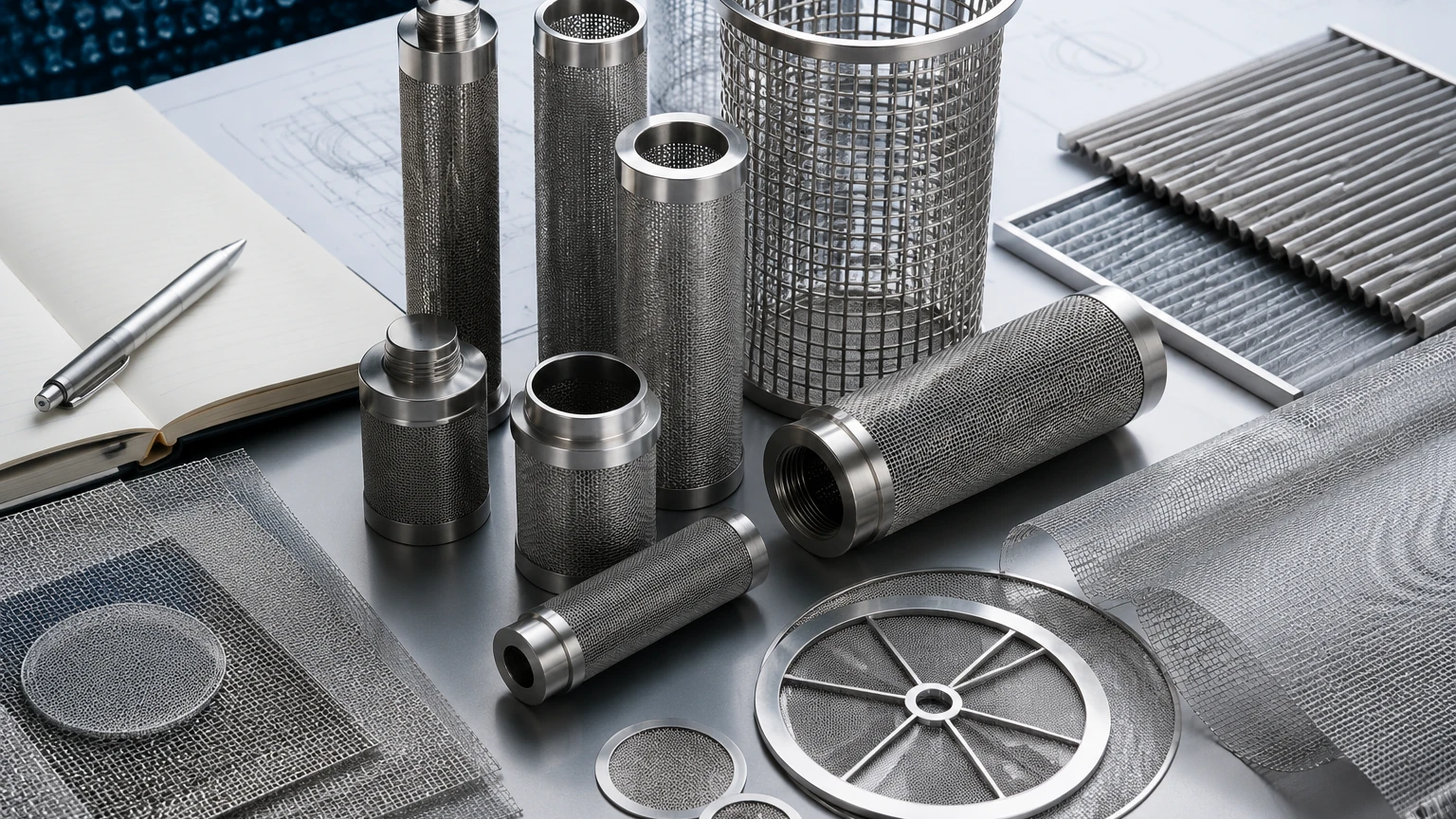
Johnson Display
In the realm of industrial engineering and architectural design, the term "Johnson display" refers to the application of wedge wire screen technology—originally developed for rigorous filtration and separation tasks—into functional and aesthetic display structures. These components, characterized by their precision-engineered V-shaped profiles and continuous slots, offer a unique combination of structural integrity, open area efficiency, and visual appeal. For engineers and purchasing teams, understanding the technical nuances of these screens is essential for selecting the right filtration or display component for demanding environments.
At its core, a Johnson display utilizes the same manufacturing principles as industrial wedge wire. It consists of surface profiles (usually V-shaped) that are resistance-welded onto support profiles at each intersection. This creates a non-clogging surface that is ideal for both filtering media and serving as a robust architectural element. As industries move toward more integrated designs where equipment must be both functional and visually representative of high-quality engineering, the demand for custom-fabricated stainless steel components has grown significantly.
The Technical Evolution of Wedge Wire Screens
The transition from pure filtration to the concept of a Johnson display began with the recognition of the material's inherent strength and versatility. Traditionally used in water well drilling, mining, and food processing, wedge wire screens were designed to withstand high pressure and corrosive environments. The "Johnson" name has become synonymous with this specific type of continuous-slot screen due to its historical development in the early 20th century.
Today, the engineering behind these displays focuses on the precision of the slot opening. Unlike woven wire mesh, which can shift under stress, the welded nature of wedge wire ensures that the slot width remains constant. This is critical in industrial display applications where the screen might serve as a protective barrier, a light-diffusing element, or a media retention grate. The ability to control the open area—the ratio of the slot width to the wire width—allows engineers to balance transparency with structural rigidity.
Material Selection for Industrial Environments
When specifying a Johnson display, the choice of material is the primary factor determining the component's lifespan and performance. Kaifil specializes in stainless steel solutions, typically utilizing Grade 304 or Grade 316L.
1. Grade 304 Stainless Steel: This is the standard choice for many indoor industrial applications. It offers excellent strength and basic corrosion resistance, making it suitable for decorative grilles, partition screens, and equipment housings where exposure to harsh chemicals is limited.
2. Grade 316L Stainless Steel: For more demanding environments, such as chemical processing plants, coastal installations, or pharmaceutical cleanrooms, 316L is preferred. The addition of molybdenum enhances resistance to pitting and crevice corrosion, particularly in chloride-rich environments. The "L" designation signifies low carbon content, which is vital for maintaining corrosion resistance in the heat-affected zones of the welds.
Engineers must also consider the surface finish. A mill finish may suffice for internal industrial components, but for a display-grade product, electropolishing or mechanical polishing is often required. Electropolishing, in particular, removes a microscopic layer of material, smoothing the surface and enhancing the passive chromium oxide layer, which significantly improves both the aesthetic shine and the corrosion resistance of the Johnson display.
Engineering the V-Wire Profile
The defining feature of a Johnson display is the V-shaped surface wire. This profile is not merely an aesthetic choice; it serves a critical functional purpose. In filtration, the V-shape creates a two-point contact for particles, which minimizes the risk of blinding or clogging. In a display context, this geometry interacts with light and airflow in specific ways.
From a structural perspective, the V-wire provides a high strength-to-weight ratio. The wires can be oriented vertically or horizontally depending on the load requirements. For example, if the display is used as a floor grate or a walk-on surface in a processing facility, the support rods must be spaced and sized to handle the expected weight without deflection. Engineers often refer to load-span tables to determine the appropriate combination of surface wire size and support rod frequency.
Furthermore, the continuous slot design allows for uniform distribution of fluids or air. This makes Johnson-style screens ideal for use in "display" air diffusers or water features within industrial cooling systems, where maintaining a consistent flow pattern is as important as the visual appearance of the equipment.
Customization and OEM Capabilities
One of the most significant advantages of working with a professional manufacturer like Kaifil is the ability to customize every aspect of the filtration or display component. A Johnson display is rarely a "one-size-fits-all" product. Instead, it is engineered to meet specific project parameters.
Customization options include:
* Slot Width: Precision slots can range from 20 microns up to several millimeters. In display applications, larger slots are often used to increase transparency, while finer slots are used for precision filtration or light diffusion.
* Shape and Configuration: While flat panels are common, wedge wire can be fabricated into cylinders, cones, or even complex curved geometries. This flexibility allows the Johnson display to be integrated into existing machinery or architectural frameworks seamlessly.
* Framing and Reinforcement: To ensure ease of installation, screens can be supplied with custom frames, flanges, or mounting brackets. This reduces the need for on-site welding or modification, which can compromise the integrity of the stainless steel.
For purchasing teams, reviewing the Main Page of a manufacturer's technical catalog is the first step in understanding the breadth of available profiles and the technical support offered for OEM projects. Detailed engineering drawings and material certifications are standard requirements for ensuring the final product meets the rigorous standards of the industrial sector.
Performance Expectations and Maintenance
A well-engineered Johnson display is designed for longevity. Unlike plastic or lower-grade metal alternatives, stainless steel wedge wire does not degrade under UV exposure and maintains its structural properties across a wide temperature range. However, performance expectations must be aligned with the maintenance reality of the installation site.
In industrial settings, the primary maintenance concern is the accumulation of debris or mineral deposits within the slots. Because the V-wire profile is designed to be self-cleaning (particles only touch two points and are easily washed away), maintenance is generally simpler than with woven mesh. Periodic pressure washing or chemical cleaning (consistent with the material grade) is usually sufficient to maintain both the functional open area and the visual clarity of the display.
Total cost of ownership (TCO) is a critical metric for engineers. While the initial investment in a custom stainless steel Johnson display may be higher than other materials, the extended service life, reduced replacement frequency, and minimal maintenance requirements often result in a lower TCO over the life of the project.
Applications Across Diverse Industries
The versatility of the Johnson display allows it to serve multiple roles across various sectors:
* Food and Beverage: Used as sanitary strainers and display-grade grates that must meet strict hygiene standards while remaining durable enough for daily washdowns.
* Water Treatment: Functional intake screens that also serve as a visual barrier to prevent large debris from entering sensitive equipment.
* Architectural Industrial Design: Used in modern manufacturing facilities for wall cladding, ceiling panels, and partitions that require airflow and a high-tech, industrial aesthetic.
* Chemical Processing: As media retention screens in reactors where the visual confirmation of the screen's integrity is necessary during maintenance cycles.
Selection Criteria for Engineers and Purchasing Teams
Before finalizing a purchase order for a Johnson display or related filtration components, engineers should confirm several key data points with the manufacturer. This ensures that the product will perform as intended under actual operating conditions.
1. Pressure Drop Calculations: If the screen is part of a fluid system, understanding the pressure drop across the slot openings is vital for pump sizing and system efficiency.
2. Structural Load Requirements: Clearly define whether the screen will be subject to static loads, dynamic loads, or environmental stresses like wind or vibration.
3. Chemical Compatibility: Provide a full list of chemicals and temperatures the screen will encounter to ensure the correct grade of stainless steel and welding technique is used.
4. Tolerances: Specify the required precision for slot widths. In high-accuracy filtration, even a small deviation can impact the effectiveness of the separation process.
By focusing on these technical boundaries, procurement professionals can avoid the risks associated with under-specified components. Working with a manufacturer that understands the intersection of filtration science and structural engineering allows for the development of high-performance solutions that meet the specific needs of the application.
For those looking to explore the full range of custom stainless steel filtration solutions, including wire mesh and precision metal components, visiting the Main Page provides access to technical specifications and application guidance. This resource helps bridge the gap between initial design concepts and the delivery of a reliable, industrial-grade Johnson display.
In conclusion, the Johnson display represents a sophisticated application of wedge wire technology. By leveraging the inherent benefits of stainless steel—durability, precision, and corrosion resistance—engineers can implement solutions that are as functional as they are robust. Whether the goal is to optimize a filtration process or to install a durable industrial partition, the technical principles of the wedge wire screen remain the foundation of quality and performance.