


Magnetic Oil Filter
In industrial lubrication and hydraulic systems, the management of particulate contamination is a critical factor in maintaining equipment longevity and operational efficiency. While traditional mechanical filtration methods rely on porous media to trap contaminants based on size, the magnetic oil filter introduces a specialized mechanism for the removal of ferrous particles. These particles, often generated through internal wear of gears, bearings, and pumps, are frequently smaller than the pore size of standard mesh or paper filters. By utilizing high-intensity magnetic fields, these filters sequester metallic debris that would otherwise circulate through the system, causing accelerated abrasive wear.
For engineers and maintenance professionals, understanding the technical nuances of magnetic filtration is essential for optimizing system performance. This guide examines the principles, design considerations, and selection criteria for integrating magnetic components into industrial filtration circuits.
The Mechanics of Magnetic Particle Capture
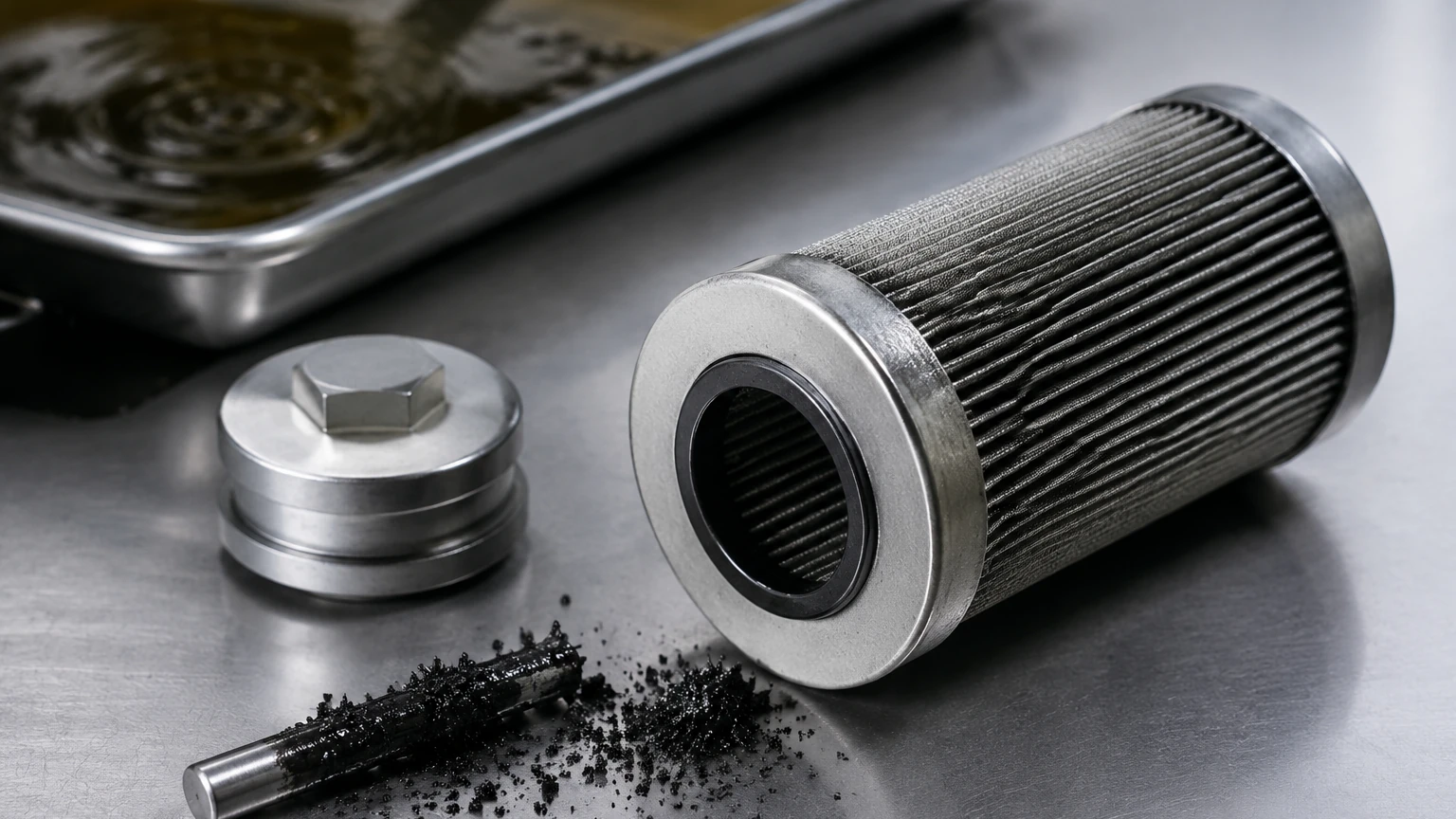
A magnetic oil filter operates on the principle of magnetic attraction to remove ferromagnetic contaminants—such as iron, steel, and nickel—from a fluid stream. Unlike a mechanical filter, which creates a physical barrier that can cause a pressure drop as it loads, a magnetic filter captures particles on the surface of a magnetic core or rod without significantly impeding fluid flow.
Magnetic Flux Density and Gradient
The effectiveness of a magnetic filter is determined by its flux density, measured in Gauss or Tesla, and the magnetic gradient. Flux density refers to the strength of the magnetic field at the surface of the filter. However, the magnetic gradient—the rate at which the field strength changes as the distance from the magnet increases—is what actually pulls the particles toward the magnet. High-gradient magnets are more effective at capturing sub-micron particles from high-velocity fluid streams.
Particle Size and Capture Efficiency
One of the primary advantages of magnetic filtration is its ability to capture particles that are significantly smaller than the nominal rating of traditional filter media. While a standard 10-micron mechanical filter may allow 2-micron iron filings to pass, a high-intensity magnetic rod can successfully sequester these particles. This is particularly important in high-pressure hydraulic systems where fine metallic dust can act as a lapping compound, eroding valves and seals over time.
Material Selection for Industrial Magnetic Filters
The performance of a magnetic oil filter is heavily dependent on the type of magnetic material used and the environment in which it operates. Industrial applications typically utilize one of three primary magnet types:
1. Neodymium Iron Boron (NdFeB): These are the strongest permanent magnets available, offering exceptionally high flux density. They are ideal for capturing very fine particles in compact spaces. However, their performance can degrade at high temperatures, typically requiring specialized grades for applications exceeding 80°C (176°F).
2. Samarium Cobalt (SmCo): While slightly less powerful than Neodymium, Samarium Cobalt magnets offer superior thermal stability. They are the preferred choice for high-temperature lubrication systems, such as those found in steam turbines or heavy-duty industrial gearboxes, where temperatures may consistently exceed 150°C.
3. Ferrite (Ceramic) Magnets: These offer lower magnetic strength but are highly resistant to corrosion and are cost-effective. They are generally used in large-scale low-pressure systems where the volume of fluid allows for larger capture surfaces.
In most high-performance industrial settings, the magnets are encased in a 304 or 316 stainless steel sleeve. This protective housing prevents the magnets from corroding and ensures that the captured debris can be easily removed during maintenance cycles.
Integration with Stainless Steel Filtration Systems
In many industrial environments, a magnetic oil filter is not used in isolation but rather as a complementary component to a stainless steel filter cartridge or wire mesh assembly. This hybrid approach provides two-stage protection:
* Stage One (Magnetic): The magnetic core removes the majority of ferrous debris, which often constitutes the bulk of the contaminant load in mechanical systems.
* Stage Two (Mechanical): The stainless steel mesh or pleated cartridge removes non-ferrous contaminants such as silica, brass, or seal elastomers.
By removing the ferrous load before it reaches the mechanical media, the magnetic filter significantly extends the service life of the primary filter element. This reduces the frequency of filter replacements and lowers the total cost of ownership. For organizations looking to explore these integrated solutions, the Main Page of the manufacturer provides detailed specifications on custom-engineered filtration assemblies.
Engineering Selection Criteria
When specifying a magnetic oil filter for an industrial application, several engineering factors must be evaluated to ensure the system meets performance expectations.
Flow Velocity and Residence Time
The capture efficiency of a magnet is inversely proportional to the velocity of the fluid. If the oil moves too quickly past the magnetic surface, the drag forces of the fluid will overcome the magnetic attraction, preventing the particles from sticking. Engineers must calculate the residence time—the duration the fluid spends within the effective magnetic field—to ensure it is sufficient for the target particle sizes.
Fluid Viscosity
High-viscosity oils (such as ISO VG 320 or 460 gear oils) exert greater drag on particles than low-viscosity hydraulic fluids. In high-viscosity applications, stronger magnets or larger surface areas are required to pull particles through the thicker fluid film. Temperature also plays a role here, as oil viscosity decreases with heat, potentially improving capture efficiency if the magnet remains within its stable temperature range.
Contamination Loading and Cleaning Cycles
Unlike mechanical filters that eventually clog and trigger a bypass or pressure alarm, a magnetic filter will continue to allow fluid to pass even when it is fully loaded. However, once the magnetic surface is saturated with a "cake" of debris, it can no longer capture new particles. In extreme cases, the collected debris may be sheared off by the fluid flow (a phenomenon known as "wash-off"), releasing a large slug of contamination into the system. Therefore, maintenance schedules must be established based on the anticipated rate of wear-particle generation.
Applications in Demanding Industries
Magnetic filtration is utilized across diverse sectors where fluid purity is paramount to mechanical reliability.
* Hydraulic Systems: In heavy machinery and plastic injection molding, magnetic filters protect sensitive proportional valves and high-pressure pumps from internal wear debris.
* Metalworking and Machining: In grinding and honing operations, magnetic separators are used to remove steel fines from coolants and cutting oils, improving surface finish and extending tool life.
* Power Generation: Large turbines and generators use magnetic filtration in their lubrication circuits to prevent bearing damage caused by fine metallic particulates.
* Food and Beverage: While often used for product purity, magnetic filters in the lubrication systems of food-grade machinery prevent metallic contamination from entering the production environment in the event of a seal failure.
Maintenance and Operational Safety
Maintaining a magnetic oil filter requires a different approach than standard filter changes. Because the magnets are permanent, they do not need replacement unless they have been subjected to extreme heat or physical impact. Maintenance primarily involves cleaning the captured debris.
For manual cleaning systems, the magnetic rod is typically removed from its stainless steel sleeve. Once the magnet is withdrawn, the ferrous particles lose their attraction to the sleeve and can be easily wiped or rinsed away. In automated systems, the magnetic field is periodically diverted or neutralized to flush the captured debris into a secondary waste stream without interrupting the main process flow.
Safety is a critical consideration during maintenance. High-intensity rare earth magnets can exert significant force on nearby steel tools or components. Personnel with pacemakers or sensitive electronic medical devices must maintain a safe distance from exposed magnetic cores.
Conclusion: Strategic Implementation
The integration of a magnetic oil filter into an industrial system is a strategic decision that enhances the reliability of mechanical components. By targeting the most destructive sub-micron ferrous particles, these filters reduce the abrasive load on the entire system and protect the integrity of primary mechanical filters.
When selecting a filtration partner, engineers should prioritize manufacturers who can provide customized solutions tailored to specific flow rates, temperatures, and chemical environments. Whether through standalone magnetic separators or integrated stainless steel filter cartridges, the goal remains the same: achieving the highest possible fluid cleanliness with minimal operational downtime. For further technical details on material compatibility and custom designs, reviewing the Main Page of a specialized manufacturer is the recommended next step for procurement and engineering teams.
