


Microsparger
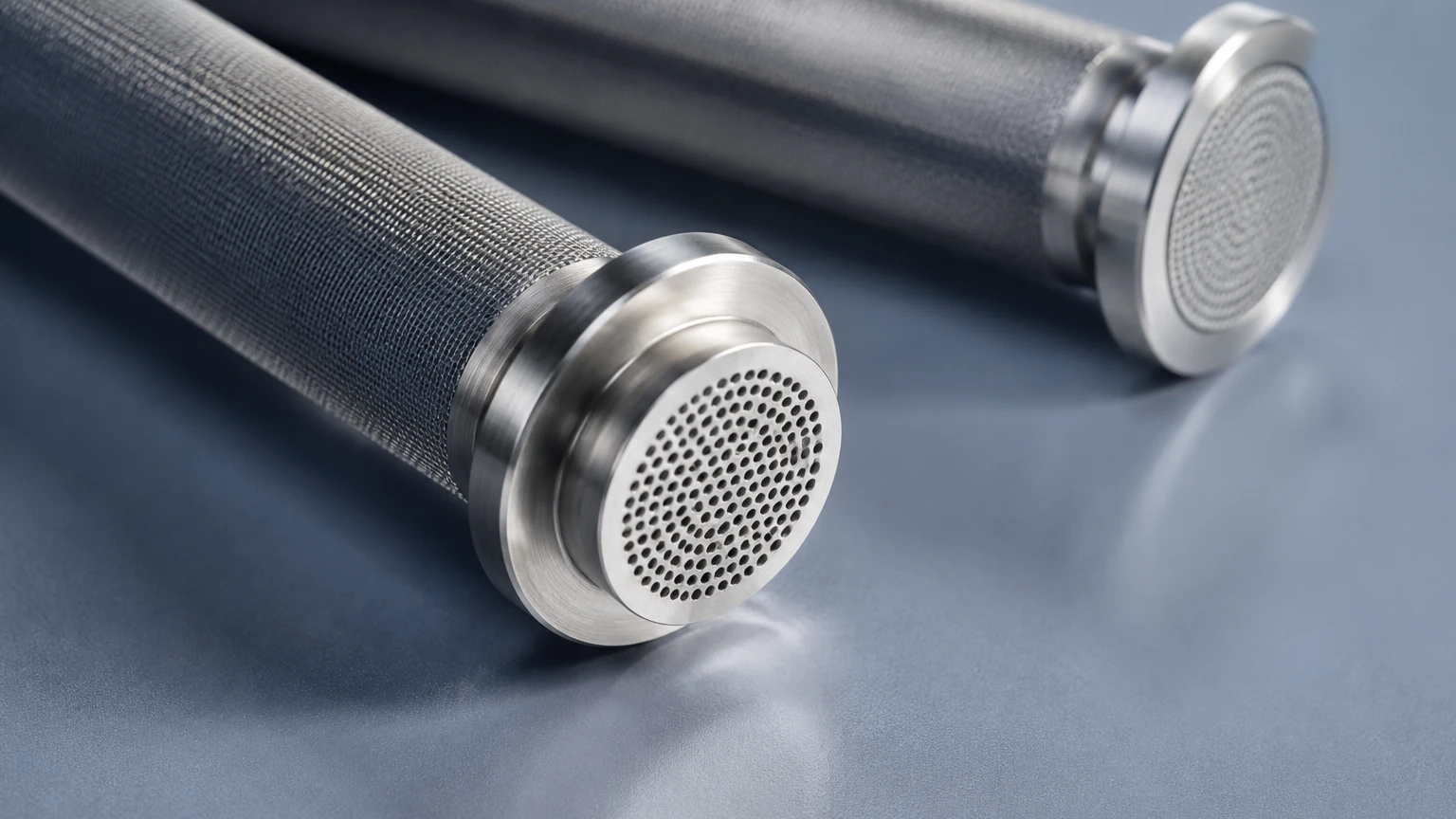
In industrial process engineering, the efficiency of gas-liquid reactions is often limited by the surface area available for mass transfer. A microsparger is a specialized aeration and gas injection component designed to overcome these limitations by producing millions of tiny, discrete bubbles rather than the large, turbulent bubbles generated by traditional drilled-pipe spargers. Typically constructed from porous sintered metal, these components are critical in applications ranging from bioreactor oxygenation to chemical hydrogenation and carbonation.
For engineers and procurement teams, selecting a microsparger involves more than simply choosing a micron rating. It requires a deep understanding of fluid dynamics, material compatibility, and the specific mass transfer requirements of the process. This guide examines the technical fundamentals, engineering considerations, and selection criteria necessary for integrating high-performance microspargers into industrial systems.
Engineering Fundamentals of Gas Dispersion
The primary function of a microsparger is to maximize the gas-liquid interfacial area. According to the principles of mass transfer, the rate at which a gas dissolves into a liquid is governed by the mass transfer coefficient (kLa). By reducing the diameter of the gas bubbles, a microsparger exponentially increases the total surface area for a given volume of gas.
Bubble Size and Buoyancy
Standard spargers typically produce bubbles in the range of 2mm to 10mm. In contrast, a microsparger utilizing sintered stainless steel media can produce bubbles as small as 10 to 50 microns. Smaller bubbles have two distinct advantages:
1. Increased Surface Area: For the same volume of gas, smaller bubbles provide significantly more surface area for diffusion.
2. Increased Residence Time: Smaller bubbles have lower buoyancy and rise more slowly through the liquid column. This increased contact time allows for more complete gas absorption before the bubbles reach the surface and escape into the headspace.
Pore Morphology and Distribution
The performance of a microsparger is directly tied to the pore morphology of the sintered metal. Unlike wire mesh, which has a geometric, two-dimensional structure, sintered metal creates a complex, three-dimensional tortuous path. This structure ensures that gas is distributed evenly across the entire surface of the element, preventing "channeling" where gas escapes through a single point of least resistance.
Material Selection and Industrial Compatibility
Microspargers must operate in demanding environments involving high pressures, extreme temperatures, and corrosive chemicals. Material selection is the first line of defense against premature failure and process contamination.
Stainless Steel (316L)
Stainless steel 316L is the industry standard for most microsparger applications. Its high chromium and molybdenum content provide excellent resistance to pitting and crevice corrosion. In the pharmaceutical and food industries, 316L is preferred for its biocompatibility and ability to withstand Clean-in-Place (CIP) and Steam-in-Place (SIP) sterilization cycles. As a specialist in stainless steel filtration and gas dispersion, Kaifil provides customized solutions that leverage the durability of 316L to ensure long-term operational stability.
Advanced Alloys
For environments where 316L may be insufficient—such as high-concentration chloride solutions or strong acids—engineers may specify advanced alloys like Hastelloy® C-276 or Monel®. These materials offer superior resistance to stress corrosion cracking and chemical attack, though they come with higher material costs and specialized manufacturing requirements.
Temperature and Pressure Thresholds
Sintered metal microspargers are inherently robust. Unlike plastic or ceramic alternatives, metal spargers can operate at temperatures exceeding 400°C (depending on the alloy and atmospheric conditions) and can withstand high differential pressures. This makes them ideal for high-pressure chemical reactors where gas must be injected into a pressurized liquid stream.
Key Evaluation Criteria for Selection
When evaluating a microsparger for a new or existing system, technical professionals should focus on several performance-defining metrics. These ensure that the component does not become a bottleneck in the production process.
Micron Rating and Gas Flow Rate
The micron rating of the porous media determines the initial bubble size. However, there is a trade-off: finer micron ratings (e.g., 0.5 or 2 microns) produce smaller bubbles but require a higher "bubble point" pressure to initiate flow. Engineers must calculate the required Gas Hourly Space Velocity (GHSV) and ensure the sparger surface area is sufficient to handle the flow without exceeding the maximum recommended exit velocity, which could lead to bubble coalescence (bubbles merging into larger ones).
Pressure Drop (ΔP)
The pressure drop across the microsparger is a critical factor in system design. High ΔP requires more powerful compressors and increases energy consumption. Factors influencing ΔP include:
* Media thickness
* Pore size
* Gas viscosity and density
* Surface fouling over time
Connection and Integration Types
Microspargers must be integrated into various reactor geometries. Common configurations include:
* Threaded NPT/BSP Connections: For easy installation into standard pipe fittings.
* Flanged Connections: For high-pressure or large-scale industrial tanks.
* Quick-Connect/Tri-Clamp: Essential for hygienic applications in the pharmaceutical and food sectors to facilitate rapid removal for cleaning.
* In-line Spargers: Designed to be mounted directly into a process pipe for continuous gas injection into a flowing liquid.
To explore specific configurations and engineering support for these components, you can visit the Main Page for detailed technical specifications.
Common Risks and Operational Challenges
While microspargers are highly efficient, they are not "set and forget" components. Understanding the risks associated with their use is vital for maintaining process uptime.
Fouling and Clogging
The most common issue with microspargers is clogging. In biological applications, proteins and cellular debris can accumulate on the porous surface (biofouling). In chemical applications, mineral scaling or particulate matter in the gas stream can block the pores. Clogging leads to an increase in differential pressure and a decrease in gas transfer efficiency.
Bubble Coalescence
If the gas flow rate is too high for the available surface area, bubbles will emerge so close together that they immediately merge into larger bubbles. This negates the benefit of using a microsparger. Proper sizing—ensuring sufficient surface area to keep the flux (flow per unit area) low—is the primary engineering solution to this problem.
Mechanical Stress and Fatigue
In highly agitated tanks, microspargers may be subjected to significant mechanical loads and vibration. If the sparger is long and unsupported, the junction between the porous element and the solid hardware can become a point of fatigue failure. Engineers should consider the use of support brackets or reinforced internal cores for spargers used in high-shear environments.
Maintenance and Cleaning Protocols
To extend the service life of a stainless steel microsparger, a proactive maintenance schedule is required. Unlike disposable filters, sintered metal spargers are designed to be cleaned and reused.
1. Chemical Cleaning: Soaking the element in caustic or acidic solutions can dissolve organic or mineral deposits. It is crucial to ensure the cleaning agent is compatible with the metal alloy.
2. Ultrasonic Cleaning: This is the most effective method for removing fine particulates lodged deep within the tortuous paths of the sintered media. High-frequency sound waves create cavitation bubbles that dislodge contaminants.
3. Backflushing: In some in-line installations, reversing the flow of liquid or gas can help clear surface-level accumulation.
4. Sterilization: For aseptic processes, microspargers can be autoclaved or sterilized in place using high-pressure steam. The structural integrity of sintered 316L remains unaffected by standard sterilization temperatures.
Information to Confirm Before Procurement
Before finalizing a custom microsparger order, the engineering team should have documented answers to the following questions to ensure the product meets the application's demands:
* What is the target gas and liquid? (To determine chemical compatibility and gas solubility characteristics).
* What is the required gas flow rate at operating temperature and pressure? (To size the surface area correctly).
* What is the maximum allowable pressure drop? (To select the appropriate micron rating and media thickness).
* Are there space constraints within the vessel? (To decide between a single large sparger or multiple smaller elements).
* What are the cleaning requirements? (To determine the need for specialized connections like Tri-Clamps).
By addressing these technical variables early in the design phase, purchasing teams can avoid costly retrofits and ensure that the filtration and gas dispersion system operates at peak efficiency. Kaifil’s expertise in custom manufacturing allows for the development of microspargers tailored to these specific industrial parameters, providing reliable performance in even the most demanding environments.
