


Self Cleaning Dust Collector
In industrial environments where airborne particulates, fumes, and dust are constant byproducts of manufacturing, the self cleaning dust collector serves as a critical component for both regulatory compliance and operational efficiency. Unlike static filtration systems that require frequent manual intervention to replace or clean saturated filters, self-cleaning systems utilize automated mechanisms to remove accumulated dust cake from the filter media. This ensures a consistent pressure drop and continuous operation, which is vital for high-volume production lines in sectors such as chemical processing, pharmaceuticals, and metalworking.
Selecting the right filtration components for these systems requires a deep understanding of the interaction between the dust characteristics, the cleaning mechanism, and the structural integrity of the filter media. For engineers and procurement specialists, the goal is to achieve a balance between high filtration efficiency and long-term durability, particularly when dealing with aggressive or high-temperature gas streams.
Mechanics of Automated Cleaning Systems
The primary advantage of a self cleaning dust collector is its ability to maintain airflow by periodically shedding the dust layer that builds up on the exterior of the filter elements. There are several engineering approaches to achieving this, with pulse-jet cleaning being the most prevalent in modern industrial applications.
Pulse-Jet Technology
In a pulse-jet system, the dust-laden air enters the collector and passes through the filter media (typically cartridges or bags). Dust is captured on the surface, while clean air exits through the plenum. As the dust layer thickens, the differential pressure across the filter increases. Once a predetermined setpoint is reached, a high-pressure blast of compressed air is released through a Venturi nozzle into the top of the filter. This creates a shockwave that causes the filter media to expand rapidly, dislodging the dust cake, which then falls into a hopper for collection.
Reverse Air and Mechanical Shaking
While pulse-jet systems are standard for high-pressure applications, other methods include reverse air systems and mechanical shakers. Reverse air collectors use a dedicated fan to blow low-pressure air in the opposite direction of the process flow. Mechanical shakers, though less common in continuous high-load environments, use a motorized vibratory system to physically dislodge dust. However, these often require the airflow to be paused during the cleaning cycle, making them less suitable for 24/7 industrial operations compared to pulse-jet designs.
The Role of Stainless Steel Filtration Media
While fabric bags and polymer cartridges are common in general dust collection, demanding industrial applications often necessitate the use of stainless steel filtration components. As a specialized manufacturer, Kaifil provides precision-engineered stainless steel solutions that address the limitations of traditional materials. For more technical details on these components, professionals can refer to our Main Page.
Temperature and Chemical Resistance
In industries such as chemical processing or smelting, exhaust gases can reach temperatures well above the melting point of polyester or aramid fibers. Stainless steel wire mesh and sintered metal filters can withstand continuous operating temperatures exceeding 500°C. Furthermore, in environments where the dust is corrosive or acidic, 304 or 316L stainless steel provides the necessary chemical resistance to prevent premature filter failure.
Structural Integrity Under Pulse Pressure
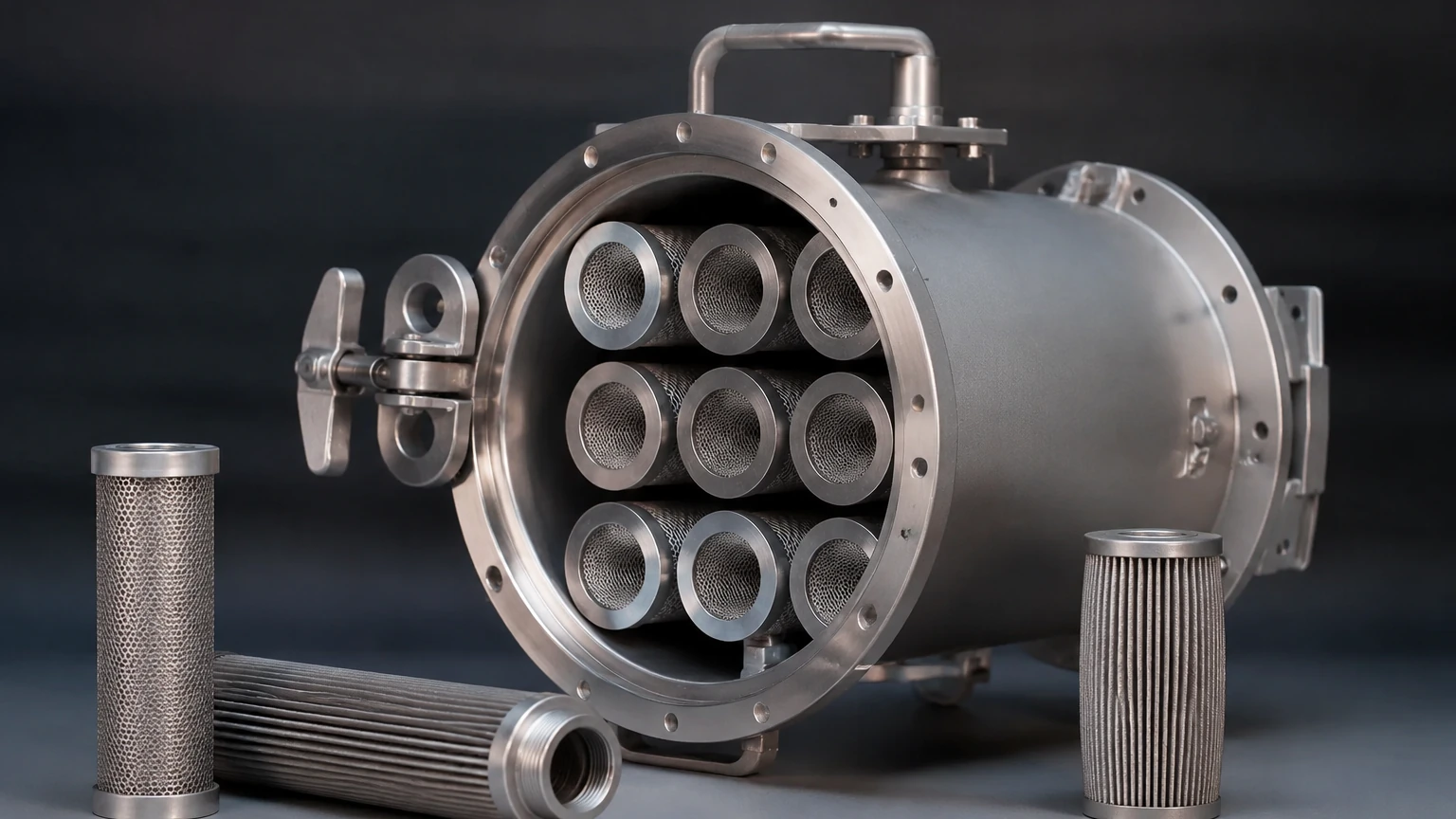
The cleaning cycle of a self cleaning dust collector subjects the filter media to repeated mechanical stress. Fabric filters can stretch or tear over time, leading to "leakage" or bypass. Stainless steel cartridges, particularly those with reinforced internal cores and pleated wire mesh, offer superior structural rigidity. This ensures that the filter maintains its shape and filtration accuracy (micron rating) even after thousands of pulse cycles.
Key Engineering Parameters for Filter Selection
When specifying filters for a dust collection system, engineers must evaluate several technical parameters to ensure the system performs according to design specifications.
Air-to-Cloth Ratio
The air-to-cloth (A/C) ratio, also known as the filtration velocity, is the ratio of the volume of air passing through the collector to the total surface area of the filter media. A lower A/C ratio generally leads to higher filtration efficiency and longer filter life, as it reduces the force with which dust particles impact the media. For fine or abrasive dust, maintaining a conservative A/C ratio is critical to prevent "blinding," where particles become deeply embedded in the media pores and cannot be removed by the cleaning pulse.
Micron Rating and Filtration Efficiency
Filtration efficiency is typically defined by the micron rating, which indicates the size of particles the media can effectively trap. In a self cleaning dust collector, the initial dust cake actually aids in filtration, improving the efficiency for sub-micron particles. However, the base media must be selected to handle the specific particle size distribution of the process. Sintered metal felt and multi-layer wire mesh composites allow for precise control over pore size, ensuring that even the finest hazardous dusts are contained.
Differential Pressure (Delta P)
Monitoring the pressure drop across the filters is the most effective way to gauge the health of the system. A stable "clean" pressure drop indicates that the self-cleaning mechanism is effectively removing the dust cake. If the differential pressure continues to rise despite frequent pulsing, it may indicate that the filters have reached the end of their service life or that the dust characteristics (such as moisture content) are causing the media to clog.
Customization for Demanding Industrial Applications
Standard off-the-shelf filtration solutions often fail to meet the specific needs of specialized industrial processes. Customization is frequently required in the following areas:
* Pleat Geometry: Increasing the number of pleats can expand the surface area within the same footprint, but pleats that are too tight can trap dust and prevent effective cleaning. Engineering the optimal pleat pitch is essential for sticky or hygroscopic dust.
* Surface Treatments: For applications involving moisture or oil, stainless steel filters can be treated or manufactured with specific surface finishes to enhance dust release (hydrophobic or oleophobic properties).
* End Cap Configurations: Compatibility with existing collector housings is vital. Custom-machined end caps ensure a leak-proof seal, preventing bypass which could damage downstream equipment or violate emission standards.
Maintenance and Total Cost of Ownership (TCO)
While the initial investment in a self cleaning dust collector equipped with stainless steel filters may be higher than simpler systems, the Total Cost of Ownership is often significantly lower. The durability of metal media means fewer replacement cycles, reduced labor costs for filter changes, and less production downtime.
Cleaning and Reuse
One of the unique advantages of stainless steel filter cartridges used in dust collection is their ability to be cleaned and reused. Unlike disposable fabric bags, metal filters can often be ultrasonically cleaned or chemically backwashed to restore their original permeability. This is particularly valuable in processes involving high-value dusts (such as precious metal recovery) or where hazardous waste disposal costs for spent filters are high.
Compressed Air Consumption
An efficiently designed self-cleaning system minimizes the consumption of compressed air. By using high-quality filters that release dust easily, the system can operate with fewer pulses and at lower pressures. This not only saves energy but also reduces the wear and tear on the pulse valves and the filter media itself.
Procurement Checklist for Engineers
Before finalizing the specifications for a self-cleaning system or replacement filters, purchasing and engineering teams should confirm the following data points:
1. Dust Characteristics: Is the dust abrasive, explosive (ATEX requirements), sticky, or fine?
2. Gas Chemistry: Are there corrosive gases present that require specific stainless steel grades like 316L or exotic alloys?
3. Operating Temperature: What are the peak and continuous operating temperatures?
4. Flow Rate: What is the required CFM (Cubic Feet per Minute) and the corresponding air-to-cloth ratio?
5. Regulatory Standards: Does the filtration efficiency meet local environmental and workplace safety (OSHA/EPA) regulations?
By focusing on these technical boundaries, industrial facilities can ensure their self cleaning dust collector provides reliable, long-term performance in even the most challenging environments. For customized filtration solutions and engineering support, exploring the options available on the Main Page can provide the necessary technical foundation for a successful implementation.
