


Absorber Column
In industrial process engineering, the absorber column—often referred to as a gas absorption tower—is a critical component used to separate specific components from a gas stream by dissolving them into a liquid solvent. This unit operation is fundamental in chemical processing, environmental protection, and pharmaceutical manufacturing. For engineers and procurement teams, understanding the mechanical and chemical nuances of an absorber column is essential for optimizing throughput, ensuring regulatory compliance, and minimizing the total cost of ownership.
At its core, the absorber column facilitates mass transfer between a gas phase and a liquid phase. Whether the goal is to remove pollutants like sulfur dioxide from flue gas or to recover valuable products like ammonia from a process stream, the efficiency of the column depends heavily on the design of its internals and the quality of the materials used in its construction.
Understanding the Fundamentals of the Absorber Column
Absorption is a physical or chemical process in which atoms, molecules, or ions from a gas enter a bulk liquid phase. The absorber column provides the necessary surface area and contact time for this transfer to occur efficiently. There are two primary types of absorption:
1. Physical Absorption: The gas dissolves in the liquid solvent based on its solubility, governed largely by Henry’s Law. No chemical reaction occurs between the solute and the solvent.
2. Chemical Absorption (Reactive Absorption): The solute reacts with a component in the solvent to form a new compound. This is common in carbon capture (using amines) or acid gas removal, where the reaction significantly increases the absorption rate and capacity.
In most industrial configurations, the gas enters at the bottom of the column and moves upward, while the liquid solvent is introduced at the top and flows downward. This counter-current flow ensures that the gas with the lowest concentration of the solute meets the fresh solvent with the highest capacity for absorption, maintaining a consistent concentration gradient throughout the vessel.
Internal Components and Their Impact on Performance
To maximize the contact area between the gas and liquid, the interior of an absorber column is filled with either trays or packing material. The choice between these two designs depends on the specific process requirements, including pressure drop constraints, liquid-to-gas ratios, and the potential for fouling.
Tray Columns
Tray columns utilize a series of horizontal plates (trays) to create discrete stages for gas-liquid contact. The gas bubbles through the liquid held on each tray. Common tray types include:
* Sieve Trays: Simple perforated plates where the gas velocity prevents the liquid from falling through the holes.
* Valve Trays: Equipped with liftable caps that adjust to gas flow rates, providing better flexibility (turn-down ratio) than sieve trays.
* Bubble Cap Trays: Feature risers and caps that ensure the gas passes through a liquid seal, ideal for low gas flow rates where other trays might weep.
Packed Columns
Packed columns use a continuous bed of material to provide surface area. They are generally preferred for smaller diameter columns or when a low pressure drop is required. Packing is categorized into:
* Random Packing: Discrete pieces (like Raschig rings, Pall rings, or saddles) dumped into the column. They offer a balance between surface area and cost.
* Structured Packing: Carefully engineered layers of corrugated metal gauze or wire mesh. Structured packing provides the highest efficiency and lowest pressure drop, making it the standard for high-performance applications in the pharmaceutical and fine chemical industries.
The Role of Precision Filtration and Internals
While the trays or packing facilitate the primary mass transfer, auxiliary internals like demisters and liquid distributors are equally vital. This is where high-quality manufacturing becomes a decisive factor in system reliability.
Mist Eliminators (Demister Pads)
As gas exits the top of an absorber column, it often carries small droplets of the liquid solvent (entrainment). If not captured, this leads to solvent loss and potential damage to downstream equipment. Demister pads, often constructed from multilayered stainless steel wire mesh, utilize impingement and coalescence to remove these droplets. For engineers, selecting the correct mesh density and wire diameter is critical to achieving the desired separation efficiency without causing an excessive pressure drop.
Liquid Distributors
Uniform distribution of the solvent across the cross-section of the column is paramount. If the liquid channels down one side (channeling), large portions of the gas stream will bypass the solvent, leading to a drastic drop in absorption efficiency. Precision-engineered distributors ensure that the packing or trays are fully wetted, maximizing the effective mass transfer area.
Material Selection and Corrosion Resistance
Absorber columns often handle aggressive chemicals, such as acidic gases or caustic solvents. Consequently, the choice of material for both the column shell and the internals is a primary engineering consideration. Stainless steel is the industry standard due to its durability and resistance to a wide range of corrosive environments.
* 304/304L Stainless Steel: Suitable for mildly corrosive environments and food-grade applications.
* 316/316L Stainless Steel: Contains molybdenum, providing superior resistance to chlorides and organic acids. This is the most common choice for chemical processing.
* Duplex and Super Duplex: Used in high-pressure or highly saline environments where standard austenitic steels might suffer from stress corrosion cracking.
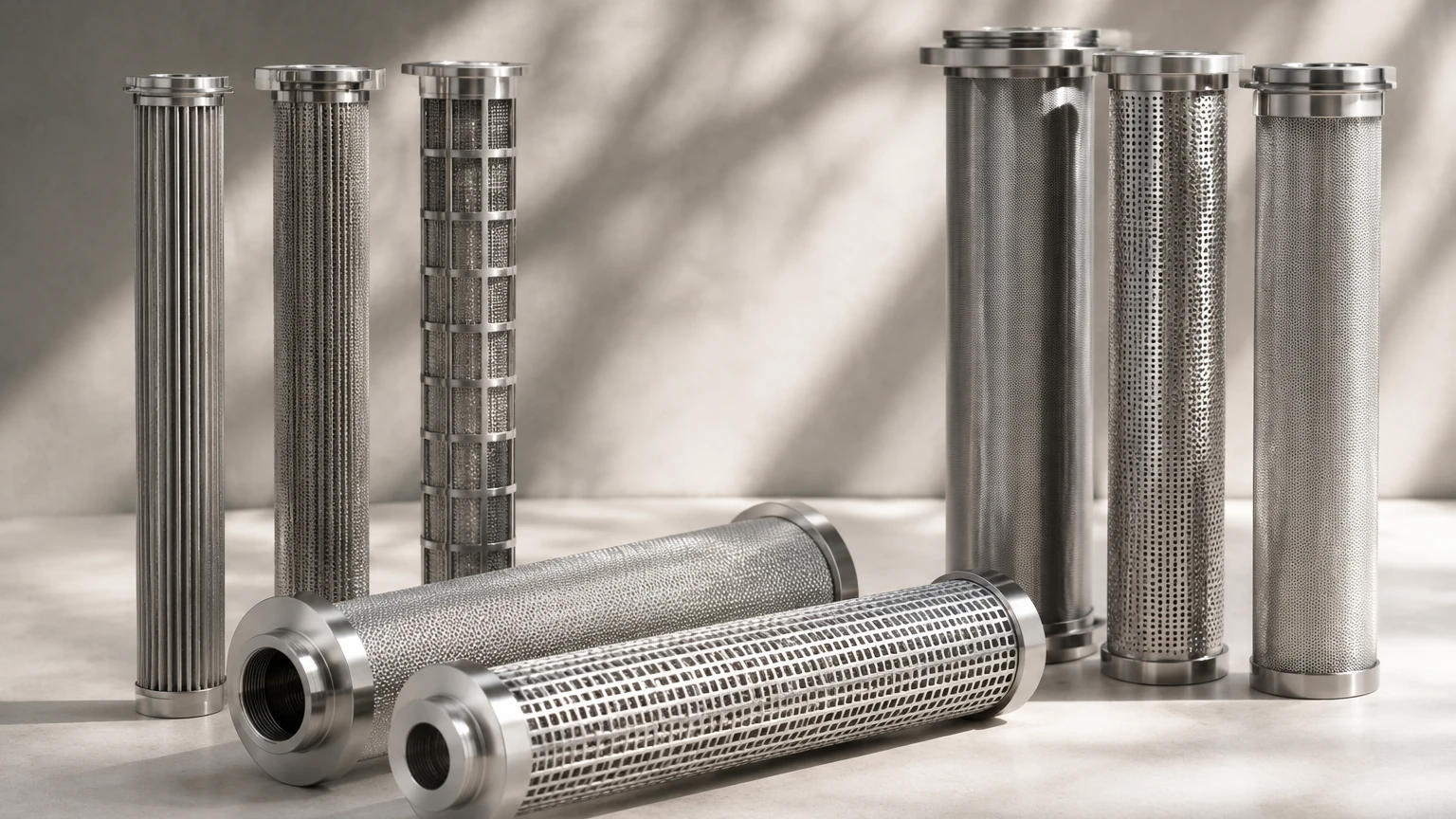
For specialized filtration components within the column, such as support grids or outlet strainers, the use of precision-manufactured stainless steel ensures that the components do not degrade or contaminate the process stream. To explore specific material options and technical specifications for these components, engineers can refer to the Main Page for detailed product data.
Critical Design Parameters for Engineers
When specifying an absorber column or its replacement internals, several technical parameters must be confirmed to ensure the system meets performance expectations:
1. Gas and Liquid Flow Rates: These determine the column diameter. If the gas velocity is too high, it will prevent the liquid from flowing down (flooding); if too low, the gas may not distribute properly (weeping in trays).
2. Pressure Drop: Every internal component adds resistance. In vacuum systems or high-volume gas processing, minimizing pressure drop is essential to reduce energy costs associated with blowers and compressors.
3. HETP (Height Equivalent to a Theoretical Plate): For packed columns, this value indicates the height of packing required to achieve the same separation as one theoretical tray. Lower HETP values signify a more efficient packing design.
4. Temperature and Pressure: Absorption is typically exothermic. Cooling may be required (via inter-stage coolers) to maintain the solvent's capacity, as solubility generally decreases with increasing temperature.
Operational Challenges: Flooding, Foaming, and Entrainment
Maintaining the steady-state operation of an absorber column requires constant monitoring of several physical phenomena:
* Flooding: This occurs when the upward gas velocity is so high that it supports or carries the liquid upward. Flooding results in a sharp increase in pressure drop and a total loss of separation efficiency. It is often the limiting factor for a column's capacity.
* Foaming: Some solvents, particularly those containing impurities or surfactants, tend to foam when in contact with gas. Foam fills the void space in the packing or trays, leading to premature flooding and solvent carryover.
* Entrainment: As mentioned previously, high gas velocities can carry liquid droplets out of the column. This is mitigated by the installation of high-efficiency wire mesh demisters.
Maintenance, Cleaning, and Component Longevity
Over time, absorber columns may suffer from fouling, where solids or polymers accumulate on the packing or trays. This increases pressure drop and reduces the available surface area for mass transfer.
Regular inspection of the internals is necessary. Stainless steel components offer a significant advantage here; they can often be cleaned using chemical washes or high-pressure steam without damaging the structural integrity of the mesh or plates. When replacement is necessary, ensuring that the new components match the original engineering specifications (or improve upon them with modern wire mesh designs) is vital for restoring the column to its original performance levels.
Selecting a Partner for Custom Filtration Components
In many industrial scenarios, standard off-the-shelf components are insufficient for the specific demands of a unique absorber column. Customization becomes necessary—whether it is a non-standard column diameter requiring a segmented demister pad or a specific filtration accuracy needed for a catalyst protection bed.
Working with a manufacturer that understands the intersection of metallurgy and fluid dynamics allows engineers to optimize their filtration solutions. From selecting the right wire mesh weave to designing robust support structures that can withstand the weight of a saturated packing bed, technical expertise is the foundation of a successful installation.
Conclusion
The absorber column remains a cornerstone of modern industrial processing. Its ability to efficiently clean gas streams and recover valuable materials is dependent on a complex interplay of thermodynamics, fluid mechanics, and material science. By focusing on high-quality internals, rigorous material selection, and precise design parameters, facilities can ensure their absorption processes are both efficient and reliable. For those seeking to review product options and application support for stainless steel filtration and column internals, visiting the Main Page provides access to a wealth of technical resources and manufacturing capabilities tailored to demanding industrial environments.
