


Oil Water Separator
In industrial fluid management, the efficient separation of oil from water is a critical process required for environmental compliance, equipment protection, and resource recovery. An oil water separator (OWS) is a specialized device designed to isolate oil, grease, and hydrocarbons from water-based streams. Whether managing industrial wastewater, cooling water, or process fluids, the effectiveness of these systems depends heavily on the engineering of their internal components, such as coalescing media and stainless steel wire mesh filters.
For engineers and procurement professionals, selecting the right oil water separator involves understanding the physical properties of the fluids, the required discharge standards, and the durability of the filtration materials used. High-performance systems often rely on custom-engineered components to handle the thermal and chemical stresses of industrial environments. To explore specific filtration components that support these systems, technical teams can visit the Main Page for detailed product specifications.
Engineering Principles of Oil-Water Separation
The separation of oil and water is primarily governed by the difference in specific gravity between the two substances. Most oils have a lower density than water, causing them to float. However, in industrial applications, oil rarely exists as a simple layer on top of a stagnant tank. It is often dispersed into droplets of varying sizes due to mechanical agitation, pumping, or chemical processing.
Stokes' Law and Gravity Separation
The fundamental principle behind gravity-based oil water separators is Stokes' Law, which calculates the rising velocity of an oil droplet. The formula considers the droplet diameter, the difference in density between the oil and water, and the viscosity of the water.
In practical terms, larger oil droplets rise faster. Standard gravity separators (such as API separators) are effective for removing "free oil"—droplets typically larger than 150 microns. However, for droplets smaller than this, gravity alone is often insufficient within a reasonable footprint, necessitating the use of coalescing technologies.
Mechanical Coalescence
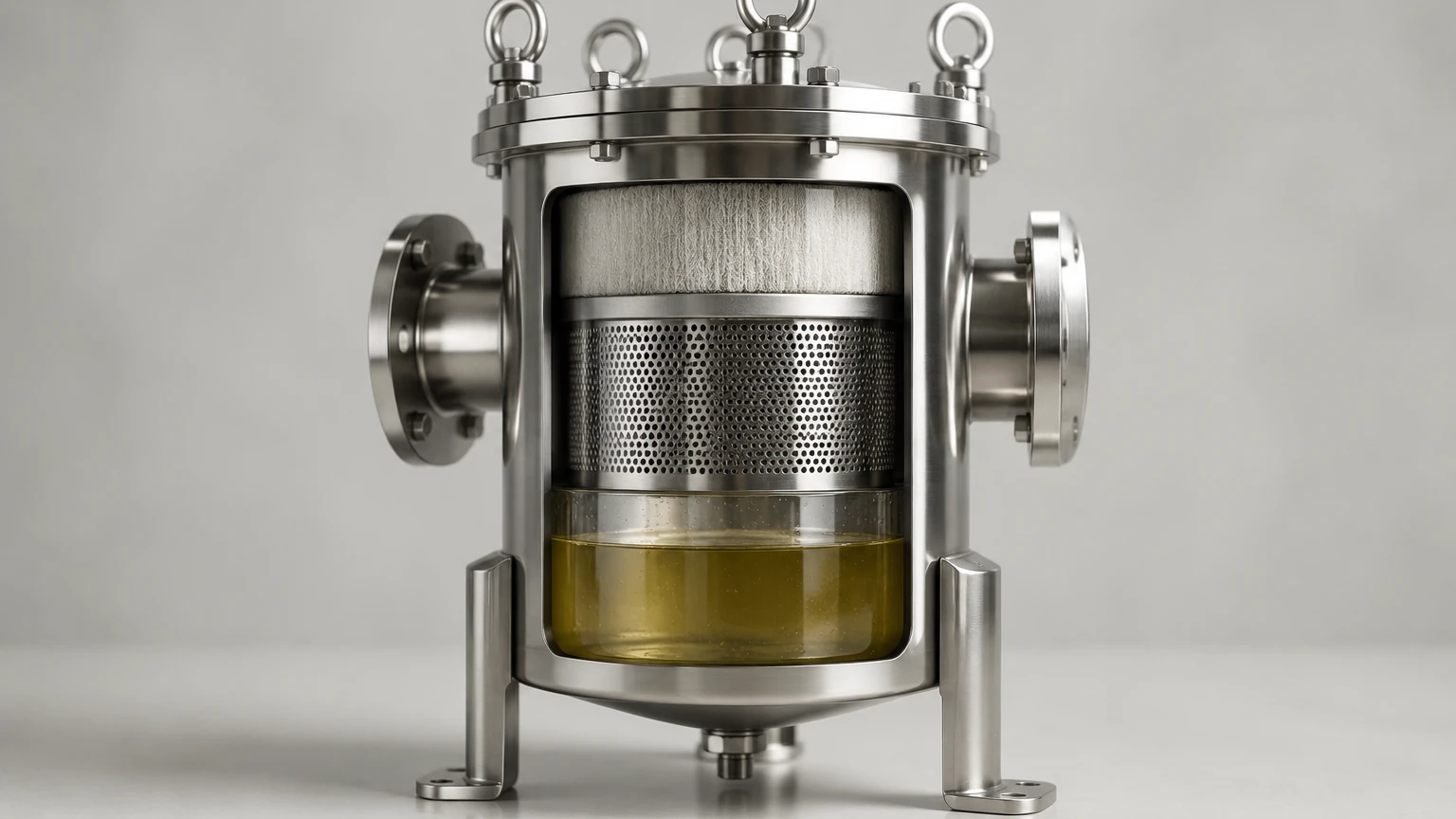
Coalescing oil water separators utilize internal media to accelerate the separation process. As oily water passes through a coalescing matrix—often constructed from layers of stainless steel wire mesh or specialized cartridges—small oil droplets collide with the surface of the media. These droplets attach to the media, merge with other droplets (coalesce), and grow in size until they possess enough buoyancy to rise rapidly to the surface for removal. This method allows for the capture of droplets as small as 20 microns, significantly improving effluent quality.
The Role of Stainless Steel Components in Filtration
The internal components of an oil water separator are subjected to constant flow, potential chemical corrosion, and temperature fluctuations. While plastic media is sometimes used in light-duty applications, stainless steel remains the material of choice for industrial-grade systems.
Durability and Chemical Resistance
Stainless steel (typically Grades 304 or 316L) provides the structural integrity required to withstand high-pressure flows and aggressive chemical cleaning agents. In industries like chemical processing or oil and gas, where the fluid may contain acidic or alkaline components, stainless steel prevents the premature degradation of the coalescing media. This ensures that the filtration efficiency remains consistent over the equipment's lifecycle.
Precision Wire Mesh Design
Custom-manufactured wire mesh filters are integral to high-efficiency separators. The weave pattern, wire diameter, and pore size must be precisely engineered to balance separation efficiency with pressure drop. A mesh that is too fine may clog rapidly with suspended solids, while a mesh that is too coarse will fail to capture smaller oil droplets. Engineering teams must specify these parameters based on the specific viscosity and surface tension of the oils being processed.
Key Evaluation Criteria for Selecting an Oil Water Separator
When evaluating an oil water separator for a specific facility, several technical factors must be confirmed to ensure the system meets performance expectations without excessive maintenance costs.
1. Flow Rate and Retention Time
The volume of fluid processed per hour directly impacts the "retention time"—the duration the fluid stays within the separator. If the flow rate exceeds the design capacity, the velocity of the water may carry oil droplets through the system before they have time to rise or coalesce. Engineers must calculate peak flow rates, not just average flows, to prevent system bypass during heavy load periods.
2. Oil Concentration and Type
It is essential to identify the state of the oil in the water:
* Free Oil: Large droplets that rise quickly.
* Dispersed Oil: Smaller droplets (20–150 microns) requiring coalescing media.
* Emulsified Oil: Droplets smaller than 20 microns, often stabilized by surfactants or mechanical shear. Standard mechanical separators cannot break chemical emulsions; these require secondary treatment like DAF (Dissolved Air Flotation) or chemical flocculation.
3. Operating Temperature
Temperature affects the viscosity of both the oil and the water. Higher temperatures generally reduce water viscosity, which, according to Stokes' Law, allows oil droplets to rise faster. However, high temperatures can also weaken certain synthetic filter materials, making stainless steel cartridges a more reliable choice for high-temperature process streams.
Technical Challenges and Risk Mitigation
Even a well-designed oil water separator can face operational challenges if not properly maintained or if the influent characteristics change. Understanding these risks is vital for long-term reliability.
Managing Suspended Solids
Industrial wastewater rarely contains only oil and water. Suspended solids (silt, scale, or biological matter) can accumulate on the coalescing media. If the media is not designed for easy cleaning or backwashing, these solids will create a pressure drop, reducing flow and potentially forcing oil through the filter. Using stainless steel mesh allows for more aggressive cleaning methods, such as high-pressure washing or chemical soaking, which would damage synthetic alternatives.
Preventing Short-Circuiting
Short-circuiting occurs when the fluid takes a direct path from the inlet to the outlet without spreading across the full volume of the separator. This reduces the effective retention time. Proper baffle design and the strategic placement of metal filter components ensure a uniform flow distribution, maximizing the contact time between the oily water and the coalescing surfaces.
Customization and OEM Solutions for Industrial Applications
Standard off-the-shelf separators often fail to meet the unique constraints of specialized industrial processes. Customization is frequently required in the following areas:
* Material Selection: For highly corrosive environments, alloys like 904L or Duplex stainless steel may be necessary for the internal filter elements.
* Configuration: Separators may need to be integrated into existing skids where space is limited, requiring custom-sized filter cartridges or unique housing geometries.
* Micron Ratings: Depending on the discharge permit (e.g., 5 ppm vs. 15 ppm oil-in-water), the coalescing media's precision must be adjusted to target specific droplet sizes.
Working with a manufacturer that specializes in custom stainless steel filtration solutions allows engineers to fine-tune these variables. By optimizing the internal wire mesh and cartridge designs, facilities can achieve higher purity levels and longer service intervals.
Total Cost of Ownership and Operational Efficiency
While the initial purchase price of an oil water separator is a significant factor, the total cost of ownership (TCO) is driven by maintenance, replacement parts, and energy consumption.
Maintenance Cycles
Systems utilizing high-quality stainless steel components typically have longer maintenance cycles. Unlike disposable plastic filters that must be replaced frequently, stainless steel mesh can often be cleaned and reused for several years. This reduces the cost of consumables and minimizes downtime associated with filter changes.
Energy and Pressure Drop
A poorly designed filter element creates a high pressure drop, requiring more powerful pumps and increasing energy consumption. Engineering the filtration media to provide the lowest possible resistance while maintaining the required capture efficiency is key to operational economy. Precision-manufactured wire mesh provides a high open-area ratio, which helps maintain low differential pressure.
Conclusion
The selection of an oil water separator is a critical decision for any industrial facility managing hydrocarbon-contaminated water. By focusing on the underlying physics of separation and the material science of the internal components, engineers can ensure their systems provide reliable, long-term performance. Stainless steel filtration elements, characterized by their durability and precision, play a fundamental role in the efficiency of these systems. For technical professionals seeking to optimize their filtration processes, understanding these engineering nuances is the first step toward achieving superior water quality and operational reliability.
