


Reticulated Polyurethane Foam
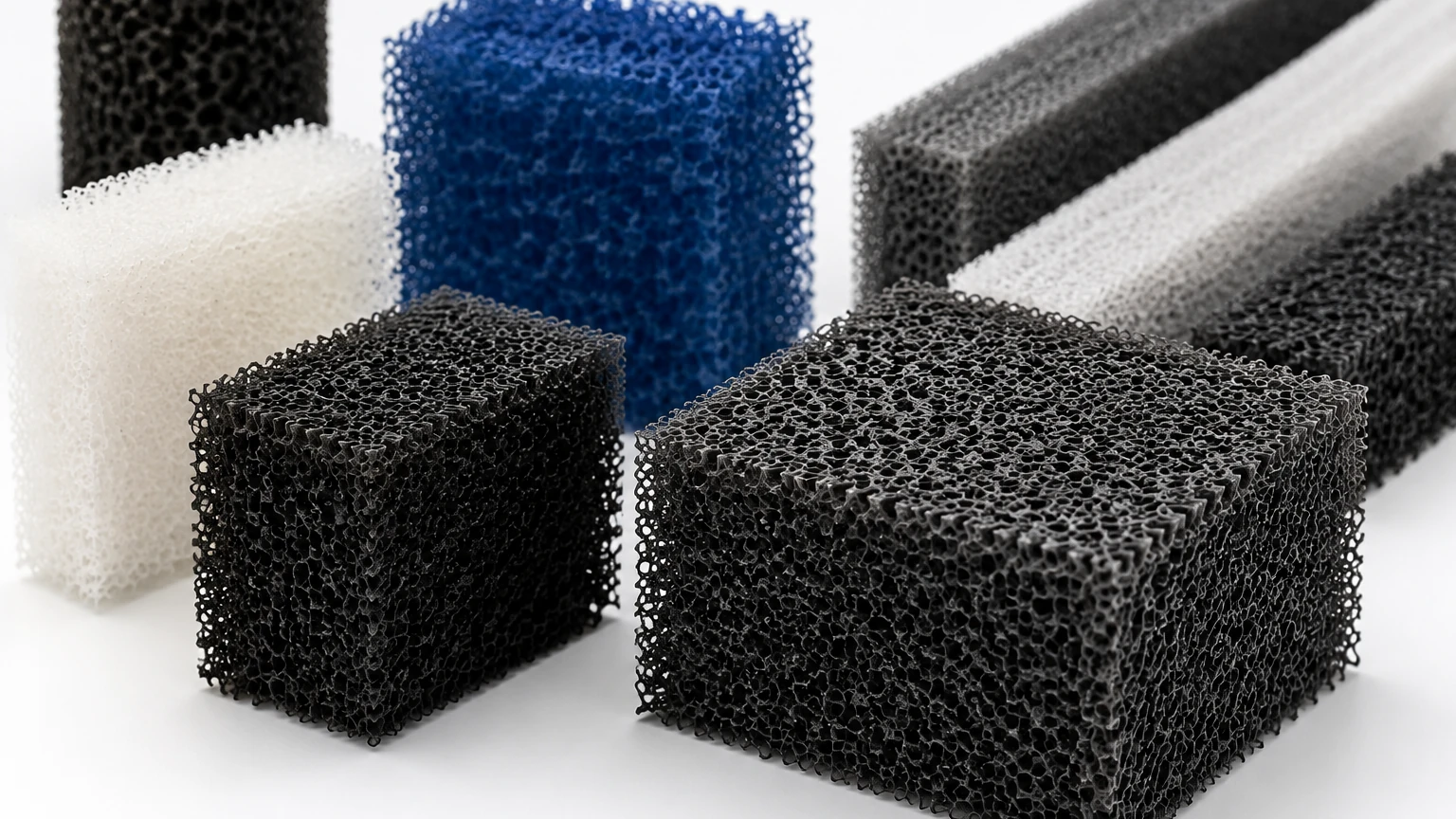
In the landscape of industrial filtration and fluid management, reticulated polyurethane foam stands as a versatile, open-cell material characterized by a unique skeletal structure. Unlike standard flexible foams, which contain a mix of open and closed cells, reticulated foam undergoes a specialized manufacturing process to remove the cell membranes (or "windows"), leaving only a three-dimensional network of polymer strands. This high-porosity architecture makes it an essential component in applications ranging from air and water filtration to acoustic absorption and ceramic filter substrates.
For engineers and procurement professionals, understanding the technical nuances of reticulated polyurethane foam is critical when selecting filtration media. While Kaifil specializes in high-precision stainless steel filtration solutions, many industrial systems utilize polyurethane foam as a primary or pre-filtration stage. Evaluating its performance characteristics, material chemistry, and limitations ensures that the entire filtration sequence—including downstream precision metal components—operates at peak efficiency.
The Reticulation Process and Pore Structure
The defining characteristic of reticulated polyurethane foam is its "openness." In standard foam production, gas bubbles create cells, but the thin walls between these cells often remain intact. Reticulation is a post-processing step that eliminates these walls. The two primary methods for achieving this are thermal reticulation and chemical reticulation.
Thermal reticulation, often called "zapping," involves placing the foam in a vacuum pressure vessel filled with a combustible gas mixture. Upon ignition, a controlled flash flame travels through the foam, melting the thin cell membranes without damaging the thicker skeletal strands. Chemical reticulation, conversely, involves submerging the foam in a caustic solution that dissolves the membranes.
The resulting structure is measured in Pores Per Inch (PPI). This metric is the standard for specifying reticulated foam:
* 10–30 PPI: Large pores, used for coarse filtration, such as pre-filters for HVAC systems or biological filters in aquaculture.
* 45–70 PPI: Medium density, suitable for small engine air filters and general industrial dust collection.
* 80–100+ PPI: Fine pores, used in specialized applications requiring high surface area, such as cosmetic applicators or fine mist eliminators.
Material Chemistry: Polyester vs. Polyether
When specifying reticulated polyurethane foam, the choice between polyester and polyether chemistry is the most significant engineering decision. Although they may appear identical, their performance in specific environments differs drastically.
Polyester-Based Foam
Polyester reticulated foam is known for its superior physical strength and resistance to hydrocarbons. It exhibits high tensile strength, tear resistance, and elongation. From a chemical perspective, it is highly resistant to petroleum products, oils, and common solvents. This makes it the preferred choice for automotive air filters and industrial lubricant filtration. However, polyester foam is susceptible to hydrolysis—the breakdown of the polymer chain when exposed to moisture and heat over long periods.
Polyether-Based Foam
Polyether reticulated foam is engineered for environments involving water and high humidity. It possesses excellent hydrolytic stability, meaning it will not crumble or degrade when submerged in water or used in damp outdoor environments. While it generally has lower tensile strength and less resistance to oils compared to polyester, its longevity in aqueous applications makes it the standard for water treatment pre-filters and outdoor equipment.
Key Performance Metrics for Industrial Filtration
To integrate reticulated polyurethane foam into a system effectively, engineers must evaluate several performance benchmarks. These metrics determine how the foam will interact with the fluid (liquid or gas) and the impact it will have on system energy consumption.
1. Pressure Drop (Delta P)
One of the primary advantages of reticulated foam is its extremely low resistance to flow. Because the material is approximately 95% to 98% void space, it allows high volumes of air or liquid to pass through with minimal pressure drop. This is a critical factor for systems where blower or pump energy must be minimized.
2. Dust Holding Capacity
The three-dimensional nature of the foam allows for "depth filtration." Unlike a flat screen that captures particles only on its surface, reticulated foam captures particles throughout its entire thickness. This results in a higher dust holding capacity, extending the time between maintenance cycles.
3. Chemical and Thermal Stability
While polyurethane is versatile, it has defined thermal limits. Most reticulated foams are rated for continuous use between -40°C and 100°C (-40°F to 212°F). Beyond these temperatures, the polymer may soften or become brittle. For applications exceeding these ranges, engineers typically transition to metal-based filtration solutions, such as those found on the Kaifil Main Page.
Reticulated Foam vs. Stainless Steel Filtration
In many industrial processes, reticulated polyurethane foam and stainless steel wire mesh are used in tandem. Understanding where one ends and the other begins is vital for optimized system design.
| Feature | Reticulated Polyurethane Foam | Stainless Steel (Wire Mesh/Sintered) |
| :— | :— | :— |
| Durability | Limited; disposable or limited wash cycles | High; permanent and cleanable |
| Temperature Limit | ~100°C | Up to 800°C+ (depending on alloy) |
| Chemical Resistance | Specific to Polyether/Polyester | Broad (304, 316L, Inconel) |
| Filtration Logic | Depth filtration (coarse) | Surface or Depth (precision) |
| Cost | Low initial cost | Higher initial investment, lower TCO |
Reticulated foam is often employed as a sacrificial pre-filter. By capturing large particulates (100 microns and above), it protects more expensive, high-precision stainless steel filter cartridges from premature clogging. This staged approach balances cost-effectiveness with high-purity output.
Common Risks and Engineering Considerations
Despite its utility, reticulated polyurethane foam presents certain risks if misapplied. Engineers should confirm the following before finalizing a specification:
* Outgassing: In sensitive electronics or aerospace applications, the residual chemicals from the reticulation process can outgas, potentially contaminating sensitive components. Specifying "low-outgassing" grades is necessary in these contexts.
* UV Degradation: Polyurethane is sensitive to ultraviolet light. If used in outdoor applications without protective housing, the foam will eventually yellow, become brittle, and lose its structural integrity.
* Compression Set: If the foam is compressed within a housing to create a seal, it may undergo "compression set," where it fails to return to its original thickness. This can lead to bypass, where unfiltered fluid flows around the edges of the foam rather than through it.
* Media Migration: In high-velocity streams, there is a risk that small fragments of the foam skeletal structure (ligaments) could break off and enter the downstream flow. This is a primary reason why precision industries, such as pharmaceuticals or semiconductor manufacturing, prefer the structural integrity of sintered metal filters for final-stage filtration.
Selection and Customization Guidance
When sourcing reticulated polyurethane foam, the "off-the-shelf" approach is rarely sufficient for specialized industrial equipment. Customization options usually include:
1. Thickness and Shape: Foam can be die-cut, CNC routed, or water-jet cut into complex geometries to fit specific filter housings.
2. Impregnation: The foam can be coated with functional materials. For example, carbon-impregnated foam is used for odor removal, while PVC-coated foam provides enhanced chemical resistance and rigidity.
3. Felted Foam: Reticulated foam can be compressed under heat to create "felted" foam. This process increases the density and reduces the pore size, allowing for much finer filtration and higher flow resistance when needed.
Conclusion
Reticulated polyurethane foam is a foundational material in the world of industrial filtration, offering a unique combination of high porosity, low pressure drop, and depth-loading capability. Whether used as a standalone filter for rugged air intake systems or as a pre-filter to protect precision metal components, its role is vital for maintaining system longevity.
For engineers designing systems that demand the highest levels of durability, chemical resistance, and filtration accuracy, transitioning from polymer foams to custom-engineered metal solutions is often the next logical step. To explore advanced stainless steel wire mesh filters and precision filtration components that complement or replace foam media in demanding environments, visit the Kaifil Main Page for detailed product specifications and application support. Ensuring the correct synergy between pre-filtration media like reticulated foam and final-stage precision filters is the key to achieving efficient, cost-effective, and reliable industrial performance.
