


Filter on
In industrial process engineering, the decision to implement a filter on a production line is driven by the necessity to protect downstream equipment, ensure product purity, and maintain systemic efficiency. Whether in chemical processing, pharmaceutical manufacturing, or high-pressure hydraulic systems, the presence of a reliable filter on the fluid stream acts as a critical safeguard against contamination and mechanical wear. For engineers and procurement specialists, understanding the technical nuances of stainless steel filtration media is essential for optimizing performance and minimizing the total cost of ownership.
Selecting the right filtration solution requires a deep dive into material science, fluid dynamics, and mechanical engineering. Stainless steel, particularly in the form of wire mesh and sintered metal cartridges, has become the industry standard for demanding environments due to its thermal stability, chemical resistance, and structural integrity. When evaluating a filter on its ability to meet specific industrial standards, professionals must look beyond simple micron ratings and consider the complex interplay of flow rates, pressure differentials, and cleaning protocols.
Engineering Considerations for Implementing a Filter on Process Lines
The integration of a filter on an industrial line begins with a comprehensive analysis of the operating environment. Unlike disposable plastic or paper filters, stainless steel components are designed for longevity and reuse, but their performance is highly dependent on correct specification.
Material Selection and Chemical Compatibility
One of the primary advantages of utilizing a stainless steel filter on a chemical or food-grade line is the material's inherent resistance to corrosion. Grade 304 stainless steel is often sufficient for standard applications, providing excellent durability and oxidation resistance. However, in environments involving high chloride concentrations or acidic solutions—common in marine and chemical processing—Grade 316L is preferred. The addition of molybdenum in 316L enhances its resistance to pitting and crevice corrosion, ensuring the filter on the line does not become a source of metallic contamination itself.
Flow Rate and Pressure Drop ($\\Delta P$)
Every filter on a pressurized system introduces a degree of resistance. Engineers must calculate the initial pressure drop to ensure the pump system can handle the added load without compromising flow velocity. A high-quality stainless steel filter on a high-viscosity fluid line must feature a high percentage of open area to facilitate flow while maintaining particle retention. If the pressure drop is too high from the outset, the operational window before the filter requires cleaning or replacement becomes unfeasibly narrow.
Selecting Filtration Media Based on Particle Characteristics
The effectiveness of a filter on any given application is determined by the geometry and structure of the filtration media. Kaifil specializes in various wire mesh weaves and sintered structures that cater to diverse industrial needs.
Wire Mesh Weave Types
* Plain Weave: The most common structure where wires cross over and under each other. It provides a consistent pore size and is ideal for basic straining and high-flow applications.
* Dutch Weave: This weave uses heavier warp wires and finer shute wires, resulting in a much denser mesh with higher strength and finer filtration capabilities. A Dutch weave filter on a high-pressure line offers superior resistance to deformation.
* Twilled Dutch Weave: Combining twill and Dutch weave techniques, this structure allows for the finest filtration levels, often down to the sub-micron range, while maintaining the mechanical strength necessary for industrial use.
Absolute vs. Nominal Filtration
When specifying a filter on a critical process, the distinction between nominal and absolute ratings is vital. A nominal rating refers to a filter's ability to retain a major percentage (usually 60% to 90%) of particles of a certain size. In contrast, an absolute rating indicates that 99.9% or more of particles above the specified micron size will be captured. For pharmaceutical or high-purity chemical applications, an absolute-rated filter on the final stage of processing is often a regulatory requirement.
Operational Parameters: Maintaining the "Filter On" Status
Once a filter is installed, maintaining its "Filter On" status—meaning its active, efficient operation—requires diligent monitoring. The primary indicator of a filter's health is the differential pressure. As particles accumulate on the surface or within the depth of the media, the resistance to flow increases.
Differential Pressure Monitoring
Industrial systems should be equipped with sensors to monitor the pressure before and after the filter. A sudden spike in differential pressure may indicate a process upset or a surge in contaminant loading. Conversely, a sudden drop in differential pressure could signify a breach in the filter media or a failure of the internal seals. Establishing a "terminal differential pressure" setpoint allows maintenance teams to schedule cleaning or replacement before the filter on the line fails or causes upstream damage.
Cleaning and Regeneration
One of the most significant benefits of a stainless steel filter on a production line is its cleanability. Depending on the contaminant, filters can be regenerated using several methods:
* Backwashing: Reversing the flow of fluid to dislodge particles from the mesh surface.
* Ultrasonic Cleaning: Using high-frequency sound waves in a solvent bath to remove fine particles trapped deep within the mesh or sintered pores.
* Chemical Cleaning: Utilizing specific acids or bases to dissolve organic or inorganic scaling without damaging the stainless steel substrate.
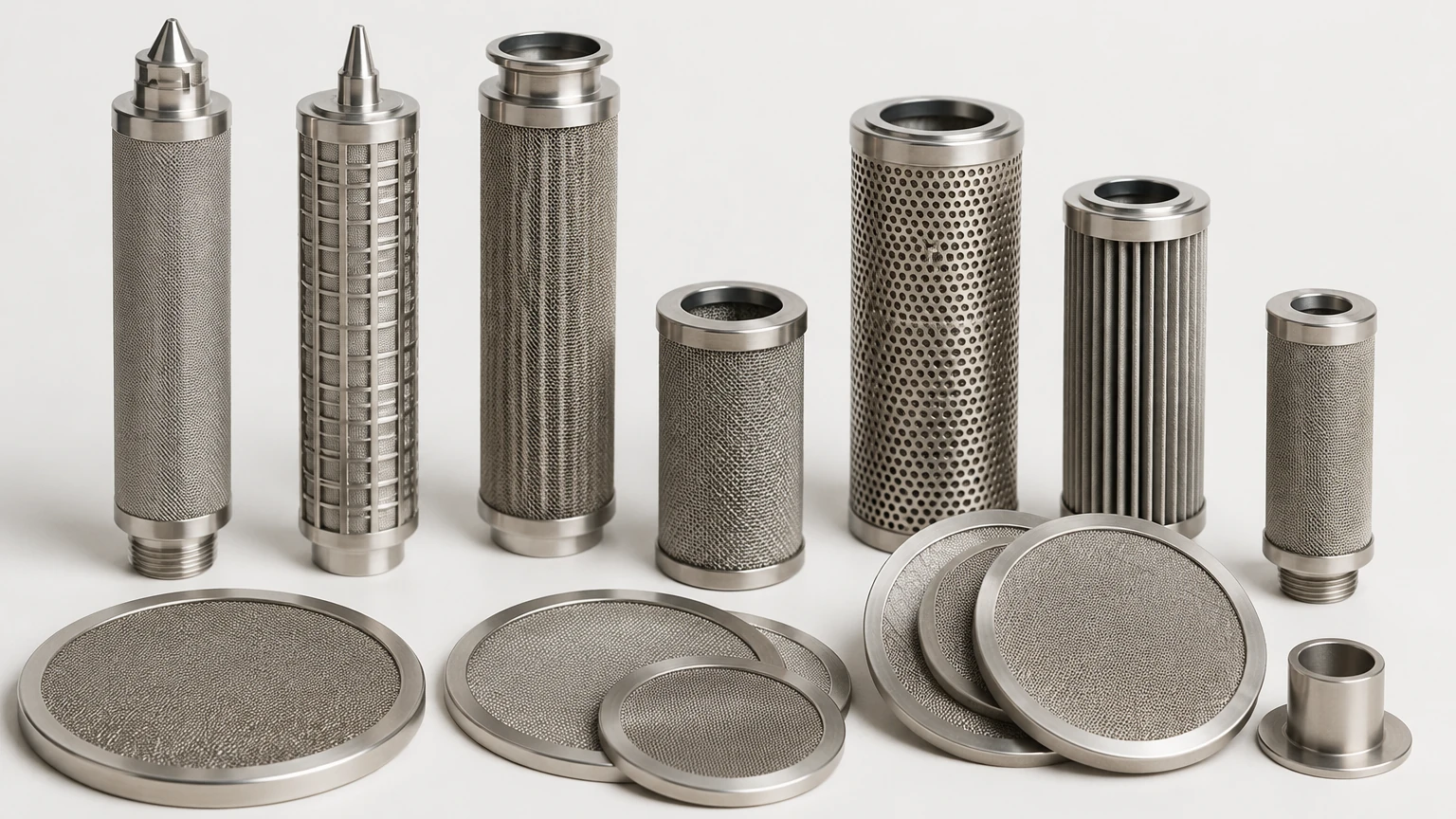
Customization and OEM Solutions for Specific Applications
Standard off-the-shelf filters often fail to meet the unique constraints of specialized industrial equipment. Customization is where engineering expertise becomes a decisive factor. When designing a filter on behalf of an OEM (Original Equipment Manufacturer), several variables must be tailored to the specific machine or process.
Geometry and Fittings
Industrial filters come in various forms, including cylindrical cartridges, pleated elements, disc filters, and conical strainers. The choice of geometry affects the total filtration surface area. For instance, a pleated filter on a compact hydraulic system provides significantly more surface area than a standard cylindrical element, allowing for higher dirt-holding capacity in a smaller footprint. Custom fittings, such as NPT threads, flange mounts, or quick-disconnect couplings, ensure a leak-proof integration into the existing piping architecture.
Multi-Layer Sintered Mesh
For applications involving extreme pressures or high-velocity flows, a single layer of wire mesh may lack the necessary structural support. Sintered mesh involves bonding multiple layers of wire cloth together through a heat-treatment process. This creates a robust, integrated filter on a molecular level that combines a fine filtration layer with several support and drainage layers. This technology is frequently used in polymer filtration and high-temperature gas processing.
Total Cost of Ownership and Lifecycle Management
While the initial investment in a stainless steel filter on a process line may be higher than disposable alternatives, the total cost of ownership (TCO) is typically much lower over the lifecycle of the equipment. Engineers must account for the costs associated with downtime, disposal of hazardous waste (used disposable filters), and the risk of catastrophic failure.
Durability and Sustainability
Stainless steel filters can last for years, if not decades, with proper maintenance. This longevity reduces the frequency of procurement cycles and minimizes the environmental impact associated with disposing of spent filter cartridges. Furthermore, the predictable performance of a high-quality filter on a critical line reduces the risk of producing off-spec products, which can result in significant financial losses in industries like food and beverage or pharmaceuticals.
Quality Assurance and Testing
To ensure that every filter on the market meets the rigorous demands of industry, manufacturers like Kaifil employ various testing protocols. These include bubble point tests to verify pore integrity, flow fatigue testing to ensure structural durability under fluctuating pressures, and material certification to guarantee the chemical composition of the stainless steel. When purchasing filtration components, requesting these test reports is a standard best practice for quality-conscious engineering teams.
Conclusion and Technical Support
Implementing an effective filter on an industrial process is a multi-faceted challenge that requires a balance of mechanical strength, filtration precision, and operational efficiency. By selecting high-quality stainless steel media and tailoring the design to the specific needs of the application, companies can achieve superior process control and equipment protection.
For those seeking to optimize their filtration systems or develop custom OEM components, partnering with a manufacturer that understands the complexities of metal mesh and sintered structures is essential. To explore technical specifications, Review product options and application support on the Kaifil website. Accessing professional guidance during the design phase ensures that the filter on your line is not just a component, but a high-performance asset that contributes to the long-term success of your industrial operations.
