


Water Treatment Mesh Suppliers
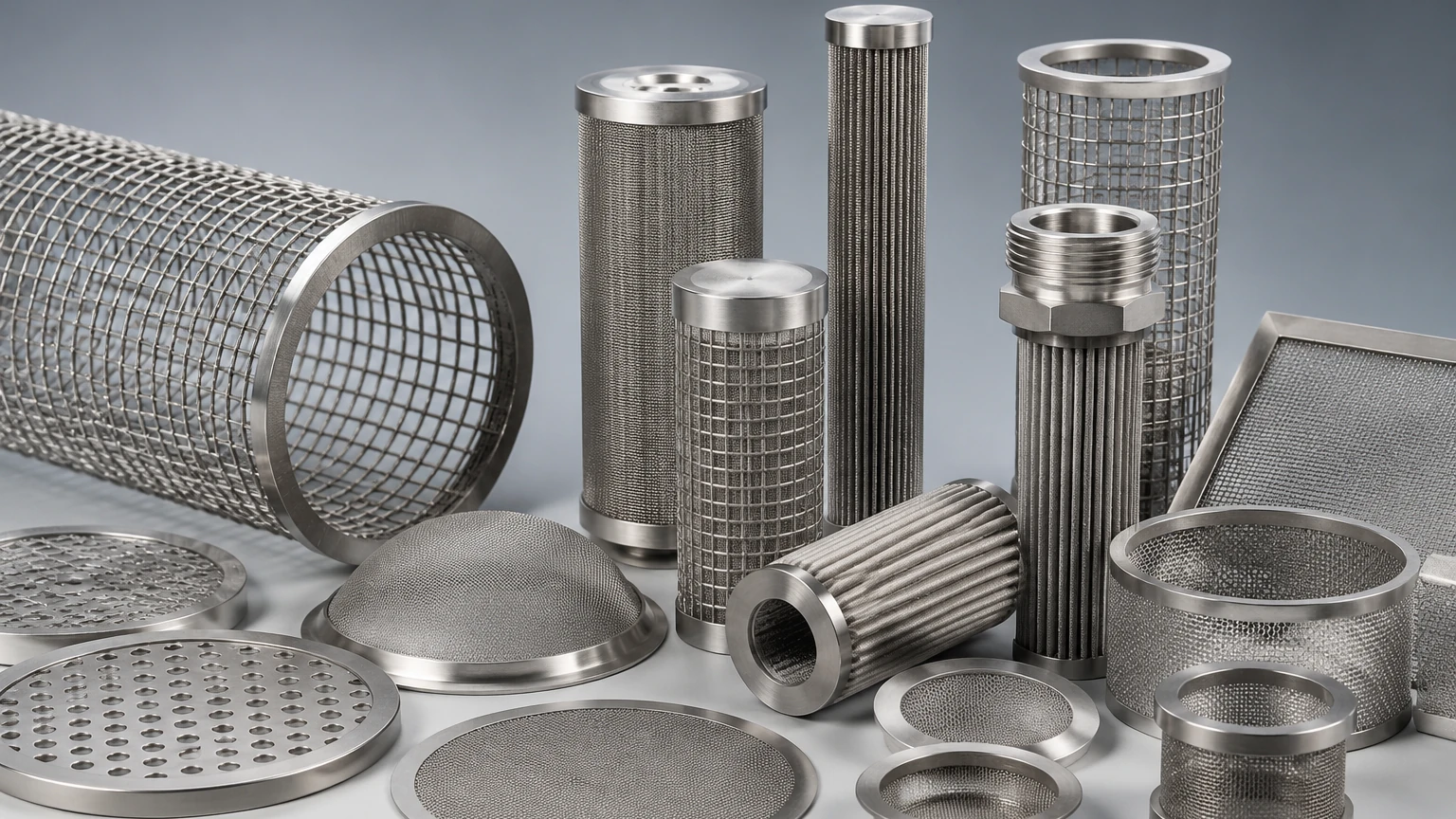
In the complex landscape of industrial liquid processing, the selection of filtration media is a critical engineering decision that dictates the efficiency, longevity, and operational cost of the entire system. Stainless steel wire mesh has emerged as a gold standard for water treatment due to its mechanical strength, chemical resistance, and precise filtration apertures. However, the performance of these components is heavily dependent on the capabilities of the chosen water treatment mesh suppliers. For engineers and procurement managers, identifying a partner who understands the nuances of fluid dynamics and material science is essential for maintaining system integrity.
As a professional manufacturer specializing in custom stainless steel filtration solutions, Kaifil provides the technical expertise required to navigate these challenges. From initial material selection to the production of complex filter cartridges, the focus remains on delivering high-performance components for demanding industrial environments. To explore the full range of manufacturing capabilities and precision filtration products, technical professionals often begin by reviewing the Main Page to align their specific project requirements with available engineering solutions.
The Role of Stainless Steel Mesh in Modern Water Treatment
Industrial water treatment encompasses a wide array of processes, including raw water intake, process water purification, and wastewater reclamation. In each of these stages, the primary goal of a mesh filter is to provide a reliable physical barrier against particulate matter. Unlike polymer-based filters or sand media, stainless steel mesh offers a rigid structure that does not deform under high differential pressure, ensuring that the filtration rating remains constant throughout the service cycle.
Selecting the appropriate alloy is the first step in the engineering process. For most general-purpose industrial applications, Grade 304 stainless steel provides adequate corrosion resistance and durability. However, in environments involving brackish water, high chloride concentrations, or aggressive chemical cleaning agents, Grade 316L is the preferred choice. The low carbon content and the addition of molybdenum in 316L significantly enhance resistance to pitting and crevice corrosion, which are common failure modes in water treatment infrastructure. Reliable water treatment mesh suppliers must provide full material traceability and certifications to ensure that the alloy used matches the specified design requirements.
Technical Specifications: Weave Patterns and Micron Ratings
The performance of a wire mesh filter is defined by its weave pattern, which determines both the filtration accuracy and the flow characteristics. Understanding these technical nuances is vital for engineers when communicating with water treatment mesh suppliers.
Plain and Twill Weaves
Plain weave is the most common configuration, where each shute wire passes over and under one warp wire. This creates a square opening and is ideal for high-flow applications where coarse to medium filtration is required. Twill weave, on the other hand, allows for a heavier wire diameter by passing each shute wire over and under two warp wires. This increases the mechanical strength of the mesh, making it suitable for high-pressure environments where a standard plain weave might suffer from wire displacement.
Dutch Weaves for Precision Filtration
For applications requiring fine filtration (below 50 microns), Dutch weaves are often employed. Plain Dutch weave uses a larger diameter warp wire and a smaller shute wire, resulting in a dense, multi-layered mesh with no visible openings when viewed directly. This structure provides high-pressure resistance and excellent filtration efficiency. Twilled Dutch weave takes this a step further, offering even finer filtration ratings—often down to 1 to 5 microns—making it an essential component in high-purity water polishing and sensitive hydraulic systems.
Absolute vs. Nominal Filtration
A common point of confusion in procurement is the distinction between absolute and nominal micron ratings. A nominal rating refers to an approximate filtration level (e.g., 90% of particles of a certain size are retained), whereas an absolute rating indicates the size of the largest spherical particle that can pass through the mesh under laboratory conditions. Engineers must confirm that their water treatment mesh suppliers use standardized testing methods, such as the bubble point test, to verify absolute ratings for critical applications.
Evaluating Water Treatment Mesh Suppliers: Key Competencies
Choosing a supplier involves more than comparing price points; it requires an evaluation of the manufacturer’s engineering depth and quality control systems. In the B2B sector, a supplier acts as a technical partner rather than just a vendor.
Engineering and OEM Capabilities
Industrial systems often require non-standard filter dimensions or specialized end-cap configurations. A top-tier supplier should offer comprehensive OEM services, including the ability to design and manufacture custom filter cartridges, pleated mesh elements, and reinforced filter baskets. This includes the integration of support cores or outer shrouds to prevent the mesh from collapsing under high-pressure surges. The ability to provide 3D CAD models and technical drawings during the design phase is a hallmark of a professional manufacturer.
Quality Control and Material Verification
In water treatment, the cost of a filter failure can be catastrophic, leading to downstream equipment damage or contaminated process water. Suppliers must implement rigorous quality management systems. This includes Positive Material Identification (PMI) to verify alloy composition, ultrasonic cleaning to remove manufacturing residues, and precise welding techniques—such as TIG or plasma welding—to ensure seam integrity without introducing localized corrosion points.
Technical Support and Application Guidance
Experienced water treatment mesh suppliers help engineers calculate the "clean pressure drop" across a filter element. If the pressure drop is too high, it leads to increased energy consumption and reduced flow rates. By analyzing the fluid viscosity, flow rate, and particulate load, the supplier can recommend a mesh configuration that balances filtration efficiency with operational economy.
Industrial Applications and Performance Requirements
Stainless steel mesh filters are utilized across diverse sectors, each with specific performance benchmarks that the supplier must meet.
Pre-Filtration for Reverse Osmosis (RO)
In desalination and high-purity water plants, RO membranes are highly susceptible to fouling. Stainless steel mesh pre-filters remove suspended solids and silt that would otherwise clog the membranes. Because these filters can be backwashed and reused, they offer a more sustainable and cost-effective alternative to disposable melt-blown cartridges.
Cooling Tower and Heat Exchanger Protection
Cooling water systems are prone to scale buildup and debris accumulation. High-flow mesh filters are installed to protect heat exchangers from fouling, which maintains thermal efficiency and reduces the frequency of mechanical cleaning. In these applications, the durability of the mesh is paramount, as it must withstand continuous flow and potential abrasive contact with sand or scale particles.
Food, Beverage, and Pharmaceutical Processing
In these industries, filtration components must comply with strict hygienic standards. Stainless steel is the material of choice because it is non-leaching and can withstand Clean-in-Place (CIP) procedures involving high temperatures and caustic chemicals. Suppliers serving these sectors must ensure that their products are free from lubricants or contaminants used during the weaving process.
Maintenance, Longevity, and Total Cost of Ownership (TCO)
One of the most compelling arguments for sourcing from high-quality water treatment mesh suppliers is the reduction in the Total Cost of Ownership. While the initial investment in a stainless steel filter is higher than that of a polymer or paper filter, the long-term savings are significant.
Cleanability and Reusability
Unlike disposable filters that must be discarded once they reach their terminal pressure drop, stainless steel mesh can be cleaned multiple times. Cleaning methods vary depending on the nature of the contaminant:
* Backwashing: Reversing the flow of water to dislodge surface particles.
* Ultrasonic Cleaning: Using high-frequency sound waves in a cleaning solution to remove particles trapped deep within the weave.
* Chemical Soaking: Using specific solvents or acids to dissolve organic or mineral buildup.
Reduced Downtime and Waste
By using durable metal filters, facilities reduce the frequency of system shutdowns required for filter changes. Furthermore, the elimination of disposable filter waste aligns with corporate sustainability initiatives and reduces environmental disposal fees. A supplier that provides clear maintenance protocols and cleaning guidelines adds significant value to the procurement process.
Customization and Collaborative Engineering with Kaifil
At Kaifil, the manufacturing process is built around the specific needs of the industrial client. Recognizing that no two water treatment systems are identical, the company focuses on delivering bespoke filtration components that integrate seamlessly into existing infrastructure. Whether the requirement is for a high-volume water intake screen or a precision sub-micron filter for a pharmaceutical process, the engineering team works closely with clients to optimize mesh selection.
This collaborative approach extends to the development of multi-layered sintered mesh, where multiple layers of wire cloth are bonded together through heat and pressure. This creates a filter medium with the filtration accuracy of fine mesh and the mechanical strength of heavy plate, making it ideal for the most demanding high-pressure water treatment applications. For a detailed overview of these advanced filtration technologies and to consult with technical experts, visiting the Main Page provides the necessary starting point for a successful partnership.
Strategic Procurement: Questions for Potential Suppliers
To ensure a successful procurement cycle, engineering and purchasing teams should pose the following questions to prospective water treatment mesh suppliers:
1. What is the maximum operating temperature and pressure for this specific mesh design?
2. Can you provide a certificate of conformance and a material test report (MTR) for each batch?
3. What is the expected service life of the mesh under my specific operating conditions (e.g., pH levels, flow velocity)?
4. Do you offer specialized surface treatments, such as passivating or electropolishing, to enhance corrosion resistance?
5. How do you handle the validation of micron ratings for critical filtration stages?
By addressing these technical details upfront, organizations can avoid the common pitfalls of industrial filtration and ensure that their water treatment systems operate at peak efficiency for years to come. The right supplier does not just provide a product; they provide a solution that enhances the reliability of the entire industrial process.
