


Recessed Filter Press
In the landscape of industrial solid-liquid separation, the recessed filter press stands as a cornerstone technology for high-efficiency dewatering and filtrate recovery. Utilized extensively across chemical processing, mining, wastewater treatment, and food and beverage production, this equipment relies on the fundamental principles of pressure filtration to achieve high solids concentration in the resulting filter cake. For engineers and procurement specialists, understanding the mechanical nuances, material requirements, and filtration media selection is critical to optimizing operational uptime and ensuring process consistency.
At its core, the recessed filter press is a batch-operation machine that utilizes a series of recessed plates to create chambers where solids are trapped while the liquid phase, or filtrate, is forced through a filter medium. The performance of these systems is heavily dependent on the precision of the internal components, particularly the filtration media and the structural integrity of the plates. As a manufacturer specializing in custom stainless steel filtration solutions, Kaifil provides the technical expertise and precision components required to enhance the durability and efficiency of these industrial systems. For more detailed information on specific filtration components, visit the Main Page to review product options and application support.
Operating Principles of a Recessed Filter Press
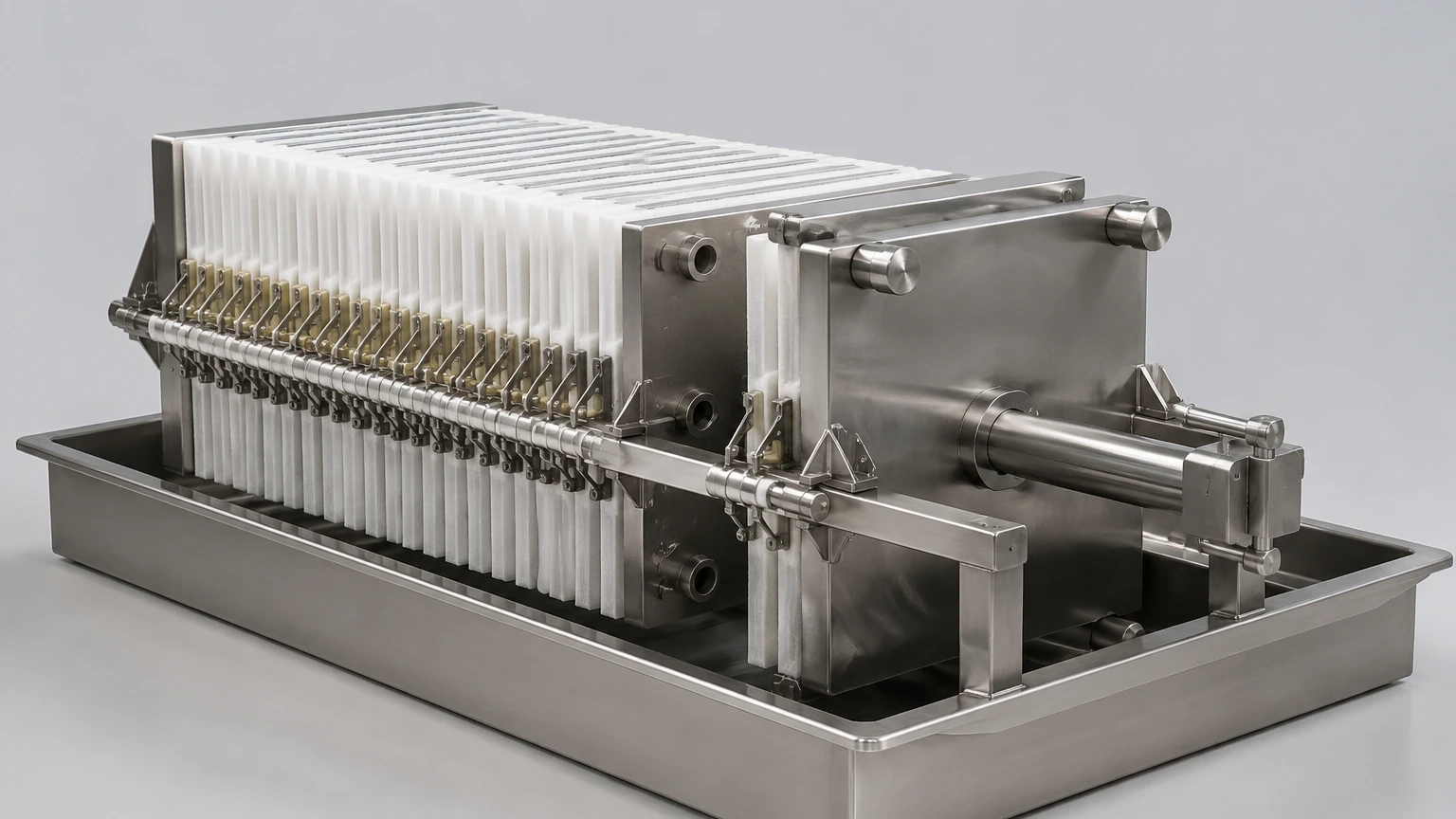
The operation of a recessed filter press follows a cyclical process: closing, filling, filtration, and cake discharge. The process begins when a hydraulic ram compresses a stack of recessed plates together, forming a series of sealed internal chambers. Each plate has a concave area on both sides, which, when pressed against the adjacent plate, creates a void or "recess" that serves as the collection point for the solid material.
Once the stack is sealed, the slurry is pumped into the press under high pressure. The slurry enters through a central feed port and distributes across all chambers simultaneously. The filter medium—typically a specialized cloth or a precision-engineered stainless steel mesh—covers the surface of the recessed plates. As the pressure increases, the liquid is forced through the medium, traveling through drainage grooves on the plate surface and exiting via discharge manifolds. The solid particles are retained within the chambers, gradually building up a "filter cake."
Filtration continues until the chambers are full or the flow rate of the filtrate drops below a predetermined threshold, indicating that the cake has reached maximum density. At this stage, the pump is stopped, and the hydraulic pressure is released. The plates are then moved individually or in groups to allow the solid cakes to fall out by gravity. The efficiency of this cycle is determined by the pump pressure, the slurry characteristics, and the permeability of the filter medium.
Key Components and Engineering Considerations
A recessed filter press is a complex assembly of structural and functional components. Engineering a system for a specific industrial application requires careful consideration of each element to ensure it can withstand the mechanical stresses of high-pressure operation.
The Plate Pack
The plates are the primary functional units of the press. In a recessed design, the plates are typically made from reinforced polypropylene, though stainless steel plates are used in high-temperature or high-pressure chemical applications. The depth of the recess determines the thickness of the filter cake. Selecting the correct cake thickness is a balance between maximizing solids throughput and ensuring the cake can be effectively dewatered and discharged.
The Filter Medium
The choice of filter medium is perhaps the most critical factor in determining filtration clarity and cycle time. While synthetic cloths are common, many industrial processes involving corrosive chemicals, high temperatures, or stringent hygiene requirements necessitate the use of stainless steel wire mesh or multi-layer sintered mesh. These metal media provide superior structural stability, preventing the "stretching" that can occur with fabric media under high pressure, which often leads to bypass or inconsistent filtration accuracy.
Hydraulic Clamping System
To prevent leakage during the high-pressure injection of slurry, the press must be held together with significant force. Hydraulic systems provide the necessary clamping pressure, often reaching several hundred bars of internal pressure. Modern systems include automated pressure compensation to maintain the seal even as temperatures fluctuate during the process.
Material Selection for Demanding Environments
In industries such as pharmaceutical manufacturing or volatile chemical processing, the materials used in the recessed filter press must exhibit exceptional resistance to degradation. Standard polypropylene plates and polyester cloths may fail when exposed to aggressive solvents or temperatures exceeding 90°C.
Stainless steel 316L and other high-performance alloys are preferred for these environments. Stainless steel filtration components offer several advantages:
1. Chemical Compatibility: Resistance to a wide range of acids, bases, and organic solvents.
2. Thermal Stability: The ability to operate in cryogenic or high-heat environments without losing structural integrity.
3. Mechanical Strength: High resistance to the abrasive forces of slurry particles, which can quickly erode softer materials.
4. Cleanability: Metal media can be subjected to rigorous Clean-in-Place (CIP) protocols, including steam sterilization and aggressive chemical backwashing, which are essential in food and beverage and pharmaceutical sectors.
When designing a system, engineers must evaluate the pH levels, temperature ranges, and particle morphology of the slurry to select the appropriate alloy and mesh weave. Kaifil’s experience in custom metal filtration ensures that these variables are accounted for during the manufacturing of OEM filter components.
Evaluating Filtration Performance and Efficiency
The performance of a recessed filter press is measured by two primary metrics: filtrate clarity and cake dryness. Achieving the desired balance between these two requires precise control over the filtration variables.
Filtrate Clarity
Clarity is determined by the micron rating of the filter medium and the initial layer of the filter cake itself. In many applications, the first few minutes of filtrate may be slightly turbid until a "pre-coat" of solids forms on the mesh. Using high-precision stainless steel mesh with a defined pore structure can minimize this initial turbidity and provide more consistent results throughout the cycle.
Cake Dryness and Moisture Content
Lower moisture content in the filter cake reduces disposal costs and improves the efficiency of subsequent drying processes. To achieve drier cakes, some recessed filter presses incorporate an air-blow step at the end of the cycle. Compressed air is forced through the cake to displace remaining interstitial liquid. The structural rigidity of a metal filter medium is advantageous here, as it provides a stable backing that prevents the cake from shifting or cracking prematurely during the air-blow phase.
Cycle Time Optimization
Total cycle time includes the time for filling, filtration, and discharging. If the filter medium becomes "blinded"—where particles become lodged within the pores—the filtration phase will lengthen significantly. Selecting a weave pattern, such as a plain Dutch weave or a twilled weave, that facilitates easy cleaning and resists blinding is essential for maintaining short cycle times and high productivity.
Maintenance and Replacement Cycles
While the structural frame of a recessed filter press can last for decades, the consumable components—specifically the filter media and seals—require regular inspection and maintenance. In a B2B industrial context, downtime is a significant cost factor, making the durability of these components a primary concern.
Media Blinding and Cleaning
Over time, fine particles can accumulate within the filter medium. In systems using cloth, this often necessitates the removal and laundering of the cloths. In contrast, stainless steel mesh media can often be cleaned in situ using high-pressure spray bars or chemical baths. Regular cleaning extends the life of the media and ensures that the pressure drop across the press remains within design limits.
Identifying Wear
Signs that the filter media or plates require replacement include:
* Increased Filtrate Turbidity: Indicating a tear or bypass in the medium.
* Extended Cycle Times: Indicating permanent blinding of the pores.
* Leakage Between Plates: Suggesting that the sealing surfaces are worn or that the hydraulic clamping force is insufficient.
For engineers, calculating the Total Cost of Ownership (TCO) involves comparing the initial higher cost of durable stainless steel media against the frequent replacement and labor costs associated with standard filter cloths. In many high-volume or critical-path applications, the longevity of metal components provides a superior return on investment.
Customization Options for Industrial Applications
No two filtration applications are identical. The characteristics of the slurry—particle size distribution, viscosity, and solids concentration—vary significantly between industries. Therefore, customization is a vital aspect of procuring a recessed filter press or its replacement parts.
Customization options typically include:
* Micron Ratings: Tailoring the mesh opening size to the specific particle size of the process.
* Plate Geometry: Modifying the recess depth or the drainage pattern to suit specific cake formation characteristics.
* Manifold Configurations: Designing the inlet and outlet ports to integrate seamlessly with existing plant piping.
* OEM Integration: For equipment manufacturers, sourcing custom-designed filtration inserts that meet specific performance guarantees is a common requirement.
Kaifil works closely with engineering teams to develop these customized solutions, ensuring that the filtration components are perfectly matched to the mechanical and chemical demands of the application. By focusing on precision manufacturing and material expertise, Kaifil supports the development of high-performance filtration systems that meet the rigorous standards of modern industry.
Conclusion
The recessed filter press remains one of the most effective tools for industrial dewatering, offering a robust and scalable solution for solid-liquid separation. However, the success of the system depends on more than just the mechanical press itself; it requires a deep understanding of filtration physics and material science. By selecting the right plate design and high-quality filtration media, such as those provided by Kaifil, operators can achieve higher filtrate quality, drier cakes, and reduced maintenance costs. For those seeking to optimize their filtration processes or develop new OEM solutions, visiting the Main Page provides access to a wealth of technical resources and product specifications designed to support informed decision-making in the industrial filtration sector.
