


Coconut Water Filter
In the global beverage industry, coconut water has transitioned from a niche regional product to a mainstream functional drink. This growth has placed significant pressure on processing facilities to maintain high standards of purity, clarity, and shelf stability. A critical component in achieving these standards is the industrial coconut water filter system. Unlike standard water treatment, coconut water filtration involves managing organic solids, lipids, and sensitive flavor profiles, requiring a specialized approach to filter design and material selection.
For engineers and procurement teams, selecting the right filtration hardware is not merely about removing debris; it is about optimizing the production line for efficiency, hygiene, and long-term cost-effectiveness. This guide examines the technical requirements of coconut water filtration, the advantages of stainless steel media, and the engineering considerations necessary for industrial-scale beverage production.
The Role of Filtration in Coconut Water Processing
Coconut water is a complex biological fluid containing sugars, minerals, proteins, and a small amount of oil. Immediately after extraction from the nut, the liquid contains suspended solids such as husk fibers, pulp, and fragments of the coconut meat. If these are not removed efficiently, they can lead to rapid enzymatic browning, off-flavors, and microbial spoilage.
Filtration serves three primary functions in this context:
1. Clarification: Removing visible particles and pulp to produce a clear, aesthetically pleasing product.
2. Microbial Reduction: Lowering the bioburden before pasteurization or UHT (Ultra-High Temperature) treatment, which improves the efficacy of thermal processing.
3. Equipment Protection: Preventing downstream components, such as heat exchangers and filling nozzles, from clogging or sustaining abrasive wear from fibers.
Industrial processors typically employ a multi-stage filtration strategy. This begins with coarse separation and moves toward fine polishing. Using a high-quality coconut water filter at each stage ensures that the final product meets regulatory food safety standards while preserving the delicate organoleptic properties of the water.
Technical Challenges of Coconut Water Filtration
Processing coconut water presents unique challenges that differentiate it from other fruit juices or water treatment applications. Engineers must account for the following factors when designing or purchasing filtration systems:
1. Fiber and Pulp Loading
Raw coconut water contains high concentrations of cellulosic fibers. These fibers are often long and flexible, which can lead to "blinding" or "plugging" of standard mesh screens. A robust coconut water filter must be able to handle high solids loading without requiring constant manual intervention or frequent replacement of disposable elements.
2. Lipid and Protein Fouling
As the coconut matures, the lipid content in the water increases. These fats, along with proteins, can form a biofilm or a sticky layer on the filter media. This fouling increases differential pressure (ΔP) and can harbor bacteria if the filter is not designed for thorough Clean-in-Place (CIP) cycles.
3. Enzymatic Activity
Coconut water is highly susceptible to polyphenol oxidase (PPO) and peroxidase (POD) activity. These enzymes cause the water to turn pink or brown when exposed to oxygen. Filtration systems must be closed and integrated into a vacuum or nitrogen-blanketed environment to minimize oxidation during the clarification process.
Selecting the Right Coconut Water Filter Media
In industrial beverage production, the choice of filter media significantly impacts the total cost of ownership (TCO). While disposable polymer filters are common for final polishing, stainless steel filtration components have become the standard for primary and secondary stages due to their durability and cleanability.
Wedge Wire Screens
For the initial extraction stage, wedge wire screens are highly effective. The V-shaped profile of the wire allows only two-point contact with particles, which significantly reduces the risk of clogging. In coconut water processing, wedge wire is used to strain out large husk fibers and pulp fragments. These screens are easily cleaned via mechanical scrapers or backwashing, making them ideal for continuous high-volume operations.
Sintered Wire Mesh Filters
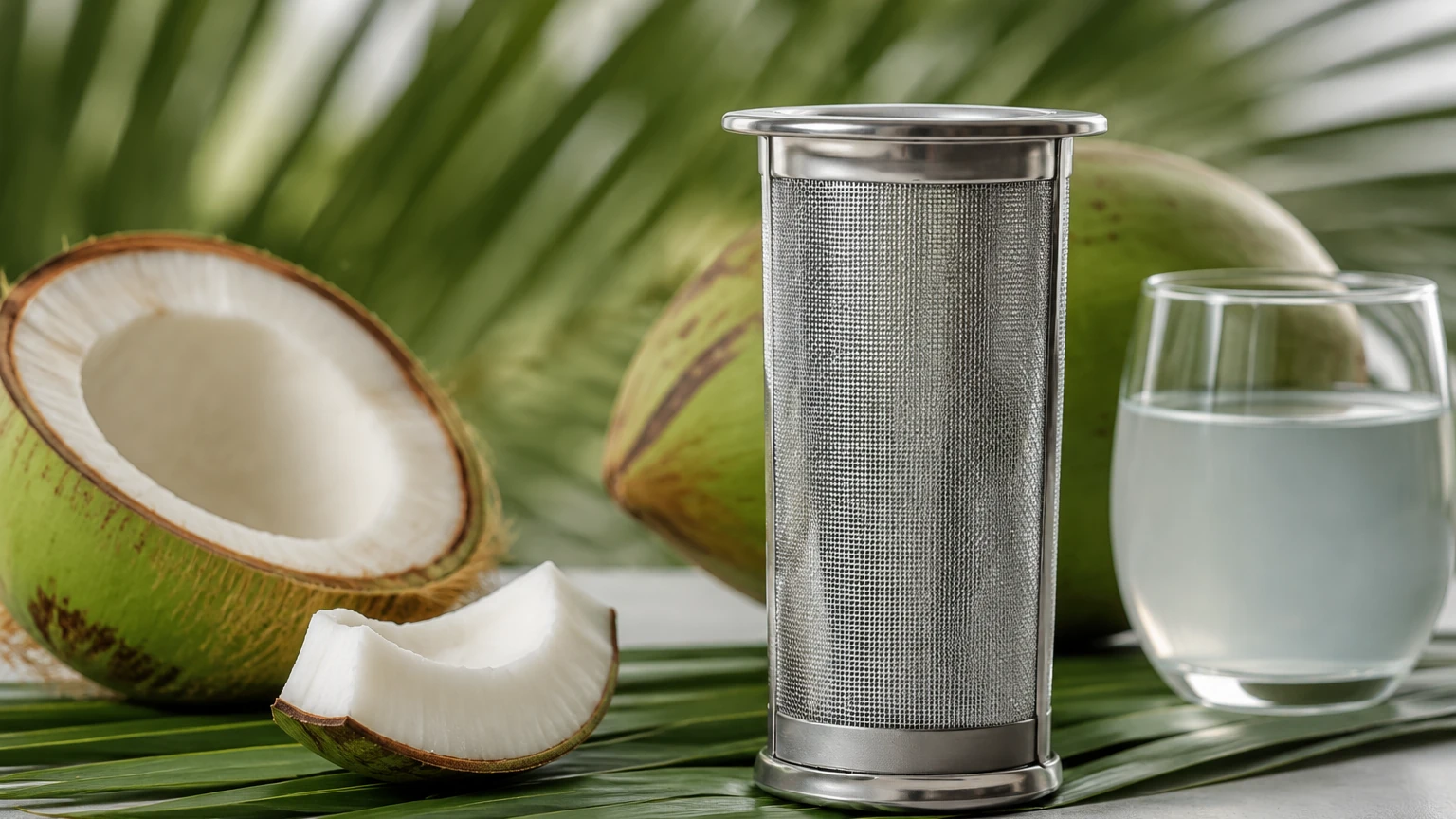
When higher precision is required, sintered wire mesh is the preferred medium. Sintering involves bonding multiple layers of stainless steel wire mesh through heat and pressure without the use of binders. This creates a robust, porous structure with fixed pore sizes. A sintered coconut water filter can achieve nominal or absolute micron ratings, allowing for the removal of fine particulates and even some microbial reduction. The structural integrity of sintered mesh prevents media migration, ensuring that no metal fragments enter the product stream.
Stainless Steel Filter Cartridges
For secondary clarification and polishing, stainless steel filter cartridges offer a high surface area-to-volume ratio. These can be designed as cylindrical or pleated elements. Pleated designs are particularly beneficial for coconut water as they provide a larger filtration area within the same footprint, allowing for lower flux rates and longer intervals between cleaning cycles.
Sanitary Design and Material Standards
Because coconut water is a food product, the filtration hardware must adhere to strict sanitary standards, such as those set by 3-A, FDA, or EHEDG. At Kaifil, we emphasize the use of high-grade materials and precision manufacturing to meet these requirements.
* Material Selection: Grade 316L stainless steel is the industry standard for coconut water filters. It offers superior corrosion resistance against the natural salts and mild acidity found in the liquid. Furthermore, 316L can withstand the harsh chemicals (such as caustic soda and nitric acid) used during CIP cycles.
* Surface Finish: The internal surfaces of the filter housing and the media itself must be polished to a high degree. A surface roughness (Ra) of less than 0.8 μm is typically required to prevent bacterial adhesion and ensure that the equipment can be fully sterilized.
* Gaskets and Seals: All non-metallic components must be made from FDA-compliant elastomers such as EPDM, Silicone, or Viton. These materials must be compatible with both the product and the cleaning temperatures, which can exceed 90°C (194°F) during sanitation.
Optimizing Performance and Maintenance
To ensure the longevity and efficiency of a coconut water filter, engineers must monitor several operational parameters. Proper system integration is as important as the filter itself.
Differential Pressure Monitoring
Monitoring the pressure drop across the filter is the most effective way to determine when cleaning is required. As the filter media traps solids, the pressure at the inlet increases while the outlet pressure decreases. Operating a filter beyond its recommended differential pressure limit can cause "breakthrough," where contaminants are forced through the media, or even structural failure of the filter element.
Flow Rate and Flux
Matching the filter's capacity to the production line's flow rate is essential. If the flow rate is too high (high flux), the velocity of the fluid can drive particles deeper into the mesh, making them harder to remove during cleaning. Conversely, an oversized filter increases the volume of product held within the system, which can lead to higher waste during changeovers.
Cleaning and Regeneration
One of the primary advantages of stainless steel filters is their ability to be regenerated. Unlike disposable filters that are discarded when fouled, stainless steel elements can be cleaned using ultrasonic baths, chemical soaking, or high-pressure backpulsing. For coconut water applications, a combination of hot water rinsing and alkaline cleaning is usually sufficient to remove organic residues and fats.
Custom OEM Solutions for Beverage Producers
Every coconut water processing facility has different requirements based on the variety of coconut, the desired clarity of the final product, and the existing piping infrastructure. Standard off-the-shelf filters often fail to provide the optimal balance of flow rate and filtration efficiency.
Customization options include:
* Bespoke Micron Ratings: Tailoring the pore size to allow a specific amount of pulp through for "pulp-added" varieties while removing unwanted fibers.
* Custom End Fittings: Ensuring the filter cartridges fit seamlessly into existing housings, whether they use 222, 226, or DOE (Double Open End) configurations.
* Reinforced Structures: Adding internal support cores or external cages to allow the filter to withstand high-pressure surges or vacuum conditions.
By working with a specialized manufacturer, beverage producers can develop filtration components that are specifically engineered for the unique rheology of coconut water. This results in fewer production halts, lower consumable costs, and a more consistent product quality.
Conclusion
In the competitive beverage market, the quality of the coconut water filter is a determining factor in operational success. High-performance stainless steel filtration solutions provide the durability, hygiene, and precision necessary to handle the specific challenges of coconut water processing. By moving away from disposable media toward cleanable, engineered metal components, processors can achieve a more sustainable and cost-effective production model.
For engineers looking to optimize their filtration processes or source custom-made components, understanding the intersection of material science and fluid dynamics is key. To explore our full range of industrial filtration capabilities and technical specifications, please visit our Main Page. Selecting the right filtration partner ensures that your production line remains efficient, compliant, and capable of delivering the high-quality coconut water that consumers demand.
