


Woven Wire Mesh: Industrial Engineering vs. Retail Fencing Solutions
When sourcing materials for a project, the term "woven wire" encompasses a vast spectrum of products, ranging from heavy-duty agricultural barriers to high-precision industrial filtration components. For many procurement managers and DIY enthusiasts, a search for woven wire fence menards represents a starting point for exploring local retail availability. However, for engineers and technical professionals in the chemical, pharmaceutical, or food processing industries, the requirements for woven wire products often exceed the specifications found in standard big-box retail aisles.
Understanding the distinction between retail-grade fencing and industrial-grade woven wire mesh is critical for ensuring the longevity, safety, and efficiency of a technical application. While retail outlets provide excellent solutions for perimeter security and livestock containment, industrial environments demand a higher level of material purity, dimensional accuracy, and corrosion resistance.
The Difference Between Retail Woven Wire Fence and Industrial Mesh
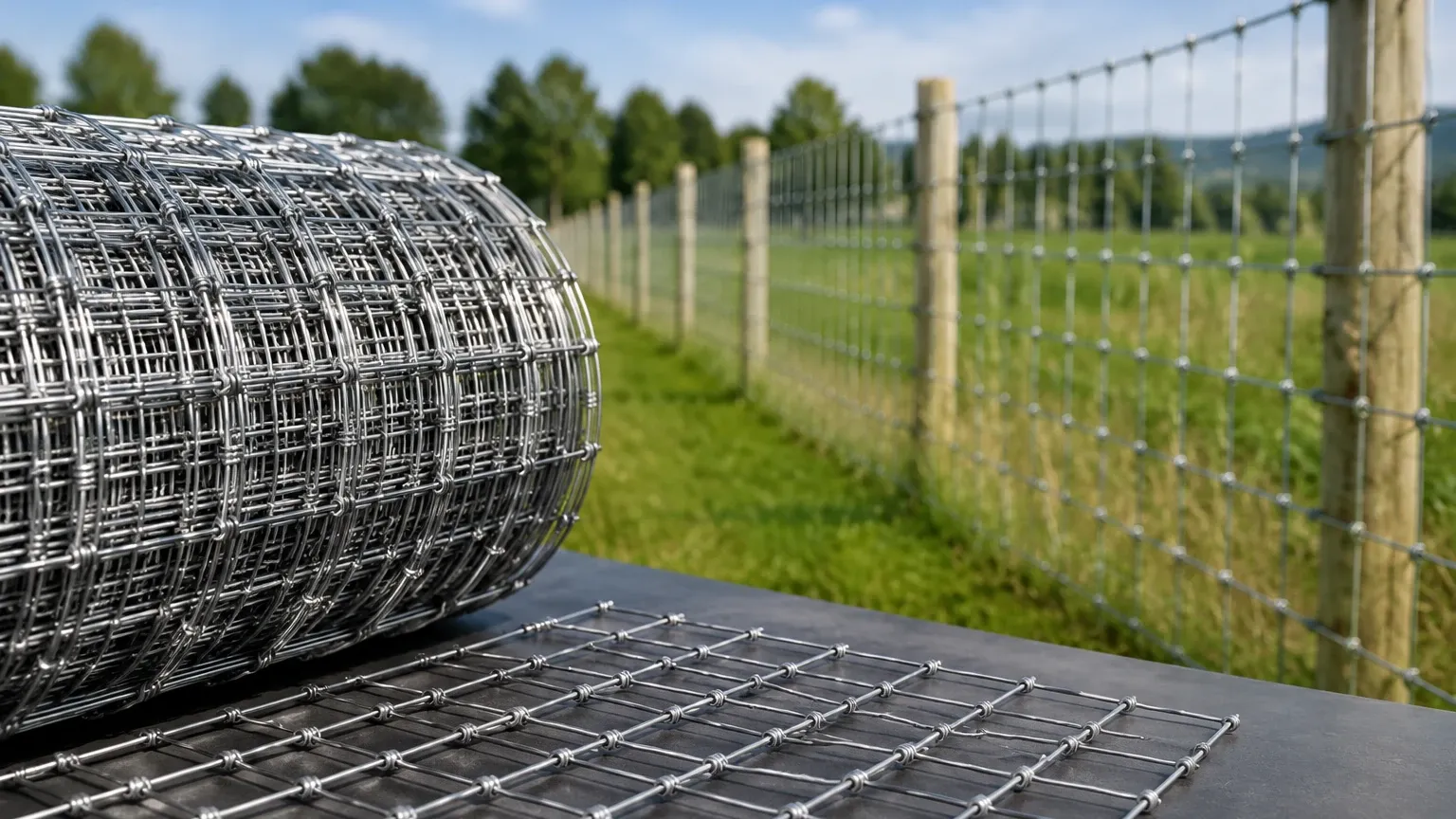
Retail products, such as those categorized under "woven wire fence menards," are primarily designed for structural and containment purposes. These products are typically manufactured using galvanized steel wire with relatively large openings (apertures). They are effective for agricultural use, such as keeping cattle or sheep within a designated area, where the primary stresses are physical impact and atmospheric exposure.
In contrast, industrial Woven Wire Mesh is engineered for precision. In industrial contexts, the "mesh" is often used for filtration, separation, or sifting. The manufacturing process for industrial mesh involves tighter tolerances and a wider variety of weave patterns. While a fence may have openings measured in inches, industrial mesh apertures are often measured in microns (one-millionth of a meter).
Key differences include:
* Material Composition: Retail fencing is usually galvanized (zinc-coated) carbon steel. Industrial mesh frequently utilizes Stainless Steel 304, 316, or 316L to withstand corrosive chemicals and high temperatures.
* Precision: Industrial mesh requires a consistent mesh count (the number of openings per linear inch) to ensure uniform filtration performance.
* Durability: While galvanized wire resists rust for a period, it cannot match the chemical passivity of stainless steel in acidic or alkaline environments.
Material Integrity: Why Stainless Steel Outperforms Galvanized Options
For engineers evaluating the total cost of ownership, material selection is the most significant factor. When browsing "woven wire fence menards" options, the primary material is typically Class 1 or Class 3 galvanized wire. This is suitable for outdoor residential or farm use where the wire is exposed to rain and humidity.
However, in industrial filtration or high-heat manufacturing, galvanized coatings can fail. Zinc can flake off, contaminating the product stream—a critical failure in food and beverage or pharmaceutical production. This is why industrial professionals prioritize high-grade alloys.
Stainless Steel 304
This is the most common stainless steel used in woven wire mesh. It offers excellent resistance to atmospheric corrosion and is widely used in the food industry. It is a cost-effective choice for applications that require more durability than galvanized steel but do not face extreme chemical exposure.
Stainless Steel 316 and 316L
For marine environments or chemical processing, SS316 is the standard. The addition of molybdenum provides superior resistance to chlorides and acids. SS316L (low carbon) is preferred for welded components to prevent carbide precipitation during the welding process, ensuring the mesh remains corrosion-resistant at the joints.
Technical Parameters: Mesh Count, Wire Diameter, and Aperture
When moving beyond the scope of a standard woven wire fence, engineers must define specific technical parameters to ensure the mesh performs its intended function. These parameters include:
1. Mesh Count: This refers to the number of wires per linear inch. A higher mesh count results in smaller openings. For example, a 100-mesh screen has 100 openings per inch in both the warp and weft directions.
2. Wire Diameter: The thickness of the wire used in the weave. There is always a trade-off between wire diameter and open area. Thicker wires provide more strength and longer wear life but reduce the "percentage of open area," which can restrict flow rates in filtration applications.
3. Aperture (Opening Size): This is the clear distance between two adjacent wires. In precision sifting, the aperture size is the most critical metric, as it determines the largest particle that can pass through the mesh.
4. Percentage of Open Area: This is the ratio of the area of the openings to the total area of the mesh. It is a vital calculation for engineers designing hydraulic systems or air filtration units, as it directly impacts pressure drop.
Weave Patterns and Their Functional Impact
While a standard woven wire fence typically uses a simple hinge-joint or fixed-knot weave, industrial woven wire mesh utilizes several sophisticated patterns to achieve specific mechanical properties.
Plain Weave
The most common weave, where each warp wire crosses alternately over and under each weft wire. It provides a consistent aperture and is used for general-purpose screening and filtration.
Twill Weave
In this pattern, each warp wire passes alternately over and under two weft wires. This allows for the use of heavier wire diameters with a given mesh count, resulting in a stronger mesh that is often used for high-pressure filtration.
Dutch Weave (Plain and Twill)
Dutch weaves use different wire diameters for the warp and weft. The result is a dense, firm mesh with very small, triangular openings. This is the gold standard for fine filtration in hydraulic systems and fuel filters, as it provides excellent flow rates while capturing very fine particulates.
Application-Specific Selection: From Agriculture to Chemical Processing
The choice between a retail-sourced "woven wire fence menards" product and a custom industrial mesh depends entirely on the application environment.
* Agriculture and Perimeter Security: If the goal is to create a physical barrier for animals or property, retail woven wire fencing is the most logical and cost-effective choice. The large openings allow for visibility, and the galvanized coating is sufficient for standard weather conditions.
* Food and Beverage Processing: Here, the mesh must be "food-grade." Stainless steel woven wire mesh is required to prevent contamination. It is used in everything from frying oil filtration to sifting flour and sugar.
* Pharmaceutical Manufacturing: This industry requires the highest level of precision and cleanliness. Mesh must be manufactured to exact micron ratings to ensure the purity of the final product. Custom-fabricated filter cartridges often utilize multi-layered sintered mesh for added strength.
* Petrochemical and Hydraulic Systems: These environments involve high pressures and corrosive fluids. Industrial-grade SS316L mesh is essential to prevent system failures and ensure the longevity of the equipment.
Procurement Considerations: Customization and Long-Term Value
For purchasing teams, the initial cost of a product is only one part of the equation. While a retail woven wire fence may have a lower upfront price per square foot, it cannot be customized for specific industrial machinery.
Industrial manufacturers like Kaifil provide value through customization options that retail stores cannot offer, such as:
* Custom Slitting and Cutting: Mesh can be provided in specific widths or pre-cut shapes (circles, rectangles, or complex geometries) to fit directly into production lines.
* Fabrication and Framing: Industrial mesh can be welded into frames, cylinders, or pleated cartridges. This reduces assembly time for the end-user and ensures a perfect fit within the filtration housing.
* Technical Support: Engineers can consult with manufacturers to determine the optimal mesh count and wire diameter for their specific flow rate and particle retention requirements.
When evaluating a supplier, it is important to confirm their quality control processes. For industrial applications, material certifications (MTRs) and aperture inspections are often required to prove that the mesh meets the design specifications.
Conclusion: Making the Right Choice
Whether you are looking for a woven wire fence menards solution for a backyard project or a high-precision stainless steel mesh for a chemical reactor, the key is to match the material specifications to the environmental demands. For structural, low-precision needs, retail fencing is an accessible and reliable option. However, when the success of a process depends on filtration accuracy, chemical resistance, and mechanical durability, investing in industrial-grade Woven Wire Mesh is the only way to ensure long-term performance and safety.
By understanding the technical nuances of wire diameter, mesh count, and alloy selection, engineers can avoid the risks of premature failure and product contamination, ultimately achieving a lower total cost of ownership and more reliable industrial operations.
