


Woven Wire Mesh Material: A Technical Selection Guide for Industrial Filtration
In industrial filtration and separation, the performance of a system is fundamentally limited by the physical and chemical properties of its media. Selecting the appropriate woven wire mesh material is not merely a matter of cost; it is a critical engineering decision that dictates the service life, filtration efficiency, and safety of the entire process. Whether used in chemical processing, hydraulic systems, or food production, the material must withstand specific environmental stressors while maintaining structural integrity.
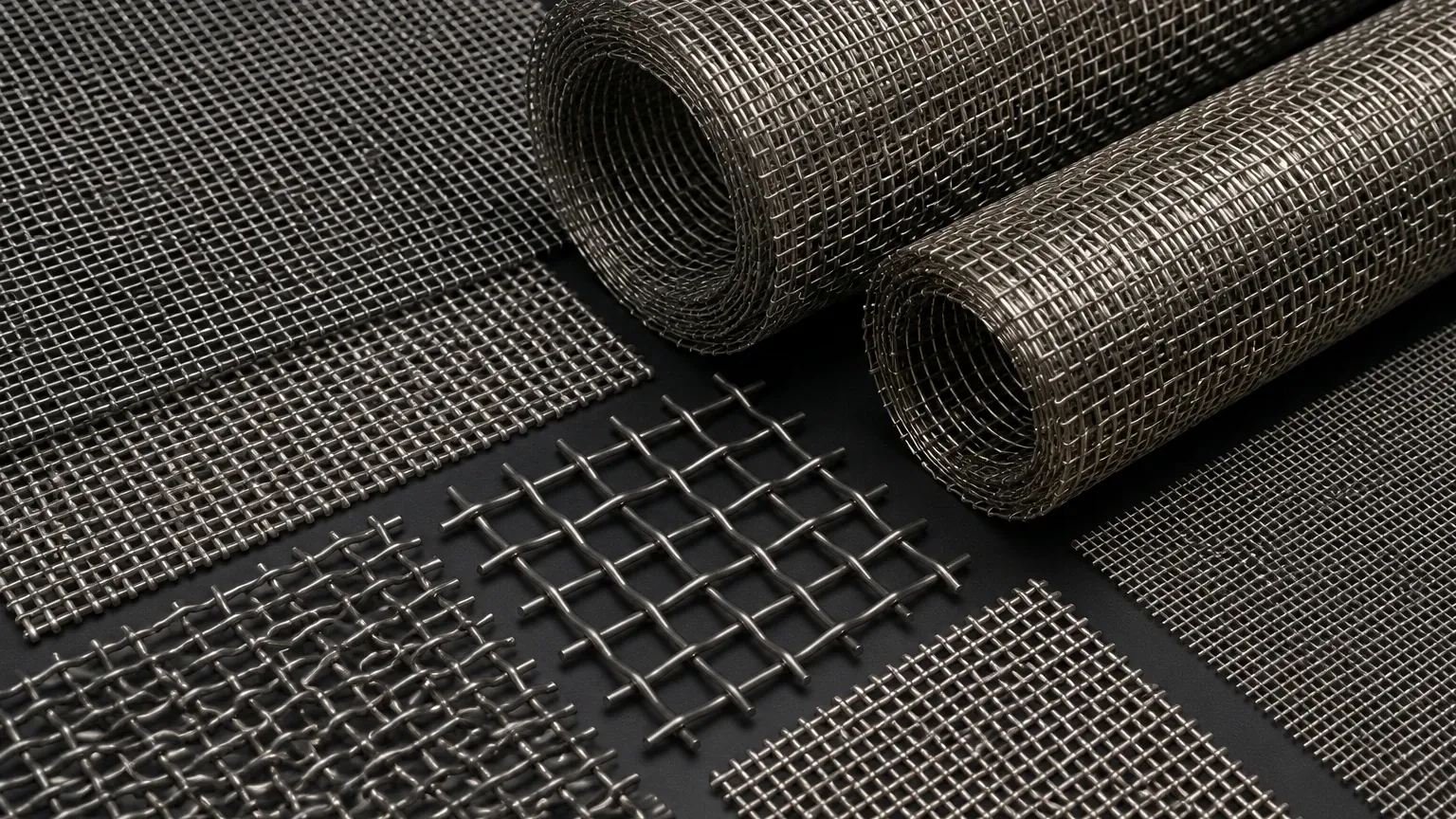
Woven Wire Mesh is a versatile medium produced by weaving individual metal wires into precise patterns. While the weave type—such as plain, twill, or dutch weave—determines the pore structure and flow characteristics, the material alloy determines how that structure responds to corrosion, extreme temperatures, and mechanical loads. This guide examines the technical specifications of common mesh materials and the engineering criteria used to evaluate them for industrial applications.
The Role of Metallurgy in Filtration Performance
The primary function of the material in a woven mesh is to provide a stable framework for the filtration apertures. Unlike synthetic media, metal wire mesh offers superior dimensional stability under pressure. However, different alloys react differently to the fluids they process. Engineers must look beyond basic tensile strength and consider the electrochemical and thermal properties of the alloy.
For instance, in high-pressure hydraulic applications, the material must possess high fatigue resistance to withstand pressure pulsations. In chemical filtration, the focus shifts to the passive oxide layer of the metal, which prevents localized pitting or general thinning of the wire. Choosing the wrong woven wire mesh material can lead to premature failure, downstream contamination, and costly unscheduled downtime.
Primary Stainless Steel Alloys for Woven Mesh
Stainless steel remains the most widely used material for industrial wire mesh due to its balance of mechanical strength, corrosion resistance, and cost-effectiveness. However, "stainless steel" covers a broad spectrum of alloys with distinct performance profiles.
Type 304 Stainless Steel
Often referred to as the "standard" industrial alloy, Type 304 is an austenitic stainless steel containing approximately 18% chromium and 8% nickel. It provides excellent resistance to atmospheric corrosion and many organic and inorganic chemicals.
* Best For: General industrial screening, food processing (where chloride levels are low), and basic water treatment.
* Limitations: Susceptible to pitting and crevice corrosion in chloride-rich environments (such as seawater or high-salt brines).
Type 316 and 316L Stainless Steel
Type 316 is the preferred choice for more demanding chemical and marine environments. The addition of 2% to 3% molybdenum significantly enhances its resistance to chloride-induced pitting.
Type 316L is the low-carbon version of 316. In the context of woven mesh, 316L is critical when the mesh components are to be welded into filter cartridges or frames. The lower carbon content prevents carbide precipitation during welding, which otherwise leads to intergranular corrosion at the heat-affected zones.
* Best For: Chemical processing, pharmaceutical manufacturing, and marine filtration.
* Technical Advantage: Superior corrosion resistance in acidic and saline environments.
High-Temperature Alloys: Type 310 and 314
When filtration must occur at elevated temperatures—such as in kiln exhausts or hot gas filtration—standard 304 or 316 alloys may suffer from rapid oxidation or loss of mechanical strength. Type 310 stainless steel contains higher levels of chromium (25%) and nickel (20%), allowing it to maintain structural integrity at temperatures up to 1,100°C (2,012°F) in oxidizing atmospheres.
Specialty and Exotic Alloys
In environments where stainless steel is insufficient—such as highly concentrated acids or extreme alkaline conditions—specialty alloys are required. These materials are often selected for their specific electrochemical stability.
Monel® (Nickel-Copper Alloys)
Monel is highly resistant to corrosion by seawater and is particularly effective in handling hydrofluoric acid and alkaline solutions. It maintains its strength across a wide temperature range and is frequently used in oil refining and marine engineering.
Inconel® and Hastelloy®
These nickel-chromium-molybdenum alloys are engineered for the most severe environments. Hastelloy, in particular, is used for filtration in aggressive chemical reactors where standard stainless steels would dissolve within hours. These materials offer exceptional resistance to stress-corrosion cracking and high-temperature oxidation.
Copper, Brass, and Bronze
While less common in high-pressure industrial filtration, copper-based woven wire mesh material is used for its unique properties. Brass (copper-zinc) and Bronze (copper-tin) offer good wear resistance and are often used in spark-sensitive environments due to their non-sparking nature. Additionally, copper mesh is frequently utilized in EMI/RFI shielding and architectural applications.
Engineering Criteria for Material Selection
When specifying a woven wire mesh material, engineers must evaluate several intersecting factors to ensure the filter performs as intended over its entire lifecycle.
1. Chemical Compatibility and Corrosion Rates
It is essential to consult corrosion resistance tables for the specific fluid being filtered. Factors such as pH, concentration, temperature, and the presence of impurities (like sulfur or chlorides) can drastically alter the corrosion rate. In many B2B applications, a "material test report" (MTR) is required to verify the exact chemical composition of the wire used in the weaving process.
2. Temperature and Thermal Expansion
Metals expand and contract with temperature changes. In multi-layered sintered mesh or framed filter panels, mismatched thermal expansion coefficients between the mesh and the support structure can lead to warping or mechanical failure of the weave. Furthermore, at high temperatures, "creep" (the tendency of a solid material to move slowly or deform permanently under the influence of persistent mechanical stresses) must be considered.
3. Mechanical Strength and Ductility
The wire must be ductile enough to be woven into complex patterns (like Dutch weaves) without fracturing, yet strong enough to resist deformation under the differential pressure of the filtration process. The tensile strength of the wire directly influences the "burst pressure" of the resulting filter element.
4. Surface Finish and Cleanliness
In pharmaceutical and food-grade applications, the surface finish of the wire mesh material is paramount. The material must be capable of being passivated or electropolished to remove surface contaminants and enhance the protective oxide layer. This ensures that the mesh does not leach metallic ions into the product stream and remains easy to clean (CIP – Clean-In-Place).
Common Risks in Material Specification
One of the most frequent risks in purchasing industrial mesh is the "substitution error." For example, substituting 304 for 316 to save on initial costs can lead to a catastrophic failure if the process fluid contains trace chlorides.
Another risk is neglecting the impact of the weaving process itself. The cold-working of the wire during weaving can increase its hardness but may also make certain alloys more susceptible to stress-corrosion cracking. Understanding the post-weaving treatments, such as annealing or sintering, is vital for high-performance applications.
Total Cost of Ownership (TCO) Considerations
While high-performance alloys like 316L or Hastelloy have a higher upfront cost per square foot, their impact on the Total Cost of Ownership is often lower than cheaper alternatives. A mesh that lasts three times longer and requires fewer maintenance interventions significantly reduces the operational expenditure (OPEX) of a facility.
Engineers should calculate the TCO by factoring in:
* Initial procurement cost.
* Frequency of filter replacement.
* Cost of production downtime during changeouts.
* Risk of downstream equipment damage if the mesh fails.
Technical Confirmation Before Procurement
Before finalizing a purchase order for Plain, twill and dutch woven wire mesh in SS304/316L — rolls, cut mesh and framed panels, procurement teams and engineers should confirm the following data points with the manufacturer:
1. Mesh Count and Wire Diameter: Ensure the combination provides the required micron rating and open area percentage.
2. Alloy Certification: Request MTRs to ensure the material meets ASTM or international standards.
3. Environmental Conditions: Disclose the maximum operating temperature and the full chemical composition of the process fluid.
4. Customization Requirements: Determine if the mesh requires specialized edge treatments, framing, or sintering to prevent wire migration.
Conclusion
The selection of the right woven wire mesh material is a foundational step in designing an efficient industrial filtration system. By matching the metallurgical properties of the alloy to the specific demands of the application, manufacturers can achieve a balance of precision, durability, and cost-effectiveness.
As a specialist in custom stainless steel filtration, Kaifil provides the engineering expertise necessary to navigate these material choices. From standard SS304/316L mesh to precision-engineered components for demanding chemical and hydraulic environments, selecting the right material ensures that your filtration process remains reliable and productive over the long term.
