


Liquid Filtration Bags
In industrial processing, the efficiency of liquid-solid separation is a critical factor in maintaining product purity, protecting downstream equipment, and ensuring operational continuity. Liquid filtration bags represent one of the most versatile and cost-effective methods for removing contaminants from process streams. Used extensively in industries ranging from chemical processing and water treatment to food and beverage production, these components are designed to capture particulates within a pressurized housing system.
For engineers and procurement professionals, selecting the appropriate filtration media requires a deep understanding of fluid dynamics, chemical compatibility, and the physical properties of the suspended solids. While traditional disposable bags are common, high-performance applications often necessitate specialized materials, including stainless steel wire mesh, to withstand extreme temperatures or aggressive chemical environments. This guide examines the technical nuances of liquid filtration bags, the engineering criteria for selection, and the strategic advantages of integrating durable metal filtration components into industrial systems.
The Role of Liquid Filtration Bags in Industrial Processing
Liquid filtration bags operate on a principle of pressure-driven surface or depth filtration. The fluid enters the bag from the top or side, passes through the filter media, and exits through the perforated support basket of the housing. The contaminants are retained inside the bag, which simplifies the disposal or cleaning process. Unlike cartridge filters, which are often used for fine polishing, bag filters are typically favored for high-flow applications and batches with higher particulate loading.
The primary function of these bags is to provide a reliable barrier against specific particle sizes. In a B2B context, the choice of a filtration bag is rarely just about the micron rating; it involves balancing the flow rate against the allowable pressure drop (Delta P). As the bag captures debris, the resistance to flow increases. Monitoring this differential pressure is essential for determining the optimal replacement or cleaning cycle, preventing bag rupture or bypass.
Comparing Filter Bag Media: Felt, Monofilament, and Stainless Steel Mesh
The performance of a liquid filtration bag is fundamentally dictated by its material composition. Most industrial applications utilize one of three primary media types:
1. Needlefelt (Depth Filtration)
Felt bags are constructed from non-woven fibers that create a tortuous path for the fluid. This depth-loading capability allows the bag to capture a wide range of particle sizes throughout its thickness. While effective for general-purpose filtration, felt bags are typically disposable and may experience fiber migration if not properly singed or glazed.
2. Monofilament Mesh (Surface Filtration)
Monofilament bags use a woven fabric where each thread is a single continuous strand. This creates precise, square openings that provide consistent surface filtration. These are ideal for applications requiring exact micron ratings and high mechanical strength. Common materials include nylon and polyester.
3. Stainless Steel Wire Mesh
For the most demanding industrial environments, stainless steel wire mesh is the preferred medium. Unlike polymer-based bags, stainless steel filters offer exceptional thermal stability and mechanical rigidity. They are particularly valuable in high-viscosity liquid filtration or when the process involves aggressive solvents that would degrade synthetic fibers. Stainless steel mesh can be fabricated into bag-like geometries to fit standard housings, providing a cleanable and reusable alternative to disposable media. For those exploring high-durability options, you can Review product options and application support on our Main Page to understand how metal components integrate into standard systems.
Engineering Specifications: Micron Ratings and Flow Dynamics
When specifying liquid filtration bags, engineers must distinguish between nominal and absolute micron ratings. A nominal rating indicates that the filter will trap a high percentage of particles of a given size, but it does not guarantee 100% efficiency. Absolute ratings, more common in high-precision metal mesh, signify that no particle larger than the specified micron size can pass through the media.
Flow Rate and Viscosity
The flow capacity of a bag is influenced by the viscosity of the liquid. High-viscosity fluids, such as resins or heavy oils, require a larger filtration surface area or a coarser mesh to maintain an acceptable flow rate. If the velocity through the media is too high, it can force deformable contaminants through the pores, a phenomenon known as "extruding," which compromises filtrate quality.
Effective Filtration Area (EFA)
The size of the bag (commonly categorized as Size 1, Size 2, Size 3, or Size 4) determines the EFA. A larger EFA reduces the flux (flow per unit area), which generally extends the service life of the bag and lowers the initial pressure drop. In custom industrial designs, increasing the EFA through pleated metal inserts or oversized housings is a common strategy for reducing maintenance frequency.
Chemical and Thermal Compatibility in Harsh Environments
Material science is at the heart of filtration success. Selecting a bag material that is chemically incompatible with the process fluid can lead to catastrophic failure, including media softening, swelling, or complete dissolution.
* Polypropylene: Excellent for acids and alkalis but limited to temperatures below 90°C (194°F).
* Polyester: Suitable for higher temperatures (up to 150°C/300°F) and offers good resistance to most oxidizing agents.
* Stainless Steel (304/316L): The gold standard for chemical and thermal resistance. Stainless steel components can operate in temperatures exceeding 250°C and are resistant to a vast array of organic solvents, making them indispensable in petrochemical and pharmaceutical manufacturing.
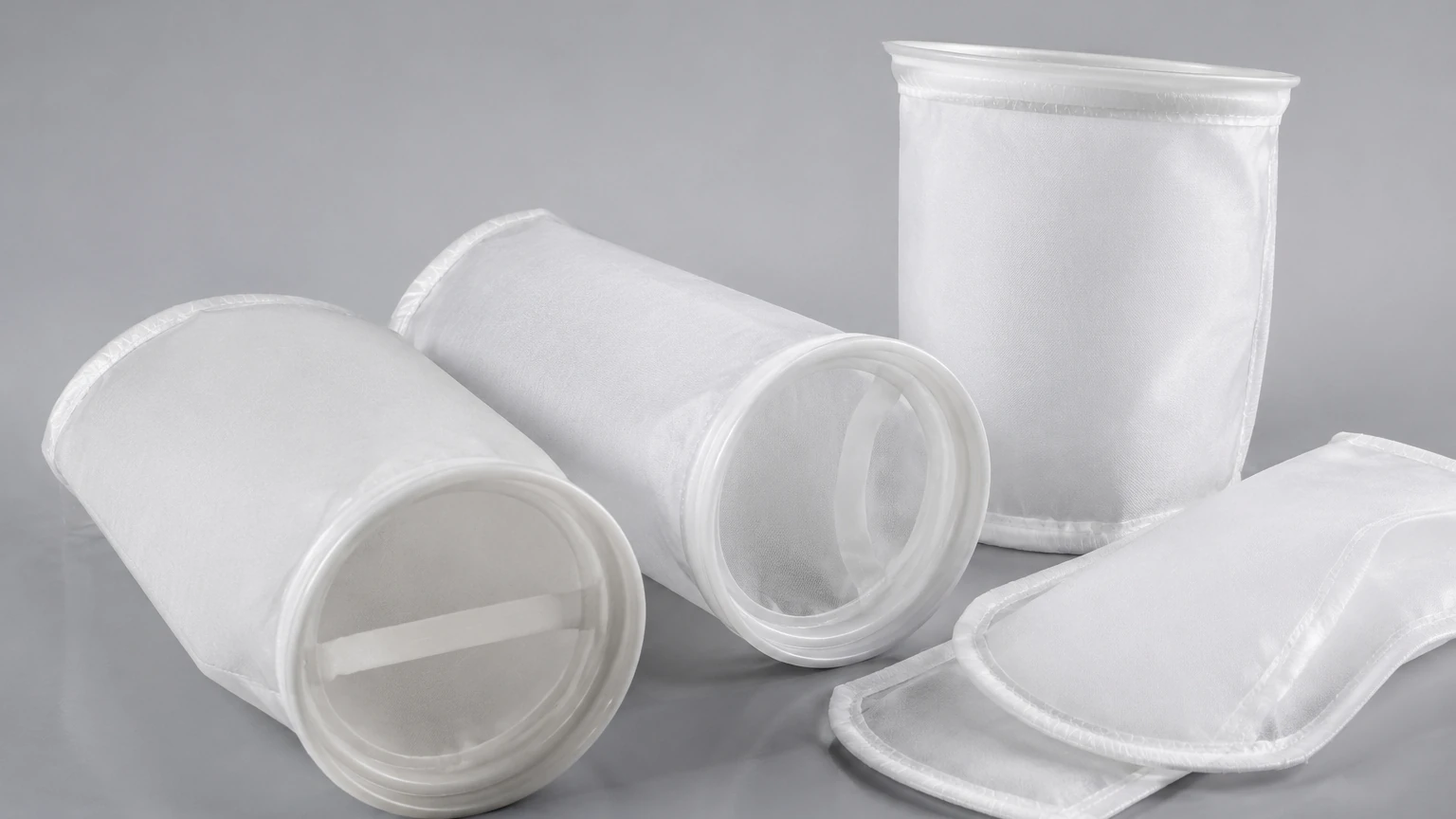
Engineers must also consider the sealing ring material. Whether using a plastic flange (polypropylene or polyester) or a metal ring (zinc-coated steel or stainless steel), the seal must prevent bypass. A bypass occurs when fluid leaks around the top of the bag rather than passing through the media, rendering the filtration process ineffective.
Operational Risks and Preventive Maintenance Strategies
Despite their apparent simplicity, liquid filtration bags are subject to several operational risks that can impact plant productivity.
1. Pressure Shocks and Water Hammer
Sudden changes in flow velocity can create pressure surges that exceed the burst strength of a standard felt or mesh bag. In systems prone to water hammer, reinforcing the filter with a high-strength stainless steel support basket or switching to a permanent metal filter element is a necessary engineering safeguard.
2. Particle Bypass
Bypass is often caused by improper installation or the use of incorrectly sized bags. If the bag does not seat perfectly within the housing's internal flange, unfiltered liquid will take the path of least resistance. Utilizing bags with molded plastic seals that expand under pressure can mitigate this risk.
3. Blinding and Premature Clogging
Blinding occurs when the surface of the filter is rapidly coated by a layer of solids (filter cake) that is impermeable. In some cases, this cake actually improves filtration efficiency (autofiltration), but if the pressure drop rises too quickly, it indicates that the micron rating may be too fine for the particulate load or that the fluid contains gelatinous contaminants that require depth filtration.
Transitioning from Disposable Bags to Permanent Stainless Steel Solutions
For many facilities, the recurring cost of purchasing, storing, and disposing of single-use bags is a significant operational expense. Transitioning to custom-engineered stainless steel filtration components offers a compelling Return on Investment (ROI).
Stainless steel mesh filters, designed to the same dimensions as standard liquid filtration bags, provide several advantages:
* Sustainability: Eliminates the waste stream associated with used filter bags, which may be classified as hazardous waste depending on the process fluid.
* Durability: Metal mesh does not stretch or tear under high differential pressure, ensuring consistent filtration performance over thousands of cycles.
* Cleanability: These elements can be backwashed, ultrasonically cleaned, or chemically sanitized, making them ideal for food-grade and pharmaceutical applications where hygiene is paramount.
When evaluating this transition, engineers should consult the Main Page for technical specifications on wire mesh weaving and structural reinforcements that ensure long-term reliability in high-pressure housings.
Critical Information for Procurement and Custom Engineering
Before finalizing a purchase or initiating a custom design for liquid filtration components, technical teams should confirm several key data points to ensure the solution is fit for purpose:
1. Fluid Characteristics: Confirm the pH level, viscosity at operating temperature, and the presence of any volatile organic compounds (VOCs).
2. Contaminant Profile: Identify the particle size distribution (PSD) and whether the solids are rigid, fibrous, or deformable.
3. Operating Parameters: Define the maximum operating pressure, the design temperature, and the required flow rate (GPM or m³/h).
4. Housing Compatibility: Ensure the bag or metal element dimensions match the existing housing, including the specific type of sealing rim (e.g., Sentinel ring, Snap-band, or flange).
5. Regulatory Compliance: For food, beverage, or medical applications, verify that all materials meet FDA or equivalent regional standards for food contact.
By focusing on these factual boundaries and engineering requirements, organizations can optimize their filtration processes, reduce downtime, and achieve a lower total cost of ownership. Whether utilizing standard synthetic bags for light-duty tasks or custom stainless steel mesh for rigorous industrial cycles, the right filtration strategy is a cornerstone of modern manufacturing excellence.
