


Fluid Bed Reactor
In the landscape of modern chemical engineering and industrial processing, the fluid bed reactor (FBR) stands as a cornerstone technology for achieving high efficiency in heat and mass transfer. Whether utilized for catalytic cracking, polymerization, or the drying of pharmaceutical granules, the performance of a fluid bed reactor is inextricably linked to the precision of its internal components. Among these, the filtration and distribution systems are perhaps the most critical, as they dictate the stability of the fluidized state and the purity of the final output. For engineers and procurement specialists, understanding the synergy between reactor design and high-performance metal filtration is essential for optimizing operational uptime and product quality.
At Kaifil, we specialize in the engineering and manufacture of custom stainless steel filtration solutions that meet the rigorous demands of fluid bed applications. By integrating advanced material science with precision manufacturing, we support the Main Page of industrial innovation, providing the components necessary for reliable, long-term reactor performance.
Understanding the Fluid Bed Reactor Mechanism
A fluid bed reactor operates on a principle where a fluid (typically a gas or liquid) is passed through a granular solid material at high enough velocities to suspend the solid and cause it to behave like a fluid. This state, known as fluidization, provides a massive surface area for contact between the fluid and the solid, which is why FBRs are preferred for reactions requiring rapid heat exchange or highly uniform temperature gradients.
As the upward velocity of the fluid increases, the drag forces eventually counteract the weight of the particles. At the "minimum fluidization velocity," the bed expands and begins to exhibit fluid-like properties, such as the ability to flow and take the shape of its container. In this environment, the choice of filtration media is paramount. The filters must not only withstand the abrasive nature of moving particles but also ensure that the fluidizing medium is distributed evenly across the entire cross-section of the bed to prevent "channeling"—a phenomenon where the fluid bypasses the solids, leading to inefficient reaction zones.
The Critical Role of Filtration in Fluid Bed Systems
Filtration in a fluid bed reactor serves two primary functions: gas distribution and particle retention. Both are essential for maintaining the integrity of the process.
Gas Distribution Plates
The distributor plate, located at the base of the reactor, is the primary interface between the incoming fluid and the solid bed. Traditional perforated plates often suffer from uneven flow or "weeping," where solids fall back into the plenum chamber during shutdowns. To solve this, engineers frequently turn to multi-layer sintered wire mesh. These components provide a controlled pressure drop, ensuring that the gas enters the bed with uniform velocity across every square inch. This uniformity is vital for preventing hot spots and ensuring consistent product quality.
Catalyst and Product Recovery
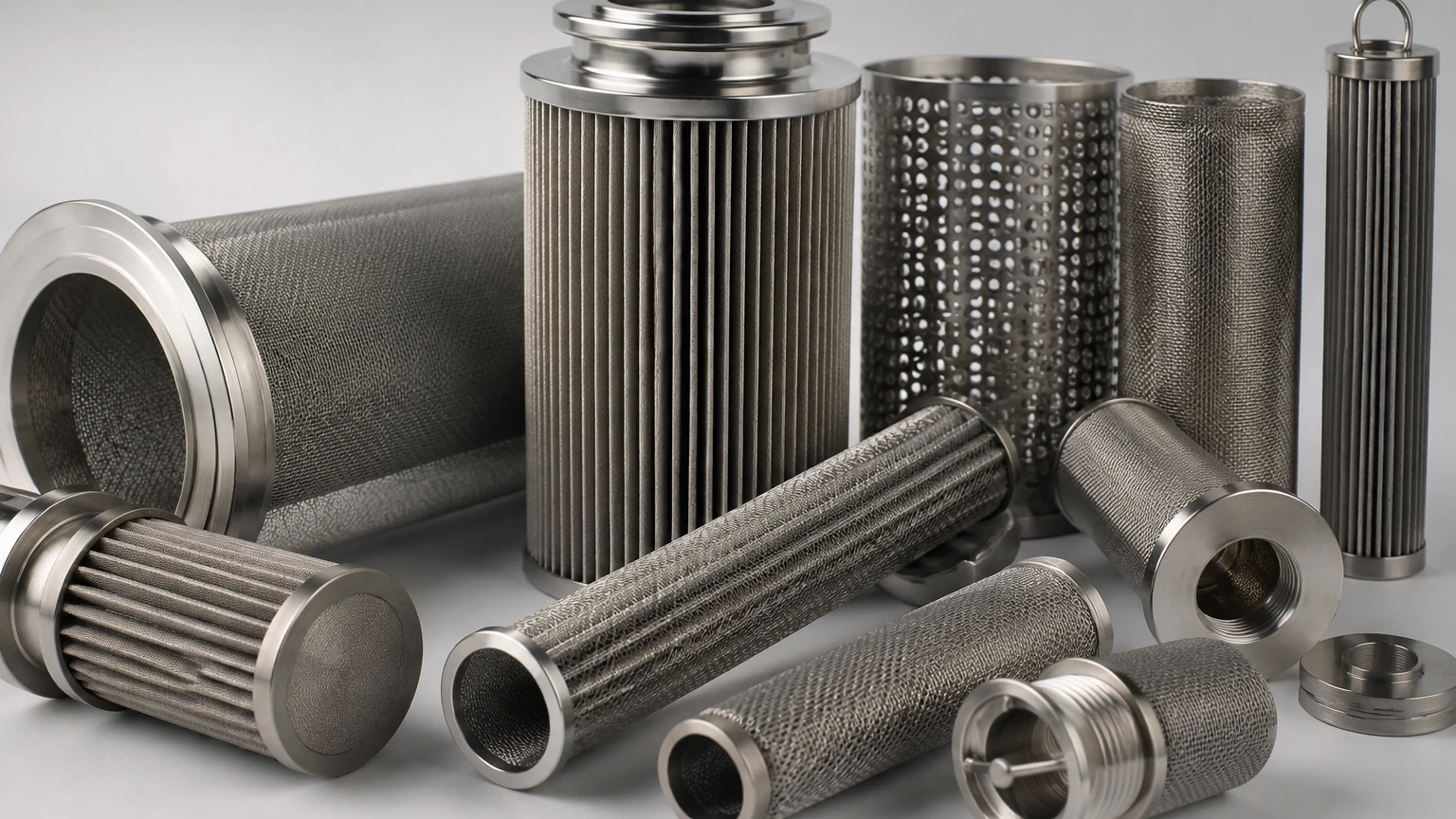
At the top of the reactor, filtration systems are required to separate the fluidizing gas from the entrained solids. In many chemical processes, these solids are expensive catalysts or the actual product. High-efficiency stainless steel filter cartridges or sintered metal elements are used to capture these particles. Unlike fabric bags, metal filters can withstand the high temperatures and corrosive atmospheres common in industrial reactors, and they can be cleaned in-situ through back-pulsing or back-washing techniques.
Material Selection for Harsh Reactor Environments
The longevity of a fluid bed reactor's internal components depends heavily on material science. Because these reactors often operate under high pressure, extreme temperatures, and chemically aggressive conditions, standard materials are rarely sufficient.
* 316L Stainless Steel: The industry standard for most pharmaceutical and food-grade applications due to its excellent corrosion resistance and mechanical strength.
* 310S Stainless Steel: Utilized in high-temperature applications, such as combustion or gasification, where oxidation resistance is a primary concern.
* Hastelloy and Inconel: For environments involving highly acidic or alkaline media, nickel-based alloys provide the necessary chemical stability that standard stainless steels cannot offer.
Kaifil works closely with engineering teams to select the optimal alloy based on the specific chemical profile and thermal cycling requirements of the fluid bed reactor. This ensures that the filtration components do not become the weak link in the production chain.
Engineering Considerations for Filter Design
When specifying filtration components for a fluid bed reactor, several technical parameters must be evaluated to ensure system compatibility and performance.
Pore Size and Filtration Accuracy
The micron rating of the filter must be carefully matched to the particle size distribution of the bed material. If the pore size is too large, valuable catalyst may be lost; if it is too small, the pressure drop will increase rapidly, leading to higher energy consumption and potential system instability. Sintered metal media offer the advantage of a fixed pore structure, which does not shift or deform under pressure, providing consistent filtration accuracy.
Mechanical Strength and Pressure Differential
Fluidized beds are dynamic environments. The filters must be able to withstand the mechanical impact of particles and the significant pressure differentials that occur during start-up or during back-pulse cleaning cycles. Reinforced sintered mesh and pleated stainless steel cartridges provide the structural integrity required to prevent collapse or bypass.
Thermal Expansion
In high-temperature reactors, the difference in thermal expansion between the filter element and the reactor housing must be accounted for. Engineering custom seals and mounting hardware is a critical part of the design process to prevent leaks that could compromise the entire process.
Common Challenges and Solutions in Fluid Bed Filtration
Even the best-designed fluid bed reactor can face operational challenges. Identifying these early can prevent costly downtime.
1. Blinding and Clogging: Fine particles can become lodged within the filter media. This is often addressed by using surface-loading filtration media, such as sintered wire mesh, which allows for more effective cleaning during back-pulse cycles compared to depth-loading media.
2. Abrasion: The constant movement of solids can wear down internal components. Utilizing hardened stainless steel or specialized coatings can extend the life of distributor plates and internal baffles.
3. Corrosion: In pharmaceutical or chemical synthesis, trace amounts of moisture combined with process gases can create highly corrosive environments. Selecting the correct grade of stainless steel and ensuring proper passivation are essential steps in the manufacturing process.
Selecting the Right Filtration Partner
For engineers managing complex fluid bed reactor projects, the choice of a component manufacturer is a strategic decision. It is not merely about purchasing a part; it is about securing a technical solution that integrates seamlessly with the reactor's design.
Kaifil provides comprehensive OEM and customization services, allowing for the development of filtration components tailored to specific flow rates, temperature profiles, and chemical environments. Our expertise in stainless steel wire mesh and precision metal components ensures that every filter we produce contributes to the overall efficiency and reliability of the industrial process.
When evaluating a partner for fluid bed reactor components, consider the following:
* Customization Capabilities: Can the manufacturer adjust the weave pattern, layer count, and dimensions to meet specific pressure drop requirements?
* Quality Assurance: Does the manufacturer provide material certifications and performance testing to verify filtration accuracy?
* Technical Support: Is the manufacturer capable of assisting with the engineering calculations required for proper filter sizing?
Conclusion
The fluid bed reactor remains one of the most versatile and efficient tools in the industrial arsenal, but its success depends on the precision of its internal filtration and distribution systems. By focusing on high-quality materials, engineered pore structures, and robust mechanical designs, operators can ensure their reactors run at peak performance with minimal maintenance.
Whether you are designing a new system or upgrading an existing one, the integration of specialized stainless steel filtration is a proven method for enhancing process stability and product purity. For more information on custom filtration solutions and technical specifications, visit our Main Page to explore how our engineering team can support your specific application needs.
