


How Does a Fractionating Tower Work
In the realm of industrial chemical processing, the fractionating tower—also known as a fractionation column—stands as a cornerstone of separation technology. Whether in petrochemical refineries, pharmaceutical labs, or large-scale food processing facilities, the ability to separate complex mixtures into their individual components based on boiling points is essential. For engineers and procurement teams, understanding the mechanical and thermodynamic principles behind these towers is critical for optimizing production efficiency and ensuring the longevity of the equipment.
To answer the fundamental question—how does a fractionating tower work—one must look at the intersection of heat transfer, fluid dynamics, and material science. This article provides a technical overview of the fractionation process, the critical internal components involved, and the role of high-performance filtration in maintaining system integrity.
The Core Principle of Fractional Distillation
At its simplest level, a fractionating tower works by utilizing the different boiling points of substances within a liquid mixture. This process is known as fractional distillation. Unlike simple distillation, which might only separate two components with vastly different boiling points, fractional distillation allows for the separation of multiple components (fractions) that may have boiling points relatively close to one another.
The process begins by heating the raw feedstock, often in a furnace or a reboiler at the base of the tower. As the mixture heats up, components with lower boiling points (the "lighter" fractions) vaporize first. These vapors rise through the vertical column. As they ascend, the temperature within the tower gradually decreases. This temperature gradient is the engine of the separation process.
As the vapors rise, they encounter cooler surfaces or liquid descending from the top of the tower. Components with higher boiling points (the "heavier" fractions) condense back into liquid form and fall toward the bottom, while the lighter vapors continue to rise until they reach a level where the temperature is low enough for them to condense. By placing collection points at various heights along the tower, operators can draw off different products simultaneously.
Key Structural Components of a Fractionation Column
A fractionating tower is a complex assembly of engineering components designed to maximize the contact area between rising vapors and descending liquids. The primary components include:
1. The Shell: The outer cylindrical vessel, typically constructed from high-grade stainless steel or carbon steel, designed to withstand internal pressures and corrosive environments.
2. The Reboiler: Located at the base, this heat exchanger provides the thermal energy required to vaporize the bottom liquid, driving the upward flow of vapor.
3. The Condenser: Located at the top, it cools the overhead vapors, turning them back into liquid.
4. The Reflux Drum: This vessel holds the condensed liquid from the top of the tower. A portion of this liquid, called "reflux," is pumped back into the top of the column to enhance separation efficiency.
5. Internal Trays or Packing: These are the most critical elements for mass transfer. They provide the surface area where the vapor and liquid interact.
For those seeking to optimize these systems, reviewing specialized components on our Main Page can provide insights into the custom filtration and support structures necessary for high-performance columns.
The Operational Cycle: From Feed to Fraction
To fully grasp how does a fractionating tower work, it is helpful to follow the path of the material through a standard operational cycle. The feedstock is typically introduced into the middle of the tower at a point known as the "feed tray." This section divides the tower into two functional zones: the stripping section (below the feed) and the enriching (or rectification) section (above the feed).
The Stripping Section
In the lower half of the tower, the goal is to "strip" the lighter components out of the descending liquid. As the liquid moves down over trays or through packing, it is met by hot vapors rising from the reboiler. These vapors carry enough energy to boil off any remaining light fractions trapped in the liquid, ensuring that the product exiting the bottom of the tower consists primarily of the heaviest components.
The Enriching Section
In the upper half, the goal is to "enrich" the rising vapor with the lightest components. As the vapor rises, it meets the cooler reflux liquid falling from the top. This contact causes the heavier molecules remaining in the vapor to condense and join the downward liquid stream, while the lightest molecules remain in the vapor phase. This continuous counter-current exchange ensures that the vapor reaching the top of the tower is highly purified.
Trays vs. Packing: Internal Engineering Choices
The choice between using trays or packing inside a fractionating tower depends on the specific application, the required purity, and the allowable pressure drop. Both methods aim to increase the surface area for mass transfer.
Tray Columns
Tray columns use a series of horizontal plates stacked at intervals. Vapors bubble through the liquid held on each tray. Common types include:
* Sieve Trays: Simple perforated plates where vapor rises through small holes.
* Valve Trays: Feature liftable caps that adjust to vapor flow rates, offering better flexibility.
* Bubble Cap Trays: Use fixed caps over risers, ensuring high contact time even at low flow rates.
Packed Columns
Instead of discrete stages, packed columns use a continuous bed of material. This can be "random packing" (small shapes like rings or saddles dumped into the column) or "structured packing" (meticulously engineered wire mesh or corrugated metal sheets). Packed columns generally offer a lower pressure drop and are preferred for vacuum distillation or heat-sensitive materials.
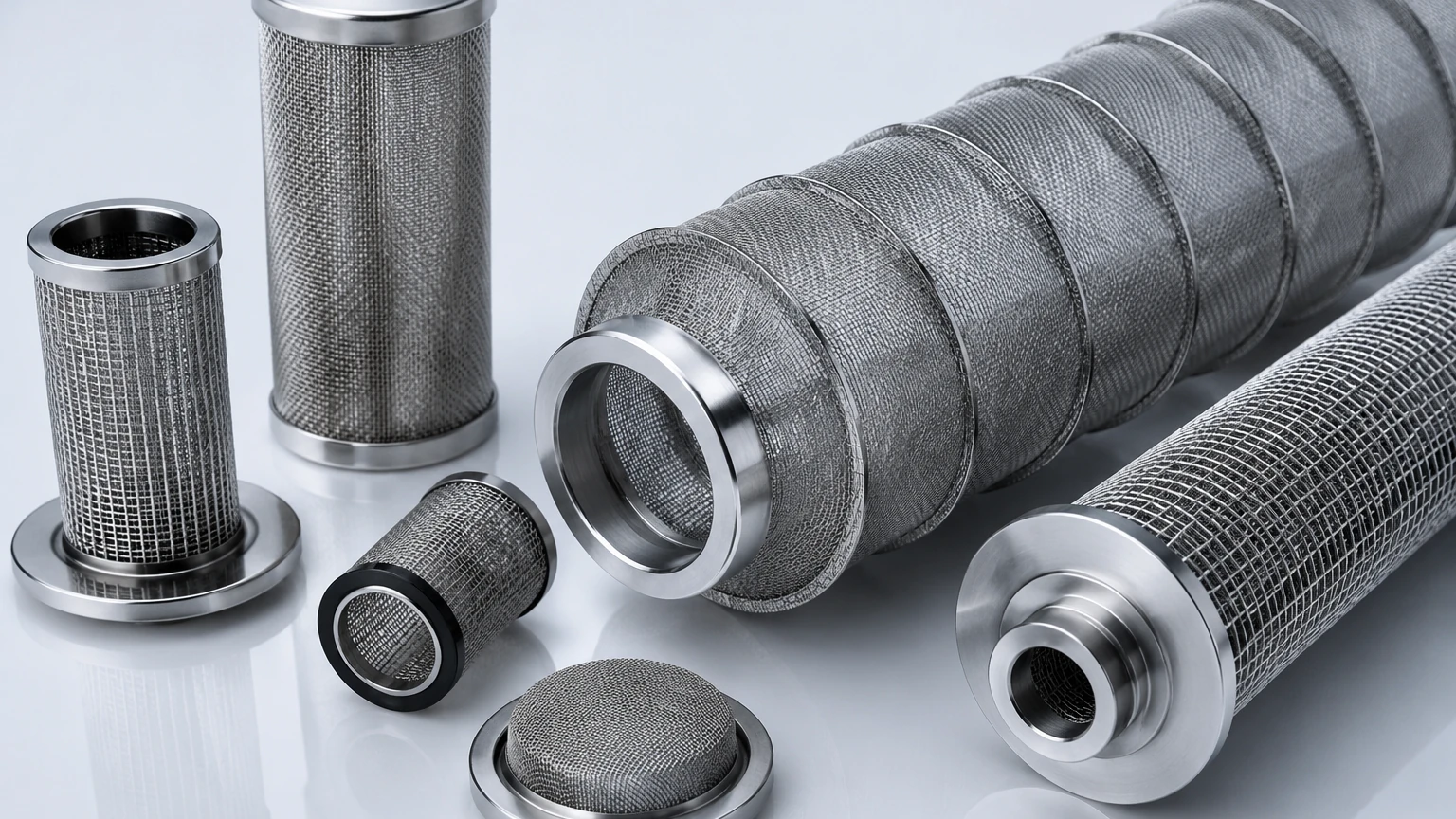
In many industrial settings, the precision of the wire mesh used in structured packing is vital. High-quality stainless steel mesh ensures uniform liquid distribution and prevents channeling, which can significantly degrade separation efficiency.
The Role of Precision Filtration and Mist Elimination
While the thermal process does the heavy lifting of separation, mechanical filtration components are essential for maintaining the purity of the fractions and protecting downstream equipment. This is where the expertise of a manufacturer like Kaifil becomes indispensable.
Mist Eliminators (Demisters)
As vapors reach the top of the tower, they often carry tiny liquid droplets (entrainment). If these droplets enter the condenser or the next stage of the process, they contaminate the product. Mist eliminators, often constructed from layers of knitted wire mesh, are installed near the vapor outlets. They work by intercepting the droplets, which coalesce on the wire surfaces and fall back into the column.
Support Grids and Bed Limiters
In packed towers, the packing material must be held securely in place. Precision-engineered support grids must be strong enough to hold the weight of the packing and the liquid holdup while remaining open enough to allow vapor and liquid to pass with minimal resistance. Custom stainless steel filtration components and support structures ensure these internals do not corrode or deform under high-temperature conditions.
Feed Filtration
Before the feedstock even enters the fractionating tower, it often passes through stainless steel filter cartridges. Removing solid contaminants at this stage prevents fouling of the trays or packing, which can lead to increased pressure drops and frequent, costly shutdowns for cleaning.
Maintenance and Material Considerations for Longevity
Understanding how does a fractionating tower work also involves recognizing the factors that lead to its failure. The internal environment of a fractionation column is often characterized by high temperatures, varying pressures, and chemically aggressive substances.
Corrosion Resistance
Material selection is paramount. While carbon steel may suffice for some hydrocarbon applications, stainless steel (such as 304L or 316L) is the standard for pharmaceutical, food-grade, and highly corrosive chemical processes. Stainless steel provides the necessary resistance to pitting and stress corrosion cracking, ensuring the tower internals maintain their geometric integrity over years of service.
Fouling and Clogging
Fouling occurs when solids, polymers, or coke deposits build up on trays or packing. This restricts flow, increases the pressure drop, and forces the reboiler to work harder, consuming more energy. Regular inspection and the use of high-quality, smooth-surfaced metal internals can mitigate these effects. When cleaning is required, the durability of stainless steel components allows for aggressive chemical or mechanical cleaning without damaging the filtration media.
Total Cost of Ownership
When evaluating filtration and separation components for a fractionating tower, engineers must look beyond the initial purchase price. The total cost of ownership includes energy consumption (driven by pressure drop), maintenance frequency, and the lifespan of the components. Precision-manufactured wire mesh and filter cartridges may have a higher upfront cost but often pay for themselves through improved yield and reduced downtime.
Conclusion
A fractionating tower is a marvel of industrial engineering that relies on the precise balance of heat and mass transfer. From the initial vaporization in the reboiler to the final mist elimination at the overhead outlet, every stage of the process must be optimized for the specific characteristics of the feedstock.
For engineers and technical professionals, selecting the right internal components—from structured packing to custom wire mesh filters—is the key to achieving efficient, high-purity separation. By integrating advanced manufacturing techniques with a deep understanding of filtration principles, it is possible to design systems that meet the rigorous demands of modern industry.
To learn more about how custom stainless steel filtration solutions can enhance your industrial processes, we invite you to review product options and application support on our Main Page. Whether you are designing a new column or retrofitting an existing one, choosing high-performance metal components is a critical step toward operational excellence.
