


Automatic Self Cleaning Filter
In modern industrial processing, the transition from manual to automated systems is often driven by the need for consistency, safety, and operational efficiency. The automatic self cleaning filter represents a critical evolution in liquid filtration technology, designed to handle high-solids loads and continuous flow requirements without the downtime associated with manual element replacement or cleaning. For engineers and facility managers, understanding the mechanical nuances, material constraints, and selection criteria of these systems is essential for optimizing process uptime and protecting downstream equipment.
Industrial filtration often serves as the first line of defense for sensitive components such as high-pressure pumps, heat exchangers, and spray nozzles. When these systems rely on static filters, the risk of pressure spikes and flow restriction increases as contaminants accumulate. An automatic self cleaning filter mitigates these risks by utilizing integrated cleaning mechanisms triggered by time intervals or differential pressure sensors, ensuring the filter element remains permeable even in demanding environments.
Understanding the Mechanics of Automatic Self-Cleaning Systems
The primary function of an automatic self-cleaning system is to remove accumulated debris from the filter medium while the process fluid continues to flow. Unlike duplex filters that require manual switching between housings, these units maintain a constant flow path. There are several mechanical approaches to achieving this, each suited to specific fluid characteristics and particle types.
Scraper-Type Mechanisms
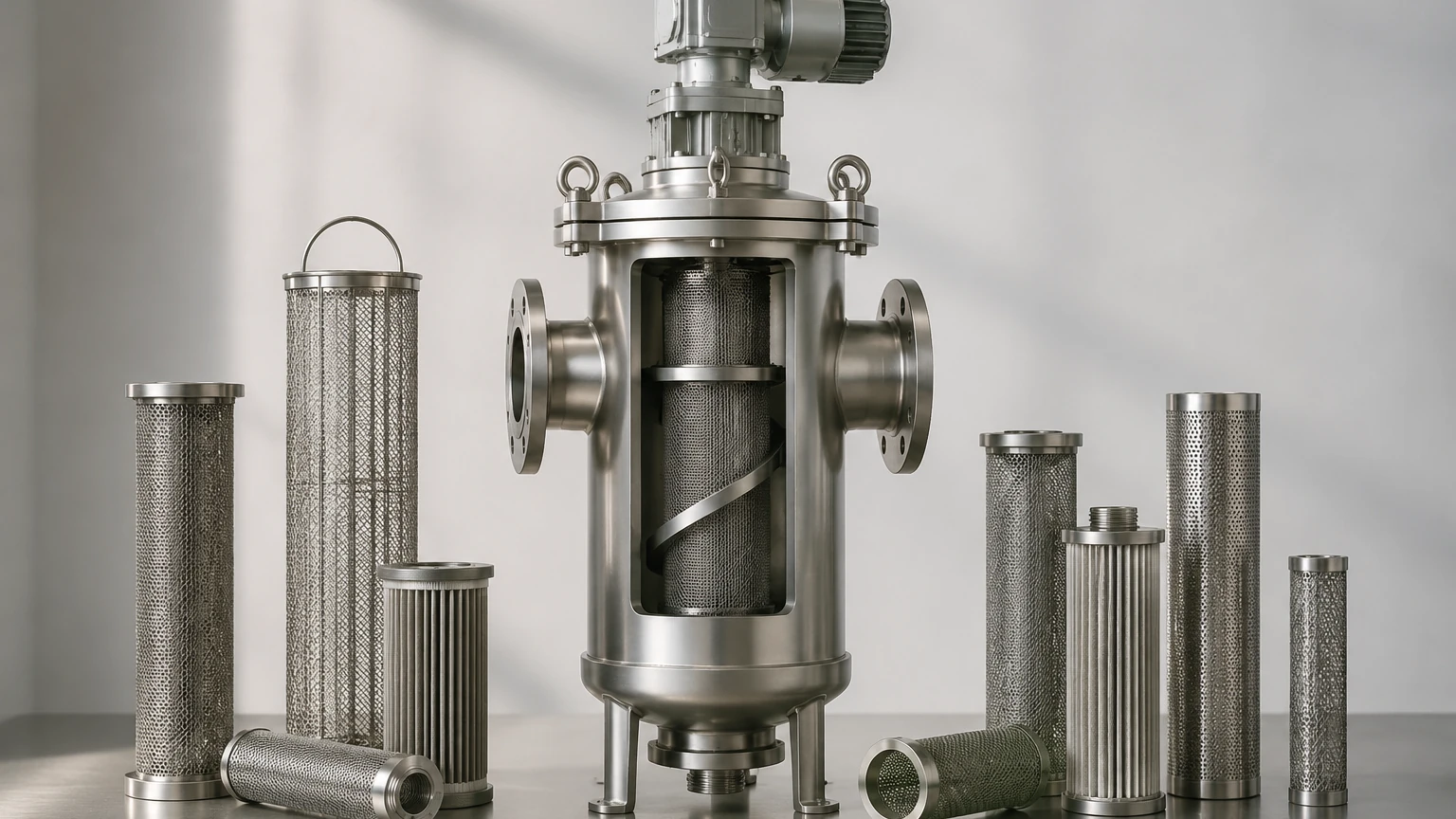
Scraper filters are particularly effective for highly viscous fluids or those containing sticky, organic contaminants. In this design, a mechanical blade or brush—often made of reinforced polymers or stainless steel—moves across the surface of a wedge wire or perforated screen. As the scraper rotates or moves linearly, it displaces the filter cake, which then settles into a collection chamber at the bottom of the housing. This concentrated waste is periodically purged through a flush valve. This method is highly valued in the food and beverage industry for handling syrups, chocolate, or oils, as well as in chemical processing for resins and adhesives.
Backwash and Suction Scanning
For low-viscosity fluids like water, thin chemicals, or light fuels, backwash systems are more common. These systems often utilize a suction scanner or a rotating backwash arm. When the differential pressure (DP) reaches a pre-set limit, the cleaning cycle begins. A small portion of the filtered fluid is forced backward through the filter mesh at high velocity. This localized reverse flow dislodges particles from the screen, which are then carried out through a dedicated drain line. Because only a tiny fraction of the total flow is used for cleaning, the overall process remains uninterrupted.
Material Selection and Structural Integrity in Metal Filtration
The durability of an automatic self cleaning filter is heavily dependent on the materials used for the housing and, more importantly, the internal filter element. In industrial environments involving corrosive chemicals or high temperatures, stainless steel is the standard choice. As a specialized manufacturer, Kaifil emphasizes the use of high-grade alloys to ensure longevity and resistance to pitting and stress corrosion cracking.
Stainless Steel 304 and 316L
SS304 is suitable for many general-purpose applications, including cooling water and non-corrosive industrial fluids. However, for pharmaceutical, food-grade, or chemical applications, SS316L is preferred due to its superior resistance to chlorides and organic acids. The "L" designation (low carbon) is crucial for welded components, as it prevents carbide precipitation during the manufacturing process, maintaining the integrity of the filter's structural welds.
Filter Media: Wedge Wire vs. Woven Mesh
The choice of filter media affects both cleaning efficiency and the "total cost of ownership." Wedge wire screens, characterized by their V-shaped profile, are highly resistant to plugging. The narrow gap at the surface widens toward the outside, allowing particles that pass the initial gap to clear the screen easily. This profile is ideal for automatic scraping. Conversely, multi-layered sintered wire mesh provides higher filtration precision (down to sub-micron levels) but may require more sophisticated backwash pressures to ensure complete cleaning. For more information on the range of customizable metal filter components available, engineers can consult the Main Page of the manufacturer’s technical catalog.
Key Performance Indicators for Industrial Selection
Selecting the correct automatic self cleaning filter requires a detailed analysis of the process parameters. Over-specifying can lead to unnecessary capital expenditure, while under-specifying leads to frequent maintenance and premature component failure.
1. Filtration Accuracy (Micron Rating): Determining the exact particle size that must be removed is the first step. In many industrial cooling water applications, a 100-micron to 500-micron screen is sufficient. However, for protecting fine spray nozzles, a 25-micron or 50-micron element may be necessary.
2. Flow Rate and Pressure Drop: Every filter introduces a pressure drop (Delta P). An automatic system must be sized so that the clean pressure drop is minimal, typically between 2 to 5 psi, allowing for a functional range before the self-cleaning cycle is triggered (usually at 10 to 15 psi).
3. Solids Loading: The concentration of solids in the influent fluid dictates the frequency of the cleaning cycles. High solids loading requires a larger surface area or a more robust cleaning mechanism to prevent the system from entering a continuous cleaning loop, which wastes flush fluid and increases wear.
4. Viscosity and Temperature: Viscous fluids require more force for both filtration and cleaning. Similarly, high-temperature applications require specialized seals (such as Viton or PTFE) and potentially reinforced filter elements to withstand thermal expansion.
Operational Advantages: Beyond Labor Savings
While the reduction in manual labor is a significant benefit, the true value of an automatic self cleaning filter lies in process stability and environmental safety. In chemical and pharmaceutical manufacturing, exposing workers to process fluids during manual filter changes can be a major safety hazard. Automated systems are enclosed, significantly reducing the risk of chemical exposure and spills.
Furthermore, these systems contribute to sustainability goals. By cleaning and reusing the filter element, facilities eliminate the recurring cost and environmental impact of disposing of used filter cartridges or bags. The concentrated waste stream produced during the purge cycle is also easier to treat or recover compared to saturated disposable media.
Application-Specific Considerations for Demanding Environments
Different industries present unique challenges that influence the design of an automatic self cleaning filter. Engineering teams must confirm these environmental factors before finalizing a purchase.
* Chemical Processing: Compatibility with aggressive solvents or acids is paramount. This often requires not just stainless steel housings but also specialized coatings or exotic alloys like Hastelloy for the internal moving parts.
* Food and Beverage: Sanitary design is non-negotiable. This includes polished internal surfaces (Ra < 0.8 µm) to prevent bacterial growth and the use of FDA-approved materials for all seals and scrapers. The system must also be compatible with Clean-in-Place (CIP) protocols.
* Water Treatment: In raw water or seawater filtration, the presence of sand, shells, and organic matter requires a robust backwash system. For seawater, the use of Duplex stainless steel or specialized anodic protection may be necessary to prevent galvanic corrosion.
* Hydraulic and Lube Oil: These systems often operate at higher pressures. The automatic filter must be rated for the maximum system pressure and capable of handling the high viscosity of cold oil during startup.
Maintenance Protocols and System Longevity
Although "automatic," these filters are not maintenance-free. To ensure a service life of 10 to 15 years, a proactive maintenance schedule should be implemented. Key areas of focus include:
* Seal Inspection: The dynamic seals on the scraper shaft or the backwash arm are wear items. Regular inspection prevents external leaks and maintains internal pressure boundaries.
* Sensor Calibration: The differential pressure transmitter is the "brain" of the system. If it drifts, the filter may clean too frequently (wasting fluid) or not frequently enough (risking element collapse).
* Mechanical Wear: For scraper filters, the blade should be checked for wear. A worn blade will leave a film on the screen, reducing filtration efficiency over time.
By integrating advanced manufacturing techniques with high-quality stainless steel components, manufacturers like Kaifil provide filtration solutions that stand up to the rigors of heavy industry. When evaluating a new installation, engineers should work closely with the manufacturer to provide a full fluid analysis and flow profile, ensuring the resulting automatic self cleaning filter is perfectly matched to the application's demands. This collaborative approach minimizes the total cost of ownership while maximizing the reliability of the entire production line.
