


Filter Bag Manufacturer
In the landscape of industrial liquid filtration, selecting a filter bag manufacturer is a decision that impacts not only the clarity of the final product but also the operational efficiency and maintenance costs of the entire processing line. Filter bags are a primary solution for high-flow, high-solids applications where cost-effectiveness and ease of replacement are paramount. However, the technical nuances of bag construction, material compatibility, and sealing mechanisms require a deep understanding of engineering principles to ensure that the chosen filtration system performs to specification.
Industrial filter bags are typically used in pressure filtration systems where fluid is pumped into a housing, passes through the bag from the inside out, and leaves the contaminants trapped within the bag. While the concept is simple, the execution involves complex variables including micron ratings, fiber migration, and differential pressure limits. For engineers and procurement teams, vetting a manufacturer involves looking beyond the price per unit and evaluating the technical support and customization capabilities that ensure long-term reliability.
Understanding the Role of a Filter Bag Manufacturer
A professional filter bag manufacturer does more than assemble fabric into a cylindrical shape. They act as a technical partner, providing guidance on material science and mechanical design. In industrial environments such as chemical processing, food and beverage production, and water treatment, the filter bag is often the last line of defense against particulate contamination.
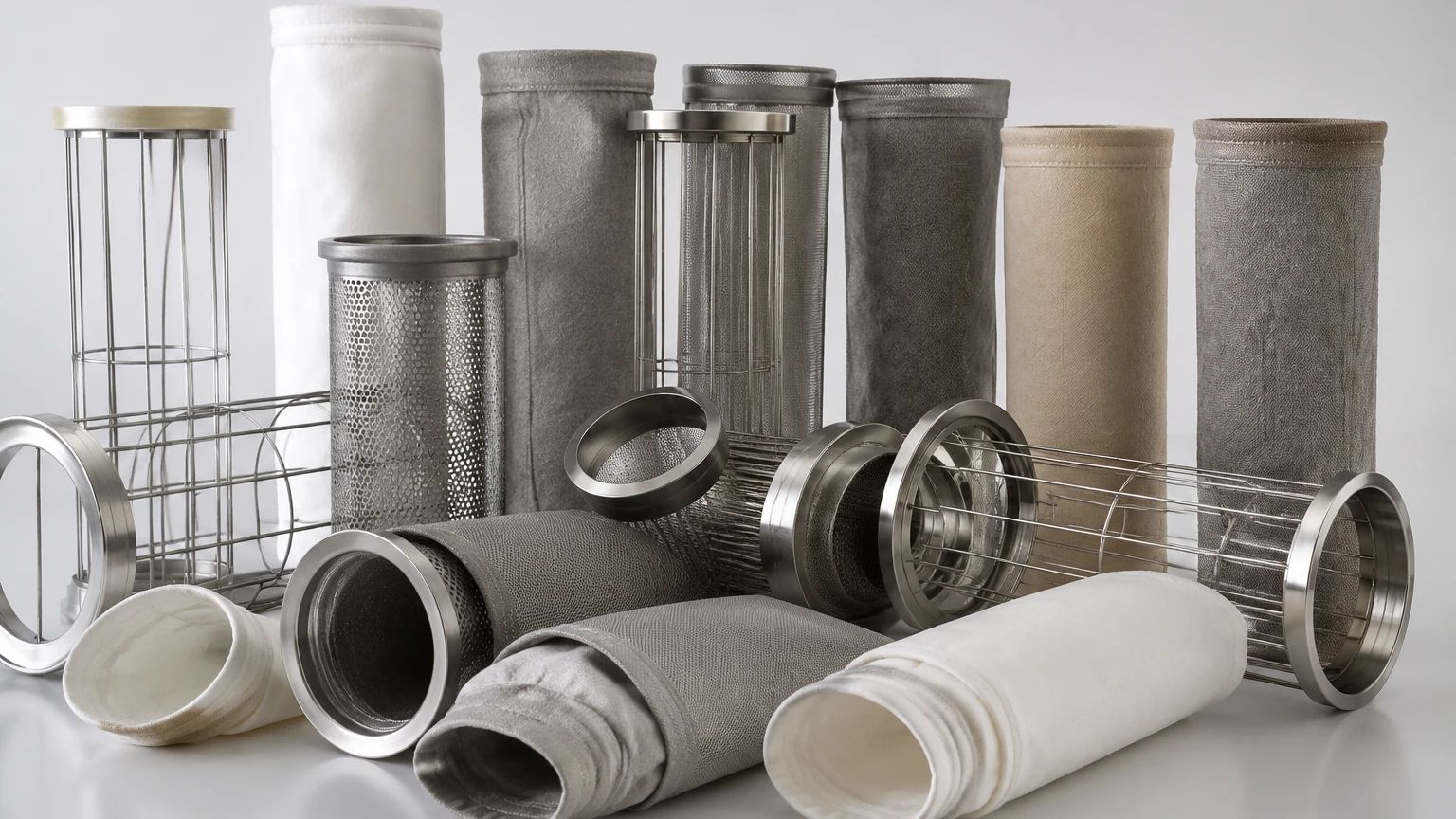
The manufacturer must provide a range of media types to handle diverse chemical environments. For instance, while polypropylene is widely used for its broad chemical resistance and low cost, it is limited by temperature. A manufacturer with deep technical expertise will offer alternatives like polyester for higher temperatures or nylon monofilament for precise surface filtration. Furthermore, for specialized applications requiring extreme durability and heat resistance, a manufacturer may integrate stainless steel mesh components, similar to the precision solutions found on the Main Page of leading filtration specialists.
Technical Specifications and Material Selection
The performance of a filter bag is fundamentally dictated by its material of construction. Engineers must consider the physical and chemical properties of the process fluid when selecting a bag.
1. Felt Media (Depth Filtration)
Needled felt is the most common material for filter bags. It provides depth filtration, meaning particles are trapped throughout the thickness of the material rather than just on the surface. This allows for a higher dirt-holding capacity. Manufacturers typically offer felt in polypropylene and polyester. The choice depends on the operating temperature; polypropylene is generally rated up to 90°C (194°F), while polyester can withstand up to 150°C (302°F).
2. Monofilament Mesh (Surface Filtration)
Monofilament mesh bags, often made of nylon or stainless steel, provide surface filtration. These are characterized by precise, square openings that ensure a definitive micron rating. Unlike felt, mesh bags can be cleaned and reused in certain applications, and they do not release fibers into the filtrate, a critical consideration in pharmaceutical and food-grade processes.
3. Specialty Materials
For highly aggressive chemicals or extreme temperatures (up to 260°C), manufacturers may utilize PTFE (Teflon) or Nomex. A reliable filter bag manufacturer will provide a chemical compatibility chart to help engineers avoid material failure, which could lead to bypass or system contamination.
Engineering Considerations for Bag Construction
The method used to construct the bag is just as important as the material itself. There are two primary methods: sewing and thermal welding.
Sewn Seams: Traditionally, filter bags were sewn together. While effective, the needle holes can potentially allow bypass of particles larger than the micron rating. To mitigate this, manufacturers may use specialized thread or apply sealant over the seams.
Welded Seams: Modern filtration requirements often demand welded seams. By using ultrasonic or thermal welding, the manufacturer eliminates needle holes entirely, ensuring that the entire bag maintains its rated efficiency. This construction is particularly important for fine micron ratings (under 10 microns) where any bypass is unacceptable.
Another critical engineering component is the sealing ring. The ring at the top of the bag must create a leak-proof seal with the filter housing. Common designs include:
* Plastic Flanges: Often featuring a "Sentinel" or "SDS" design, these use pressure-activated seals to prevent bypass.
* Steel Snap-Bands: These use a circular spring steel or stainless steel ring that snaps into the housing manifold.
* Drawstrings: Used in gravity-fed or low-pressure applications where a perfect seal is less critical.
Performance Metrics: Filtration Accuracy and Efficiency
When evaluating a filter bag manufacturer, it is essential to distinguish between nominal and absolute micron ratings. Most filter bags are nominally rated, meaning they will trap a high percentage (typically 60% to 80%) of particles at the specified micron size. However, in critical applications, an absolute-rated bag may be required, which guarantees a 99% or higher efficiency.
Engineers must also consider the "Dirt Holding Capacity" (DHC). A bag with a high DHC will last longer before reaching the terminal differential pressure, reducing the frequency of change-outs and lowering the total cost of ownership. The manufacturer should provide data on the pressure drop (ΔP) versus flow rate for various viscosities. A high initial pressure drop indicates that the bag may be too restrictive for the application, leading to shortened service life.
Evaluating Customization and OEM Capabilities
Standard filter bags (Size #1 through #4) meet the needs of most off-the-shelf housings. However, many industrial systems require custom dimensions or specialized hardware. A versatile filter bag manufacturer should offer OEM services, allowing for the design of bags that fit proprietary housings or address specific flow challenges.
Customization might include:
* Reinforced Handles: For easier removal of heavy, sludge-filled bags.
* Multi-Layered Construction: Combining a coarse outer layer for pre-filtration with a fine inner layer for final polishing.
* Integrated Magnets: To capture ferrous particles before they reach the filter media.
* Anti-Static Fibers: Critical for applications involving flammable solvents where static discharge could pose a fire risk.
By working with a manufacturer that understands these specialized needs, engineers can optimize their systems for both safety and performance. For those requiring high-precision metal components to support these bag systems, reviewing the technical capabilities on the Main Page can provide insights into how stainless steel filtration technology complements traditional bag setups.
Total Cost of Ownership and Maintenance Cycles
The purchase price of a filter bag is only a small fraction of the total cost of filtration. A low-quality bag from an unverified manufacturer may save money upfront but lead to higher costs due to:
1. Frequent Change-outs: Inferior media with low DHC requires more frequent labor and downtime.
2. Product Loss: If a bag fails or allows bypass, the entire batch of product may need to be re-processed or scrapped.
3. Downstream Damage: Particulates bypassing a bag can damage expensive equipment like pumps, spray nozzles, or high-precision membranes.
A professional manufacturer helps engineers determine the optimal change-out point. Usually, this is when the differential pressure reaches approximately 15-25 PSI (1.0-1.7 bar). Operating beyond this point risks bag rupture or "unloading," where the pressure forces trapped particles through the media and back into the clean stream.
Quality Assurance and Vetting the Manufacturer
To ensure consistent performance, the manufacturer should adhere to rigorous quality control standards. ISO 9001 certification is a baseline requirement for many industrial sectors. For food and beverage or pharmaceutical applications, the manufacturer must provide FDA-compliant materials and ensure that the production environment is free from contaminants like silicone or oils.
Key questions to ask a potential filter bag manufacturer include:
* What is your testing protocol for micron ratings? Do you use Multipass testing or other standardized methods?
* Can you provide material traceability reports? This is vital for regulated industries.
* What is the maximum flow rate recommended for this specific bag design?
* Do you offer technical support for troubleshooting premature clogging or bypass issues?
Conclusion
Selecting the right filter bag manufacturer is a strategic engineering decision that directly affects the reliability of industrial processes. By focusing on material science, construction quality, and the specific needs of the application, engineers can ensure they are using the most efficient filtration solution possible. Whether the application requires standard polypropylene felt or specialized high-temperature mesh, the manufacturer's ability to provide technical data and customized support is the hallmark of a true industrial partner. For comprehensive filtration solutions and precision-engineered components, engineers can explore the resources available on the Main Page to find the right balance of performance and durability for their systems.
