


High Flow Filter Element
In industrial fluid processing, the demand for higher throughput without a proportional increase in equipment footprint has led to the widespread adoption of the high flow filter element. Unlike traditional 2.5-inch diameter cartridges, high flow elements are engineered to handle significantly larger volumes of fluid, often reaching flow rates of up to 500 gallons per minute (GPM) per single cartridge. For engineers and procurement teams, understanding the technical nuances of these components is essential for optimizing system performance, reducing downtime, and managing the total cost of ownership.
As a specialized manufacturer of stainless steel filtration solutions, Kaifil provides precision-engineered components that address the rigorous demands of modern industrial applications. By focusing on material integrity and structural design, these filtration solutions ensure that high-volume processes remain efficient and reliable. For more information on specific configurations, professionals can visit the Main Page to review product options and application support.
Engineering Principles of High Flow Filtration
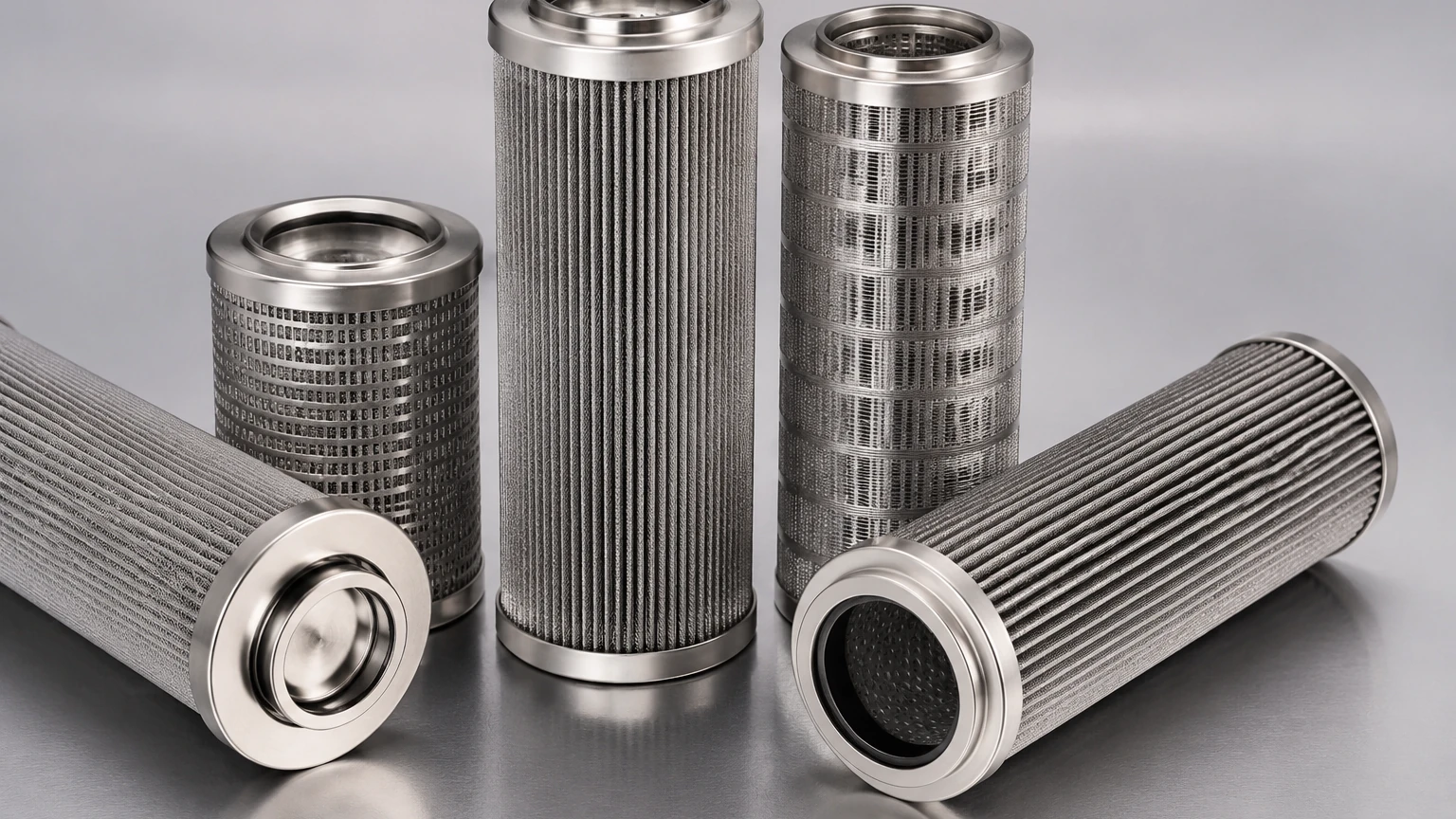
The fundamental advantage of a high flow filter element lies in its geometry and surface area. Most high flow designs utilize a 6-inch (152 mm) or 6.75-inch diameter, which provides a much larger filtration surface compared to standard cartridges. This increased diameter allows for a pleated design that maximizes the media area within a compact longitudinal space.
Surface Area vs. Flux Rate
Flux rate, defined as the flow rate per unit of filter area, is a critical metric in filtration design. By increasing the available surface area, a high flow element can maintain a lower flux rate even while processing high total volumes. A lower flux rate typically leads to higher filtration efficiency and a slower increase in differential pressure, as particles are distributed across a wider expanse of media rather than being forced into a narrow space.
Flow Directionality
Most high flow systems utilize an inside-to-outside flow pattern. This design choice is intentional: as fluid passes from the center of the element to the exterior, contaminants are trapped within the interior core of the cartridge. This prevents debris from falling back into the filter housing during element change-outs, ensuring a cleaner process and reducing the risk of downstream contamination. Furthermore, the internal support structures of these elements are designed to withstand high pressure differentials without collapsing, maintaining the integrity of the pleat pack throughout its service life.
Material Selection and Industrial Compatibility
Selecting the correct material for a high flow filter element is a decision driven by the chemical nature of the fluid, the operating temperature, and the required durability of the system. While polymer-based media like polypropylene or glass fiber are common in water treatment, demanding industrial environments often require the robustness of stainless steel.
Stainless Steel Wire Mesh and Sintered Media
For applications involving high temperatures, aggressive chemicals, or the need for cleanable media, stainless steel (typically 304 or 316L) is the material of choice. Stainless steel high flow elements offer several advantages:
- Thermal Stability: They can operate in environments exceeding 250°C, where synthetic polymers would melt or degrade.
- Chemical Resistance: They are compatible with a wide range of solvents, acids, and bases used in chemical processing.
- Mechanical Strength: Metal filters can withstand higher burst and collapse pressures, making them suitable for high-viscosity fluids or high-pressure hydraulic systems.
- Sustainability: Unlike disposable synthetic cartridges, stainless steel filters can often be cleaned and reused, reducing the environmental impact and long-term waste costs.
Sealing and Gasket Materials
The integrity of a high flow system is only as good as its seals. Engineers must specify O-ring materials—such as Viton, EPDM, or Buna-N—that are compatible with the process fluid to prevent bypass. A high flow filter element typically features a heavy-duty handle and a secure locking mechanism to ensure the element remains seated correctly even under turbulent flow conditions.
Key Performance Metrics for Filter Selection
When evaluating a high flow filter element for a specific application, engineers must look beyond simple micron ratings. Performance is a multi-faceted calculation involving efficiency, capacity, and resistance.
Absolute vs. Nominal Ratings
A "nominal" rating is an empirical value indicating that the filter will stop a certain percentage of particles of a given size. In contrast, an "absolute" rating (often defined by a Beta Ratio of 5000 or 99.9% efficiency) provides a much higher level of certainty. For critical applications in pharmaceuticals or fine chemical production, absolute-rated high flow elements are necessary to ensure product purity.
Dirt-Holding Capacity (DHC)
The total mass of contaminants a filter can retain before reaching its terminal pressure drop is its dirt-holding capacity. High flow elements excel here because their pleated structure provides deep pockets for particle entrapment. A higher DHC directly translates to longer intervals between change-outs, which reduces labor costs and system downtime.
Clean Pressure Drop (Delta P)
Every filter introduces resistance to the flow. A well-designed high flow filter element will have a very low initial "clean" pressure drop. This allows the system pumps to operate more efficiently and provides a larger "window" of usable pressure before the filter reaches its plug point. Sizing a system correctly usually involves ensuring the initial pressure drop does not exceed 2-3 PSI at the maximum intended flow rate.
Applications Across Industrial Sectors
The versatility of the high flow filter element makes it a staple in various sectors where large-scale fluid management is required.
Water Treatment and Desalination
In reverse osmosis (RO) systems, high flow elements serve as essential pre-filters. They protect expensive RO membranes from silt, sand, and organic debris. Because desalination plants process massive quantities of seawater, the high-capacity nature of these filters allows for smaller, more cost-effective filter housings.
Chemical and Petrochemical Processing
Refineries and chemical plants use high flow filtration to remove catalysts, pipe scale, and carbon fines from process streams. In these environments, the ability of a stainless steel high flow element to resist corrosion and handle high-temperature hydrocarbons is a significant operational advantage.
Food and Beverage Production
From bottled water to large-scale brewing, filtration ensures both safety and clarity. High flow elements used in this sector must comply with food-grade standards (such as FDA or EU regulations). They are often used for bulk water filtration or as a final polishing step before packaging.
Power Generation
In power plants, high flow filters are used in condensate polishing and cooling water loops. Removing suspended solids from boiler feed water is critical to preventing scale buildup and maintaining the efficiency of heat exchangers and turbines.
Sizing and System Design Considerations
Properly sizing a high flow filtration system requires more than just matching the flow rate. Engineers must consider the fluid's viscosity, as thicker fluids will create a higher pressure drop across the media.
1. Viscosity Correction: If the fluid is significantly more viscous than water (e.g., heavy oils or syrups), the flow rate per element must be de-rated to prevent premature blinding or structural failure.
2. Housing Geometry: The vessel housing the high flow filter element must be designed to minimize internal turbulence. Multi-round housings can hold several high flow elements, allowing for flow rates in the thousands of GPM within a single unit.
3. Redundancy: In continuous processes, a duplex filter arrangement—where one housing is online while the other is in standby—allows for element replacement without stopping the production line.
Total Cost of Ownership (TCO) Analysis
While the initial purchase price of a high flow filter element may be higher than that of a standard 10-inch or 30-inch cartridge, the TCO is often significantly lower. The economic benefits are realized through several channels:
- Reduced Labor: Changing one high flow element is faster than changing 20 standard cartridges. This reduces the man-hours required for maintenance.
- Smaller Footprint: High flow housings are much smaller than traditional multi-cartridge housings for the same flow rate, saving valuable floor space in a facility.
- Lower Disposal Costs: Fewer elements used over the course of a year means lower costs for waste hauling and disposal, particularly if the waste is classified as hazardous.
- Energy Savings: Lower average pressure drops mean that pumps do not have to work as hard, leading to measurable reductions in electricity consumption over the life of the system.
Technical Support and Customization
In many industrial scenarios, a standard off-the-shelf high flow filter element may not meet the specific requirements of a unique process. Customization is often necessary to address specific challenges such as extreme pH levels, unusual particle shapes, or non-standard housing dimensions.
Kaifil specializes in these custom configurations, leveraging advanced manufacturing techniques to produce stainless steel filtration components tailored to specific engineering drawings and performance specifications. By collaborating closely with technical teams, Kaifil ensures that the final filtration solution integrates seamlessly into existing infrastructure while providing the required filtration accuracy and durability.
When specifying a custom filter, engineers should be prepared to confirm the following data:
- Maximum and operating flow rates.
- Fluid temperature and chemical composition.
- Target particle size and required efficiency (Micron rating).
- Maximum allowable pressure drop.
- Connection types and sealing requirements.
Conclusion
The high flow filter element is a cornerstone of efficient industrial fluid management. By consolidating filtration capacity into a high-surface-area design, these elements offer a path toward more compact, cost-effective, and reliable systems. Whether the application involves protecting sensitive RO membranes in a desalination plant or ensuring the purity of chemicals in a high-temperature reactor, selecting the right high flow solution is a critical engineering decision. For those looking to optimize their filtration processes with high-performance metal components, exploring the resources available on the Main Page provides a starting point for technical evaluation and product selection.
