


Hirsch Funnel Filtration
Hirsch funnel filtration is a specialized vacuum-assisted separation technique used primarily for the recovery of small quantities of solid precipitates from a liquid phase. While often associated with laboratory-scale chemistry, the principles governing this process are fundamental to industrial filtration engineering. For manufacturers and process engineers, understanding the nuances of Hirsch funnel filtration is essential when transitioning from bench-top R&D to full-scale industrial production. This guide explores the technical mechanics, design considerations, and material requirements necessary to optimize filtration performance in demanding environments.
The Mechanics of Hirsch Funnel Filtration
At its core, hirsch funnel filtration relies on a pressure differential to force a liquid (the filtrate) through a porous medium, leaving behind the solid particles (the filter cake). Unlike gravity filtration, which depends solely on the weight of the liquid, vacuum-assisted filtration significantly accelerates the process by creating a low-pressure zone beneath the filter media.
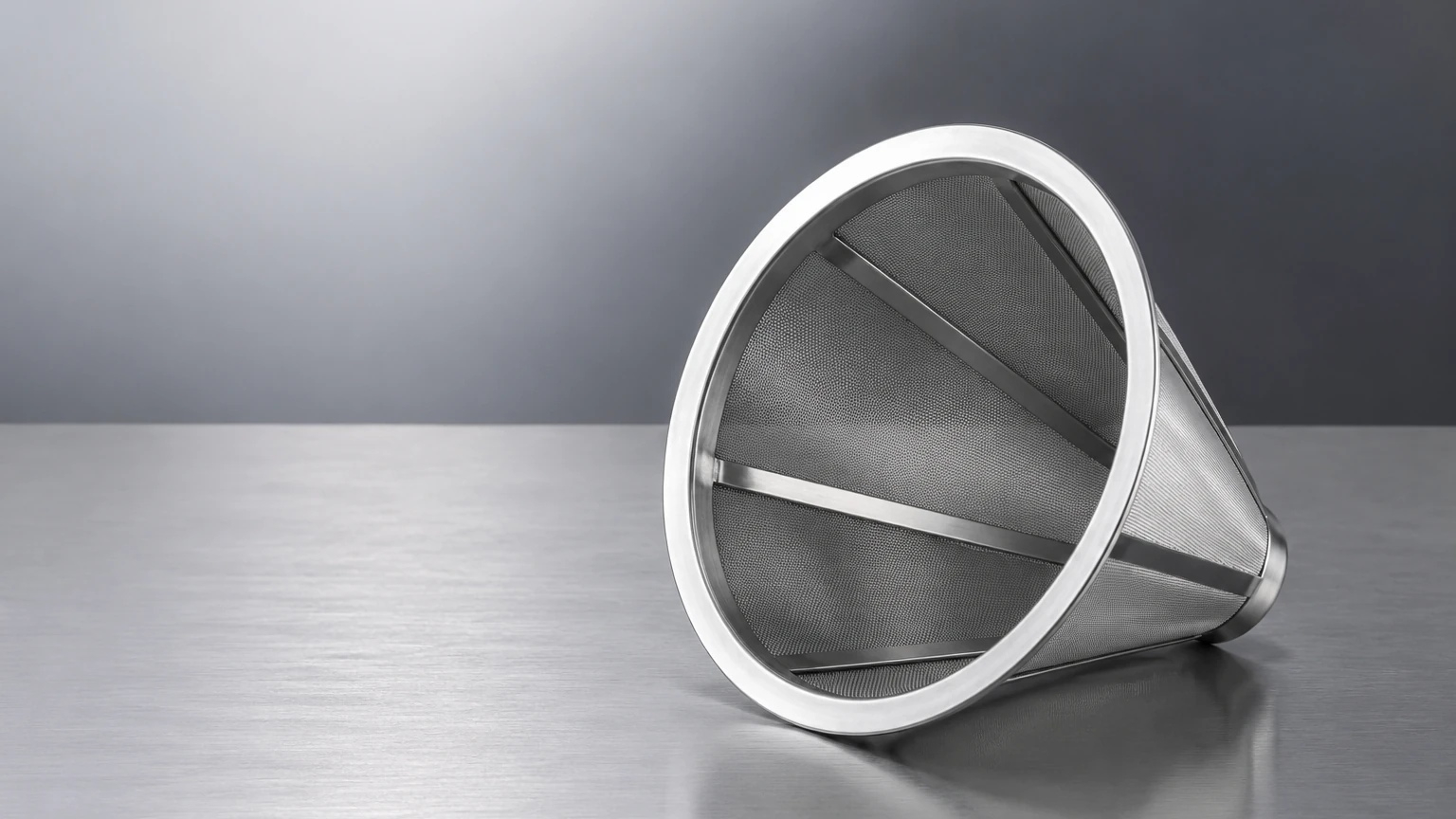
The defining characteristic of a Hirsch funnel is its geometry. It features steeply sloped, conical walls and a perforated plate at the base. This design is specifically engineered for small-volume batches where the goal is to concentrate the solid material into a small area. The conical shape ensures that even minute amounts of precipitate are gathered efficiently, minimizing losses that might occur on the larger horizontal surfaces of other funnel types.
In an industrial context, the efficiency of this process is governed by several variables, including the viscosity of the fluid, the particle size distribution of the solids, and the effective surface area of the filter media. Engineers must balance the vacuum pressure to ensure rapid flow without causing "blinding"—a condition where fine particles lodge within the pores of the media, prematurely halting the filtration cycle.
Hirsch vs. Buchner: Engineering Distinctions
In the field of vacuum filtration, the Hirsch funnel is frequently compared to the Buchner funnel. While both utilize vacuum pressure and a perforated support plate, their applications differ based on scale and cake recovery requirements.
1. Surface Area and Volume: Buchner funnels feature vertical walls and a large, flat perforated plate, making them ideal for high-volume filtration and thick filter cakes. Hirsch funnels, conversely, have a much smaller plate diameter relative to their top opening. This reduced surface area is critical when working with limited quantities of expensive or high-potency materials, such as active pharmaceutical ingredients (APIs).
2. Cake Recovery: The outward-sloping walls of the Hirsch funnel allow for easier access to the filter cake. For engineers designing custom filtration components, this geometry is a key consideration if the final product is the solid rather than the liquid.
3. Flow Dynamics: Because the plate is smaller, the flux (flow rate per unit area) can be higher in a Hirsch setup for a given vacuum strength. This requires careful selection of the filter media to prevent structural failure or particle bypass.
For organizations looking to implement these principles at an industrial scale, visiting the Main Page of a specialist manufacturer like Kaifil provides insights into how these lab-scale geometries are translated into robust, stainless steel filtration systems.
Material Selection and Chemical Compatibility
In industrial filtration, the choice of material is as critical as the design of the funnel itself. While laboratory Hirsch funnels are typically made of porcelain or glass, industrial applications often demand the durability and precision of metal. Stainless steel, particularly grades 304 and 316L, is the standard for high-performance filtration due to its corrosion resistance and thermal stability.
The Role of Stainless Steel Wire Mesh
In many advanced filtration setups, traditional filter paper is replaced by multi-layered stainless steel wire mesh or sintered metal plates. These materials offer several engineering advantages:
* Precision Pore Size: Unlike paper, which has a variable pore structure, stainless steel mesh can be manufactured to exact micron ratings, ensuring consistent filtration efficiency.
* Mechanical Strength: Under high vacuum pressures, paper can tear or deform. Stainless steel components maintain their structural integrity, preventing bypass and ensuring a clear filtrate.
* Thermal Resistance: Hirsch funnel filtration in chemical processing often involves hot or cryogenic liquids. Stainless steel can withstand extreme temperature fluctuations that would compromise synthetic or cellulose-based media.
* Reusability and Sterilization: In pharmaceutical and food-grade applications, the ability to perform Clean-in-Place (CIP) or sterilization (SIP) is paramount. Stainless steel filters are easily cleaned, reducing the total cost of ownership compared to disposable media.
Optimizing the Filtration Process
To achieve optimal results in hirsch funnel filtration, engineers must address several technical challenges related to the interface between the liquid and the filter media.
Managing Pressure Drop
The pressure drop across the filter media is a primary driver of flow rate. However, an excessive vacuum can lead to "cake compression," where the solids are packed so tightly that they form an impermeable barrier. Engineers must calculate the optimal vacuum level based on the compressibility of the solids. In some cases, a stepped vacuum approach—starting with a low vacuum and gradually increasing it as the cake builds—is more effective than applying maximum pressure immediately.
Preventing Particle Bypass
One of the most common risks in vacuum filtration is the bypass of solids around the edges of the filter media. In a Hirsch funnel, the seal between the filter disc and the perforated plate must be absolute. Industrial versions often utilize precision-machined support rings or gaskets to ensure that 100% of the fluid passes through the media. When using custom stainless steel cartridges or discs, the tolerances must be tight enough to prevent any peripheral leakage.
Cake Washing and Purity
Hirsch funnel filtration is often followed by a washing step to remove impurities from the solid precipitate. The conical design facilitates even distribution of the wash solvent over the cake. For high-purity applications, the thickness of the cake must be uniform to ensure the solvent reaches all particles equally. If the cake is too thick or unevenly distributed, "channeling" may occur, where the solvent takes the path of least resistance, leaving impurities behind in denser areas.
Scaling from Lab to Industrial Production
The transition from laboratory-scale hirsch funnel filtration to industrial production requires a shift from manual, batch-oriented processes to automated or semi-automated systems. This is where the expertise of a manufacturer like Kaifil becomes invaluable.
Industrial filtration solutions often involve translating the small-scale benefits of the Hirsch design into larger stainless steel filter housings or multi-cartridge systems. Key considerations during this scale-up include:
* Total Filtration Area (TFA): Calculating the required TFA to maintain the desired throughput without exceeding the maximum allowable pressure drop.
* Housing Design: Ensuring the internal geometry of the filter housing prevents dead zones where solids can accumulate and cause contamination.
* Customization: Many industrial processes require unique fittings, specialized coatings, or non-standard micron ratings. Custom OEM filtration solutions allow engineers to tailor the hardware to the specific chemical and physical properties of their process stream.
By leveraging advanced manufacturing techniques such as precision welding and sintering, Kaifil provides the high-performance components necessary to maintain the integrity of the filtration process at any scale.
Maintenance and Performance Evaluation
To ensure the longevity of industrial filtration equipment, a structured maintenance and evaluation protocol is necessary. Unlike disposable lab equipment, stainless steel filtration components are long-term assets that require proper care.
1. Integrity Testing: Regular testing of the filter media ensures that no breaches or pore enlargements have occurred. This is especially critical in pharmaceutical applications where validated filtration is required.
2. Cleaning Protocols: Depending on the nature of the solids, cleaning may involve ultrasonic baths, back-pulsing, or chemical solvents. The goal is to restore the original flow characteristics of the media without damaging the pore structure.
3. Monitoring Differential Pressure: Continuous monitoring of the pressure drop across the filter is the most effective way to determine when a cleaning cycle or replacement is necessary. A sudden drop in pressure may indicate a media failure, while a rapid increase suggests premature clogging.
Conclusion
Hirsch funnel filtration remains a cornerstone technique for precise solid-liquid separation. By understanding the underlying engineering principles—from the importance of conical geometry to the selection of high-grade stainless steel media—technical professionals can optimize their processes for maximum efficiency and purity. Whether performing small-scale R&D or managing large-scale industrial output, the integration of high-quality filtration components is essential for achieving consistent, reliable results in any demanding application.
