


Frits Hplc
In the field of analytical chemistry, High-Performance Liquid Chromatography (HPLC) stands as a cornerstone technique for separating, identifying, and quantifying components in a mixture. While much attention is often directed toward the sophisticated pumps, detectors, and specialized stationary phases, the efficiency of the entire system frequently depends on small, precision-engineered components known as frits.
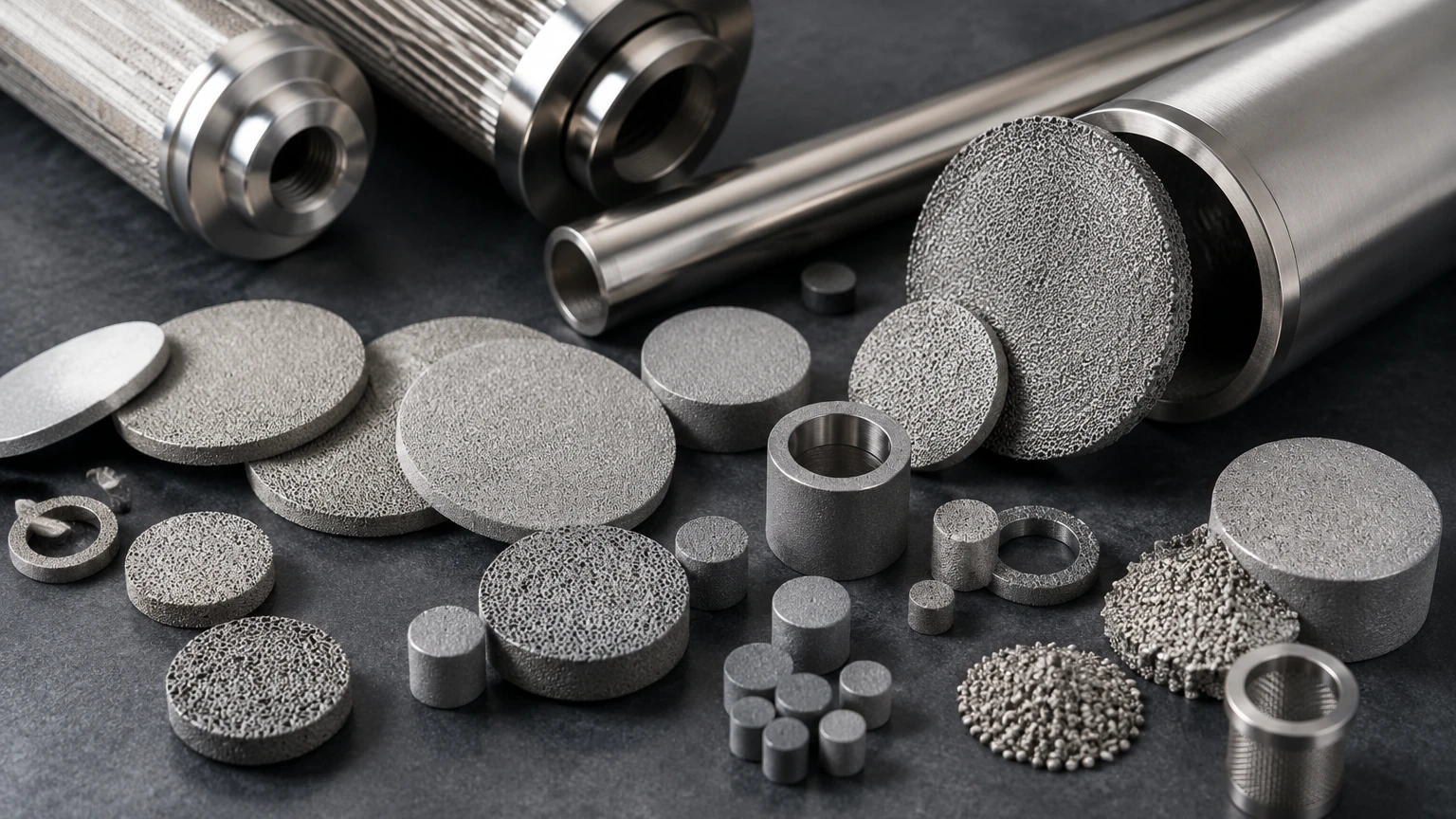
Frits HPLC components are porous discs typically situated at the inlet and outlet of a chromatography column, as well as in mobile phase intake filters. Their primary function is to protect the delicate column packing and ensure a uniform flow of the mobile phase. For engineers and laboratory managers, selecting the correct frit is not merely a matter of finding a fitting part; it is a critical decision that impacts system pressure, peak resolution, and the longevity of expensive analytical equipment.
The Role of Frits in High-Performance Liquid Chromatography
Frits serve several indispensable functions within an HPLC system. Understanding these roles is the first step in optimizing filtration performance and maintaining system integrity.
Stationary Phase Retention
HPLC columns are packed with minute particles, often ranging from 1.7 µm to 5 µm in diameter. Without a physical barrier, these particles would be washed out of the column by the high-pressure flow of the mobile phase. The frit acts as a mechanical retainer, keeping the stationary phase securely packed within the column hardware. To achieve this, the pore size of the frit must be significantly smaller than the particle size of the packing material.
Particulate Filtration
Contaminants in the mobile phase or samples—such as dust, pump seal wear particles, or undissolved solutes—can easily clog the narrow interstitial spaces between packing particles. A frit placed at the column inlet serves as a primary filter, trapping these particulates before they reach the stationary phase. This prevents localized pressure increases and protects the column from premature failure.
Flow Distribution
For effective separation, the mobile phase must enter the column with a uniform flow profile across its entire cross-section. A well-designed frit helps disperse the solvent stream as it enters the column, preventing "channeling" where the solvent moves faster through certain areas than others. Uniform distribution is essential for maintaining sharp peaks and high theoretical plate counts.
Material Selection for HPLC Frits
The chemical and physical environment inside an HPLC system is demanding. Components are subjected to high pressures (often exceeding 6,000 PSI in standard HPLC and 15,000 PSI in UHPLC) and a wide variety of solvents, including acids, bases, and organic buffers. Consequently, material selection is paramount.
Stainless Steel 316L
Stainless steel 316L is the industry standard for most HPLC applications. It offers excellent mechanical strength, allowing frits to withstand high differential pressures without deforming. Furthermore, 316L provides robust resistance to a broad range of organic solvents. As a specialist in stainless steel filtration, Kaifil utilizes advanced sintering techniques to ensure these frits maintain precise porosity and structural integrity under industrial conditions.
Titanium
In applications involving highly corrosive mobile phases or where metal ions (like iron or nickel) might interfere with sensitive biological samples, titanium frits are an excellent alternative. Titanium is highly biocompatible and offers superior resistance to halides and certain acids that might cause pitting in stainless steel.
PEEK (Polyetheretherketone)
For "metal-free" chromatography, PEEK frits are utilized. These are common in ion chromatography and bio-separations where even trace metal leaching can denature proteins or interfere with the analysis. While PEEK is chemically inert, it has lower pressure limits compared to metallic frits and may deform under extreme UHPLC conditions.
Engineering Considerations: Porosity and Micron Ratings
One of the most common questions engineers face is determining the appropriate micron rating for their HPLC frits. The micron rating refers to the size of the particles the frit is designed to trap. However, in the context of HPLC, it is more about the size of the particles the frit must *retain* (the stationary phase).
The Rule of Thumb for Pore Size
A standard engineering guideline is that the frit pore size should be no larger than half the diameter of the smallest particles in the column packing. For example:
* 5 µm packing: Generally requires a 2 µm frit.
* 3 µm packing: Generally requires a 0.5 µm or 1 µm frit.
* Sub-2 µm packing (UHPLC): Requires 0.2 µm or 0.5 µm frits.
Impact on Backpressure
There is a direct trade-off between filtration efficiency and system backpressure. A frit with smaller pores provides better protection but creates a higher resistance to flow. If the pore size is unnecessarily small, it can lead to excessive heat generation and limit the maximum flow rate of the system. Engineers must balance the need for particle retention with the pressure capabilities of their HPLC pumps.
Manufacturing Precision and Quality Standards
The performance of a frit is determined by the manufacturing process, specifically the sintering of metal powders. Sintering involves heating metal particles below their melting point until they bond together, creating a porous but rigid structure.
Controlled Porosity
Achieving a uniform distribution of pores is critical. If a frit has "hot spots" or areas of varying density, the flow distribution will be uneven, leading to poor chromatographic results. High-quality manufacturing ensures that the void volume—the percentage of the frit that is open space—is consistent across every batch.
Dimensional Tolerances
In HPLC, even a fraction of a millimeter matters. Frits must fit perfectly within the column end-fittings or filter housings. Any gap between the frit and the housing can create "dead volume," where the sample can linger and diffuse, causing peak broadening and reducing the sensitivity of the analysis.
Cleanliness and Passivation
For stainless steel frits, the final stages of manufacturing must include rigorous cleaning and passivation. Passivation involves treating the steel with an oxidant to enhance its natural protective oxide layer. This ensures that the frit does not leach metal ions into the mobile phase, which is vital for maintaining the accuracy of the analytical data.
Identifying and Troubleshooting Common Frit Issues
Engineers and technicians should be trained to recognize the signs of frit failure or degradation. Because frits are consumable components, they will eventually require replacement.
High Backpressure
The most common symptom of a clogged frit is a gradual or sudden increase in system backpressure. If the pressure remains high even after replacing the mobile phase and checking for tubing kinks, the inlet frit is the likely culprit. In many cases, replacing the frit can restore the system to its optimal operating pressure without needing to replace the entire column.
Peak Tailing and Ghost Peaks
If a frit becomes partially clogged or if the surface becomes contaminated with adsorbed proteins or lipids, it can interfere with the sample's path. This often manifests as peak tailing (where the back of the peak is elongated) or the appearance of "ghost peaks" from previously trapped contaminants leaching back into the flow stream.
Mechanical Deformation
Under extreme pressure, a frit that is too thin or made of soft material may "cup" or deform. This change in shape alters the flow path and can lead to leaks at the column fittings. Selecting a frit with the appropriate thickness and compressive strength for the intended application is essential to prevent this.
Customization and OEM Solutions for HPLC Components
While standard sizes exist, many industrial and specialized laboratory applications require custom filtration solutions. This is where working with a dedicated manufacturer becomes advantageous. Whether it is a specific diameter for a preparative-scale column or a unique material requirement for harsh chemical processing, customized frits ensure that the filtration component is perfectly matched to the application's demands.
At Main Page, the focus is on providing high-performance, custom stainless steel filtration solutions that meet the rigorous standards of the pharmaceutical, chemical, and industrial sectors. By controlling the sintering process and offering a variety of micron ratings and geometries, manufacturers can provide components that optimize both the durability and the precision of the HPLC system.
Total Cost of Ownership and Replacement Cycles
From a procurement perspective, it is important to consider the total cost of ownership rather than just the initial price of the frit. Using high-quality, precision-manufactured frits can significantly extend the life of the much more expensive HPLC columns.
Preventive Maintenance
Establishing a regular replacement cycle for frits—especially mobile phase intake frits and guard column frits—is a cost-effective strategy. Replacing a frit every few hundred injections (depending on sample cleanliness) is far less expensive than dealing with the downtime associated with a clogged system or the cost of a ruined stationary phase.
Compatibility Verification
Before purchasing, engineers should confirm the chemical compatibility of the frit material with their intended solvents and the mechanical compatibility with their existing hardware. Confirming the exact dimensions (diameter and thickness) and the required micron rating will prevent installation issues and ensure the system operates within its designed parameters.
Conclusion
Frits HPLC components are essential to the success of liquid chromatography. By acting as the primary line of defense for the column and ensuring uniform flow distribution, they directly influence the quality of analytical results. For technical professionals, understanding the nuances of material selection, porosity, and manufacturing quality is key to making informed purchasing decisions. By selecting reliable, high-precision filtration components, laboratories can ensure consistent performance, reduce maintenance costs, and achieve the highest levels of accuracy in their chemical analyses.
