


Heat Transfer By Direct Contact
In industrial process engineering, managing thermal energy efficiently is as critical as maintaining fluid purity. Heat transfer by direct contact represents one of the most efficient methods of energy exchange, characterized by the absence of a physical barrier—such as a pipe wall or plate—between the substances exchanging heat. While this method offers superior thermal efficiency, it introduces unique challenges for filtration systems. In environments where fluids of different temperatures mix directly, the filtration components must not only withstand thermal stress but also ensure that the integrity of the process is maintained despite rapid temperature fluctuations.
For engineers and procurement professionals, understanding how filtration media interacts with systems utilizing heat transfer by direct contact is essential for ensuring long-term operational reliability. This guide examines the technical principles, industrial applications, and engineering considerations for selecting filtration solutions in these demanding thermal environments.
Understanding the Fundamentals of Heat Transfer by Direct Contact
Heat transfer by direct contact occurs when two substances at different temperatures are brought into physical contact, allowing for the exchange of thermal energy through conduction and convection at the interface. Unlike indirect heat exchangers (such as shell-and-tube or plate-and-frame), direct contact systems eliminate the thermal resistance provided by a separating wall. This results in significantly higher heat transfer coefficients and allows for smaller equipment footprints.
There are three primary categories of direct contact heat exchange relevant to industrial filtration:
1. Gas-Liquid Contact: Common in cooling towers, scrubbers, and steam injection systems. A gas (like steam) is injected into a liquid, or a liquid is sprayed into a gas stream.
2. Liquid-Liquid Contact: This involves two immiscible liquids, such as oil and water, where one acts as the heat carrier. This is frequent in specialized chemical extractions and waste heat recovery.
3. Solid-Liquid Contact: Often seen in quenching processes where hot metal components or particulates are cooled by immersion in a fluid medium.
In each of these scenarios, the filtration system is responsible for removing contaminants from the heat-carrying medium. Because the substances are mixing directly, any impurity in the heating or cooling fluid can immediately contaminate the final product or the secondary fluid, making high-precision stainless steel filtration a necessity.
Industrial Applications and the Necessity of Direct Contact
Direct contact heat transfer is favored in industries where rapid temperature changes or high efficiency are paramount. However, the lack of a barrier means the filtration system must be robust enough to handle the combined characteristics of both media.
Steam Injection and Sterilization
In the food and beverage and pharmaceutical industries, culinary-grade steam is often injected directly into a product for rapid heating or sterilization. This is a classic example of heat transfer by direct contact. The steam must be filtered through high-quality stainless steel cartridges to remove pipe scale, rust, and particulates that could compromise product safety. The filter must maintain its structural integrity while transitioning from ambient temperatures to the high temperatures of pressurized steam.
Quenching and Metal Processing
In metallurgical applications, hot components are often quenched in oil or water baths. The fluid absorbs heat through direct contact. As the fluid circulates through a heat exchanger to be cooled, it must be filtered to remove metal fines and carbon deposits. The filtration media here faces extreme thermal cycling, requiring materials that resist fatigue and thermal expansion stresses.
Gas Scrubbing and Cooling
Chemical processing plants often use scrubbers where a cooling liquid is sprayed into a hot gas stream to condense vapors or remove pollutants. The nozzles used for spraying are highly sensitive to particulate matter. Filtration systems in these units must handle the chemical corrosivity of the gas while managing the thermal load transferred during the contact process.
Filtration Challenges in Direct Contact Thermal Systems
When a system utilizes heat transfer by direct contact, the filtration components are subjected to conditions that standard filters cannot survive. Engineers must account for several technical challenges:
Thermal Shock
Thermal shock occurs when a filter is suddenly exposed to a fluid of a significantly different temperature. In direct contact systems, this can happen during startup, shutdown, or when switching between different process streams. Brittle filtration media, such as certain polymers or low-grade ceramics, can crack or deform. Stainless steel wire mesh and sintered metal filters are preferred because their metallic lattice can absorb and dissipate thermal energy more uniformly.
Differential Thermal Expansion
In a filter housing, the filter element and the housing itself may be made of different materials or have different thicknesses. During direct contact heat exchange, these components expand at different rates. If the design does not account for this, it can lead to seal failure, bypassing of unfiltered fluid, or permanent deformation of the filter cartridge.
Viscosity Changes
Heat transfer by direct contact often results in rapid changes in fluid viscosity. As a liquid is heated, its viscosity typically decreases, which can change the pressure drop across the filter. Conversely, cooling a fluid can increase its viscosity, potentially leading to a sudden spike in differential pressure that could collapse a weak filter element. Engineering a filter with a high collapse pressure rating is critical in these applications.
Material Selection: Why Stainless Steel Dominates Thermal Filtration
For applications involving heat transfer by direct contact, stainless steel is the industry standard for filtration media. Its physical properties provide the necessary balance of thermal conductivity, mechanical strength, and corrosion resistance.
* Grade 304/304L: Suitable for general industrial applications with moderate temperature requirements and non-corrosive fluids. It offers good thermal stability and is cost-effective for large-scale water treatment or cooling systems.
* Grade 316/316L: The preferred choice for pharmaceutical, food, and chemical applications. The addition of molybdenum provides superior resistance to pitting and crevice corrosion, which is vital when direct contact involves chemically active fluids at elevated temperatures.
* High-Temperature Alloys (e.g., 310S or Inconel): In extreme cases where direct contact involves molten salts or high-temperature gases exceeding 500°C, specialized alloys are used to prevent oxidation and maintain structural rigidity.
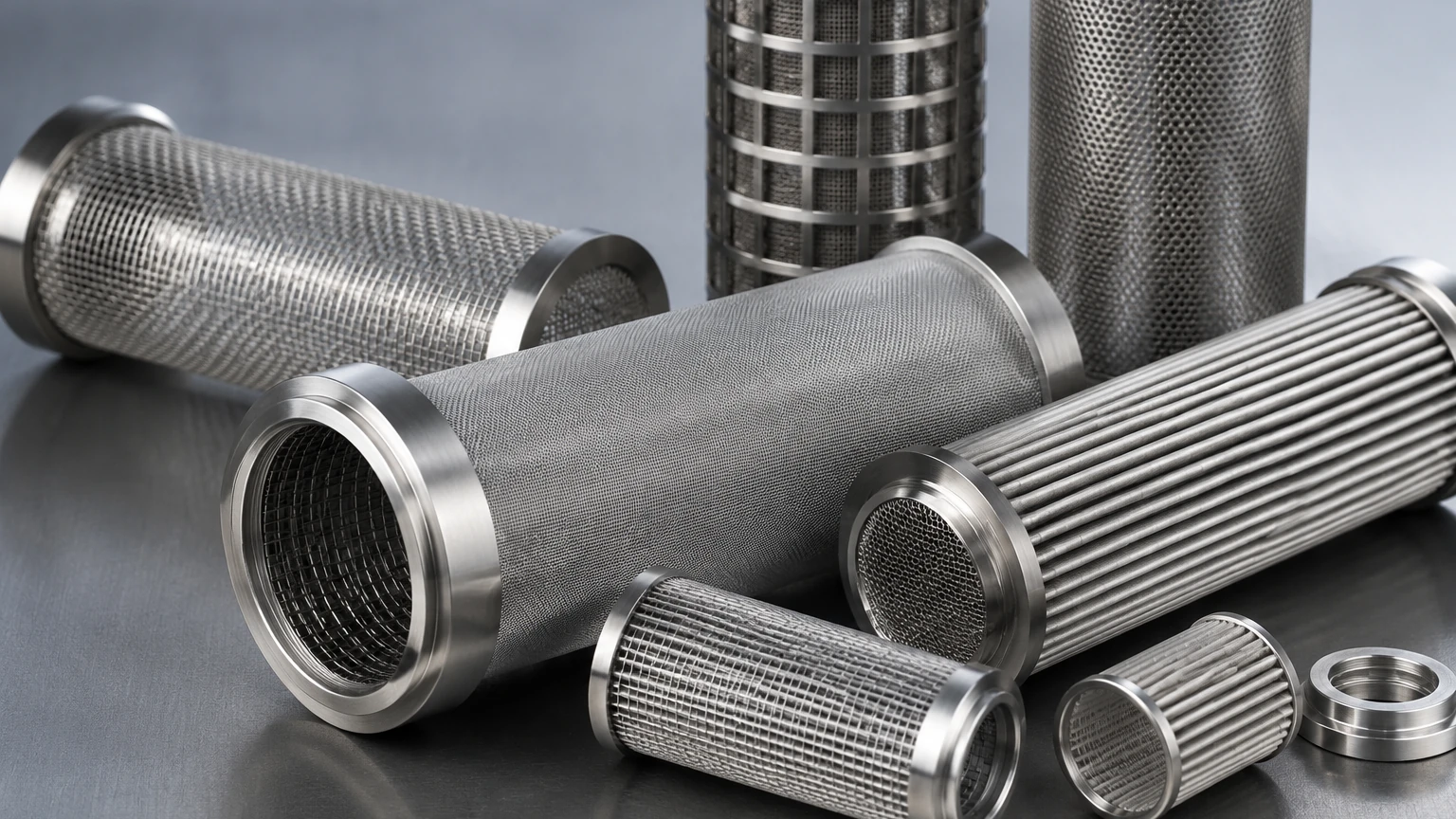
Stainless steel wire mesh filters are particularly effective because they provide a precise pore size that remains stable even under thermal load. Unlike felt or paper media, which can swell or degrade when exposed to hot liquids, metal mesh maintains its geometric integrity, ensuring consistent filtration accuracy.
Engineering Considerations for Filter Design in Heat Exchange Environments
When designing a filtration solution for a system using heat transfer by direct contact, several engineering parameters must be confirmed to ensure optimal performance. Technical teams should evaluate the following:
1. Filtration Accuracy (Micron Rating): Determine the minimum particle size that must be removed to protect downstream equipment or product quality. In direct contact systems, even small particles can act as nucleation sites for scaling, which reduces heat transfer efficiency.
2. Structural Reinforcement: For high-temperature applications, filter cartridges often require internal support cores or external cages. This prevents the pleats or mesh from deforming under the combined pressure of high-viscosity fluids and thermal expansion.
3. Sealing Mechanisms: Standard O-rings made of Nitrile or EPDM may fail at the temperatures associated with direct contact steam or oil. High-temperature gaskets made of PTFE, Viton, or even metal-to-metal seals should be specified based on the maximum operating temperature.
4. Flow Velocity and Turbulence: Direct contact mixing often involves high-velocity flows. The filter must be designed to handle the resulting turbulence without suffering from vibration-induced fatigue. Sintered wire mesh is often used here because the individual wires are bonded together, preventing them from shifting or fraying.
For those looking to explore specific configurations and technical specifications for industrial metal filters, you can Review product options and application support on our Main Page to see how custom engineering addresses these thermal challenges.
Evaluating Performance and Total Cost of Ownership
In B2B procurement, the initial cost of a filter is often secondary to the total cost of ownership (TCO). In systems utilizing heat transfer by direct contact, the TCO is heavily influenced by the filter's durability and cleanability.
Cleanability and Reuse
Disposable filters are often impractical in high-temperature direct contact systems due to the risk of media migration and the cost of frequent replacements. Stainless steel filters can be cleaned via backwashing, ultrasonic cleaning, or chemical immersion. This ability to regenerate the filter media significantly reduces long-term operational expenses and waste.
Impact on Heat Transfer Efficiency
Fouling is the enemy of efficient heat transfer. If a filtration system fails to remove particulates, those solids can settle on heat exchange surfaces, creating an insulating layer that hinders thermal energy transfer. By maintaining a high level of fluid purity, precision filtration ensures that the system operates at its peak thermal efficiency, reducing energy consumption.
Maintenance Cycles
Engineers should specify filters that allow for extended maintenance intervals. In direct contact systems, this often means choosing a filter with a larger surface area (such as a pleated design) to accommodate higher dirt-holding capacity without increasing the footprint of the installation.
Conclusion
Heat transfer by direct contact is a powerful tool in the industrial arsenal, offering unmatched thermal efficiency and process speed. However, the success of these systems depends on the ability to manage the associated thermal and mechanical stresses. By selecting high-quality stainless steel filtration solutions, engineered specifically for high-temperature and high-pressure environments, manufacturers can protect their equipment, ensure product purity, and optimize energy usage.
When evaluating filtration components for direct contact applications, it is essential to partner with a manufacturer that understands the nuances of material science and fluid dynamics. Proper material selection, robust structural design, and a clear understanding of the thermal profile of the process are the keys to a reliable and cost-effective filtration strategy. For more detailed technical resources and customized filtration engineering, visiting our Main Page provides access to the expertise required to navigate these complex industrial requirements.
