


Pulse Jet Bag House
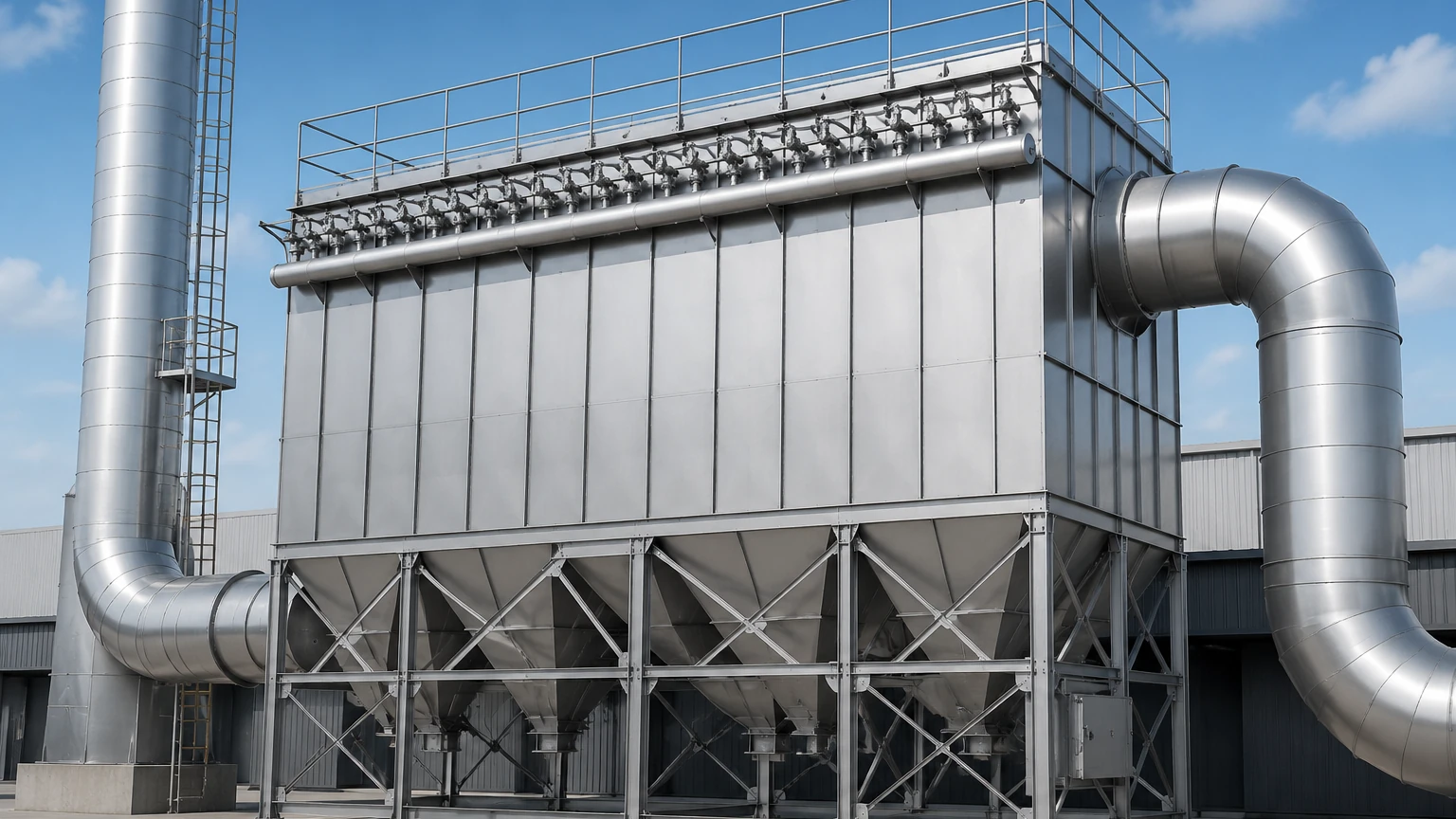
In industrial air pollution control and dust collection, the pulse jet bag house stands as the most prevalent technology for high-volume particulate removal. Engineered to handle heavy dust loads and operate continuously without shutting down for cleaning cycles, these systems are critical in sectors ranging from chemical processing and cement production to pharmaceutical manufacturing and metal smelting. For engineers and procurement professionals, understanding the mechanical nuances, material constraints, and filtration physics of a pulse jet bag house is essential for optimizing system longevity and process efficiency.
Unlike shaker-style or reverse-air systems, a pulse jet bag house utilizes high-pressure compressed air to dislodge accumulated dust from the exterior of the filter media. This "online" cleaning capability allows for a smaller footprint and higher air-to-cloth ratios, but it also places significant mechanical stress on the filter components. When operating in demanding environments involving high temperatures or corrosive gases, the choice of filter media and internal support structures becomes the deciding factor in the system’s total cost of ownership.
The Mechanics of Pulse Jet Cleaning Technology
The fundamental operation of a pulse jet bag house relies on the principle of pressure differential and kinetic energy. Dust-laden air enters the housing, where it is directed toward the filter bags. As the air passes through the media, particulates are trapped on the outer surface, forming what is known as a "dust cake." This cake actually improves filtration efficiency over time, but it also increases the pressure drop across the system.
To manage this pressure drop, the system employs a cleaning sequence:
1. Sensing: A differential pressure gauge monitors the resistance between the clean and dirty sides of the bag house.
2. Activation: Once a predetermined set point is reached, a timer board or PLC triggers a solenoid valve.
3. The Pulse: The valve opens, releasing a burst of compressed air (typically 60 to 100 PSI) into a manifold (header pipe).
4. Induction: The air travels through a nozzle and often through a venturi located at the top of the bag. This creates a secondary flow of air, amplifying the pulse.
5. Expansion and Contraction: The sudden blast causes the filter bag to expand rapidly and then snap back against its internal support cage. This mechanical shock, combined with the momentary reversal of airflow, causes the dust cake to fracture and fall into the hopper below.
Because this process happens in milliseconds, only a small fraction of the total filter area is being cleaned at any given time, allowing the rest of the system to continue filtering the process gas.
Critical Components and Engineering Considerations
A pulse jet bag house is a complex assembly where every component must be synchronized to ensure performance. For technical teams, the following components require rigorous specification:
The Filter Media and Support Cages
In standard applications, needle-punched felts or woven fabrics are used. However, in high-performance or chemically aggressive environments, these materials may degrade rapidly. This is where stainless steel wire mesh or sintered metal fiber media become necessary. These materials offer superior thermal stability and chemical resistance, ensuring that the filter does not lose structural integrity under the constant mechanical flexing of the pulse cycle.
The Venturi
Located at the top of the filter bag, the venturi is designed to optimize the pulse of compressed air. By creating a vacuum effect (the Bernoulli principle), it draws in surrounding clean air to increase the volume of the cleaning pulse. A poorly designed or misaligned venturi can lead to uneven cleaning and premature bag wear at the top of the filter.
Pulse Valves and Manifolds
The efficiency of the cleaning cycle is heavily dependent on the speed at which the pulse valve opens and closes. A "crisp" pulse is more effective at dislodging dust than a slow, sluggish blast. Engineers must ensure that the compressed air supply is dry and oil-free to prevent the solenoid valves from sticking or the filter media from becoming blinded by moisture-laden dust.
Material Selection: When to Transition to Stainless Steel
While traditional fabric bags are cost-effective for ambient temperature and non-corrosive dust, many industrial processes exceed their physical limits. When a pulse jet bag house is integrated into a chemical reactor, a high-temperature kiln, or a corrosive gas stream, stainless steel filtration solutions are required.
At Kaifil, we specialize in providing custom stainless steel filtration components that withstand these extremes. Stainless steel wire mesh and precision metal filter cartridges offer several advantages over fabric in pulse jet applications:
* Thermal Resistance: Stainless steel grades like 304, 316L, or 310S can operate at temperatures far exceeding the 500°F (260°C) limit of most synthetic fibers.
* Chemical Compatibility: In the presence of acidic or alkaline gases, synthetic fibers can undergo hydrolysis or chemical rot. Stainless steel provides a stable, non-reactive surface.
* Mechanical Strength: The high-pressure pulses in a pulse jet bag house can cause fabric bags to tear or abrade against the support cage. Metal media is inherently more durable and resistant to abrasion from sharp or heavy particulates.
For engineers evaluating these options, reviewing the Main Page for specific material grades and filtration accuracies is a critical step in the design phase.
Engineering Metrics: Air-to-Cloth Ratio and Pressure Drop
Two of the most critical metrics in the design of a pulse jet bag house are the air-to-cloth (A/C) ratio and the operating pressure drop.
Air-to-Cloth Ratio
The A/C ratio, or filtration velocity, is the volume of air passing through each square foot of filter media per minute (expressed in CFM/ft² or m/min). Pulse jet systems typically operate at higher A/C ratios (between 3:1 and 6:1) compared to other bag house types. However, if the ratio is too high, the dust particles are driven so deeply into the media that the pulse cleaning cannot remove them, leading to "depth loading" or blinding.
Pressure Drop (Delta P)
The differential pressure across the bags is the primary indicator of system health. A stable Delta P indicates that the cleaning cycle is effectively balancing the dust accumulation. A sudden rise in Delta P may suggest a failure in the pulse system, moisture in the air supply, or that the dust cake has become too dense to be dislodged.
Common Operational Risks and Mitigation
Operating a pulse jet bag house involves managing several risks that can lead to unplanned downtime or environmental non-compliance:
1. Blinding: This occurs when moisture or oil coats the filter media, causing the dust to turn into a mud-like consistency that cannot be pulsed off. Ensuring a dry compressed air supply and maintaining the gas temperature above the dew point are essential preventions.
2. Abrasion: High-velocity dust particles can wear through filter media, especially near the inlet. Using wear-resistant baffles and high-quality stainless steel mesh can significantly extend the service life of the internal components.
3. Pulse System Failure: If a solenoid valve fails or a diaphragm ruptures, a row of bags will stop being cleaned. This leads to a localized increase in pressure drop and eventually forces the rest of the system to work harder, accelerating wear.
4. Incomplete Cleaning: If the pulse pressure is too low or the pulse duration is too short, the dust cake is not fully removed. This results in a "base" level of high pressure that reduces the total capacity of the bag house.
The Economic Impact of High-Performance Filtration
When calculating the total cost of ownership for a pulse jet bag house, engineers must look beyond the initial purchase price of the filter media. The frequency of bag replacements, the cost of compressed air, and the downtime associated with maintenance are the primary drivers of long-term costs.
Stainless steel and precision metal filters, while representing a higher initial investment, often provide a lower total cost in demanding applications. Their ability to be cleaned and reused, combined with their resistance to catastrophic failure from temperature spikes or chemical excursions, provides a level of process security that fabric bags cannot match. Furthermore, the precision of wire mesh allows for more accurate control over particle emission levels, which is vital for meeting increasingly stringent environmental regulations.
Conclusion
The pulse jet bag house remains a cornerstone of industrial dust management due to its efficiency and continuous operation capabilities. However, the success of the system depends on the synergy between mechanical design and material science. For applications involving extreme temperatures, corrosive chemicals, or the need for high-precision filtration, transitioning to stainless steel media is often the most technically sound and economically viable path.
Technical professionals looking to optimize their filtration systems or develop custom OEM solutions should consult with experts who understand the rigors of industrial environments. To explore specific engineering data and customization options for high-performance metal filters, please visit the Main Page to review product options and application support.
