


Gas Filtration
In industrial processing, gas filtration is a critical operation designed to remove solid particulates, liquid aerosols, and other contaminants from gas streams. Unlike liquid filtration, which primarily relies on mechanical straining, gas filtration involves complex physical interactions between the gas molecules, the suspended particles, and the filter media. For engineers and facility managers, selecting the appropriate filtration system is essential for protecting downstream equipment, ensuring product purity, and maintaining environmental compliance.
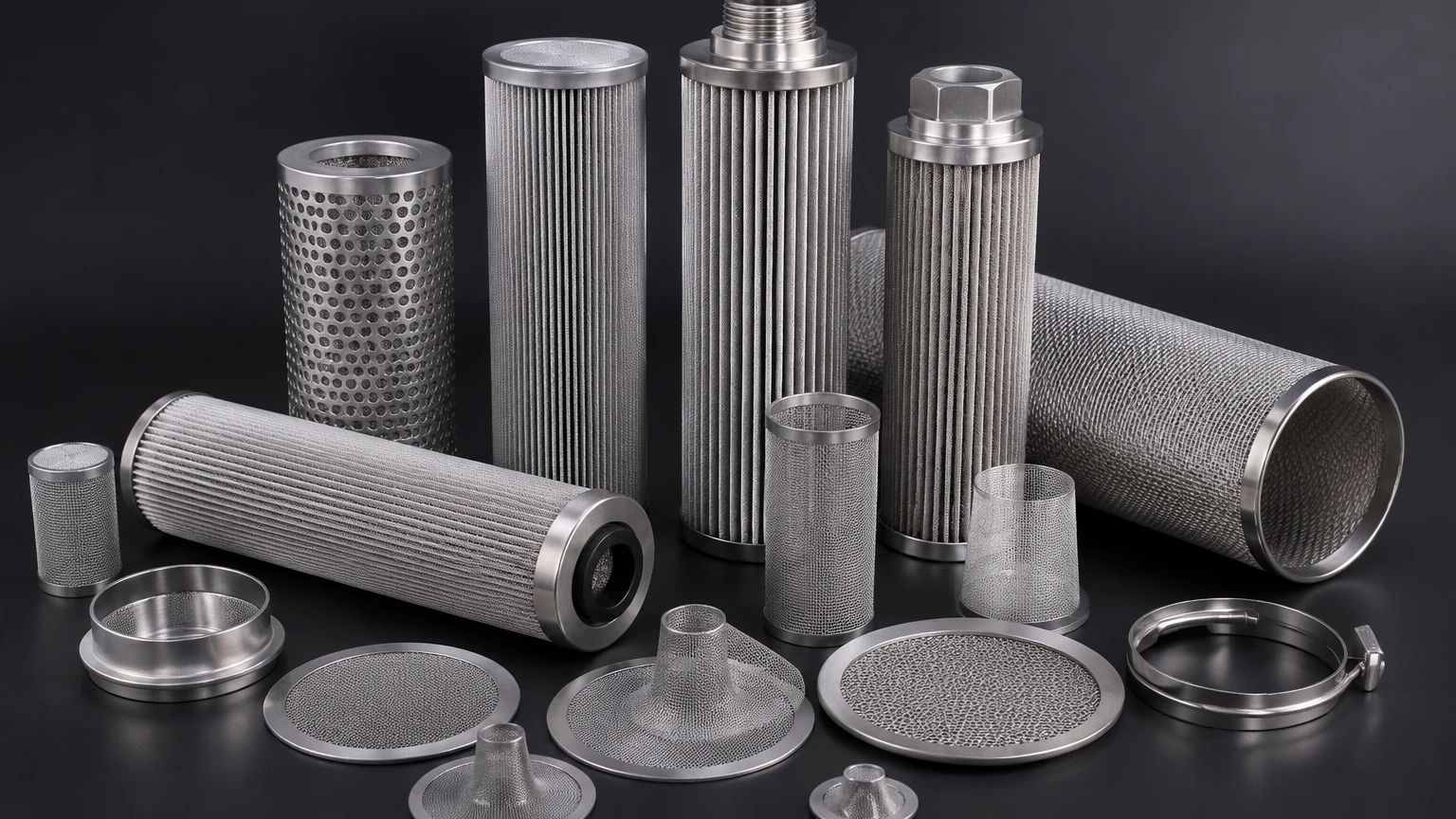
Stainless steel filtration solutions have become the industry standard for demanding gas applications due to their thermal stability, chemical resistance, and structural integrity. As a professional manufacturer, Kaifil specializes in providing high-performance stainless steel filter cartridges and wire mesh components tailored to these rigorous industrial requirements. For more information on our full suite of filtration capabilities, please visit our Main Page.
The Fundamental Mechanisms of Gas Filtration
Understanding how particles are captured within a gas stream is the first step in engineering an effective filtration system. Gas filtration does not rely on a single process but rather a combination of four primary mechanisms that vary in effectiveness based on particle size and gas velocity.
1. Inertial Impaction
Inertial impaction occurs when larger, heavier particles (typically greater than 1 micron) possess enough momentum that they cannot follow the streamlines of the gas as it curves around a filter fiber. Instead, the particles continue on a straight path and collide with the fiber, where they are captured. This mechanism is most effective at higher gas velocities.
2. Interception
Interception happens when a particle follows a gas streamline but comes within one particle radius of a filter fiber. Because the particle is physically large enough to touch the fiber, it becomes attached. This mechanism is relatively independent of gas velocity and is a primary factor for mid-sized particles.
3. Diffusion (Brownian Motion)
For extremely small particles (typically less than 0.1 microns), the random bombardment by gas molecules causes the particles to wander across the gas streamlines. This erratic movement, known as Brownian motion, increases the likelihood that a particle will contact a filter fiber and be trapped. Diffusion is most effective at low gas velocities, where particles have more time to deviate from the flow path.
4. Electrostatic Attraction
In some specialized applications, an electrostatic charge on either the particles or the filter media can pull contaminants toward the fibers. While less common in high-temperature stainless steel applications, it remains a factor in certain synthetic media gas filtration processes.
Engineering Considerations for Industrial Gas Streams
When designing a system for industrial gas filtration, engineers must balance several competing factors to achieve optimal performance and cost-effectiveness. The selection of the filter media and housing geometry is dictated by the specific characteristics of the gas and the contaminants.
Pressure Drop (Delta P)
The pressure drop is the difference in gas pressure between the upstream and downstream sides of the filter. A high initial pressure drop indicates that the filter media is too restrictive for the required flow rate, which leads to increased energy consumption by compressors or blowers. Engineers must design for a low "clean" pressure drop while allowing for a manageable increase as the filter loads with contaminants.
Face Velocity
Face velocity refers to the speed at which the gas approaches the filter surface. If the velocity is too high, it can lead to particle re-entrainment, where captured particles are pushed through the media by the force of the gas. Conversely, if the velocity is too low, the system may become unnecessarily large and expensive. Finding the "sweet spot" is critical for maintaining efficiency.
Micron Rating and Efficiency
In gas filtration, the micron rating can be nominal or absolute. An absolute rating signifies that 100% of particles of a specific size will be captured, whereas a nominal rating indicates a percentage (e.g., 95% or 98%). For critical applications like sterile air or catalyst recovery, absolute-rated stainless steel mesh or sintered media is often required to ensure process integrity.
Material Selection: Why Stainless Steel?
Industrial gas streams often involve extreme temperatures, corrosive chemicals, or high pressures that would degrade polymer-based filters. Stainless steel, particularly grades 304 and 316L, offers several distinct advantages for gas filtration.
Temperature Resistance
Many industrial processes, such as flue gas treatment or hot air drying, operate at temperatures exceeding 200°C (392°F). Stainless steel filter cartridges can maintain their structural shape and filtration efficiency at temperatures up to 500°C or higher, depending on the alloy and structural design. This eliminates the need for gas cooling stages, which can significantly reduce capital and operating costs.
Chemical Compatibility
Gas streams in chemical processing often contain acidic or alkaline vapors. Stainless steel 316L provides superior resistance to pitting and corrosion in these environments. This durability ensures that the filter media does not shed metal particles into the process stream (media migration) and maintains a long service life.
Mechanical Strength
Gas filtration systems can experience sudden pressure surges or high differential pressures as the filter becomes loaded. Sintered metal fiber and multi-layer woven wire mesh provide the mechanical strength necessary to withstand these forces without collapsing or bypassing, providing a reliable barrier for sensitive downstream components.
Common Applications for Gas Filtration
High-performance gas filtration is essential across a wide spectrum of industries. Each application presents unique challenges regarding particle size, gas composition, and hygiene standards.
Chemical and Petrochemical Processing
In these sectors, gas filtration is used for catalyst recovery, where expensive catalyst particles must be captured from the gas stream and returned to the reactor. Additionally, filtration protects high-speed compressors from abrasive dust and removes impurities from process gases like hydrogen, nitrogen, and natural gas.
Food and Beverage Production
Compressed air and CO2 used in food packaging or carbonation must be free of oil, moisture, and bacteria. Stainless steel filters are used for sterile air filtration, where they can be repeatedly sterilized using in-line steam (SIP – Steam In Place) without losing their filtration properties. This is a significant advantage over disposable filters that must be replaced after a limited number of sterilization cycles.
Pharmaceutical Manufacturing
Pharmaceutical processes require ultra-clean environments. Gas filtration is used for tank venting, where air entering or leaving a storage tank must be filtered to prevent contamination. Stainless steel vent filters are preferred for their ability to handle the moisture and heat associated with pharmaceutical clean-room protocols.
Power Generation and Emissions Control
Gas turbines and internal combustion engines require clean intake air to prevent blade erosion and internal wear. On the exhaust side, filtration systems are employed to remove particulate matter (PM) from flue gases before they are released into the atmosphere, helping facilities meet environmental regulations.
Maintenance, Cleaning, and Total Cost of Ownership
One of the primary benefits of utilizing stainless steel for gas filtration is that the media is often cleanable and reusable. This shifts the economic model from a recurring consumable expense to a long-term capital investment.
Cleaning Methods
Depending on the nature of the contaminant, stainless steel filters can be cleaned using several methods:
* Backpulsing/Backwashing: Using a high-pressure burst of gas or liquid to dislodge particles from the surface of the media.
* Ultrasonic Cleaning: Using high-frequency sound waves in a cleaning solvent to remove deeply embedded particulates from sintered or mesh structures.
* Chemical Cleaning: Using acids, alkalis, or solvents to dissolve organic or inorganic deposits.
* Burn-off (Pyrolysis): Heating the filter in a controlled environment to carbonize and remove organic polymers or resins.
Replacement Cycles
While stainless steel filters are durable, they are not infinite. Over time, repeated cleaning and thermal cycling can lead to material fatigue. Engineers should monitor the "recovered" pressure drop after each cleaning cycle. When the pressure drop after cleaning remains significantly higher than the original clean pressure drop, it indicates that the media is permanently fouled or blinded and should be replaced.
Evaluating Total Cost
When comparing filtration options, purchasing teams should look beyond the initial purchase price. Disposable filters may have a lower upfront cost but require frequent replacement, labor for change-outs, and disposal fees for contaminated waste. A permanent stainless steel solution, while more expensive initially, often provides a lower total cost of ownership over a three-to-five-year period due to reduced downtime and the elimination of recurring media costs.
Selecting a Filtration Partner
Effective gas filtration requires a deep understanding of fluid dynamics and material science. When sourcing filtration components, it is vital to work with a manufacturer that can provide customization to meet specific flow rates, connection types, and micron ratings.
Kaifil provides comprehensive engineering support to help global customers navigate these technical decisions. Whether you require a standard wire mesh filter or a custom-designed sintered metal cartridge for a high-temperature gas application, our manufacturing expertise ensures reliable performance in the most demanding environments. By confirming gas composition, operating temperature, and required filtration efficiency, engineers can work with our team to develop a solution that optimizes process uptime and protects critical assets.
