


80 Mesh Size
In the landscape of industrial filtration and material separation, the term 80 mesh size refers to a specific configuration of wire cloth or screen that provides a balance between fine particle retention and high flow capacity. For engineers and procurement specialists, understanding the technical nuances of this specification is critical for optimizing system performance, ensuring product purity, and managing the lifecycle costs of filtration components.
At its most fundamental level, 80 mesh indicates that there are 80 openings per linear inch of the material. However, the performance of an 80 mesh filter is determined by more than just the count; it is the interaction between wire diameter, aperture size, and the material of construction that dictates its suitability for demanding industrial environments.
Defining 80 Mesh: Aperture and Wire Diameter
To specify a filtration medium accurately, one must look beyond the mesh count to the physical dimensions of the openings. In a standard 80 mesh size stainless steel wire cloth, the aperture—the clear distance between two adjacent wires—is typically approximately 0.178 millimeters, or 178 to 180 microns.
The Relationship Between Wire and Opening
The wire diameter used in the weaving process directly impacts the aperture size and the overall strength of the mesh. For a standard 80-mesh specification, a common wire diameter is 0.14 mm (0.0055 inches).
* Aperture (Opening Size): 0.180 mm / 180 Microns
* Wire Diameter: 0.140 mm
* Open Area Percentage: Approximately 31% to 36%
The open area percentage is a critical metric for engineers calculating flow rates and pressure drops. A higher open area reduces resistance to fluid or gas flow but may result in a more fragile mesh structure. Conversely, using a thicker wire increases the durability and pressure resistance of the screen but reduces the open area, potentially leading to higher differential pressures across the filter element.
Material Engineering: 304 vs. 316 Stainless Steel
Selection of the correct alloy is as important as the 80 mesh size itself. Most industrial 80 mesh components are manufactured from stainless steel due to its mechanical strength and resistance to environmental degradation. For more information on material options and custom configurations, technical teams often consult the Main Page of specialized manufacturers to evaluate chemical compatibility.
Grade 304 Stainless Steel
Grade 304 is the standard industrial workhorse. It offers excellent corrosion resistance in most atmospheric conditions and is suitable for many water treatment and general industrial applications. It is cost-effective but may be susceptible to chloride-induced pitting in marine or highly acidic environments.
Grade 316/316L Stainless Steel
For applications involving chemical processing, pharmaceuticals, or food and beverage production, Grade 316 or its low-carbon variant, 316L, is the preferred choice. The addition of molybdenum enhances resistance to pitting and crevice corrosion, particularly in environments containing chlorides. In the pharmaceutical industry, the smooth surface finish and corrosion resistance of 316L are essential for maintaining sanitary standards and preventing batch contamination.
Flow Dynamics and Pressure Drop Considerations
When integrating an 80 mesh size filter into a hydraulic or process system, engineers must account for the "clean pressure drop." This is the initial resistance the filter provides when it is free of contaminants.
Factors Influencing Flow
1. Viscosity of the Fluid: High-viscosity fluids (such as heavy oils or syrups) will experience a much higher pressure drop through an 80 mesh screen than water or air.
2. Flow Velocity: As the velocity of the fluid increases, the turbulence at the wire interface increases, leading to a non-linear rise in pressure drop.
3. Contaminant Loading: As particles are trapped by the 180-micron openings, the effective open area decreases, causing the pressure drop to rise.
In precision metal filter components, the 80 mesh layer is often supported by a coarser mesh or a perforated metal core to prevent the fine mesh from deforming under high differential pressure. This structural reinforcement is vital in hydraulic systems where sudden pressure spikes are common.
Industrial Applications for 80 Mesh Filters
The 80 mesh size is widely utilized across various sectors because it occupies a "middle ground" in filtration—fine enough to protect sensitive downstream equipment but coarse enough to avoid frequent clogging in high-volume processes.
Chemical and Petrochemical Processing
In chemical plants, 80 mesh strainers are frequently used as pre-filters for more expensive membrane systems or as protection for pumps and valves. They effectively remove scale, rust, and larger suspended solids that could cause mechanical wear or process interference.
Food and Beverage Industry
80 mesh is a standard specification for straining pulps, seeds, or large particulates from juices and oils. Because stainless steel is non-reactive, it ensures that the sensory qualities of the food product remain unaltered while meeting stringent hygiene requirements.
Hydraulic and Lubrication Systems
In hydraulic circuits, 80 mesh size screens are often used in suction strainers. They prevent large debris from entering the pump from the reservoir, which is critical for preventing catastrophic pump failure. While they do not provide the fine silt control of 10-micron depth filters, they are the first line of defense in maintaining system integrity.
Water Treatment
For industrial water intake, 80 mesh screens serve to remove sand and organic debris. They are commonly found in cooling tower filtration loops and irrigation systems where protecting spray nozzles from clogging is the primary objective.
Customization Options: From Wire Cloth to Filter Cartridges
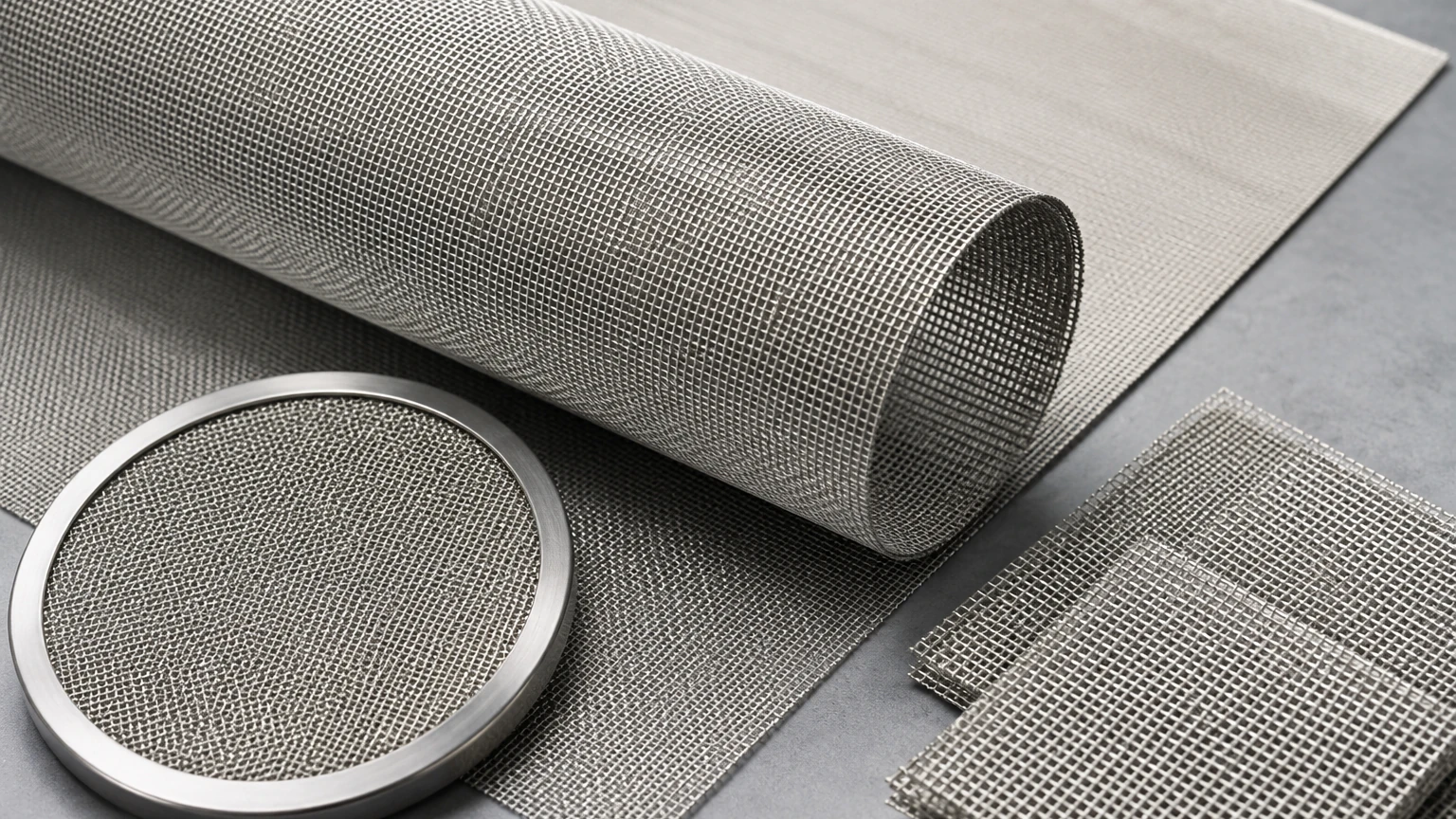
While raw 80 mesh wire cloth is available in rolls, most industrial applications require the material to be fabricated into specific shapes or components. Customization allows the filtration media to fit seamlessly into existing hardware.
* Filter Discs and Washers: Precision-cut 80 mesh discs are used in extruder screens for plastic recycling and fiber production. These can be single-layered or multi-layered (sintered) for added strength.
* Cylindrical and Conical Strainers: These are used in pipeline filtration. The 80 mesh size can be formed into baskets or cones with reinforced edges to withstand high flow velocities.
* Pleated Filter Cartridges: To increase the surface area within a small footprint, 80 mesh stainless steel can be pleated. This significantly extends the time between cleaning cycles by distributing the contaminant load over a larger area.
* Sintered Mesh: For extreme environments, 80 mesh can be vacuum-sintered with other layers of mesh. This process fuses the wires at their contact points, creating a rigid, migration-free filter medium that can withstand high temperatures and back-pulsing.
Operational Maintenance and Cleaning Protocols
One of the primary advantages of using stainless steel 80 mesh size filters over disposable polymer filters is cleanability. However, the cleaning method must be matched to the type of contaminant and the structural integrity of the mesh.
Mechanical Cleaning
For coarse debris, simple manual brushing or high-pressure water hosing may be sufficient. However, care must be taken not to distort the wire spacing, as this would change the effective filtration rating.
Ultrasonic Cleaning
For fine particles lodged within the 180-micron apertures, ultrasonic cleaning is the most effective method. The cavitation bubbles created by the ultrasonic waves reach into the mesh intersections to dislodge contaminants that mechanical scrubbing cannot reach.
Chemical Cleaning and Burn-off
In applications involving polymers or resins, chemical solvents or controlled thermal burn-off ovens may be used to clear the mesh. It is imperative to ensure that the cleaning temperature does not exceed the annealing temperature of the stainless steel, which could soften the wire and reduce the filter's pressure rating.
Selection Checklist for Procurement Teams
When sourcing 80 mesh size components, purchasing teams should confirm several technical parameters with the manufacturer to ensure the product meets the application's requirements:
1. Verification of Mesh Count: Ensure the material truly has 80 wires per inch in both the warp and shute directions.
2. Wire Diameter Confirmation: Verify if the wire diameter is standard (0.14mm) or if a heavy-duty wire is required for high-pressure applications.
3. Alloy Certification: Request material test reports (MTRs) to confirm the grade of stainless steel (e.g., 304, 316, or 316L).
4. Edge Treatment: Determine if the mesh needs to be hemmed, welded, or framed to prevent fraying and ensure a proper seal within the housing.
5. Tolerances: For precision applications, specify the allowable variance in aperture size to ensure consistent filtration performance.
Comparison with Adjacent Mesh Sizes
Choosing between 80 mesh and adjacent sizes like 60 mesh or 100 mesh depends on the specific goals of the filtration process.
* 60 Mesh (approx. 250 microns): Choose this if the primary goal is high flow and the particles are relatively large. It offers less resistance but allows more fine material to pass through.
* 80 Mesh (approx. 180 microns): The balanced choice for general-purpose industrial straining and protection.
* 100 Mesh (approx. 150 microns): Choose this for finer filtration. However, be prepared for a higher frequency of cleaning and a more significant pressure drop.
By carefully evaluating the particle size distribution of the process fluid and the mechanical requirements of the system, engineers can determine if the 80 mesh size provides the optimal performance profile for their specific needs. Working with a dedicated manufacturer like Kaifil ensures that these technical specifications are met with precision, providing reliable filtration solutions for demanding industrial environments.
