


Cage Filter Bag
In industrial air pollution control and process filtration, the cage filter bag assembly serves as the primary mechanism for removing particulate matter from gas streams. While the filter bag itself acts as the permeable membrane, the internal support cage is the structural backbone that ensures the system operates under high-pressure differentials without collapsing. For engineers and procurement specialists, understanding the technical interplay between these two components is essential for optimizing the lifespan of a dust collection system and maintaining stringent emission standards.
Industrial filtration environments, such as those found in chemical processing, pharmaceutical manufacturing, and food production, demand high-precision components. As a specialist in stainless steel filtration solutions, Kaifil emphasizes the importance of material integrity and structural design in these systems. Whether dealing with high-temperature flue gases or corrosive chemical vapors, the selection of the cage and bag must be treated as a single engineering unit.
Understanding the Role of the Support Cage in Filter Bag Systems
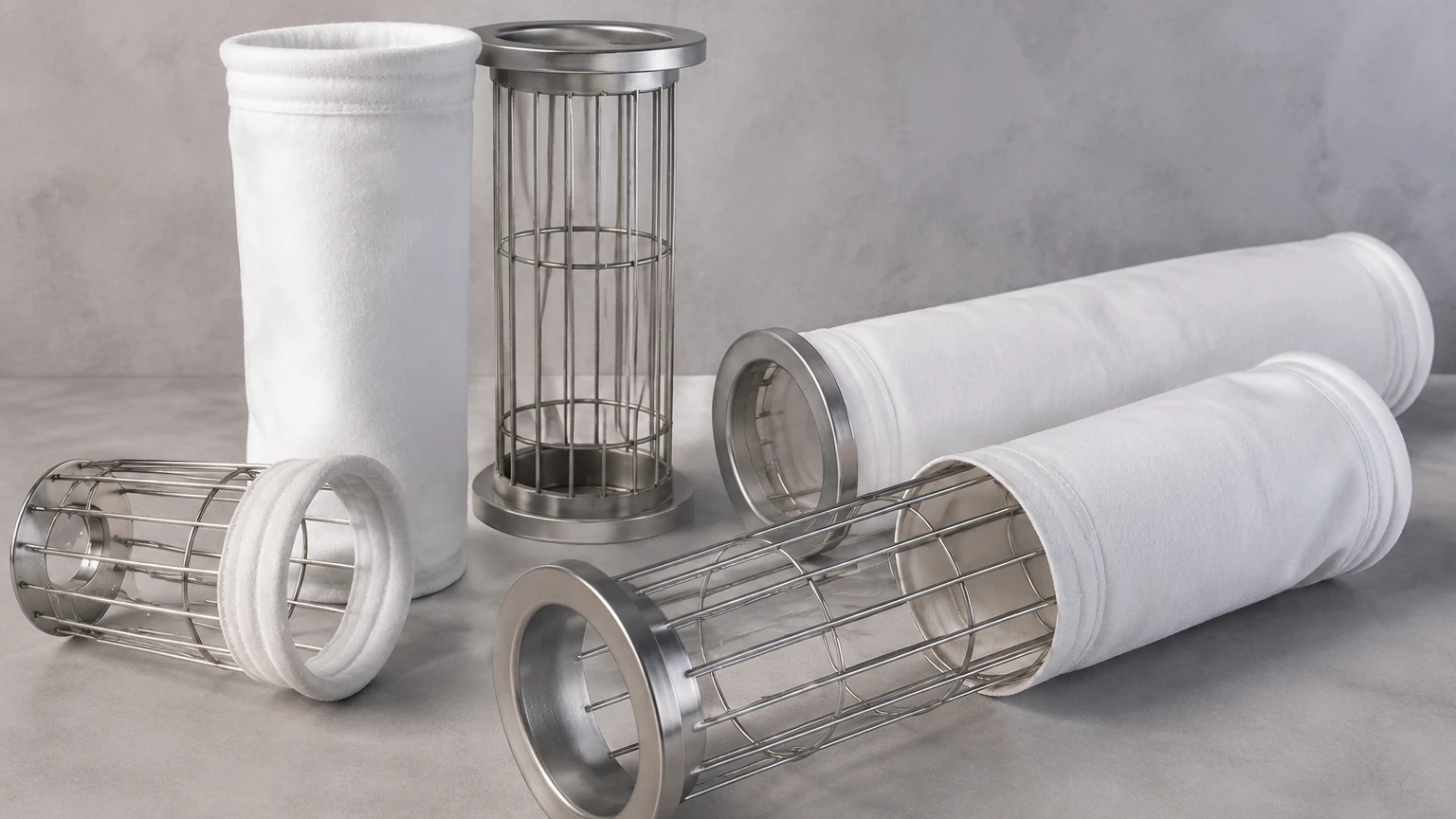
The primary function of a filter cage is to provide a rigid framework that keeps the filter bag open during the filtration cycle. In a pulse-jet baghouse, air flows from the outside of the bag to the inside. This creates a pressure differential that would instantly collapse a fabric bag if it were not supported by a metal cage.
Beyond simple structural support, the cage plays a vital role during the cleaning cycle. Pulse-jet cleaning involves a high-pressure burst of compressed air sent down the center of the bag. This pulse causes the bag to expand rapidly away from the cage, dislodging the accumulated dust cake on the exterior. The cage must be designed with enough vertical wires and horizontal rings to prevent the bag from sagging or over-flexing, which can lead to premature mechanical failure of the fabric fibers.
Engineering Specifications for Filter Bag Cages
When specifying a support cage, several engineering parameters must be evaluated to ensure compatibility with the filter media and the operating environment. These specifications directly influence the filtration efficiency and the mechanical durability of the entire assembly.
Wire Count and Spacing
The number of vertical wires in a cage is a critical design factor. Standard cages typically feature 10, 12, or 20 vertical wires. A higher wire count provides better support for the filter media, reducing the amount of "flexing" the fabric undergoes during the cleaning pulse. For lightweight or high-flex media, such as fiberglass or PTFE membranes, a 20-wire cage is often recommended to minimize mechanical stress and prevent the fabric from being pushed into the spaces between the wires.
Wire Diameter and Material Selection
Most industrial cages are constructed from wire diameters ranging from 3mm to 4mm (approximately 11 to 8 gauge). The choice of material is dictated by the chemical composition of the gas stream and the operating temperature.
* Carbon Steel: Suitable for non-corrosive environments with low moisture levels.
* Galvanized Steel: Provides basic moisture resistance and is commonly used in general industrial ventilation.
* Stainless Steel (304, 316, 316L): Essential for chemical processing, food and beverage, and pharmaceutical applications where corrosion resistance and hygiene are paramount. Kaifil specializes in these high-grade stainless steel components to ensure long-term reliability in aggressive environments.
Surface Treatments and Abrasion Prevention
The interface between the metal cage and the fabric bag is a common point of failure. If the cage surface is rough or corroded, it can act like sandpaper, wearing through the filter bag during the cleaning cycles. To prevent this, various surface treatments are applied to the metal cages.
1. Epoxy Coating: Provides a smooth, chemical-resistant finish that reduces friction between the bag and the cage. This is particularly useful in environments with high humidity or acid gas concentrations.
2. Zinc Plating: Offers sacrificial protection against rust, though it is less durable than epoxy in highly acidic conditions.
3. Electropolishing: Frequently used for stainless steel cages in the pharmaceutical and food industries. This process removes surface impurities and creates a microscopically smooth finish, ensuring that no metal burrs damage the delicate filter membranes.
Optimizing Filtration Performance through Design
Filtration performance is not solely dependent on the fabric; the cage geometry affects the airflow dynamics within the baghouse. A poorly designed cage can create "dead zones" where dust is not effectively cleared during the pulse-jet cycle, leading to a steady increase in pressure drop.
The Importance of the Venturi
Many cage designs incorporate a Venturi at the top. The Venturi is a funnel-shaped component that directs the high-pressure cleaning air into the center of the bag. By accelerating the air and creating a vacuum effect that draws in additional surrounding air, the Venturi ensures that the cleaning pulse reaches the bottom of the bag effectively. Engineers must ensure the Venturi is properly aligned and securely attached to the cage to prevent energy loss during the cleaning cycle.
Top and Bottom Cap Configurations
Cages are available with various top and bottom configurations to match the baghouse tube sheet. Common designs include the "snap-band" top, which creates a gasket-like seal against the tube sheet, and the "flange" top. The bottom of the cage is typically capped with a welded plate or a rounded end to prevent the bag from rubbing against sharp edges at the base.
Selection Criteria for Industrial Applications
Selecting the right cage filter bag combination requires a thorough analysis of the process conditions. Engineers should consider the following factors before finalizing a purchase:
* Operating Temperature: High-temperature applications (above 200°C) require specialized alloys and heat-resistant filter media like P84 or PTFE.
* Chemical Compatibility: If the gas stream contains sulfur oxides (SOx) or nitrogen oxides (NOx), stainless steel cages and acid-resistant treatments are necessary to prevent structural degradation.
* Dust Characteristics: Abrasive dust requires heavier gauge wire and more frequent inspection of the cage surface finish.
* Moisture Levels: High moisture can lead to "blinding" of the filter bag and rapid corrosion of carbon steel cages. In these cases, hydrophobic bag treatments and epoxy-coated or stainless steel cages are recommended.
For more detailed technical specifications and support in selecting the appropriate filtration components, engineers can visit the Main Page to explore customized solutions tailored to specific industrial requirements.
Maintenance, Inspection, and Replacement Cycles
A proactive maintenance schedule is essential for preventing catastrophic system failures. Because the cage is hidden inside the filter bag, its condition is often overlooked until a bag failure occurs.
Signs of Cage Failure
* Increased Pressure Drop: If the cage is corroded or bent, it may prevent the bag from being cleaned effectively, leading to a permanent increase in differential pressure.
* Frequent Bag Breakage: If bags are failing prematurely at the vertical wire lines, it is a clear indication that the cage surface is rough or the wire count is insufficient for the media type.
* Visible Rust on Bags: If rust stains appear on the clean side of the filter bags, the cage's protective coating has failed, and the structural integrity of the cage is compromised.
Replacement Cycles
While filter bags may be replaced every 1 to 3 years depending on the application, high-quality stainless steel cages can last significantly longer. However, it is a best practice to inspect the cages every time the bags are changed. If a cage shows signs of pitting, wire thinning, or broken welds, it should be replaced immediately to protect the investment in new filter bags.
Customization and OEM Solutions in Filtration
Many industrial facilities operate legacy baghouse systems that require non-standard cage dimensions. Customization is a core strength of specialized manufacturers. When ordering custom cages, engineers should provide precise measurements for:
* Overall length and outside diameter.
* Tube sheet hole diameter.
* Wire gauge and vertical wire count.
* Specific material and coating requirements.
By working with a manufacturer like Kaifil, which offers extensive OEM capabilities, industrial plants can ensure that their replacement components meet the exact tolerances required for their specific equipment. Precision manufacturing ensures that the cage fits snugly within the bag without being so tight that it stretches the fabric or so loose that the bag sags.
Conclusion
The cage filter bag assembly is a critical intersection of textile science and mechanical engineering. While the filter bag performs the separation, the cage determines the mechanical limits and cleaning efficiency of the system. By prioritizing high-grade materials, such as those provided by Kaifil, and ensuring a precise fit between the bag and its support, industrial operators can achieve lower emissions, reduced energy consumption, and extended component lifespans. For technical professionals seeking to optimize their filtration systems, reviewing the available material options and engineering support is the first step toward a more efficient operation. Review product options and application support on the Main Page to find the right configuration for your industrial environment.
