


Woven Wire Fence Near Me: A Technical Guide to Industrial Mesh Selection
When searching for a "woven wire fence near me," industrial procurement officers and facility engineers are often looking for more than just a perimeter barrier. In professional and industrial contexts, woven wire structures serve critical roles in safety partitioning, equipment enclosures, and high-durability security barriers. Unlike standard residential fencing, industrial-grade woven wire mesh requires specific engineering considerations regarding material composition, weave geometry, and structural integrity to withstand demanding environments.
Selecting the right supplier involves balancing the convenience of local availability with the technical requirements of the application. For many specialized industrial projects, standard off-the-shelf fencing from a local hardware store lacks the precision and material longevity required for chemical processing, food production, or high-security zones. This guide explores the technical parameters of woven wire mesh and how to evaluate sourcing options for industrial applications.
Understanding the Technical Landscape of Woven Wire Mesh
At its core, Woven Wire Mesh is produced by interlacing longitudinal (warp) and transverse (shute) wires. While the term "fence" implies a simple vertical barrier, the industrial application of this material often involves complex enclosures where the mesh must provide both visibility and physical protection.
Material Grades and Corrosion Resistance
The most significant factor in the longevity of an industrial woven wire fence is the alloy selection. When searching for solutions "near me," it is vital to confirm the specific grade of stainless steel or carbon steel being offered.
* Type 304 Stainless Steel: This is the industry standard for most general-purpose industrial fencing and enclosures. It offers excellent corrosion resistance against most oxidizing acids and is highly durable. However, it may be susceptible to pitting in high-salinity environments.
* Type 316/316L Stainless Steel: For facilities located near the coast or those involved in chemical processing, 316 stainless steel is the preferred choice. The addition of molybdenum provides superior resistance to chlorides and industrial solvents.
* Galvanized Steel: Often found in local retail searches for "woven wire fence near me," galvanized steel is a cost-effective option for agricultural use but may lack the multi-decade lifespan required for high-end industrial infrastructure compared to stainless steel counterparts.
Weave Patterns and Their Functional Impact
The method by which the wires are woven determines the mesh's strength, aperture stability, and aesthetic appearance. When evaluating technical specifications for a project, engineers must choose a weave that aligns with the safety and filtration requirements of the site.
Plain Weave
The most common weave pattern is the plain weave, where each warp wire crosses alternately over and under each shute wire. This provides a high degree of transparency and a consistent aperture size, making it ideal for safety guards where visual inspection of machinery is necessary while maintaining a physical barrier.
Twill Weave
In a twill weave, each warp wire passes alternately over and under two shute wires. This allows for the use of heavier wire diameters in a given mesh count, resulting in a stronger, more rigid structure. This is often used in heavy-duty industrial partitions where impact resistance is a priority.
Dutch Weave
While primarily used in filtration, Dutch weaves utilize different diameters for warp and shute wires. While less common for standard fencing, this weave is used in specialized industrial enclosures that require high strength and very fine openings to prevent the passage of small debris or contaminants.
Evaluating "Near Me" vs. Direct Manufacturer Sourcing
The search for a "woven wire fence near me" often leads to local distributors or general fencing contractors. While these sources offer the advantage of proximity and potentially lower shipping costs for small quantities, there are distinct technical trade-offs to consider for B2B procurement.
Precision and Customization
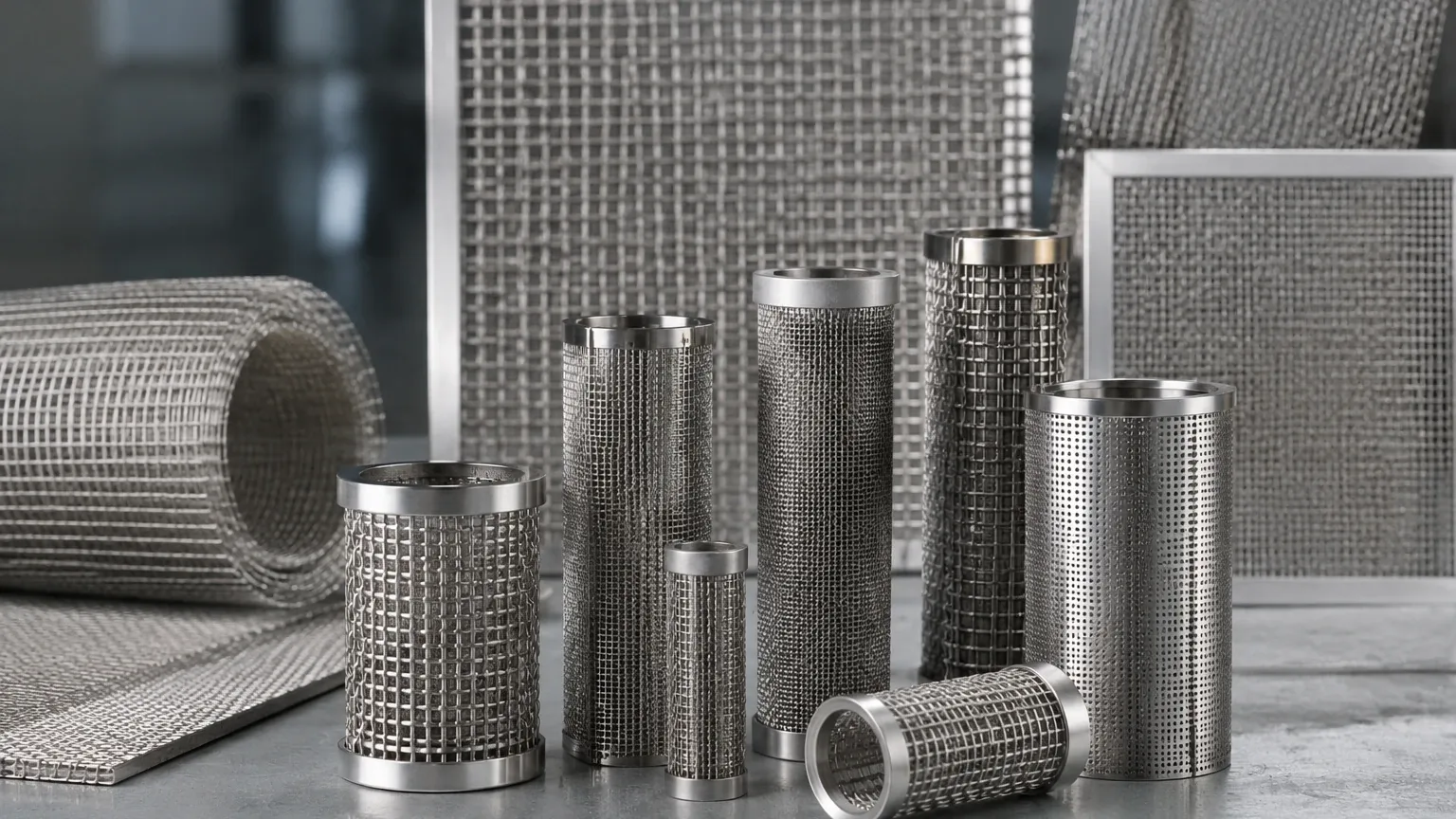
Local retail-oriented suppliers typically stock standard dimensions (e.g., 2-inch or 4-inch openings). However, industrial applications often require precise aperture sizes to meet safety regulations (such as OSHA machine guarding standards) or specific airflow requirements. A direct manufacturer like Kaifil can provide Plain, twill and dutch woven wire mesh in SS304/316L — rolls, cut mesh and framed panels. Send mesh count or micron target for a technical quote. to ensure the mesh meets exact engineering tolerances.
Quality Certification
In industrial sectors like pharmaceuticals or food and beverage, material traceability is non-negotiable. Local general-purpose suppliers may not provide the Mill Test Reports (MTRs) or material certifications required to prove the alloy composition. Direct sourcing from a manufacturer ensures that the mesh used in your "woven wire fence" meets the chemical and physical properties specified in your project’s design phase.
Engineering Considerations for Industrial Enclosures
When designing a woven wire barrier or enclosure, several engineering variables must be calculated to ensure the final installation is fit for purpose.
1. Aperture Size (Clear Opening): This is the distance between two adjacent wires. For safety fencing, the aperture must be small enough to prevent fingers or tools from passing through, yet large enough to allow for adequate ventilation or visibility.
2. Wire Diameter: The thickness of the wire directly impacts the tensile strength and weight of the fence. Heavier gauges offer better impact resistance but increase the load on the supporting framework.
3. Open Area Percentage: This is the ratio of the area of the openings to the total area of the mesh. In environments with high-velocity air or fluid flow, a high open area percentage is necessary to prevent the fence from acting as a sail and experiencing excessive wind load.
4. Edge Treatment: For industrial safety, how the mesh is finished is critical. Options include knuckled edges (wires bent back), welded edges, or framed panels. Framed panels are often preferred for "near me" installations because they arrive ready to bolt into existing structural steel.
Installation and Structural Support
A woven wire fence is only as strong as its support system. In an industrial setting, the mesh is typically secured to a framework of square tubing, angle iron, or specialized C-channels.
* Tensioning: For rolls of woven wire mesh, proper tensioning is required to prevent sagging over time. This often involves the use of tension bars and heavy-duty bolts.
* Panelized Systems: Many modern industrial facilities prefer modular panel systems. These allow for rapid installation and easy replacement of individual sections if damage occurs. When sourcing "near me," checking for compatibility with standard modular framing systems can significantly reduce labor costs.
Total Cost of Ownership (TCO) in Filtration and Fencing
While the initial price of a "woven wire fence near me" from a local discount supplier may be lower, the Total Cost of Ownership often favors high-quality stainless steel mesh.
* Maintenance: Stainless steel requires minimal maintenance compared to painted or galvanized steel, which may require periodic recoating to prevent rust.
* Longevity: In corrosive industrial environments, a 316L stainless steel mesh can last decades, whereas lower-grade materials may fail within 2–5 years, leading to costly downtime and replacement labor.
* Regulatory Compliance: Using certified industrial mesh ensures compliance with safety and health regulations, avoiding potential fines and liability issues associated with substandard barriers.
Conclusion: Making an Informed Procurement Decision
Whether you are securing a sensitive chemical storage area or creating a safety perimeter around high-speed machinery, the choice of woven wire mesh is an engineering decision first and a purchasing decision second. While searching for a "woven wire fence near me" is a logical starting point for logistics, the technical specifications—material grade, weave type, and aperture precision—should drive the final selection.
For projects requiring high-performance materials and customized dimensions, partnering with a manufacturer that understands industrial filtration and structural mesh is essential. By focusing on technical accuracy and material integrity, you ensure that your woven wire installation provides the necessary protection and durability for your specific industrial environment.
Before finalizing a purchase from a local vendor, confirm that the material meets your facility's long-term requirements for corrosion resistance and structural load. In many cases, the specialized expertise of a dedicated mesh manufacturer provides the most cost-effective and reliable solution for complex B2B applications.
