


Woven Wire Fence Nearby: Industrial Procurement and Technical Selection Guide
When engineers or procurement managers search for a "woven wire fence nearby," the intent often extends beyond simple perimeter security. In industrial contexts, woven wire structures—ranging from coarse protective screens to high-precision filtration media—are critical components in chemical processing, food production, and hydraulic systems. While local retail suppliers may offer standard galvanized fencing, industrial-grade applications require a deeper understanding of material science, weave geometry, and environmental resistance.
Selecting the right Woven Wire Mesh involves balancing mechanical strength with specific functional requirements such as flow rates, particle retention, and corrosion resistance. This guide examines the technical considerations necessary for sourcing high-performance wire mesh and why industrial specifications often necessitate looking beyond local general-purpose inventory.
1. Defining Industrial Woven Wire Mesh vs. Standard Fencing
The term "woven wire fence" is frequently used interchangeably with industrial screening and partitions. However, for a technical professional, the distinction lies in the precision of the manufacture and the alloy used. Standard local fencing is typically made from galvanized carbon steel with wide tolerances. In contrast, industrial woven wire mesh is engineered to precise mesh counts and wire diameters to ensure predictable performance in demanding environments.
Industrial applications for these structures include:
* Machine Guarding: High-tensile stainless steel mesh provides visibility and ventilation while protecting personnel from moving parts.
* Security Partitions: In pharmaceutical or high-tech facilities, woven wire panels provide secure enclosures that do not interfere with HVAC or fire suppression systems.
* Coarse Filtration and Scalping: Used as a primary stage to remove large debris before finer filtration processes.
* Architectural and Environmental Barriers: Providing durable, corrosion-resistant boundaries in coastal or chemically aggressive areas.
For those requiring specific engineering properties, Plain, twill and dutch woven wire mesh in SS304/316L — rolls, cut mesh and framed panels. Send mesh count or micron target for a technical quote. represents the standard of quality required for industrial integration.
2. Material Selection: The Engineering Foundation
When searching for a woven wire fence nearby, the most critical factor often overlooked by general suppliers is the alloy. In industrial settings, the environmental conditions—such as exposure to chlorides, high temperatures, or acidic cleaning agents—dictate the material choice.
Stainless Steel 304
This is the most common grade for industrial mesh. It offers excellent strength and good corrosion resistance for general applications. It is suitable for machine guards and partitions in indoor environments where chemical exposure is minimal.
Stainless Steel 316L
For applications in the food and beverage, pharmaceutical, or marine industries, SS316L is the preferred choice. The addition of molybdenum provides superior resistance to pitting and crevice corrosion, particularly in chloride-rich environments. In a B2B procurement context, specifying 316L ensures a longer service life and reduced total cost of ownership compared to standard galvanized products found at local hardware outlets.
Specialized Alloys
In extreme cases, such as petrochemical processing or high-heat treatment, exotic alloys like Inconel or Monel may be required. These materials maintain their structural integrity at temperatures where standard stainless steel would fail or oxidize.
3. Weave Types and Their Functional Impact
The method by which the wires are interlaced determines the mesh’s stability, aperture precision, and surface texture. Understanding these weaves is essential for moving beyond basic fencing into technical application.
* Plain Weave: The most straightforward construction where each warp wire crosses over and under each shute wire. It provides the highest level of transparency and is ideal for protective screens and simple partitions.
* Twill Weave: Each warp wire passes over and under two shute wires. This allow for the use of heavier wires in a given mesh count, increasing the mechanical strength and durability of the "fence" or screen without sacrificing the mesh count.
* Dutch Weave (Plain and Twill): These weaves use different wire diameters for the warp and shute directions. This creates a dense, strong mesh with small, curved openings. While not typically used for perimeter fencing, it is the industry standard for high-pressure filtration and particulate separation.
4. Evaluating Technical Specifications
To ensure the "woven wire fence nearby" meets industrial standards, engineers must confirm several key metrics. Relying on a local generalist often means these specifications are unavailable or unverified.
Mesh Count and Aperture
Mesh count refers to the number of openings per linear inch. For security or protective applications, the aperture (the clear distance between wires) is more critical. It determines what size object can pass through the mesh. In filtration, this is often expressed in microns.
Wire Diameter
The diameter of the wire directly affects the weight, strength, and open area of the mesh. A thicker wire increases the lifespan of the screen under abrasive conditions but reduces the percentage of open area, which can impact airflow or fluid throughput.
Percentage of Open Area
This is a calculated value: `(Aperture / (Aperture + Wire Diameter))^2 x 100`. In applications like motor housing guards or ventilation panels, maintaining a specific open area is vital to prevent equipment overheating while still providing a safety barrier.
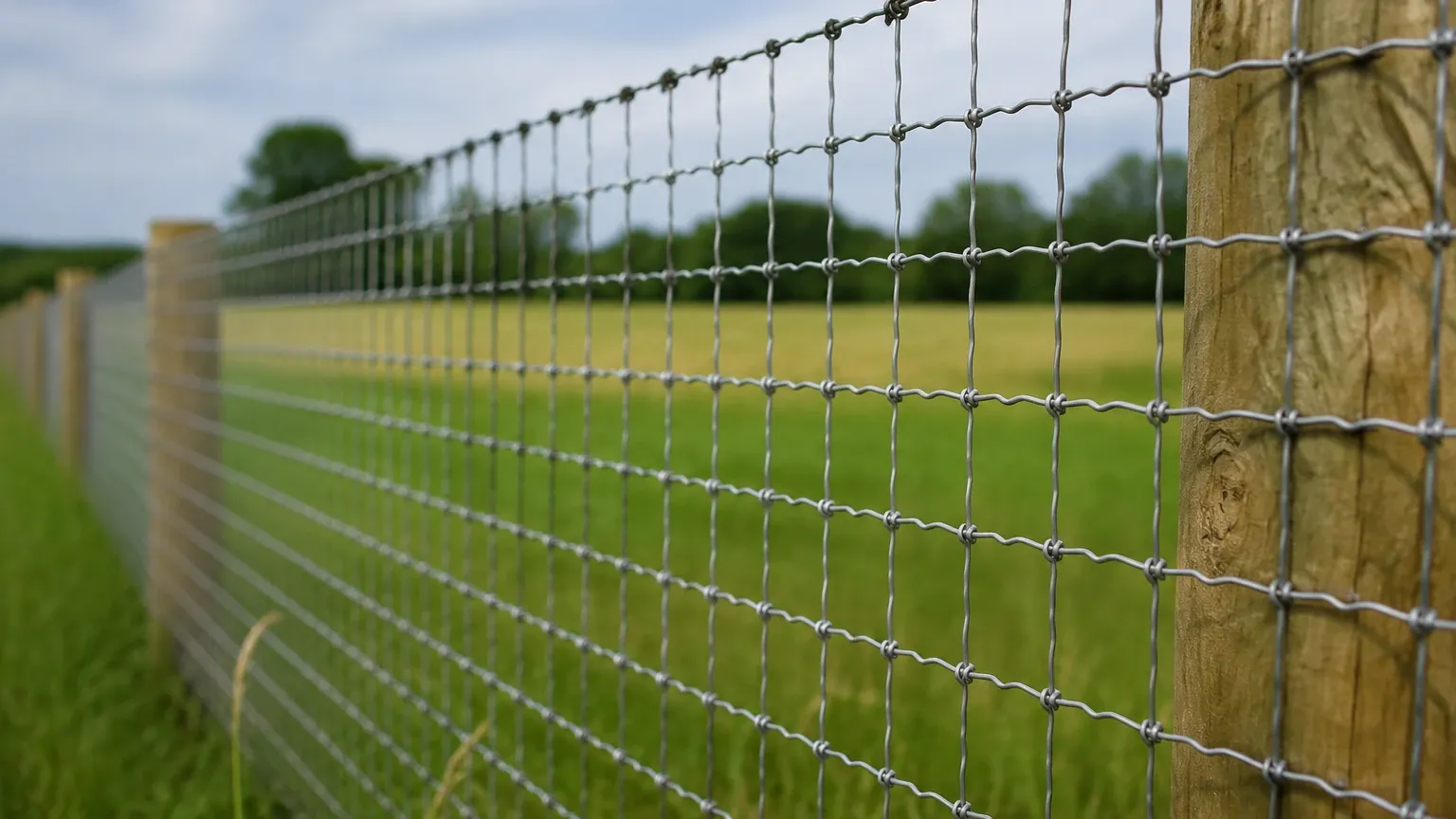
5. The Limitations of Sourcing "Nearby"
While the convenience of finding a woven wire fence nearby is appealing for immediate, low-stakes needs, industrial projects face significant risks when sourcing from non-specialized local vendors:
1. Inconsistent Alloy Quality: General-purpose fencing often lacks material mill certificates. In a B2B environment, the absence of traceability can lead to premature failure and compliance issues.
2. Limited Customization: Local stock is usually restricted to standard rolls. Industrial applications often require custom-cut pieces, specific framed panels, or non-standard widths to minimize waste and installation time.
3. Lack of Technical Support: A general supplier cannot advise on the flow characteristics of a 40-mesh screen versus a 60-mesh screen or recommend the best weave for a high-vibration environment.
4. Durability Concerns: Standard "nearby" fencing is often designed for residential or agricultural use, where tolerances are loose. Industrial Woven Wire Mesh is manufactured to withstand constant mechanical stress and rigorous cleaning cycles.
6. Customization and OEM Capabilities
For many B2B buyers, the "fence" is actually a component of a larger machine or system. This requires a manufacturer like Kaifil that can provide OEM services. Customization options include:
* Edge Treatments: Hemmed edges, welded frames, or specialized selvages to prevent fraying and ensure safe handling.
* Forming and Shaping: Mesh can be pleated, cylindrical, or conical to fit specific housings or structural requirements.
* Surface Finishes: Passivation, electropolishing, or specialized coatings can be applied to enhance corrosion resistance or improve the aesthetic finish of architectural mesh.
When these factors are considered, the value of a specialized manufacturer outweighs the proximity of a local retail supplier. Professional manufacturers provide the engineering documentation and quality assurance necessary for critical infrastructure and industrial equipment.
7. Procurement Checklist for Industrial Mesh
Before finalizing a purchase for woven wire products, technical teams should confirm the following with their supplier:
* Material Certification: Can the supplier provide MTRs (Material Test Reports) for the specific batch of stainless steel?
* Dimensional Tolerances: Does the mesh meet ISO or ASTM standards for aperture consistency?
* Application Compatibility: Is the chosen weave and wire diameter suitable for the specific pressure, temperature, and chemical exposure of the project?
* Total Cost of Ownership: While a local galvanized fence might be cheaper upfront, what is the cost of replacement if it corrodes in six months? High-grade stainless steel mesh often provides a much lower cost over the project's lifecycle.
Conclusion
Searching for a "woven wire fence nearby" is the starting point for many procurement tasks, but for industrial applications, the search must evolve into a technical evaluation of Woven Wire Mesh. By focusing on material grades like SS316L, understanding weave geometries, and demanding rigorous quality standards, engineers can ensure their systems remain secure, efficient, and durable. Sourcing from a specialized manufacturer ensures that the final product is not just a barrier, but a precision-engineered component designed for the rigors of the industrial environment.
