


Rotary Trommel Screen
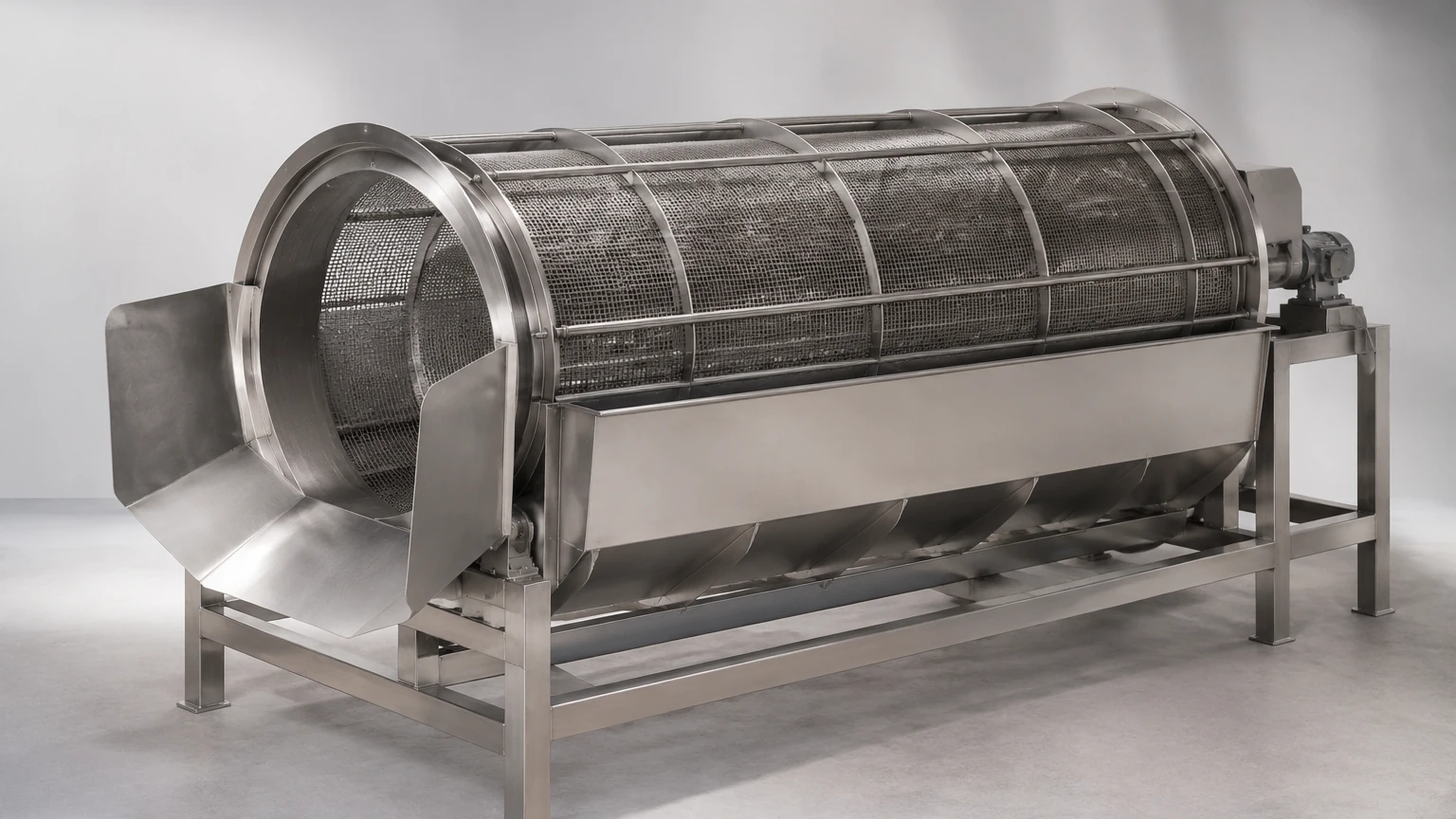
In the landscape of industrial separation and filtration, the rotary trommel screen remains a foundational technology for processing bulk materials and liquids. Often referred to as a drum screen, this mechanical screening machine is utilized extensively across diverse sectors, including municipal waste management, mineral processing, chemical production, and food processing. Its primary function is to separate materials based on size through a rotating cylindrical drum, leveraging gravity and centrifugal force to achieve high-volume throughput with relatively low energy consumption.
For engineers and procurement professionals, selecting the right rotary trommel screen involves more than just sizing a drum. It requires a deep understanding of material science, mechanical tolerances, and the specific filtration requirements of the medium being processed. As a specialist in stainless steel filtration solutions, Kaifil provides the precision-engineered components—specifically the wire mesh and perforated metal screens—that dictate the efficiency and longevity of these systems.
Understanding the Mechanical Principles of the Rotary Trommel Screen
The fundamental operation of a rotary trommel screen is deceptively simple, yet its efficiency is governed by complex physical interactions. The machine consists of a cylindrical drum that is typically inclined at a slight angle. As the drum rotates, the feed material is lifted by internal lifters or the friction of the drum wall and then dropped. This tumbling action ensures that the material is constantly agitated, allowing smaller particles to pass through the screen apertures while larger "oversize" materials continue their journey toward the discharge end of the drum.
Several variables influence the performance of this process:
* Rotational Speed: The RPM of the drum must be carefully calibrated. If the speed is too low, the material simply slides along the bottom, leading to poor separation. If it is too high, centrifugal force may pin the material against the drum wall, preventing it from falling through the screen. The "critical speed" is the point at which material is held against the wall; most industrial trommels operate at 30% to 45% of this critical speed.
* Angle of Inclination: The slope of the drum determines the residence time of the material. A steeper angle increases the flow rate but may reduce the precision of the separation, as particles have fewer opportunities to encounter an aperture.
* Aperture Design: The shape and size of the openings in the screen media—whether square mesh, round perforations, or slotted wedge wire—directly impact the "open area" percentage and the likelihood of material blinding.
Engineering Considerations for Screen Media Selection
The screen media is the heart of the rotary trommel screen. It is the component that performs the actual separation and is subject to the highest levels of wear and stress. When designing or retrofitting a trommel, engineers must choose between various types of screen media based on the physical properties of the feed material.
Woven Wire Mesh
Woven wire mesh is frequently used for fine to medium filtration tasks. It offers a high percentage of open area, which translates to higher throughput. However, in heavy-duty applications, the friction between the wires at the weave points can lead to premature wear. For these scenarios, high-tensile stainless steel is preferred to maintain structural integrity. You can find detailed technical specifications for various mesh grades on our Main Page.
Perforated Metal Plates
For applications involving heavy, abrasive materials or high-impact loads, perforated metal plates are often the superior choice. These plates are typically thicker than woven mesh and provide greater mechanical strength. The holes can be staggered or straight, and the bridge width between holes can be customized to balance strength and flow rate.
Wedge Wire (Profile Wire)
Wedge wire is particularly effective in liquid-solid separation and dewatering applications. The V-shaped profile of the wire creates an aperture that widens inwardly, significantly reducing the risk of clogging or blinding. As particles pass through the narrowest point at the surface, they are immediately released into the wider area below, ensuring a continuous flow.
Material Science: The Role of Stainless Steel in Heavy-Duty Filtration
In industrial environments, the durability of a rotary trommel screen is often dictated by its resistance to corrosion and abrasion. This is why stainless steel is the industry standard for high-performance trommel components. Kaifil specializes in utilizing advanced alloys to meet specific environmental challenges.
1. AISI 304 Stainless Steel: This is the most common grade used in industrial filtration. It provides excellent corrosion resistance in standard environments and is suitable for most food-grade and general industrial applications.
2. AISI 316L Stainless Steel: For chemical processing or marine environments, 316L is preferred due to the addition of molybdenum, which enhances resistance to pitting and crevice corrosion, especially in chloride-rich environments.
3. Duplex Stainless Steels: In extreme cases where both high mechanical strength and superior corrosion resistance are required, duplex grades may be employed. These are particularly useful in the pulp and paper industry or in advanced wastewater treatment plants.
The choice of material also impacts the total cost of ownership. While stainless steel components have a higher initial purchase price compared to carbon steel, their extended service life and reduced maintenance requirements offer a much lower cost per ton of processed material.
Optimizing Throughput and Separation Efficiency
To maximize the efficiency of a rotary trommel screen, engineers must address the phenomenon of "blinding" and "plugging." Blinding occurs when moisture or sticky materials coat the screen surface, effectively closing the apertures. Plugging occurs when near-size particles become wedged in the openings.
To combat these issues, several engineering solutions can be integrated into the trommel design:
* Brushes and Scrapers: External brushes that rotate against the drum can mechanically clear particles from the apertures.
* Spray Bars: In wet screening applications, high-pressure water jets are used to continuously wash the screen and keep the apertures open.
* Trommel Lifters: Internal baffles or lifters not only aid in the tumbling action but can also be designed to redirect the flow of material, ensuring that every particle has multiple chances to pass through the screen.
Furthermore, the "open area" calculation is critical. A higher open area percentage increases throughput but can decrease the structural rigidity of the drum. Precision manufacturing ensures that the wire diameter or plate thickness is optimized to provide the necessary strength without unnecessarily restricting the flow.
Maintenance and Longevity in Industrial Environments
A rotary trommel screen is a significant capital investment, and its longevity depends on a proactive maintenance strategy. Because the screen media is a wear part, it should be designed for ease of replacement. Modular screen panels are an excellent solution for large-scale trommels, allowing operators to replace only the worn sections rather than the entire drum cylinder.
Key maintenance checkpoints include:
* Drive Alignment: Ensuring the motor and drive chain or belt are properly aligned to prevent uneven torque on the drum.
* Trunnion Wheel Wear: The wheels that support the rotating drum must be inspected for flat spots or misalignment, which can cause vibration and premature fatigue of the screen media.
* Seal Integrity: In enclosed trommels used for dust control or chemical containment, seals must be checked regularly to prevent leakage.
By selecting high-quality components from a manufacturer like Kaifil, facilities can extend the intervals between these maintenance cycles. Our focus on precision welding and material uniformity ensures that our screen components can withstand the constant cyclic loading inherent in rotary operations.
Customization and OEM Integration for Specialized Applications
No two industrial processes are identical, and the "off-the-shelf" approach rarely yields the best results for complex filtration needs. Customization is where the engineering expertise of a manufacturer becomes invaluable. When specifying a rotary trommel screen component, several factors should be confirmed with the manufacturer:
* Micron Rating vs. Mechanical Strength: In fine filtration, there is always a trade-off between the fineness of the mesh and its ability to withstand the weight of the material bed.
* Surface Treatment: Options such as electropolishing can be applied to stainless steel screens to reduce surface roughness, further minimizing the risk of material adhesion and improving hygiene in food and pharmaceutical applications.
* Structural Reinforcement: For high-capacity drums, the screen media may need to be supported by an external or internal skeleton to prevent sagging or deformation under load.
Kaifil works closely with OEM partners and end-users to develop customized filtration components that fit seamlessly into existing rotary trommel screen systems. Whether it is a specific weave pattern for a chemical reactor or a reinforced perforated plate for a mining operation, our engineering team ensures that the final product meets the exact rigorous standards of the application.
Conclusion: Selecting a Reliable Filtration Partner
The rotary trommel screen is a workhorse of modern industry, providing a reliable and scalable solution for material separation. However, the effectiveness of the system is entirely dependent on the quality and specification of the screen media. Engineers must balance material selection, aperture design, and mechanical durability to achieve optimal performance.
When evaluating suppliers for your filtration needs, it is essential to partner with a manufacturer that understands the technical nuances of industrial environments. From material compatibility to precision manufacturing, the right components reduce downtime and improve the purity of your output. For more information on our full range of stainless steel filtration solutions and to discuss your specific project requirements, please visit our Main Page. By focusing on quality and engineering precision, Kaifil helps industrial operators achieve sustainable and efficient filtration outcomes.
