


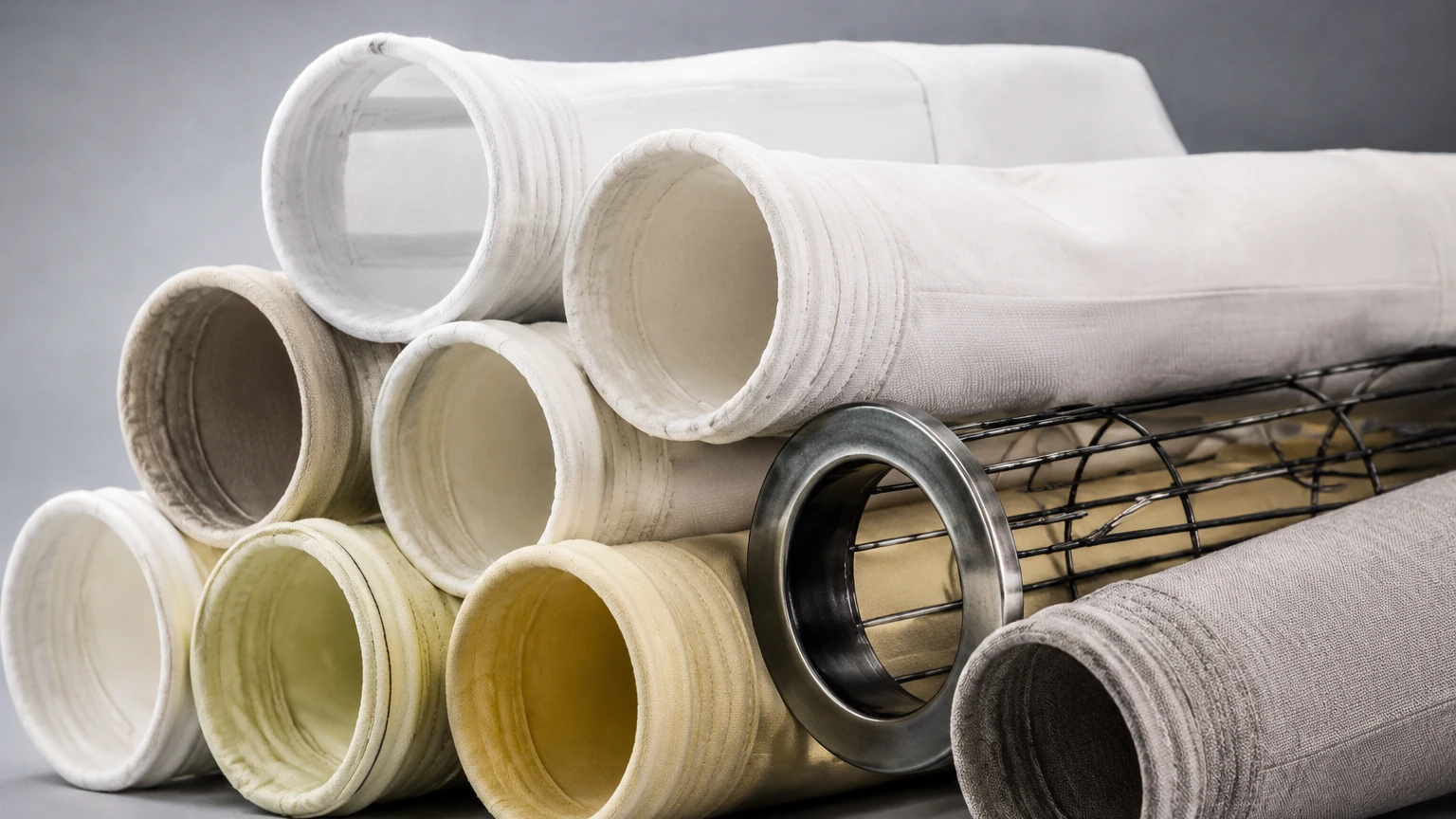
Industrial Dust Collector Filter Bag
In industrial manufacturing, maintaining air quality and managing particulate matter is not merely a matter of environmental compliance but a critical component of operational efficiency and equipment longevity. The industrial dust collector filter bag serves as the primary barrier in baghouse systems, capturing airborne contaminants generated during processes such as grinding, chemical mixing, food processing, and metal fabrication. Selecting the appropriate filtration media requires a deep understanding of particle characteristics, gas chemistry, and thermal conditions.
While traditional fabric bags are common, many high-demand industrial applications are shifting toward advanced materials and metal-based filtration components to ensure durability and consistent performance. For technical professionals and engineers, evaluating the specifications of an industrial dust collector filter bag involves balancing filtration efficiency with the mechanical stresses of the cleaning cycle.
Understanding the Role of the Industrial Dust Collector Filter Bag
The fundamental purpose of a dust collector filter bag is to separate solid particles from a gas stream. This process typically occurs through four main mechanisms: interception, impaction, diffusion, and electrostatic attraction. In most industrial baghouses, the "dust cake" that builds up on the surface of the bag actually performs the majority of the fine filtration. The bag itself acts as the structural substrate that supports this cake.
Engineers must consider the air-to-cloth (A/C) ratio, which is the volume of air passing through each square foot of filter media per minute. A high A/C ratio can lead to excessive pressure drop and premature blinding of the media, while an optimized ratio ensures that the industrial dust collector filter bag can be effectively cleaned by pulse-jet or shaker mechanisms without damaging the fibers or the structural integrity of the filter.
Material Selection and Technical Compatibility
The choice of material for an industrial dust collector filter bag is perhaps the most significant factor in its service life. Standard materials include polyester, polypropylene, and aramid (Nomex), each offering different levels of temperature resistance and chemical stability. However, in environments involving high temperatures, abrasive particles, or corrosive gases, traditional synthetic fibers often fail.
Synthetic Media Options
* Polyester: The most common choice for dry, ambient-temperature applications. It offers good abrasion resistance but is susceptible to hydrolysis in moist environments.
* Aramid (Nomex): Suitable for high-temperature applications up to 400°F (204°C). It is frequently used in asphalt plants and metal smelting.
* PTFE (Teflon): Provides excellent chemical resistance and high-temperature tolerance but comes at a significantly higher cost.
The Shift to Metal Filtration Components
In increasingly demanding sectors such as chemical processing and power generation, engineers are looking toward stainless steel wire mesh and sintered metal components as alternatives to or reinforcements for traditional bags. Stainless steel filters, like those found on the Kaifil Main Page, provide superior mechanical strength and can withstand temperatures and pressures that would disintegrate synthetic fabrics. These metal solutions are particularly effective when the "dust" is actually a valuable product that needs to be recovered without contamination from fiber shedding.
Performance Metrics: Efficiency, Pressure Drop, and Permeability
When specifying an industrial dust collector filter bag, three technical metrics dictate the success of the installation: filtration efficiency, differential pressure, and gas permeability.
1. Filtration Efficiency: This is often defined by the micron rating. For industrial dust collection, the goal is usually to capture sub-micron particles to meet EPA or OSHA standards. High-efficiency bags may utilize a membrane (such as ePTFE) to achieve surface filtration, preventing particles from embedding deep within the felt.
2. Differential Pressure (ΔP): This is the difference in pressure between the dirty side and the clean side of the filter. A rising ΔP indicates that the industrial dust collector filter bag is becoming clogged. Managing this through effective cleaning cycles is essential to minimize energy consumption by the system's fans.
3. Permeability: This refers to the ease with which air passes through the clean media. Higher permeability allows for smaller baghouse footprints but must be balanced against the need to capture fine dust.
Engineering Challenges in High-Temperature and Corrosive Environments
Standard industrial dust collector filter bags face significant challenges when exposed to "acid dew point" conditions, where gases cool and condense into corrosive liquids. In such scenarios, synthetic bags can undergo rapid chemical degradation. For example, in flue gas desulfurization or specialized chemical reactors, the presence of sulfuric or hydrochloric acid can destroy polyester or aramid fibers within weeks.
To combat this, engineering teams often specify stainless steel 304 or 316L filtration components. Metal mesh filters do not suffer from hydrolysis and maintain their pore structure even under extreme thermal cycling. By integrating custom-designed metal filter cartridges or mesh-lined bags, facilities can achieve a much lower total cost of ownership through reduced replacement frequency and more reliable emission control.
Customization and OEM Considerations for Industrial Filtration
No two industrial processes are identical, which makes customization a vital part of the procurement process. An industrial dust collector filter bag must be precisely sized to fit the internal cages of the baghouse. A bag that is too loose will rub against the cage and fail due to abrasion, while a bag that is too tight will be difficult to install and may snap under the pressure of a pulse-jet blast.
Customization options often include:
* Top and Bottom Configurations: Snap bands, flange tops, or raw edges designed to interface with specific cell plate designs.
* Reinforcements: Wear strips at the bottom of the bag to protect against high-velocity abrasive dust entering the hopper.
* Conductive Fibers: The inclusion of epitaxial fibers or stainless steel filaments to dissipate static charges, which is critical in environments handling explosive dusts like flour, wood, or certain chemicals.
For manufacturers like Kaifil, providing OEM solutions means ensuring that every stainless steel filter cartridge or wire mesh component meets the exact tolerances required by the system's engineering drawings. This precision ensures that the interface between the filter media and the housing remains leak-free, preventing the bypass of unfiltered air.
Maintenance and Total Cost of Ownership (TCO)
While the initial purchase price of an industrial dust collector filter bag is an important factor, the Total Cost of Ownership (TCO) provides a more accurate picture of value. TCO includes the cost of the bags, the labor for installation, the energy required to overcome pressure drop, and the cost of production downtime during replacement.
Cleaning Mechanisms and Longevity
The method of cleaning—whether it be pulse-jet, reverse air, or mechanical shaking—impacts the wear and tear on the bag. Pulse-jet systems are the most common in modern industry, using a burst of compressed air to expand the bag and dislodge the dust cake. However, this mechanical flexing can lead to fiber fatigue. Engineers must ensure the media selected can withstand thousands of these cycles.
In applications where fabric bags require replacement every six months, switching to a more durable metal-based filtration solution can extend service life to several years. Metal filters can often be cleaned through ultrasonic baths or chemical washing, allowing them to be reused multiple times, whereas fabric bags are typically disposed of once they reach their terminal pressure drop.
Evaluating Suppliers for Industrial Filtration Needs
When sourcing an industrial dust collector filter bag or high-performance metal filter components, it is essential to partner with a manufacturer that understands the technical nuances of your specific industry. A reliable supplier should provide detailed data sheets covering air permeability, tensile strength, and chemical resistance. They should also offer technical support to help troubleshoot issues like premature blinding or high emission levels.
For those seeking precision-engineered solutions, reviewing the capabilities of a specialized manufacturer is a necessary step. You can review product options and application support by visiting the Kaifil Main Page, where the focus is on delivering high-quality stainless steel filtration components that meet the rigorous demands of modern industrial processes.
Conclusion
The industrial dust collector filter bag is a small but vital component of the industrial ecosystem. Whether you are managing a pharmaceutical cleanroom, a food processing plant, or a heavy industrial foundry, the choice of filter media directly impacts your bottom line. By prioritizing technical specifications—such as material compatibility, filtration efficiency, and mechanical durability—engineers can ensure their dust collection systems operate at peak performance. In the most demanding environments, moving beyond standard fabrics to custom stainless steel and metal filtration solutions often provides the reliability and efficiency required for long-term success.
