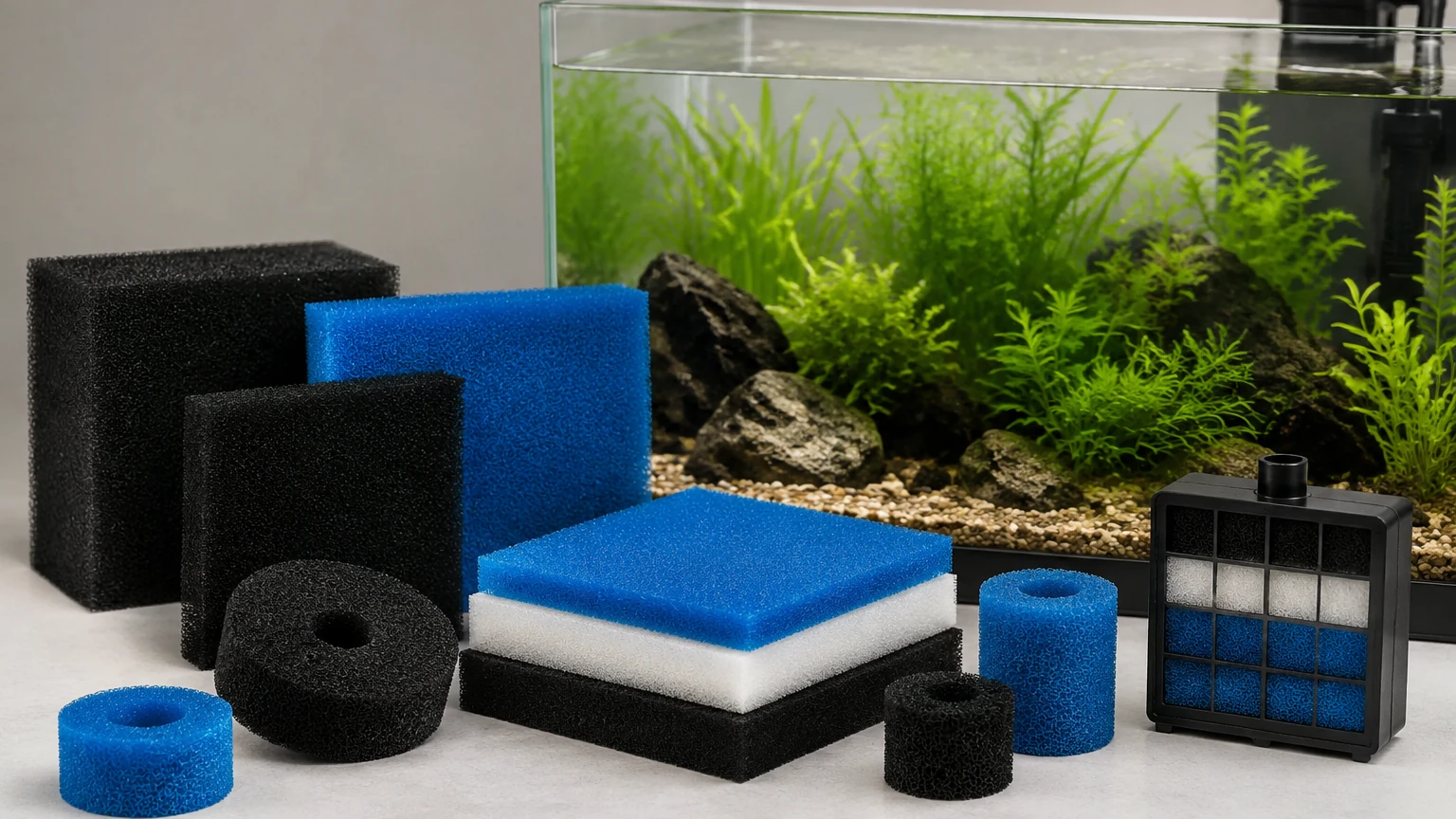
Foam for Fish Tank Filters
In the realm of aquatic life support and water treatment, filtration is the primary mechanism for maintaining chemical balance and clarity. Among the various media used in these systems, foam for fish tank filters remains a fundamental component. While often perceived as a simple sponge, the engineering behind filter foam involves specific considerations regarding porosity, material composition, and surface area. For engineers and technical professionals managing larger-scale aquatic systems or industrial water treatment processes, understanding the limitations and performance metrics of foam is essential when deciding between soft media and more durable alternatives like stainless steel wire mesh.
The Role of Foam in Aquatic Filtration Systems
Foam for fish tank filters, technically referred to as open-cell reticulated foam, serves two primary functions: mechanical separation and biological substrate provision. Unlike closed-cell foams used for insulation, reticulated foam undergoes a manufacturing process (often thermal or chemical) that removes the cell walls, leaving only a skeletal structure. This creates a highly porous material that allows water to flow through with minimal resistance while trapping particulate matter.
In a mechanical capacity, the foam acts as a depth filter. As water passes through the interconnected pathways, suspended solids—such as uneaten food, plant debris, and fish waste—become lodged within the matrix. In a biological capacity, the vast internal surface area of the foam provides an ideal environment for the colonization of nitrifying bacteria (*Nitrosomonas* and *Nitrobacter*). These microorganisms are responsible for the nitrogen cycle, converting toxic ammonia into nitrite and subsequently into less harmful nitrate.
Technical Specifications: Understanding Pores Per Inch (PPI)
The performance of foam for fish tank filters is primarily measured by its porosity, expressed in Pores Per Inch (PPI). Selecting the correct PPI is a critical engineering decision that affects flow rate, filtration efficiency, and maintenance frequency.
* Low PPI (10–20 PPI): This is characterized by large, coarse pores. It is typically used as a pre-filter to capture large debris. The advantage of low PPI foam is its high flow rate and resistance to clogging, making it suitable for high-volume systems where large particles are the primary concern.
* Medium PPI (20–30 PPI): This serves as a versatile middle ground, offering a balance between mechanical trapping and biological surface area. It is frequently used in multi-stage filtration units.
* High PPI (45–50+ PPI): These foams have very fine pores and are used for "polishing" the water. They can trap much smaller particles, leading to high water clarity. However, the trade-off is a significantly higher pressure drop and a tendency to clog rapidly, requiring frequent cleaning or replacement.
For industrial applications or large-scale aquaculture, relying solely on high PPI foam can lead to system inefficiencies. In these scenarios, engineers often look toward Main Page solutions that utilize stainless steel components to handle higher solids loading without the frequent downtime associated with fine foam media.
Mechanical vs. Biological Filtration Functions
When designing a filtration sequence, it is important to distinguish between the mechanical and biological roles of foam. If a single piece of foam is expected to perform both tasks, its biological efficiency will inevitably drop as the pores become clogged with mechanical waste.
In professional system design, a graduated approach is preferred. Water first passes through a coarse mechanical stage (low PPI foam or metal mesh) to remove bulk solids. This protects the subsequent biological stages, which may consist of medium-density foam or specialized ceramic media. By separating these functions, the biological colony remains oxygenated and unobstructed, ensuring more stable water chemistry.
Furthermore, the "depth" of the foam matters. A thicker block of foam provides more residence time for the water, increasing the probability of particle capture and bacterial interaction. However, if the foam is too thick and the flow rate is too low, the center of the foam can become anaerobic (oxygen-depleted), which can lead to the production of hydrogen sulfide rather than the beneficial conversion of nitrogen.
Maintenance and Lifecycle Management of Foam Media
One of the most significant challenges with foam for fish tank filters is its maintenance profile. Unlike permanent filtration components, foam is a consumable or semi-permanent material. Over time, the cellular structure can degrade due to constant exposure to water, microbial activity, and the physical stress of cleaning.
Maintenance typically involves rinsing the foam in dechlorinated water to dislodge accumulated solids. However, vigorous cleaning can damage the delicate reticulated structure and wash away a significant portion of the beneficial bacterial colony. From a B2B and industrial perspective, this creates a variable in operational costs. The labor required for frequent manual cleaning and the replacement costs of degraded foam must be factored into the total cost of ownership (TCO) for the filtration system.
In demanding environments, such as chemical processing or large-scale commercial aquatics, the limitations of foam—such as its inability to withstand high temperatures or aggressive cleaning chemicals—often necessitate a transition to stainless steel filter cartridges. These metal components offer a fixed pore size that does not distort under pressure and can be cleaned using ultrasonic baths or backwashing systems, providing a much longer service life.
Scaling Up: From Foam to Industrial Stainless Steel Filtration
While foam for fish tank filters is effective for small to medium-sized applications, industrial-scale water treatment and aquaculture demand higher levels of precision and durability. This is where the expertise of manufacturers like Kaifil becomes essential.
As systems scale up, the volume of water and the concentration of contaminants increase. Foam media may struggle to maintain structural integrity under high flow velocities. In contrast, stainless steel wire mesh filters provide several distinct advantages for industrial users:
1. Precision Micron Ratings: While PPI is a general estimate of porosity, stainless steel mesh can be manufactured to exact micron ratings, ensuring consistent filtration performance that meets strict regulatory or process requirements.
2. Structural Integrity: Metal filters do not compress or bypass under high-pressure conditions, a common failure point for foam media.
3. Chemical and Thermal Resistance: In industrial water treatment where pH levels may fluctuate or temperatures may rise, stainless steel (particularly 316L grade) remains inert and functional, whereas foam may melt or leach chemicals.
4. Sterilization: For pharmaceutical or food-grade aquatic systems, the ability to sterilize filtration components is mandatory. Stainless steel can be autoclaved or treated with caustic cleaners that would destroy foam media.
Engineering Considerations for High-Performance Water Treatment
When evaluating filtration media for a new project, engineers must consider the specific gravity of the contaminants, the desired flow rate, and the target water quality parameters. Foam for fish tank filters is an excellent choice for low-pressure, biological-heavy applications. However, if the project involves high-flow mechanical separation, stainless steel is often the superior choice.
Key engineering considerations include:
* Flow Velocity: High velocity can cause "channeling" in foam, where water finds the path of least resistance and bypasses the filtration matrix. Metal mesh ensures uniform distribution across the entire surface.
* Pressure Drop: A clean foam filter has a low initial pressure drop, but this increases exponentially as it loads with waste. Stainless steel filters, especially pleated designs, offer a larger surface area to maintain lower pressure drops over longer periods.
* Customization: Industrial systems often require bespoke shapes and sizes. While foam can be cut, it lacks the rigidity required for many housing designs. Custom-fabricated metal cartridges can be engineered to fit specific vessel geometries and sealing requirements.
Common Risks and Limitations of Foam Media
Despite its widespread use, foam for fish tank filters carries certain risks that technical professionals should be aware of. The most prominent is the risk of "clogging-induced bypass." In many filter designs, if the foam becomes too saturated with debris, the resulting backpressure can force water around the edges of the foam rather than through it. This results in unfiltered water returning to the system, which can lead to rapid spikes in ammonia or turbidity.
Another risk is material degradation. Some lower-quality foams are not UV-stabilized or may contain fire retardants and other additives that can leach into the water over time. For sensitive aquatic species or high-purity industrial processes, this chemical leaching is unacceptable. Ensuring that the foam is specifically rated for aquatic use is a vital step in the procurement process.
Custom Filtration Solutions for Demanding Applications
For organizations looking to optimize their filtration processes, the choice between foam and metal media depends on the specific demands of the application. While foam is a cost-effective solution for biological filtration in standard aquarium setups, industrial applications often require the robustness of custom-engineered components.
Kaifil specializes in bridging the gap between standard filtration and high-performance industrial requirements. By providing custom stainless steel filtration solutions, including wire mesh filters and precision cartridges, Kaifil supports industries that cannot afford the downtime or inconsistency of soft media. Whether you are managing a large-scale recirculating aquaculture system (RAS), a wastewater treatment plant, or a food processing facility, selecting the right filtration hardware is the foundation of operational success.
To explore the full range of durable, high-precision filtration components and to discuss your specific application requirements with an engineering-focused team, visit the Main Page to review product options and application support. Transitioning from consumable foam to permanent, cleanable stainless steel filtration can significantly reduce long-term maintenance costs and improve the reliability of your water treatment infrastructure.