


Filter Polymerfiltration
In the production of synthetic fibers, films, and high-performance resins, the purity of the polymer melt is a primary determinant of the final product's quality. The process of filter polymerfiltration involves the removal of solid contaminants, degraded polymer particles, and "gels"—semi-solid clusters of high-molecular-weight polymer—from the melt stream. For engineers and procurement teams, selecting the correct filtration system is not merely a matter of choosing a mesh size; it is a complex engineering decision that impacts production uptime, fiber breakage rates, and the mechanical integrity of the end product.
Industrial polymer processing occurs under extreme conditions. Temperatures often exceed 300°C, and pressures can reach 30 MPa or higher. In such environments, standard filtration components fail. This requires the use of specialized stainless steel filter media designed to withstand high differential pressures while maintaining precise filtration accuracy. As a specialized manufacturer, Kaifil provides the technical expertise and custom manufacturing capabilities required to meet these demanding specifications.
The Role of Filtration in High-Viscosity Polymer Processing
Polymer melts are characterized by high viscosity and non-Newtonian flow behavior. When a polymer is processed through an extruder, any particulate matter or gel can cause significant downstream issues. In fiber spinning (such as polyester or nylon), a single contaminant larger than the spinneret hole will cause a filament break, leading to costly production halts. In film extrusion, contaminants create "fish-eyes" or optical defects that render the film unusable for packaging or electronic applications.
The filter polymerfiltration process serves as the final barrier. Because polymer melts are processed at high temperatures, the filter media must be chemically inert and thermally stable. Stainless steel, particularly AISI 316L, is the industry standard due to its excellent corrosion resistance and ability to maintain structural integrity at elevated temperatures. Unlike disposable filters used in liquid processing, polymer filters are often designed to be cleaned and reused, making the durability of the metal mesh a critical factor in the total cost of ownership.
Engineering Considerations for Filter Media Selection
When specifying a filter for polymer applications, engineers must choose between different types of metal media based on the specific contaminant profile and the desired flow characteristics. The two most common types used in filter polymerfiltration are sintered metal fiber felt and multi-layer stainless steel wire mesh.
Sintered Metal Fiber Felt
Sintered fiber felt is a depth filtration medium. It consists of thin stainless steel fibers that are randomly laid and then bonded together through a high-temperature vacuum sintering process. This creates a highly porous structure (up to 80% porosity) with a high dirt-holding capacity. For polymer melts containing gels, sintered fiber felt is often superior because the labyrinthine path through the depth of the media traps deformable gels more effectively than a surface-loading mesh.
Multi-layer Wire Mesh
Wire mesh filters are surface filtration media. By vacuum-sintering multiple layers of woven wire cloth together, manufacturers can create a rigid, stable filter plate or cartridge. The outer layers provide the filtration rating, while the inner, coarser layers provide structural support and drainage. This construction is ideal for removing rigid particles and ensuring a uniform pressure distribution across the filter surface.
Selecting between these options requires an analysis of the polymer's rheology and the nature of the impurities. For high-purity resins where gel removal is the priority, a combination of depth and surface media is often the most effective solution.
Performance Metrics: Pressure Drop and Dirt Holding Capacity
In a continuous extrusion process, the pressure drop (ΔP) across the filter is a key performance indicator. As the filter polymerfiltration process continues, contaminants accumulate on or within the media, causing the pressure to rise. Once the pressure reaches a predetermined limit, the filter must be changed or cleaned.
1. Initial Pressure Drop: This is determined by the permeability of the clean filter media and the viscosity of the polymer. A lower initial ΔP allows for a longer production cycle before the maximum allowable pressure is reached.
2. Dirt Holding Capacity (DHC): This refers to the amount of contaminant the filter can trap before the pressure drop becomes excessive. In polymer filtration, high DHC is essential for minimizing the frequency of "screen changes," which can disrupt the steady-state thermal conditions of the extruder.
3. Filtration Rating: Engineers must distinguish between nominal and absolute filtration ratings. In polymer processing, an absolute rating is typically required to ensure that no particles above a specific micron size pass through to the spinneret or die.
Structural Design and Mechanical Stability
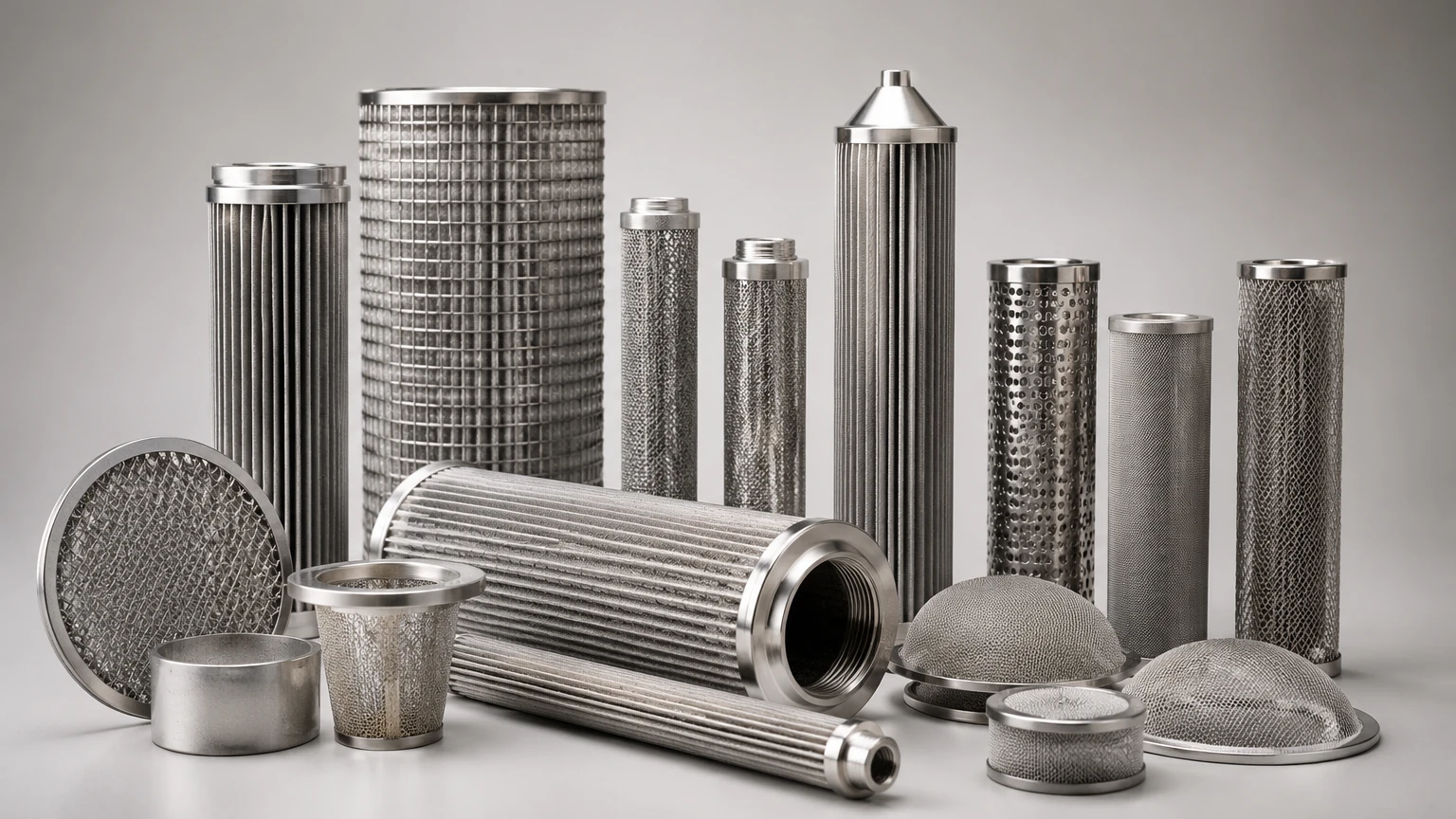
The physical configuration of the filter is as important as the media itself. Because of the high pressures involved, the filter must be supported by a robust internal structure. For cylindrical filter cartridges, this usually involves a perforated stainless steel core. The core must be engineered to resist collapse under the maximum differential pressure expected during the end-of-life stage of the filter.
Customization is often necessary to fit specific screen changers or filter housings. Common configurations include:
* Pleated Cartridges: By pleating the filter media, the effective surface area is increased significantly compared to a smooth cylinder. This results in lower flow velocity through the media, reduced pressure drop, and significantly longer service life.
* Leaf Discs: Used in large-scale polymer production, leaf discs provide a very large filtration area in a compact footprint. These are often used in "candle" arrangements within a high-pressure vessel.
* Spin Packs: In synthetic fiber production, the filtration media is often integrated directly into the spin pack assembly, just upstream of the spinneret.
At Kaifil, we focus on the precision manufacturing of these components, ensuring that every weld and pleat meets the rigorous standards required for industrial polymer processing. You can Review product options and application support on our Main Page to understand how different configurations can be tailored to your specific extrusion line.
Common Risks and Failure Modes in Polymer Filtration
Failure to properly specify or maintain a filter polymerfiltration system can lead to several industrial risks:
* Media Migration: If the filter media is poorly manufactured or sintered, individual metal fibers or wires can break off and enter the polymer stream. This not only contaminates the product but can also damage expensive downstream equipment like gear pumps and spinnerets.
* Bypass Leakage: In high-pressure environments, the seals and gaskets of the filter assembly are points of potential failure. Any bypass of unfiltered polymer renders the entire filtration system ineffective.
* Gel Shearing: If the pressure drop across the filter becomes too high, deformable gels can be "sheared" through the pores of the media. This is why monitoring the rate of pressure increase is vital for maintaining product quality.
* Structural Collapse: If a filter is pushed beyond its design limits, the internal support core or the pleated media can collapse, leading to a catastrophic release of trapped contaminants into the melt stream.
Cleaning Protocols and Life Cycle Management
One of the primary advantages of stainless steel filter polymerfiltration components is their cleanability. Given the high cost of specialized metal filters, a well-defined cleaning protocol is essential for maximizing the return on investment. Common cleaning methods include:
* Pyrolysis/Calcination: Heating the filter in a vacuum or controlled atmosphere to carbonize the polymer residues, which are then removed via ultrasonic cleaning.
* Chemical Solvent Cleaning: Using specialized solvents to dissolve the polymer. This is often used for polymers that are sensitive to high temperatures or for filters where thermal expansion might damage the fine mesh.
* Hydrolysis: Using high-pressure steam to break down certain types of polymers (like PET or Nylon).
After cleaning, filters should undergo a "bubble point test" to verify that the filtration integrity has not been compromised and that the pores remain open and uniform. A filter that has been cleaned too many times or improperly will show a decrease in filtration efficiency or an increase in the initial pressure drop.
Selecting a Partner for Custom Filtration Solutions
For engineers and purchasing managers, the choice of a filtration partner goes beyond the unit price of a cartridge. It involves finding a manufacturer that understands the technical nuances of polymer rheology and the mechanical stresses of extrusion. A reliable partner should provide:
* Material Traceability: Documentation ensuring that the stainless steel used (e.g., 316L) meets international standards for composition and corrosion resistance.
* Customization Capabilities: The ability to manufacture filters to exact dimensions, including custom end-fittings, pleat counts, and support structures.
* Technical Support: Guidance on selecting the optimal micron rating and media type based on the specific polymer and contaminant profile.
Kaifil specializes in these custom solutions, working closely with global customers to develop high-performance filtration components that meet the specific needs of demanding industrial environments. Whether you are dealing with recycled plastics that have high contaminant loads or virgin resins for medical-grade films, the right filtration strategy is essential.
To explore our full range of stainless steel wire mesh filters and custom cartridges, visit the Main Page. Our team is dedicated to providing the technical resource and manufacturing excellence required to optimize your filter polymerfiltration process, ensuring efficient, durable, and cost-effective performance across all industrial applications.
