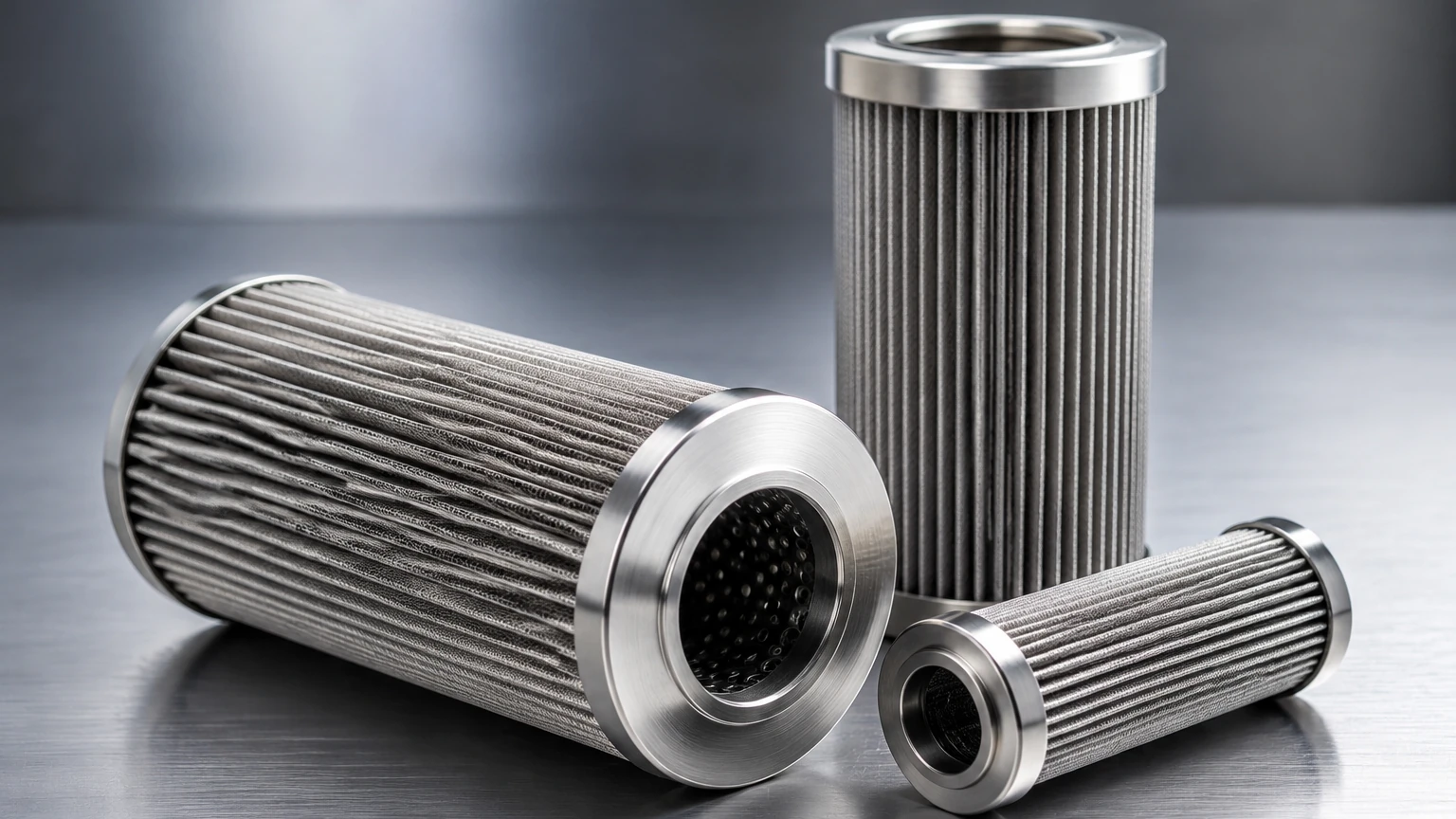
10 Micron Oil Filters
In industrial fluid power and lubrication systems, the cleanliness of the medium is the primary factor determining the longevity of mechanical components. Among the various filtration grades available, 10 micron oil filters represent a critical threshold. This specific level of filtration is often the standard for protecting sensitive hydraulic components, such as servo valves and high-pressure piston pumps, from premature wear and catastrophic failure. Understanding the technical nuances of 10 micron filtration—ranging from efficiency ratings to material compatibility—is essential for engineers and procurement teams tasked with maintaining system reliability.
Defining the 10 Micron Rating: Nominal vs. Absolute
One of the most common points of confusion in industrial filtration is the distinction between nominal and absolute micron ratings. When specifying 10 micron oil filters, it is vital to understand which standard is being applied, as the performance difference can be substantial.
Nominal Filtration
A nominal rating is an arbitrary value provided by the manufacturer, indicating that the filter can trap a large percentage of particles of a given size. Typically, a nominal 10-micron filter might only capture 50% to 95% of 10-micron particles. In non-critical applications, such as low-pressure transfer lines, this may be sufficient. However, for precision machinery, nominal ratings often provide a false sense of security.
Absolute Filtration and the Beta Ratio
In high-performance industrial environments, absolute filtration is the benchmark. This is defined by the Beta Ratio ($β$), derived from the ISO 16889 multi-pass test. For a filter to be considered "absolute" at 10 microns, it must typically achieve a Beta ratio of β10 ≥ 75 (98.7% efficiency) or, more commonly in modern hydraulics, β10 ≥ 200 (99.5% efficiency) or β10 ≥ 1000 (99.9% efficiency). When evaluating 10 micron oil filters, engineers must confirm the Beta ratio to ensure the media can effectively remove the silt-sized particles that lead to abrasive wear.
Material Options for 10 Micron Filtration Media
The choice of filter media significantly impacts the filter’s durability, chemical compatibility, and pressure drop characteristics. While disposable media are common, stainless steel solutions offer distinct advantages in demanding industrial settings.
1. Stainless Steel Wire Mesh: Kaifil specializes in precision-woven stainless steel wire mesh. For 10-micron applications, a twilled Dutch weave is often utilized. This construction provides a robust, fixed-pore structure that does not migrate or shed fibers into the fluid stream. Stainless steel is ideal for high-temperature applications or fluids that are chemically aggressive toward synthetic polymers.
2. Sintered Metal Felt: For applications requiring high dirt-holding capacity and absolute filtration, sintered metal fiber felt is an excellent choice. It consists of thin stainless steel fibers randomly laid and sintered together, creating a depth-filtration medium with high porosity. This allows for lower clean pressure drops compared to traditional woven mesh at the same 10-micron rating.
3. Glass Fiber (Microglass): This is a common disposable medium for 10-micron hydraulic filters. While it offers high efficiency and dirt-holding capacity, it is susceptible to media migration if the system experiences high-pressure surges and cannot be cleaned once saturated.
4. Cellulose: Paper-based filters are generally used for nominal filtration. They are rarely suitable for absolute 10-micron requirements due to their inconsistent pore size and poor performance in the presence of water or high temperatures.
Critical Factors in Filter Selection and System Integration
Selecting 10 micron oil filters involves more than just matching a micron size; it requires a holistic view of the system’s operating parameters.
Viscosity and Flow Rate
The viscosity of the oil—measured in Centistokes (cSt)—directly affects the pressure drop across the filter. A 10-micron filter used with ISO VG 100 gear oil will exhibit a much higher differential pressure ($ΔP$) than one used with ISO VG 32 hydraulic fluid. If the flow rate is too high for the filter's surface area, the system may prematurely trigger the bypass valve, allowing unfiltered oil to circulate.
Operating Temperature
Temperature fluctuations affect both the fluid viscosity and the structural integrity of the filter media. In cold-start conditions, the oil's high viscosity can cause a massive pressure spike. Engineers must ensure that the filter housing and the 10-micron element are rated for the maximum expected system pressure and that the bypass valve is calibrated correctly to protect the element from collapsing.
Chemical Compatibility
Industrial oils are rarely pure hydrocarbons; they contain additives such as detergents, anti-wear agents, and rust inhibitors. Furthermore, some systems use synthetic fluids like phosphate esters or water-glycols. It is imperative to verify that the filter media, adhesives, and O-ring seals (Buna-N, Viton, or EPDM) are compatible with the specific fluid to prevent seal swelling or media degradation.
The Role of 10 Micron Filters in Hydraulic and Lubrication Systems
In many industrial hierarchies of filtration, 10-micron elements serve as the "working" filters. They are strategically placed to protect the most expensive parts of the system.
* Pressure Line Filtration: Placed immediately downstream of the pump, 10-micron pressure filters protect sensitive components like proportional valves. These filters must withstand full system pressure and are often designed with high collapse strength.
* Return Line Filtration: These filters capture contaminants generated within the system (wear debris) before the oil returns to the reservoir. Using 10-micron filtration here ensures that the "clean" side of the tank remains within the required ISO 4406 cleanliness codes.
* Kidney Loop (Off-line) Filtration: For large reservoirs, an independent pump and filter circuit (kidney loop) can continuously polish the oil. 10-micron filters are frequently used in these loops to maintain a steady-state cleanliness level without affecting the main system’s flow dynamics.
Evaluating Total Cost of Ownership: Reusable vs. Disposable
For many purchasing teams, the initial cost of the filter element is the primary metric. However, a Total Cost of Ownership (TCO) analysis often reveals that stainless steel 10 micron oil filters provide better long-term value than disposable alternatives.
Disposable Elements: While the unit price is lower, the recurring costs include frequent replacement labor, disposal fees for oil-soaked hazardous waste, and the risk of system downtime during changeovers. In systems with high contamination rates, the cost of replacements can escalate rapidly.
Reusable Stainless Steel Elements: Kaifil’s stainless steel filter cartridges are designed for longevity. When the differential pressure reaches a predetermined limit, these elements can be removed, cleaned (often via ultrasonic baths or backflushing), and returned to service. This eliminates the waste stream and ensures consistent performance over years of operation. For high-value industrial processes, the durability of stainless steel prevents the risk of media rupture, which can occur in cheaper glass fiber elements during pressure spikes.
Specifying Custom Filtration Solutions for OEM Applications
Standard off-the-shelf filters do not always meet the spatial or performance constraints of specialized industrial machinery. In these instances, custom-engineered 10-micron solutions are required. When partnering with a manufacturer like Kaifil, engineers should be prepared to confirm the following technical specifications:
* Target ISO Cleanliness Code: What is the desired oil cleanliness (e.g., ISO 16/14/11)?
* Maximum Flow Rate: Measured in GPM or LPM.
* Housing Dimensions: Length, outer diameter (OD), and inner diameter (ID) constraints.
* Connection Type: Threaded, flanged, or push-on configurations.
* Bypass Requirements: Does the application require an integrated bypass valve, or is it handled by the housing?
By addressing these variables during the design phase, OEMs can ensure that the filtration system is optimized for the specific duty cycle of the equipment. For more information on our engineering capabilities and custom manufacturing processes, you can visit our Main Page to review product options and application support.
Conclusion
The implementation of 10 micron oil filters is a foundational requirement for modern industrial reliability. By moving beyond nominal ratings and considering the material science and fluid dynamics involved, engineers can significantly reduce component wear and extend the interval between major overhauls. Whether through the use of high-efficiency disposable media or the long-term sustainability of cleanable stainless steel mesh, the goal remains the same: maintaining fluid integrity to ensure uninterrupted production.