


Filter Bag Manufacturers
In the landscape of industrial liquid and gas processing, filter bags represent one of the most versatile and cost-effective methods for removing contaminants. Filter bag manufacturers serve a critical role across diverse sectors, including chemical processing, food and beverage production, pharmaceuticals, and wastewater treatment. Selecting the right manufacturer involves more than comparing unit prices; it requires a deep understanding of material science, engineering tolerances, and the specific demands of the application environment.
Industrial filter bags are designed to capture particles from a fluid stream by passing the medium through a porous fabric or mesh. While the concept is straightforward, the execution involves complex variables such as micron ratings, chemical compatibility, and thermal resistance. For procurement teams and engineers, identifying a manufacturer capable of delivering consistent quality and technical support is essential for maintaining process integrity and minimizing downtime.
Understanding the Industrial Role of Filter Bag Manufacturers
Filter bag manufacturers produce a wide array of products tailored to specific industrial needs. These products generally fall into two categories: liquid filtration bags and dust collection (or air) filter bags. In liquid applications, the bags are typically housed within a pressure vessel, where the fluid flows from the inside of the bag to the outside, trapping solids within the bag for easy disposal.
Reliable manufacturers do not merely supply consumables; they act as technical partners. They must ensure that the media—whether felt, monofilament mesh, or multifilament mesh—is manufactured to precise specifications. In high-stakes environments like pharmaceutical manufacturing or fine chemical processing, the consistency of the pore size and the integrity of the seams are non-negotiable. A failure in the bag's construction can lead to bypass, where unfiltered fluid escapes the system, potentially contaminating downstream equipment or the final product.
Key Criteria for Evaluating Filter Bag Suppliers
When vetting filter bag manufacturers, engineers should look beyond the catalog and evaluate the technical capabilities and quality control measures of the facility. Several factors determine the performance and reliability of the finished product.
Material Quality and Traceability
The choice of material is the most significant factor in filter performance. Common materials include:
* Polypropylene: Widely used for its excellent chemical resistance to acids and alkalis, though limited by lower temperature thresholds.
* Polyester: Offers high tensile strength and good resistance to oxidation and most organic solvents.
* Nylon: Preferred for its high abrasion resistance and suitability for applications involving hydrocarbons and alcohols.
* PTFE (Teflon): Reserved for extreme environments involving high temperatures and aggressive chemicals.
Manufacturers must provide documentation regarding material traceability, especially for food-grade applications where FDA compliance or EC 1935/2004 standards are required.
Construction Techniques: Sewn vs. Welded Seams
The method used to join the fabric is a critical engineering consideration. Traditional sewn seams use thread to join the media, which creates needle holes that can potentially allow bypass of particles larger than the micron rating. To combat this, many high-end filter bag manufacturers utilize ultrasonic welding or thermal bonding. Welded seams create a completely sealed joint, eliminating needle holes and significantly reducing the risk of bypass. For precision filtration, welded construction is often the preferred standard.
Ring and Flange Designs
The top of the filter bag, known as the collar or ring, ensures a tight seal within the filter housing. Manufacturers offer various options, including galvanized steel rings, stainless steel rings, and molded plastic flanges (such as the Sentinal or Snap-ring styles). A poor fit at the collar is the most common cause of filtration failure. Engineers must confirm that the manufacturer’s ring design is compatible with their existing housing brands.
Technical Considerations for Filter Selection
To make an informed purchasing decision, it is necessary to understand the performance metrics provided by filter bag manufacturers. Two primary metrics are micron ratings and flow rates.
Nominal vs. Absolute Micron Ratings
Most standard filter bags are "nominally" rated, meaning they are designed to trap a high percentage (typically 60% to 80%) of particles at a specific micron size. However, in critical applications, an "absolute" rating may be required, indicating a 99% or higher efficiency. Manufacturers specializing in high-efficiency bags often use multi-layered melt-blown media to achieve these results. Understanding the difference is vital for balancing cost with the required level of purity.
Pressure Drop and Service Life
Every filter creates a pressure drop (Delta P) across the media. As the bag loads with contaminants, the pressure drop increases. Manufacturers provide clean pressure drop charts based on fluid viscosity and flow rates. Selecting a bag with too fine a micron rating for the application will lead to rapid blinding, frequent change-outs, and increased operational costs. Conversely, a bag that is too coarse will fail to protect downstream processes.
The Transition to Permanent Filtration Solutions
While disposable filter bags are effective for many applications, certain industrial environments demand more robust solutions. In processes involving high temperatures, high pressures, or aggressive chemicals that degrade synthetic fibers, engineers often look toward stainless steel filtration.
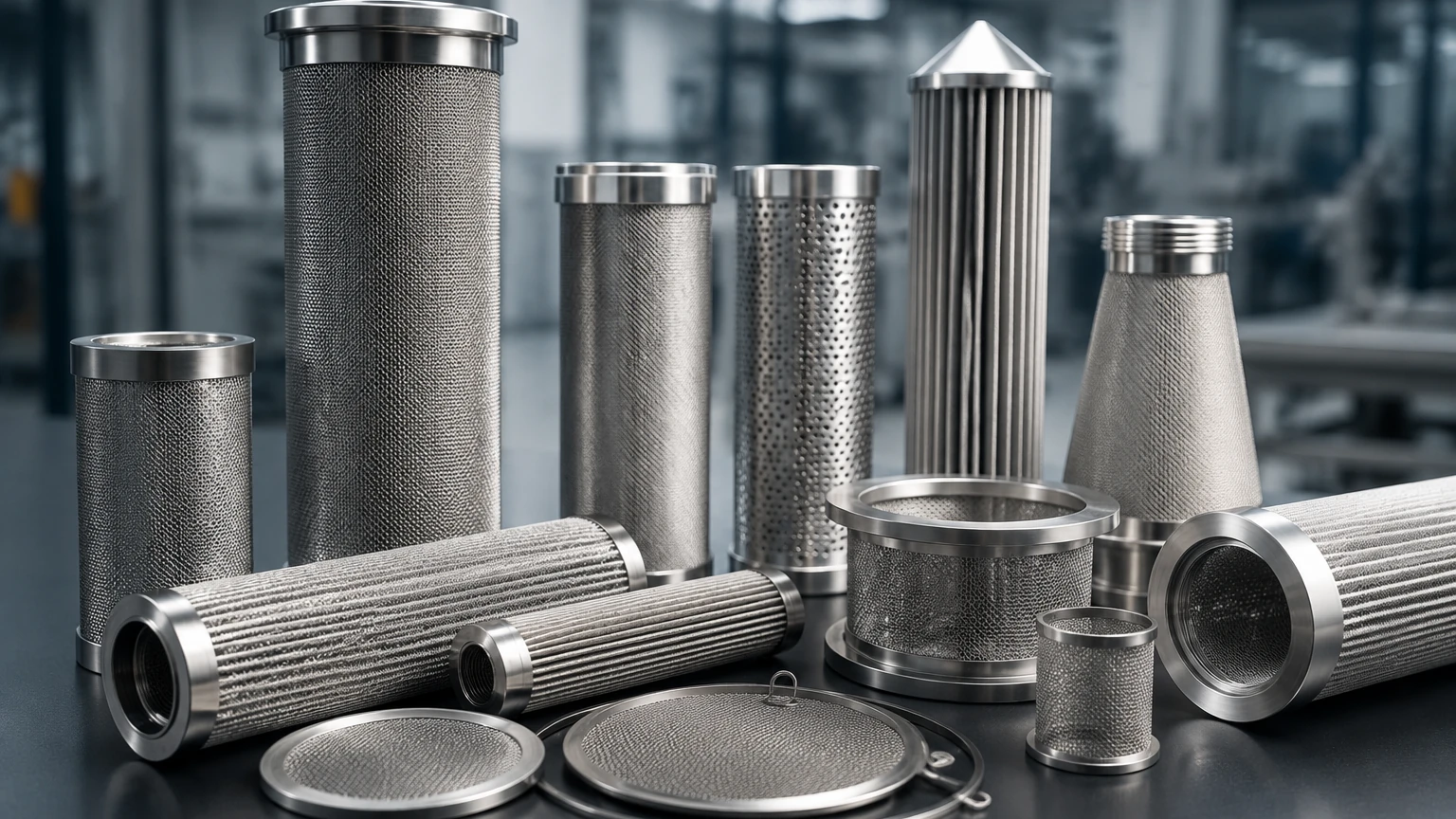
Manufacturers like Kaifil specialize in these high-performance alternatives. Stainless steel wire mesh filters and sintered metal cartridges offer several advantages over traditional bags, including cleanability, extreme durability, and precise filtration accuracy. For organizations looking to optimize their long-term filtration strategy, reviewing product options and application support on the Main Page of a specialist manufacturer can reveal opportunities for significant cost savings and improved process stability.
Stainless steel components are particularly valuable in the hydraulic, chemical, and food industries where the risk of fiber migration from a fabric bag is unacceptable. By switching to a precision-engineered metal filter, facilities can reduce the waste generated by disposable bags and ensure a more consistent filtration result over thousands of cycles.
Common Risks and Quality Assurance in Procurement
Engaging with filter bag manufacturers involves navigating several risks that can impact the total cost of ownership. Beyond the obvious risk of mechanical failure, there are subtle issues that can arise from poor manufacturing standards.
1. Fiber Migration: In lower-quality bags, individual fibers can break loose from the media and enter the filtrate. This is a major concern in the beverage and pharmaceutical industries. Top-tier manufacturers use singed or glazed surface treatments to lock fibers in place.
2. Chemical Incompatibility: Even minor additives in a process fluid can cause a bag to swell or lose structural integrity. A reputable manufacturer should provide comprehensive chemical resistance guides and, if necessary, perform compatibility testing on fluid samples.
3. Inconsistent Batch Quality: For large-scale operations, consistency is key. A manufacturer must have a robust Quality Management System (QMS), such as ISO 9001, to ensure that the 1,000th bag performs exactly like the first.
Customization and OEM Capabilities
Many industrial systems do not conform to standard sizes. In these instances, the ability of filter bag manufacturers to provide custom designs is paramount. Customization may involve non-standard lengths, specialized diameters, or the addition of handles, loops, and evacuation inserts to assist in the removal of heavy, sludge-filled bags.
Furthermore, for equipment manufacturers (OEMs), partnering with a filter producer that can provide private labeling and custom packaging is often a business requirement. This level of service indicates a manufacturer’s commitment to long-term partnerships rather than simple transactional sales.
Conclusion: Making the Right Choice
Selecting from the vast array of filter bag manufacturers requires a balance of technical scrutiny and operational foresight. While the initial cost of the bag is a factor, the true value lies in the bag’s ability to protect downstream equipment, maintain product quality, and minimize labor costs associated with change-outs.
For engineers and purchasing technical teams, the process should begin with a clear definition of the fluid characteristics, the required particle retention, and the environmental constraints of the application. While synthetic filter bags remain a staple of industrial filtration, it is also important to recognize when the limitations of fabric necessitate a move toward more durable, customized stainless steel solutions.
By evaluating manufacturers on their material science expertise, construction precision, and willingness to provide technical guidance, industrial operators can ensure they have a filtration system that is both efficient and reliable. Whether utilizing standard bags or advanced metal filtration components, the goal remains the same: achieving the highest level of purity with the lowest possible operational impact.
