


Oil Filter Cart
In industrial maintenance, the longevity of hydraulic systems, gearboxes, and lubrication circuits depends heavily on the cleanliness of the fluid. Contamination—whether in the form of particulate matter, moisture, or varnish—is the primary cause of component wear and system failure. An oil filter cart serves as a critical mobile solution for fluid purification, providing an offline filtration method that ensures lubricants meet stringent ISO cleanliness standards. This guide explores the engineering principles, component selection, and operational considerations essential for technical professionals evaluating oil filter cart systems.
Understanding the Functionality of an Oil Filter Cart
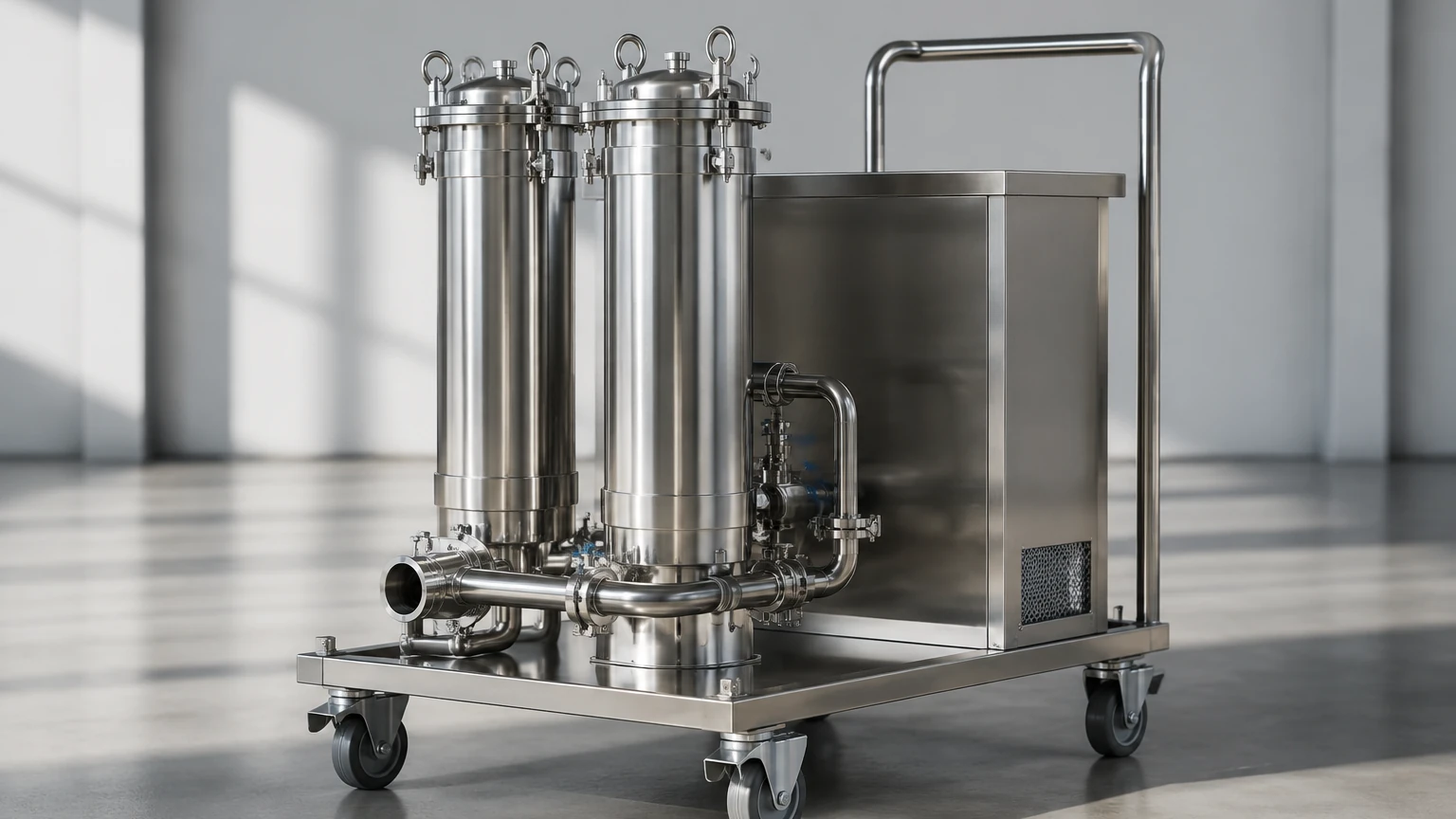
An oil filter cart is a portable filtration system designed to circulate oil from a reservoir, pass it through high-efficiency filter elements, and return it to the system. This process is often referred to as "kidney-loop" filtration because it operates independently of the main system's pump and primary filters.
The primary roles of an oil filter cart include:
1. Pre-filtration of New Oil: New oil delivered in drums is rarely clean enough for modern high-pressure hydraulic systems. A filter cart ensures that oil is purified as it is transferred from the drum to the machine reservoir.
2. Offline Contamination Control: By running the cart on a machine while it is in operation or during scheduled downtime, maintenance teams can remove fine particulates that the onboard filtration system might miss.
3. Fluid Transfer: It provides a controlled method for moving fluids between containers or systems without introducing environmental contaminants.
4. Water Removal: When equipped with specialized coalescing or water-absorbing media, these carts can effectively remove free and emulsified water from the oil.
From an engineering perspective, the effectiveness of an oil filter cart is not just in its portability but in the precision of its filtration components. For manufacturers like Kaifil, the focus remains on the structural integrity and micron-level accuracy of the filter elements housed within these units.
Technical Specifications and Engineering Considerations
Selecting or designing an oil filter cart requires a deep dive into technical specifications to ensure compatibility with the intended application. Engineers must look beyond the frame and wheels to the fluid dynamics at play.
Viscosity Handling
The viscosity of the oil is perhaps the most critical factor. High-viscosity gear oils (ISO VG 220, 320, or 460) require significantly more power to pump through a filter medium than low-viscosity hydraulic oils (ISO VG 32 or 46). If the pump and motor on the cart are undersized, the system may suffer from cavitation or bypass the filter entirely due to high differential pressure (Delta P).
Flow Rate vs. Filtration Efficiency
There is a constant trade-off between flow rate (measured in GPM or LPM) and filtration efficiency. A higher flow rate allows for faster fluid turnover but can lead to shorter residence time within the filter media, potentially reducing the capture rate of fine particles. For an oil filter cart to be effective, the flow rate must be balanced with the surface area of the filter element to maintain a low flux rate, which enhances the capture of sub-micron contaminants.
ISO Cleanliness Codes
Industrial standards often dictate target ISO 4406 cleanliness codes (e.g., 16/14/11). Achieving these targets requires filter elements with high Beta ratios. A Beta ratio (βx[c] = y) indicates the efficiency of a filter at a specific micron size. For example, a β10[c] ≥ 1000 means the filter is 99.9% efficient at capturing particles 10 microns and larger.
The Importance of High-Quality Filter Elements in Cart Systems
While the pump and motor provide the mechanical force, the filter element is the heart of the oil filter cart. In demanding industrial environments, the choice of filter media—typically between cellulose, synthetic glass fiber, or stainless steel wire mesh—determines the reliability of the filtration process.
Stainless steel filter cartridges are increasingly preferred in B2B industrial applications due to their durability and resistance to chemical degradation. Unlike disposable synthetic media, precision-engineered metal filters can withstand high pressure differentials without collapsing. This is especially vital in oil filter carts used for high-viscosity fluids where the initial pressure drop is naturally higher.
Kaifil specializes in manufacturing these precision metal components, ensuring that the internal structure of the filter can handle the rigors of continuous offline filtration. When engineers review product options and application support on the Main Page, they often prioritize the mechanical strength of the filter medium to prevent "media migration," where bits of the filter material itself enter the fluid stream—a common failure in low-quality disposable filters.
Material Selection: Why Stainless Steel Mesh Prevails in Industrial Environments
In sectors such as chemical processing, pharmaceutical manufacturing, and heavy hydraulics, the oil may contain aggressive additives or be subjected to extreme temperatures. Material compatibility is a non-negotiable requirement for an oil filter cart's internal components.
Corrosion Resistance
Using 304 or 316L stainless steel for filter mesh and support structures provides excellent resistance to corrosion. This is critical when filtering oils that may have high acid numbers or when the cart is used in humid or chemically active environments.
Cleanability and Reusability
One of the primary advantages of stainless steel wire mesh filters in an oil filter cart is their cleanability. While glass fiber elements must be discarded once saturated, stainless steel elements can often be cleaned via ultrasonic baths or backflushing, depending on the contaminant type. This reduces the long-term environmental impact and the recurring cost of consumables.
Structural Rigidity
During the filtration of cold oil, the pressure spike can be significant. Stainless steel elements offer high collapse pressure ratings. This ensures that even if the oil filter cart is operated under sub-optimal conditions, the filter remains intact, protecting the downstream system from catastrophic contamination.
Operational Efficiency and Total Cost of Ownership
When evaluating an oil filter cart for procurement, the initial purchase price is only one part of the Total Cost of Ownership (TCO). Maintenance managers must consider the operational efficiency and the cost of replacement parts.
1. Filter Replacement Frequency: Systems using low-capacity disposable filters may require frequent changes, leading to high labor costs and downtime. High-capacity pleated stainless steel elements, while higher in initial cost, offer a larger surface area, which translates to a higher dirt-holding capacity and longer intervals between maintenance.
2. Energy Consumption: An efficiently designed cart with a low-pressure-drop filter element requires less power to operate. Over hundreds of hours of kidney-loop filtration, these energy savings become measurable.
3. Seal and Gasket Integrity: The choice of seals (Buna-N, Viton, or EPDM) within the filter housing must match the fluid type. Using incompatible seals leads to leaks, which increases the TCO through fluid loss and environmental cleanup costs.
By focusing on high-performance components, companies can ensure that their oil filter cart remains a reliable asset rather than a maintenance burden. Kaifil’s expertise in custom stainless steel filtration solutions allows for the development of elements that are specifically tailored to the flow and pressure profiles of industrial carts.
Pre-Purchase Checklist for Engineering and Procurement Teams
Before finalizing the specifications for an oil filter cart or its replacement components, technical teams should confirm the following data points to ensure the equipment is fit for purpose:
* Fluid Compatibility: Confirm the base oil type (mineral, synthetic, water-glycol) and the presence of any aggressive additives.
* Operating Viscosity: Determine the viscosity at the actual operating temperature, not just the ISO grade at 40°C.
* Target Cleanliness: Define the desired ISO 4406 code to select the appropriate micron rating and Beta ratio.
* Environment Conditions: Will the cart be used in a wash-down area (requiring NEMA 4X enclosures) or a hazardous location (requiring explosion-proof motors)?
* Connection Types: Ensure the hoses and couplings are compatible with the machine's sampling ports or reservoir breathers.
* Maintenance Access: Verify that the filter housing design allows for easy element replacement without specialized tools.
For organizations looking to optimize their filtration strategy, sourcing components from a manufacturer that understands these engineering nuances is essential. Detailed technical information and customization capabilities can be found on the Main Page, which serves as a resource for engineers seeking to bridge the gap between standard equipment and specialized application needs.
Conclusion
The oil filter cart is more than a simple pump on wheels; it is a precision instrument designed to maintain the lifeblood of industrial machinery. By prioritizing high-quality materials like stainless steel wire mesh and considering the complex interplay of viscosity, flow rate, and pressure, engineers can significantly extend the service life of their equipment. Investing in robust filtration components ensures that the oil filter cart performs its duty reliably, providing a clear return on investment through reduced component wear and minimized unplanned downtime.
