


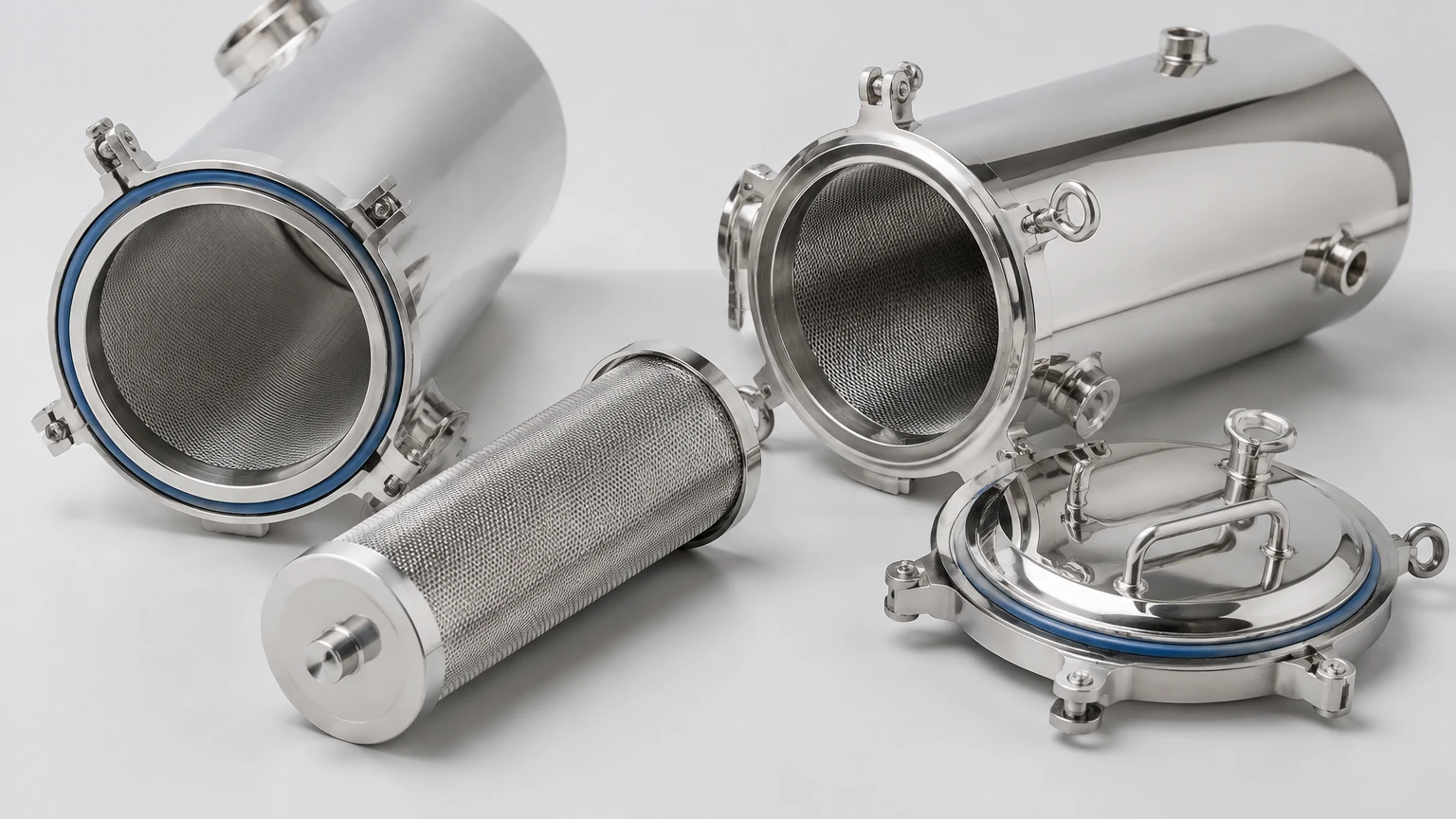
High-capacity Liquid Solid Separator
In industrial manufacturing, the efficiency of a production line is often dictated by the reliability of its filtration and separation stages. A high-capacity liquid solid separator serves as a critical component in systems where large volumes of process fluids must be cleared of particulate matter without frequent downtime or pressure loss. For engineers and procurement specialists, selecting the right separation technology requires a deep understanding of fluid dynamics, material compatibility, and the mechanical limits of the filter media.
As a specialized manufacturer, Kaifil provides precision-engineered stainless steel solutions designed to meet these rigorous industrial demands. Whether the application involves chemical processing, water treatment, or food production, the goal remains the same: achieving high throughput while maintaining strict filtration accuracy. This guide explores the technical considerations necessary for implementing effective high-capacity separation systems.
Engineering Principles of High-Capacity Separation
The term "high-capacity" in the context of a liquid-solid separator refers to more than just the physical size of the housing. It encompasses the system's ability to handle high flow rates (flux) and high solids loading while maintaining a low differential pressure (ΔP). Several engineering factors influence this performance.
Surface Area vs. Depth Filtration
To achieve high capacity, engineers must maximize the effective filtration area. In stainless steel systems, this is often achieved through pleating. A pleated stainless steel filter cartridge can offer significantly more surface area than a standard cylindrical screen of the same dimensions. This increased area allows for a lower velocity of the fluid through the mesh, which reduces the risk of particle breakthrough and extends the time between cleaning cycles.
Fluid Velocity and Turbulence
High-capacity systems must manage fluid velocity to prevent turbulence that could dislodge captured particles or cause erosion of the filter media. Proper internal housing design ensures that the liquid is distributed evenly across the entire surface of the high-capacity liquid solid separator, preventing "hot spots" where high-velocity flow might lead to premature wear or localized clogging.
Material Selection for Industrial Environments
The durability of a separator is fundamentally linked to its material composition. In many industrial sectors, plastic or low-grade metal filters are insufficient due to chemical aggression or high operating temperatures. Stainless steel is the industry standard for high-performance separation for several reasons.
304 vs. 316L Stainless Steel
- 304 Stainless Steel: Suitable for general industrial applications where corrosion resistance is required but the environment is not excessively acidic or saline. It is a cost-effective choice for water treatment and some food-grade applications.
- 316L Stainless Steel: The "L" stands for low carbon, which improves weldability and resistance to intergranular corrosion. 316L contains molybdenum, making it significantly more resistant to chlorides and chemical solvents. This is the preferred material for pharmaceutical and heavy chemical processing.
Thermal and Mechanical Stability
Unlike polymer-based filters, stainless steel components can withstand extreme temperature fluctuations without losing structural integrity. In high-pressure hydraulic systems or steam-jacketed chemical lines, a stainless steel high-capacity liquid solid separator maintains its pore geometry under stress, ensuring consistent filtration performance where other materials might deform.
Customization and Design Considerations
Off-the-shelf filtration products rarely meet the specific needs of complex industrial processes. Customization is often necessary to align the separator with existing piping, specific flow requirements, and unique particle characteristics.
Filter Media Options
Depending on the required micron rating and the nature of the solids, different types of wire mesh may be employed:
- Plain Weave: Best for simple, high-flow applications with relatively large particles.
- Dutch Weave: Provides a denser structure with higher mechanical strength, suitable for fine filtration under high pressure.
- Sintered Mesh: Multiple layers of wire mesh are bonded together through heat and pressure to create a robust, porous plate or tube. This is ideal for applications requiring extreme durability and the ability to withstand rigorous backwashing.
OEM and Precision Components
For equipment manufacturers (OEMs), integrating a separator into a larger machine requires precise dimensional tolerances. Kaifil specializes in producing custom metal filter components that fit seamlessly into proprietary systems. This includes specialized end caps, reinforced internal cores, and custom flange connections that ensure a leak-proof seal and ease of installation. For more information on our custom capabilities, you can visit our Main Page.
Key Evaluation Criteria for Engineers
When evaluating a high-capacity liquid solid separator, engineers should look beyond the initial purchase price and focus on performance metrics that impact the total cost of ownership.
1. Filtration Efficiency (Beta Ratio): It is vital to confirm the absolute vs. nominal rating of the filter. A high-capacity system must not sacrifice efficiency for flow; it should reliably capture the target particle size at the specified flow rate.
2. Cleanability and Reusability: Stainless steel filters are an investment. Their ability to be cleaned via ultrasonic baths, backflushing, or chemical cleaning significantly reduces the long-term cost compared to disposable cartridges.
3. Pressure Drop (ΔP): A well-designed separator should have a low clean pressure drop. A high initial ΔP indicates that the system is already working near its limit, leaving little room for solids loading before maintenance is required.
4. Seal Integrity: High-capacity systems often operate under significant pressure. The choice of O-rings or gaskets (EPDM, Viton, PTFE) must be compatible with the process fluid to prevent bypass, which occurs when unfiltered liquid leaks around the filter element.
Common Risks and Mitigation Strategies
Implementing a high-capacity separation solution is not without risks. Understanding these potential pitfalls allows for better system design.
Media Blinding
Blinding occurs when particles become lodged within the openings of the mesh, or when a "cake" forms that is too dense for the fluid to pass through. This is mitigated by selecting the correct weave type and ensuring that the surface area is sufficient for the solids concentration. In some cases, automated backwash cycles are integrated to clear the media periodically.
Corrosion and Erosion
Even stainless steel can succumb to erosion if the fluid contains abrasive particles moving at high velocities. Engineers should specify reinforced mesh or thicker wire diameters in high-impact zones of the separator. For chemical applications, verifying the pH and chloride levels is essential to prevent pitting corrosion.
Structural Collapse
In high-pressure applications, the differential pressure can become high enough to collapse a filter element if it becomes severely clogged. High-quality separators include internal support cores or external cages made of heavy-duty perforated metal to provide the necessary structural rigidity.
Total Cost of Ownership and Operational Efficiency
While the initial cost of a stainless steel high-capacity liquid solid separator is higher than that of disposable plastic or fabric alternatives, the long-term economics usually favor the metal solution.
- Reduced Waste: Eliminating the disposal of used filter cartridges reduces environmental impact and waste management costs.
- Downtime Reduction: Longer service intervals and faster cleaning processes mean the production line stays active for more hours per year.
- Process Consistency: Because stainless steel does not migrate (shed fibers) or deform, the quality of the filtrate remains consistent over the entire life of the filter element.
For purchasing teams, it is important to confirm the expected lifespan of the filter media under specific operating conditions. A high-quality stainless steel filter can often last for years with proper maintenance, making its "cost per gallon filtered" significantly lower than cheaper alternatives.
Conclusion
Selecting a high-capacity liquid solid separator is a technical decision that impacts the overall efficiency and safety of industrial operations. By focusing on material quality, precision engineering, and the specific requirements of the application, engineers can implement a solution that provides reliable performance in demanding environments. Kaifil remains committed to delivering these high-performance filtration components, supporting global industries with durable and customized stainless steel solutions. To review our full range of products and technical support options, please visit our Main Page.
