


Self-cleaning Filters for Liquids
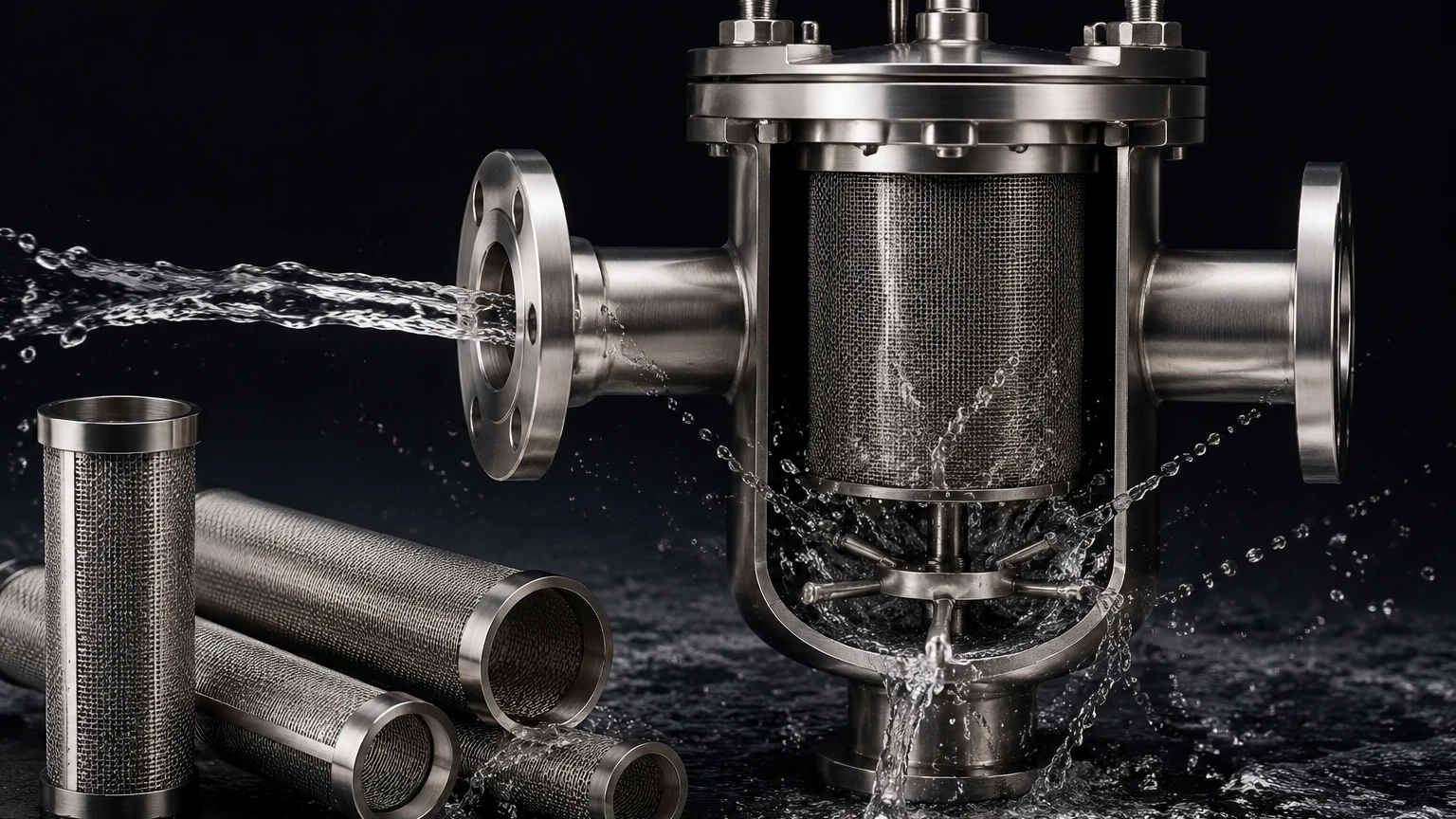
In modern industrial processing, the transition from batch filtration to continuous, automated systems is often driven by the need for higher throughput, reduced labor costs, and improved safety. Self-cleaning filters for liquids represent a critical technology for industries ranging from chemical processing and water treatment to food and beverage production. Unlike traditional bag or cartridge filters that require manual intervention and process downtime for replacement, self-cleaning systems utilize mechanical or hydraulic mechanisms to remove accumulated contaminants from the filter medium while the system remains online.
For engineers and procurement teams, selecting the right filtration system requires a deep understanding of fluid dynamics, material compatibility, and the specific mechanical principles that govern automated cleaning. This guide examines the technical nuances of self-cleaning filtration to assist in making informed specification decisions.
Mechanical Principles of Self-Cleaning Filters for Liquids
The efficacy of self-cleaning filters for liquids depends on the method used to dislodge particles from the filter element. There are three primary mechanisms employed in industrial settings:
1. Mechanical Scraper Systems
In these systems, a scraper blade or brush moves across the surface of the filter element—typically a stainless steel wedge wire or perforated screen. The scraper physically removes solids that have adhered to the surface. This design is particularly effective for high-viscosity liquids, such as resins, adhesives, or oils, where particles tend to stick to the media. Scrapers can be internal (cleaning the inside of the element) or external, depending on the flow direction.
2. Backwash (Reverse Flow) Systems
Backwash filters utilize a portion of the filtered liquid (filtrate) to flush the filter element from the clean side to the dirty side. When the pressure differential reaches a set point, a valve opens, reversing the flow through a specific segment of the filter. This sudden surge of fluid dislodges the cake of contaminants and carries it out through a waste discharge port. This method is ideal for low-viscosity fluids like water or light chemicals and is highly effective for removing granular or non-sticky particles.
3. Suction Scanning
Suction scanning combines the principles of backwashing with a focused vacuum effect. A small nozzle or "scanner" moves in a spiral or linear path across the filter screen. The pressure difference between the internal system and the atmospheric pressure at the waste outlet creates a high-velocity suction at the nozzle tip, localized to a small area of the screen. This allows for very high cleaning efficiency with minimal waste of the process fluid.
Engineering Material Selection: The Role of Stainless Steel
The durability of a self-cleaning filter is largely determined by the materials used for the filter housing and, more importantly, the filter element itself. Stainless steel is the industry standard for demanding applications due to its mechanical strength and chemical resistance.
* Grade 304/304L: Suitable for general industrial water and mildly corrosive environments. It offers excellent structural integrity at a lower cost point.
* Grade 316/316L: The preferred choice for chemical processing, pharmaceutical, and marine applications. The addition of molybdenum provides enhanced resistance to chlorides and pitting corrosion.
* Duplex Stainless Steel: Used in highly aggressive environments where both high pressure and extreme corrosion resistance are required.
Beyond the alloy grade, the structure of the element is vital. Wedge wire screens are frequently used in self-cleaning filters because their V-shaped profile minimizes the risk of "plugging" or "blinding." The narrowest part of the opening is at the surface; once a particle passes through the surface, it moves into a wider gap, reducing the likelihood of becoming wedged in the media. For finer filtration, multi-layered sintered wire mesh provides high porosity and precise micron ratings while maintaining the rigidity necessary to withstand the mechanical stresses of a cleaning cycle.
Critical Performance Metrics for System Design
When evaluating self-cleaning filters for liquids, engineers must look beyond the initial micron rating. Several key performance indicators (KPIs) determine whether a filter will succeed in a specific application:
Flux Rate and Flow Velocity
Flux rate refers to the volume of liquid passing through a unit area of filter media over time (e.g., GPM/ft²). If the flux rate is too high, particles may be forced into the media pores so deeply that the self-cleaning mechanism cannot remove them. Conversely, a flux rate that is too low may result in an oversized, unnecessarily expensive system.
Pressure Differential ($ΔP$)
The pressure drop across the filter is the primary indicator of fouling. Most automated systems are configured to trigger a cleaning cycle when the $ΔP$ reaches a specific threshold (typically 5 to 15 psi). It is essential to confirm that the filter element can withstand the maximum possible differential pressure without collapsing in the event of a control system failure.
Purge Volume and Waste Ratio
Every cleaning cycle results in some loss of process fluid. The "waste ratio" is the volume of fluid discharged during the purge cycle compared to the total volume filtered. In high-value liquid applications, such as pharmaceutical precursors or specialty chemicals, minimizing the purge volume is a top engineering priority.
Application-Specific Considerations
Different industries impose unique constraints on filtration hardware. A one-size-fits-all approach often leads to premature equipment failure or insufficient filtration quality.
* Food and Beverage: Systems must adhere to sanitary standards (such as 3A or EHEDG). This requires smooth surface finishes (Ra < 0.8 µm), the absence of dead zones where bacteria can grow, and compatibility with Clean-in-Place (CIP) chemicals.
* Chemical Processing: Compatibility with aggressive solvents and high temperatures is paramount. Seals and gaskets must be selected from materials like PTFE or Viton to prevent degradation.
* Water Treatment: In cooling tower or intake water applications, filters must handle high flow rates and varying solid loads. The ability to handle fibrous debris (like algae or organic matter) without clogging the cleaning mechanism is a critical requirement.
* Hydraulic and Lubrication Systems: These applications require high-pressure housings and very fine filtration (often down to 5-10 microns) to protect sensitive downstream components like valves and pumps.
Operational Efficiency and Total Cost of Ownership (TCO)
While the capital expenditure (CAPEX) for automated self-cleaning filters for liquids is higher than for manual bag or cartridge housings, the total cost of ownership is often significantly lower. When calculating TCO, engineers should consider the following factors:
1. Labor Savings: Manual filter changes require operators to stop the process, open the housing, dispose of contaminated media, and install new elements. Self-cleaning systems eliminate these recurring labor costs.
2. Consumable Costs: The cost of replacement bags and cartridges can be substantial over the life of a system. A permanent stainless steel element in a self-cleaning filter can last for years with proper maintenance.
3. Product Loss: Manual filter changes often involve draining the housing, leading to product waste. Automated systems can be tuned to minimize the volume of fluid lost during the purge cycle.
4. Uptime: In 24/7 manufacturing environments, the cost of downtime can exceed the cost of the filtration system itself. Continuous operation ensures maximum production capacity.
Customization and Technical Integration
Standard off-the-shelf filters rarely meet the precise needs of specialized industrial processes. Customization is often necessary to ensure seamless integration into existing piping and control architectures. Key areas for customization include:
* Nozzle Orientation: Adjusting inlet and outlet positions to fit within restricted footprints.
* Control Logic: Integrating the filter’s PLC (Programmable Logic Controller) with the plant’s central SCADA system for remote monitoring and data logging.
* Filtration Accuracy: Tailoring the micron rating and element type to the specific particle size distribution of the process fluid.
At Kaifil, we specialize in the engineering and manufacture of high-performance stainless steel filtration components. Whether you require a standard wire mesh filter or a fully customized cartridge for a self-cleaning system, our technical team provides the expertise needed to optimize your process. For more information on our manufacturing capabilities and product range, please visit our Main Page.
Final Engineering Summary
Selecting self-cleaning filters for liquids is a multi-faceted engineering challenge that requires balancing mechanical reliability with process requirements. By focusing on the cleaning mechanism, material durability, and operational metrics like $ΔP$ and waste ratios, technical teams can implement solutions that provide long-term stability. As industrial processes become increasingly automated, the role of reliable, self-maintaining filtration becomes even more central to maintaining high quality and operational efficiency. Before finalizing a purchase, it is recommended to confirm fluid viscosity, particle characteristics, and chemical compatibility with the equipment manufacturer to ensure the selected system is fit for purpose.
