


Suction Filters
In the hierarchy of industrial fluid management, suction filters represent the critical first line of defense. Positioned at the pump inlet or submerged within a reservoir, these components are engineered to protect the most expensive and sensitive parts of a hydraulic or process system: the pumps. While downstream filtration focuses on achieving specific cleanliness levels for valves and actuators, the primary objective of suction filters is to prevent large contaminants from entering the pump, thereby avoiding catastrophic mechanical failure and extending the service life of the entire system.
For engineers and procurement professionals, selecting the right suction filtration solution requires a deep understanding of the balance between fluid flow, pressure drop, and contaminant retention. As a specialized manufacturer of stainless steel filtration components, Kaifil provides the technical expertise necessary to navigate these variables, ensuring that suction filters perform reliably under demanding industrial conditions.
Understanding the Function of Suction Filters in Industrial Fluid Systems
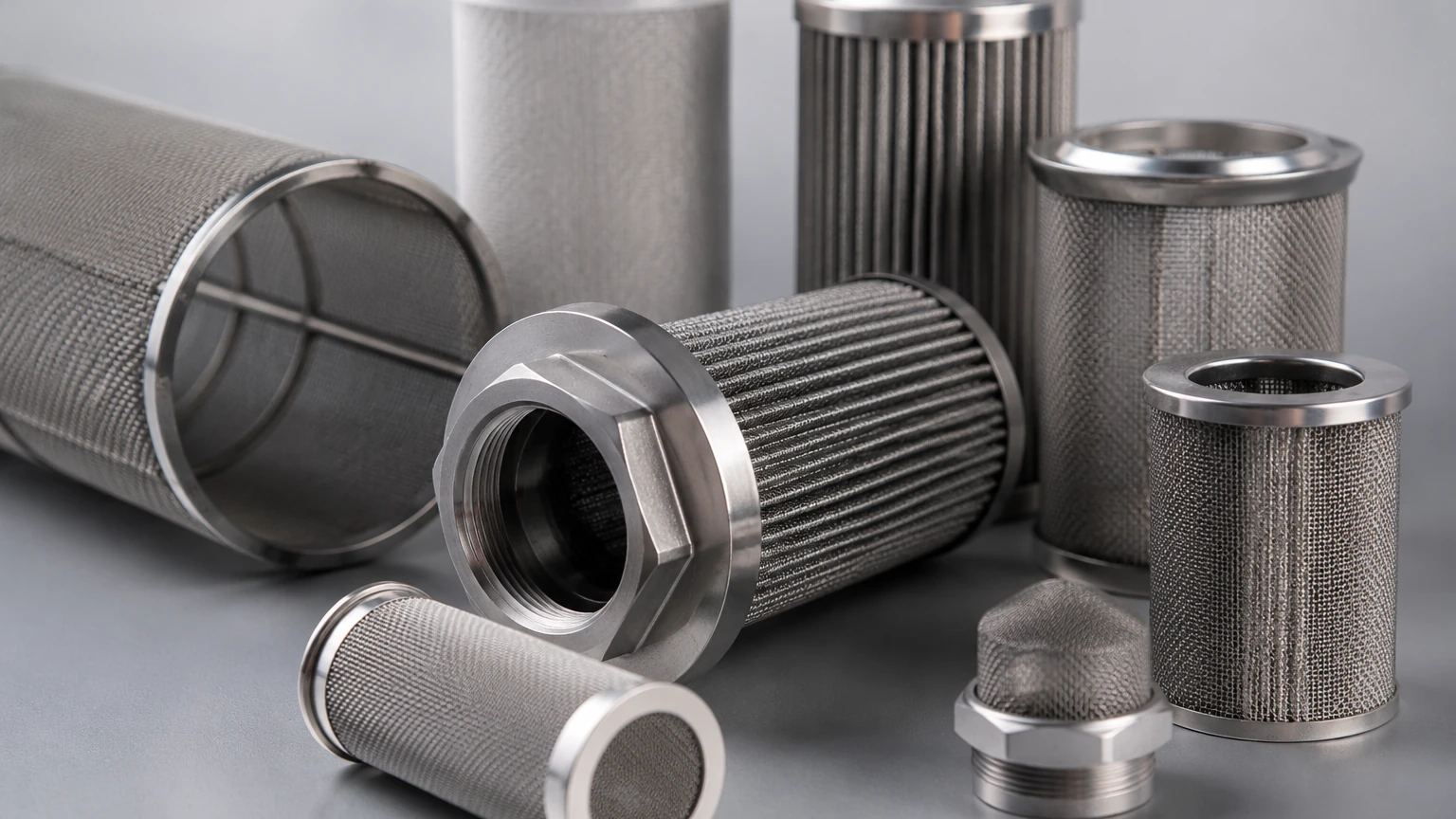
Suction filters, often referred to as suction strainers when utilizing coarser mesh, are designed to remove large particles such as metal chips, weld slag, scale, and large debris that may be present in a reservoir or fluid supply line. Unlike return line or pressure line filters, which often target microscopic particles to maintain system cleanliness, suction filters are primarily protective devices.
In a typical hydraulic system, the suction line is the area of lowest pressure. The pump creates a vacuum to draw fluid from the reservoir. Any obstruction in this line—such as a filter that is too fine or becomes clogged—increases the resistance to flow. This makes the placement and specification of suction filters a delicate engineering task. They must be robust enough to capture harmful debris but open enough to allow the pump to draw fluid without excessive effort.
Engineering the Balance: Filtration Efficiency vs. Flow Resistance
The most significant challenge in designing suction filters is managing the pressure drop ($ΔP$). In industrial filtration, every filter media imposes some resistance to flow. In the suction line, this resistance is critical because it directly impacts the Net Positive Suction Head (NPSH) available to the pump.
If the pressure drop across the suction filter is too high, the pressure at the pump inlet may drop below the vapor pressure of the fluid. This leads to the formation of vapor bubbles, a phenomenon known as cavitation, which can cause severe pitting of pump components, noise, vibration, and eventual pump failure.
To mitigate this risk, suction filters are typically specified with a coarser micron rating than other filters in the system. Common ratings for industrial suction filters range from 74 microns to 150 microns (approximately 100 to 200 mesh). This sizing is sufficient to catch the "pump-destroying" particles while maintaining a low resistance to flow. Engineers must also consider the fluid's viscosity; higher viscosity fluids (such as heavy gear oils or fluids at low temperatures) require even larger surface areas or coarser mesh to prevent excessive vacuum levels.
Material Selection and Construction of Stainless Steel Suction Filters
For demanding industrial environments, stainless steel is the preferred material for suction filters. Unlike paper or synthetic media, stainless steel wire mesh offers superior structural integrity, chemical compatibility, and thermal resistance. Kaifil specializes in utilizing high-grade stainless steel (typically 304 or 316L) to manufacture filters that withstand the rigors of chemical processing, food production, and heavy hydraulic applications.
The Advantages of Stainless Steel Wire Mesh
Stainless steel wire mesh provides a fixed pore size, ensuring consistent filtration performance. It is also highly resistant to corrosion, which is essential when dealing with water-based fluids, synthetic oils, or aggressive chemicals. Furthermore, stainless steel filters are often cleanable and reusable, offering a lower total cost of ownership compared to disposable elements.
Structural Reinforcement
Because suction filters operate under vacuum, the risk of element collapse is a real concern. High-quality suction filters feature a perforated metal inner core or a heavy-duty support mesh. This internal structure ensures that the filter media maintains its shape even as it accumulates contaminants and the pressure differential increases. At the Main Page, technical teams can find detailed specifications on the various weave types and support structures available for custom filter designs.
Critical Risks: Cavitation and Pump Starvation
When discussing suction filters, the risks of improper selection or maintenance cannot be overstated. The two primary failure modes associated with suction filtration are cavitation and pump starvation.
Cavitation
As mentioned previously, cavitation occurs when the suction pressure is too low. When the vapor bubbles created by low pressure move into the high-pressure side of the pump, they collapse violently. These micro-explosions generate localized shockwaves that can erode metal surfaces, leading to the "pitting" often seen on pump impellers and gears. A properly sized suction filter, matched to the pump's flow requirements and the fluid's viscosity, is the best defense against this damage.
Pump Starvation
Pump starvation is a more extreme version of flow restriction where the pump cannot draw enough fluid to fill its chambers. This leads to erratic operation, loss of system pressure, and overheating. In many cases, suction filters are equipped with a bypass valve (often set at a very low cracking pressure, such as 3 to 5 psi) to ensure that if the filter becomes completely clogged, the pump can still draw unfiltered fluid rather than running dry. While drawing unfiltered fluid is not ideal, it is generally considered a lesser evil than the immediate destruction caused by a dry-running pump.
Selection Criteria for Industrial Suction Filters
When specifying suction filters for a new project or as replacement components, engineers should evaluate the following criteria:
1. Flow Rate (GPM or LPM): The filter must be sized to handle the maximum flow rate of the pump. It is common practice to size a suction filter for at least twice the pump's rated flow to account for fluid viscosity changes and contaminant loading.
2. Micron Rating: Determine the largest particle size the pump can tolerate. For most hydraulic pumps, a 100-mesh (149 micron) or 140-mesh (105 micron) filter is standard.
3. Fluid Compatibility: Ensure the filter media, end caps, and adhesives (if any) are compatible with the process fluid. Stainless steel construction with welded end caps is often the safest choice for high-temperature or chemically aggressive fluids.
4. Connection Type: Suction filters come in various mounting configurations, including NPT threaded, SAE flanged, or simple slip-on designs for submerged reservoir use.
5. Environmental Conditions: Consider the temperature range and the potential for moisture or corrosive vapors in the surrounding environment.
Custom OEM Solutions for Specialized Applications
Many industrial applications require more than an off-the-shelf solution. Unique reservoir shapes, unconventional flow paths, or specific space constraints often necessitate custom-engineered suction filters.
Kaifil works closely with OEM partners to develop bespoke filtration components. This includes customizing the length, diameter, and mesh configuration to optimize surface area within a limited footprint. For example, in pharmaceutical or food and beverage applications, suction filters must not only protect the pump but also meet strict hygienic standards, requiring smooth surface finishes and specialized welding techniques to eliminate areas where bacteria could grow.
By focusing on precision manufacturing, Kaifil ensures that every custom suction filter meets the exact tolerances required for high-performance industrial machinery. Whether it is a small precision metal filter for a medical device or a large-scale suction strainer for a chemical processing plant, the engineering principles remain the same: maximize protection while minimizing flow restriction.
Maintenance, Cleaning, and Replacement Protocols
To ensure the longevity of both the suction filter and the pump, a proactive maintenance schedule is essential. Because suction filters are often located inside the reservoir, they can be "out of sight, out of mind," leading to neglect.
Monitoring Pressure Drop
Ideally, suction lines should be equipped with a vacuum gauge or a differential pressure indicator. An increase in vacuum levels at the pump inlet is a clear signal that the suction filter is accumulating debris and requires attention.
Cleaning Stainless Steel Mesh
One of the primary benefits of stainless steel suction filters is their cleanability. Depending on the type of contaminant, these filters can often be cleaned using ultrasonic baths, backflushing, or specialized solvent cleaning. However, it is vital to inspect the mesh for any signs of fatigue or damage after cleaning. If the wire mesh shows signs of fraying or the support structure is compromised, the element must be replaced to prevent fragments from entering the pump.
Replacement Cycles
In systems where cleaning is not feasible or where the risk of cross-contamination is high, a regular replacement cycle should be established. Even the highest-quality filters have a finite service life, and the cost of a replacement filter is negligible compared to the cost of a pump overhaul.
Conclusion
Suction filters are a fundamental component of any reliable fluid system. By serving as the primary barrier against large contaminants, they safeguard the heart of the industrial process—the pump. Selecting the appropriate suction filter involves a technical evaluation of flow rates, pressure drops, and material compatibility.
With a focus on high-quality stainless steel construction and customized engineering, Kaifil provides the durable filtration solutions needed to maintain system integrity in the most demanding sectors. For more information on how to optimize your filtration strategy or to request a quote for custom components, visit the Main Page to review product options and application support. Proper investment in suction filtration today prevents costly downtime and mechanical failure tomorrow.
