


Filter Skids
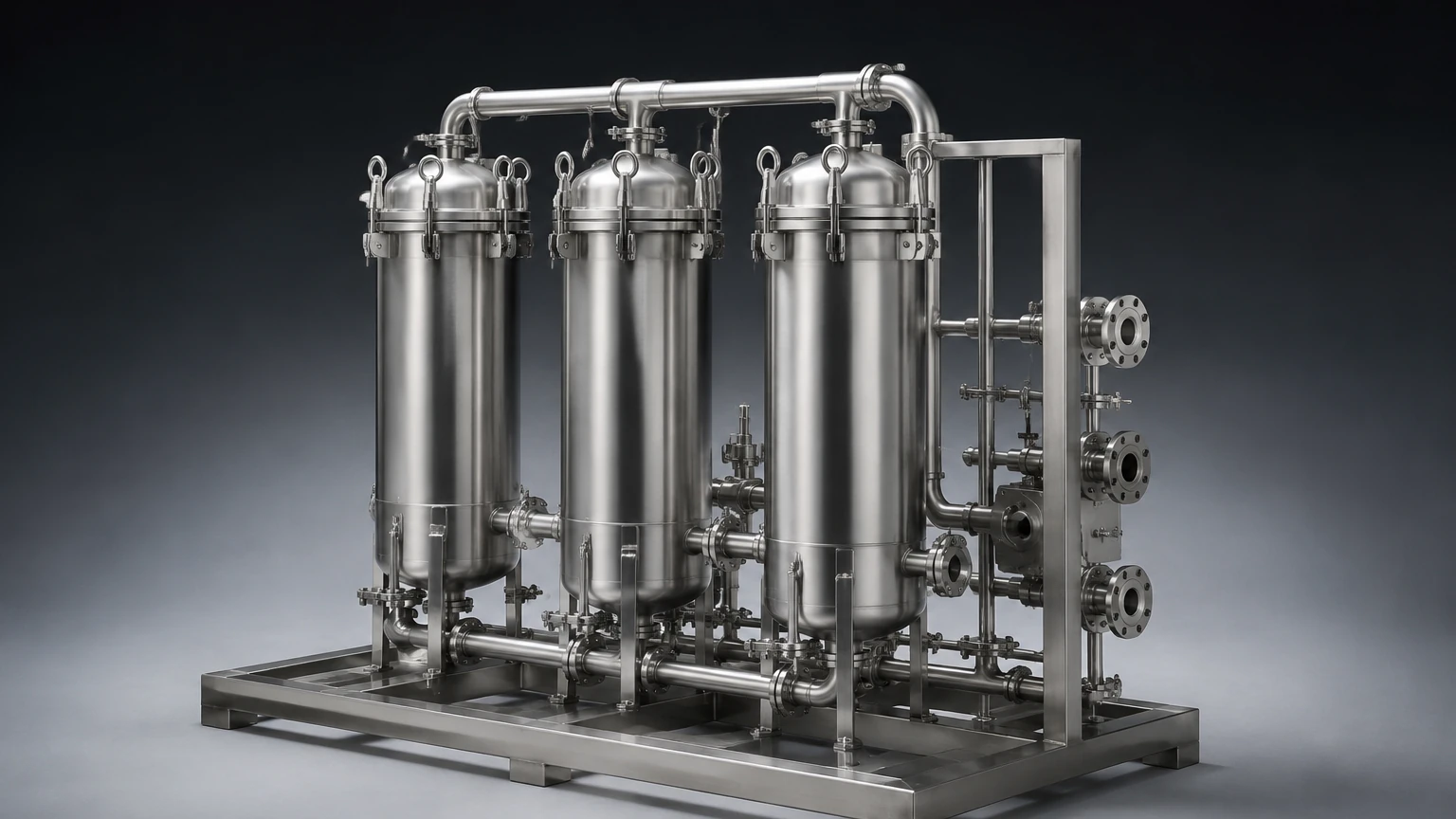
In modern industrial processing, the efficiency of a filtration system is often determined by how well it integrates into the broader production environment. Filter skids represent the pinnacle of this integration. A filter skid is a self-contained, modular filtration system mounted on a common base frame, typically including the filter vessels, piping, valves, pumps, and control instrumentation required for a specific process.
For engineers and procurement professionals, selecting or designing filter skids requires a deep understanding of fluid dynamics, material science, and mechanical engineering. These systems are not merely "plug-and-play" components; they are engineered solutions designed to handle specific flow rates, pressure requirements, and contaminant loads. As a professional manufacturer of custom stainless steel filtration solutions, Kaifil provides the core components that ensure these skids perform reliably in the most demanding industrial environments. To explore the full range of custom filtration components available for these systems, you can visit the Main Page.
Understanding the Role of Filter Skids in Industrial Processes
The primary advantage of filter skids is their modularity. In traditional plant construction, filtration components were often installed piece-by-piece on-site, leading to high labor costs and potential alignment issues. Filter skids move the majority of the assembly and testing into a controlled manufacturing environment.
These systems are utilized across diverse sectors, including chemical processing, food and beverage, pharmaceuticals, and hydraulic oil management. In chemical processing, for instance, a skid might be designed to remove catalysts from a product stream. In the food and beverage industry, it might serve as a final polishing stage for syrups or beverages. Regardless of the application, the skid's goal is to provide a centralized, automated, and easily maintainable filtration point.
By consolidating the filtration process into a single footprint, engineers can optimize the flow path, minimize pressure drops, and ensure that all safety protocols—such as pressure relief and bypass loops—are integrated into the design from the outset.
Key Components and Engineering Architecture
A high-performance filter skid is composed of several critical subsystems. Understanding these components is essential for evaluating the quality and longevity of the system.
Filter Vessels and Media
The heart of the skid is the filter vessel. Depending on the application, these may house stainless steel filter cartridges, wire mesh filters, or pleated metal elements. For industrial B2B applications, stainless steel is the preferred material due to its thermal stability and chemical resistance. Custom-engineered vessels allow for specific inlet/outlet configurations that reduce turbulence and improve the distribution of the fluid across the filter media.
Piping and Manifolds
The piping layout on a filter skid must be designed to handle the maximum design pressure and flow rate while minimizing "dead legs" where bacteria or contaminants can accumulate. Manifolds allow for the parallel operation of multiple filter housings, enabling continuous filtration even during maintenance or element replacement.
Instrumentation and Control
Modern filter skids are equipped with a suite of sensors. Differential pressure (DP) transmitters are the most critical, as they monitor the pressure drop across the filter media. When the DP reaches a pre-set limit, it indicates that the filter elements are loaded and require cleaning or replacement. Flow meters, temperature sensors, and automated valves allow the skid to be integrated into the plant’s wider Distributed Control System (DCS) or Programmable Logic Controller (PLC) architecture.
Material Selection and Chemical Compatibility
When specifying filter skids, material selection is the most significant factor in determining the total cost of ownership and operational safety. Most industrial skids utilize stainless steel for the frame, piping, and vessels, but the specific grade must be chosen based on the process fluid.
* SS 304/304L: Suitable for general industrial water treatment and non-corrosive chemical applications. It offers good strength and basic corrosion resistance.
* SS 316/316L: The standard for most chemical, pharmaceutical, and food-grade applications. The addition of molybdenum provides superior resistance to chlorides and organic acids.
* Specialty Alloys: For highly aggressive environments, such as those involving high-concentration acids or seawater, materials like Duplex stainless steel or Hastelloy may be required for the wetted parts.
Beyond the metal components, engineers must also confirm the compatibility of gaskets and seals. Common options include EPDM for steam and water, Viton (FKM) for fuels and chemicals, and PTFE for universal chemical resistance at the cost of reduced elasticity.
Technical Specification and Performance Parameters
To ensure a filter skid meets the requirements of a specific application, several technical parameters must be rigorously defined during the design phase.
Filtration Rating (Micron Level)
Filtration accuracy is defined by the micron rating of the internal elements. It is crucial to distinguish between nominal and absolute ratings. An absolute rating implies that 99.9% of particles of a specific size will be retained, whereas a nominal rating is more of a generalized efficiency guideline. For precision applications, such as hydraulic systems or pharmaceutical processing, absolute-rated stainless steel mesh or sintered metal fibers are often necessary.
Flow Rate and Pressure Drop (Delta P)
The relationship between flow rate and pressure drop is governed by the viscosity of the fluid and the surface area of the filter media. A well-designed skid maximizes the available filtration area to ensure that the initial (clean) pressure drop is as low as possible. This reduces the energy consumption of the pumps and extends the time between filter cleanings.
Solids Loading and Flux
Flux refers to the flow rate per unit area of filter media (e.g., GPM/ft²). If the flux is too high, contaminants can be forced through the media or cause rapid clogging. Engineers must balance the physical size of the skid with the expected solids loading of the influent fluid to ensure sustainable operation.
Customization and OEM Integration
Standardized filter skids rarely meet the exact needs of specialized industrial processes. Customization is often required in the following areas:
1. Multi-Stage Filtration: A skid may include a coarse pre-filter (such as a stainless steel strainer) followed by a fine polishing filter. This protects the more expensive fine elements from premature clogging.
2. Redundancy (Duplex Systems): For continuous processes that cannot be shut down, duplex skids feature two identical filter banks. Using a three-way valve, the flow can be diverted from one bank to the other, allowing for "change-over" without interrupting production.
3. Sanitary Design: In the food, beverage, and pharmaceutical sectors, skids must be designed for Clean-in-Place (CIP) or Steam-in-Place (SIP) operations. This involves high-polish internal surfaces (Ra < 0.4 µm) and the elimination of any crevices where product could stagnate.
Kaifil’s expertise in manufacturing custom stainless steel filter cartridges and precision metal components allows for the creation of bespoke filtration internals that fit perfectly within these customized skid architectures.
Maintenance, Replacement Cycles, and Operational Efficiency
The long-term value of a filter skid is realized through its ease of maintenance. Because the system is centralized, maintenance teams can perform routine checks more efficiently than with scattered filtration points.
Monitoring Differential Pressure
The primary indicator for maintenance is the differential pressure. Operating a skid beyond its recommended DP limit can result in "media migration" (where the filter element fails and releases contaminants downstream) or structural damage to the filter housing. Automated skids often include an alarm system that triggers at a "warning" pressure and shuts down the flow at a "critical" pressure.
Cleaning vs. Replacement
One of the major benefits of using stainless steel filtration media within a skid is the ability to clean and reuse the elements. Wire mesh and sintered metal components can often be backwashed (reversing the flow to dislodge contaminants) or cleaned using ultrasonic baths and chemical solvents. This significantly reduces the recurring cost of consumables compared to disposable plastic or paper filters.
Total Cost of Ownership (TCO)
When evaluating the cost of filter skids, purchasing teams should look beyond the initial capital expenditure (CAPEX). The TCO includes energy costs (pump power required to overcome pressure drop), labor for cleaning, the cost of replacement elements, and the potential cost of downtime. A higher-quality stainless steel skid with optimized flow dynamics often pays for itself within 18–24 months through lower operational expenses.
Selection Guide for Engineers and Purchasing Teams
Before moving forward with a filter skid project, technical teams should confirm the following data points to ensure the system is fit for purpose:
* Fluid Properties: What is the chemical composition, viscosity at operating temperature, and density?
* Contaminant Profile: What is the particle size distribution, concentration (PPM), and the nature of the solids (deformable vs. hard)?
* Operating Conditions: What are the normal and maximum operating pressures and temperatures? Are there any pressure surges or water hammer risks?
* Compliance Requirements: Does the skid need to meet specific standards such as ASME Section VIII (Pressure Vessels), PED (Pressure Equipment Directive), or FDA/3-A sanitary standards?
* Space Constraints: What are the maximum dimensions for the skid footprint, and is there sufficient overhead clearance for removing filter elements during maintenance?
By addressing these factors, engineers can ensure that the filter skids they implement provide reliable, high-performance filtration that protects downstream equipment and ensures product quality. For those seeking high-quality stainless steel components to integrate into their next filtration project, Kaifil offers the engineering support and manufacturing precision necessary to meet these rigorous industrial standards.
